12 Things Everyone Gets Wrong About William Shakespeare

Happy Birthday Bill (maybe!)

He may have died almost four centuries ago, yet the name of William Shakespeare remains one of the most iconic in world literature. The English playwright wrote about 38 plays, 154 sonnets and two long-narrative poems during his lifetime, many of which are considered to be among the greatest works in history. Having lived between 1564 and 1616, Shakespeare posthumously gained the nickname the "Bard of Avon" in recognition of the fact he is widely considered to be the greatest writer in the history of the English language. Aside from the various authors of the Bible, he is the most-quoted writer in history as Shakespeare wrote almost a tenth of the most-quoted lines in written or spoken English - and he is credited with introducing up to 3,000 words into the English language for the first time. And, what with it being William Shakespeare Day - as well as Saint George's Day - on April 23rd, it is once again time to celebrate the life of the great dramatist. On this occasion, certain fallacies and misconceptions about the Bard will be corrected - such as the belief he was an "Elizabethan playwright", that he wrote all of his plays himself, and that "Shakespeare" is actually the correct spelling of his surname... Well, here are 12 things everyone gets wrong about the "Bard of Avon" himself, the great playwright Mr William Shakespeare.

12. His Name Has Always Been "Shakespeare"... He Signed His Surname With At Least Six Different Spellings

Britain's most-famous ever playwright is called "William Shakespeare" - right? Well, possibly... The thing is, there are at least 80 different ways that his surname was written down during his lifetime - and there survive at least six alternative signatures provided by Shakespeare himself. In fact, the great man himself never actually used "Shakespeare" when writing his name - at least no records of him doing so survive - and instead he signed with such variations as "Willm Shakspere", "William Shakspeare" and "Willm Shakp". Confusing, yes, but it appears that the man who is credited with creating many of the words and phrases of the English language we still use today didn't even know how to correctly spell him own name...

11. Shakespeare Was An Elizabethan Playwright... But Plays Such As "Othello" And "Macbeth" Were Written During The Jacobean Period

"An Elizabethan playwright" - that is often how Shakespeare is described, but the fact of the matter is that his work-life straddled two separate monarchical reigns, that of Queen Elizabeth I and King James VI & I. What's more, some of his most-renowned works were actually written during the latter part of his life - and once James I had ascended to the throne in 1603, rather than during the Elizabethan period. The much-revered plays "Othello", "Macbeth", "The Winter's Tale", "The Tempest, "King Lear" and "Coriolanus" are just a selection of those written following Elizabeth I's death - when his works became less focused on romantic tragedy and shifted towards the corruption of men. Therefore it would probably be more apt to refer to Shakespeare as a "Jacobean playwright", rather than an "Elizabethan" one.

10. Shakespeare Wrote His Plays By Candlelight... When In Fact Wax Was Very Expensive And Most Authors Worked During The Day

William Shakespeare Writing Often in contemporary media Shakespeare is shown sitting in his study on an evening, writing away on paper lit dimly by wax candles positioned on his desk - giving the impression that this is how many of his great works were created. However, the reality is likely to have been somewhat different. Wax candles were extremely expensive during the 16th and 17th Centuries - and, although most households had them, they were mostly used only in emergencies. The likelihood is that Shakespeare, similar to most other writers at the time, worked on his plays during the day so he could write in natural daylight, then used his evenings to socialise with friends.

9. Shakespeare's Birthday Is April 23rd... When Actually No-One Is Entirely Sure

Happy Birthday William Shakespeare Gif April 23rd is a special date in English calendars - not only is it Saint George's Day, it is also celebrated as Shakespeare's birthday. Rightly Britons wish to celebrate the life of one of literature's most-revered writers, but unfortunately it is unclear whether or not April 23rd was actually Shakespeare's birthday - although it is likely to be have been the date on which he died. Shakespeare was baptised on April 26, 1564 - but the actual date he was born was not documented. Custom in 16th-Century England dictated that someone was baptised three days after their birth, which suggests Shakespeare was born on April 23rd, although no-one can be entirely sure. Furthermore, Shakespeare did die on April 23, 1616, at the age of 52 - meaning that at least this date does bear a direct link to the Bard's lifetime. To confuse matters further, however, the Julian calendar was replaced by the Gregorian calendar in 1582 - and this would move Shakespeare's baptism from April 26th to May 3rd, putting his birthday as April 30th by most modern-day calendars...

8. The Globe Theatre Is In The Exact Spot Where The Original Was... When It Is Actually 700-Feet Away

Shakespeare enthusiasts and culture lovers can still watch the Bard's plays at The Globe Theatre in Southwark, London - but, unfortunately, it is not the original, and it is not actually positioned on exactly the same site either. The original was constructed in 1599 by Shakespeare's playing company, the Lord Chamberlain's Men, but was destroyed by fire in June 1613 after a cannon misfired during a production of "Henry VIII" - and the second edition was built in June 1614 but was then closed again in 1642 due to Puritan pressure. The modern-day Globe, now in its third edition, was the brainchild of American actor Sam Wanamaker - but it is not built on exactly the same spot, instead it is approximately 700-feet away. Due to the fact buildings have been constructed on the original site in the close-to-400-years since the original Globe was demolished, the primary spot was not available. But the new edition, which is a brilliant venue than can hold close to 1,500 people, is as close to the original as was possible - in both design and location.

7. The Majority Of His Plays Were Written Entirely In Verse... But This Is Actually The Case For Just Two Of Them

William Shakespeare To Be Or Not To Be "Richard II" and "King John" - these are the only two Shakespeare plays written entirely in verse, despite popular belief to the contrary. When most people quote Shakespeare, they tend to revert to one of his verses, but the majority of his plays also contained prose. In fact, many of his plays have up to half of the text written in prose, with just 50% in verse. It seems strange, but such was the way plays were written at the time.

6. Charles Dickens Inspired The Phrase "What The Dickens?"... When It Was Actually Coined By Shakespeare
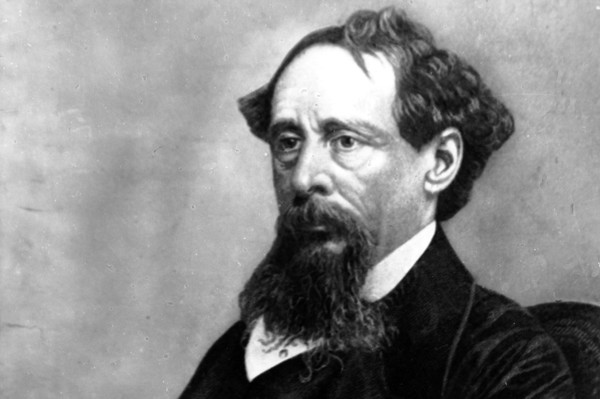
This entry differs from the other 11 due to the fact it is not a misconception about Shakespeare himself - but about the fact one of his phrases is misattributed to another great British author. Charles Dickens wrote such great Victorian works as "A Christmas Carol", "Oliver Twist", "Great Expectations" and "A Tale of Two Cities" during the 19th Century - and gained great fame for his authorship. As a result of this fame, many wrongly believe that the phrase "What the Dickens?" - used by people when they are confused or unsure of something - was coined in honour of the Victorian author. In fact, Shakespeare first used the phrase in "Merry Wives of Windsor" (Act III, Scene II) - with "Dickens" a common 17th-Century euphemism for the "Devil". The line used by Shakespeare was: "I cannot tell what the dickens his name is."

5. We Know Exactly What Shakespeare Looked Like... When Actually He Never Commissioned A Portrait Of Himself

Throughout his lifetime Shakespeare never commissioned one portrait of himself to be made, and the only one that seems to have been created while he still alive is the "Chandos" painting attributed to John Taylor. Painted between 1600 and 1610, this artwork has never actually been fully determined to be representative of Shakespeare's appearance, although it is believed to have been the basis for the engraved portrait of the playwright used on the front cover of the "First Folio" works in 1623. Named after the Duke of Candos who formally owned the painting, it is unclear why or how it was commissioned. This is the image was have of Shakespeare today, but he may have in fact looked nothing at all like this - even though it is believed that he did wear a gold earring.

4. All Of Shakespeare's Plays Were Solely Written By Him... At Least Three Were Collaborations

In 16th and 17th-Century England it was extremely common for playwrights to collaborate on works rather than write alone - and at least three of Shakespeare's plays were not created entirely by himself. "Timon of Athens" saw Shakespeare work with Thomas Middleton, John Fletcher (pictured above) helped the Bard to write "The Two Noble Kinsmen", while "Pericles" was a collaboration with George Wilkins. It is believed that Wilkins wrote the first half of Pericles and then Shakespeare completed it, while the same appears to have happened with the 1634 publication of The Two Noble Kinsmen with Fletcher. There have even been suggestions that "All's Well That Ends Well" and "Macbeth" were collaborative works due to the fact writing styles vary throughout, although this has never been proven definitively. This revelation certainly doesn't make Shakespeare a fraud, it just clarifies a commonly-held misconception.

3. He Was A Writer By Trade... But First And Foremost He Was A Businessman And An Actor

Shakespeare may be arguably Britain's greatest-ever playwright - but he was actually known in the early-1600s as a businessman with a substantial property portfolio. In his hometown of Stratford-upon-Avon, Shakespeare acquired a number of properties at the turn of the 17th Century that he rented out and earned a significant income from. Interestingly, Shakespeare's profession on official documentation in London was also registered as an "actor" - due to the fact he performed in other writers' plays as part of groups such as the Chamberlain's Men, and even in his own dramas. It is rumoured that Shakespeare himself even played the ghost in "Hamlet" and "King Duncan" in "Macbeth".

2. Shakespeare Compiled A Collection Of His Own Works... But It Was Actually First Done By Two Acting Friends

Playwrights during the 16th and 17th Centuries were keen to protect the integrity of their own works by trying to limit the number of copies of their plays that were written and printed, due to the fact an alternative acting troupe could merely act it out without permission. Therefore, Shakespeare did not commission the entirety of his works to be put into print - and they would certainly not have been as readily available in a physical form in the early-1600s as they are now. Not until actors John Heminges and Henry Condells - two of the Bard's friends and thespians who appeared in "The King's Men" - published the "First Folio" in 1623 was a collection of Shakespeare's works put into print. This book contained 36 of Shakespeare's texts, including 18 that were printed for the first time - and there is no evidence to suggest that the Bard approved these editions. Plays such as "Hamlet", "King Lear", "Othello" and "Troilus and Cressida" were then available for buy in print - and they sold like hotcakes, as they still do today.

1. Shakespeare Was A Protestant... But There Is Evidence To Suggest He Was Actually A Practising Catholic

Once the English Church had splintered from the Papacy and the Roman Catholic Church during the reign of King Henry VIII in the early-16th Century, Protestantism became the legal religion throughout the nation. Practising Catholicism was against the law, and so any active papal supporter had to hide their religious leanings. Because of this it has long been assumed that Shakespeare was a Protestant, but there is strong evidence to suggest that he was actually Catholic. His mother, Mary Arden, was brought up in a pious Catholic family - and his father, John Shakespeare, even signed a Catholic statement of faith during his lifetime (although this document has now been lost). In 1591, authorities also reported that John Shakespeare missed church "for fear of process for debt" - which was an excuse commonly used by Catholics. Also, William Shakespeare's daughter, Susanna, appears on a list of those who failed to attend Easter communion in Stratford-upon-Avon in 1606. Although evidence suggests Shakespeare privately was likely a practising Catholic, publicly he conformed to Protestantism - with his will using a Protestant formula and the fact he got married as a confirmed member of the Anglican Church of England. No-one can ever be sure what exactly the Bard's religious beliefs were, but it is likely he held at least some Catholic sympathies.

Contributor
Contributor

NUFC editor for WhatCulture.com/NUFC. History graduate (University of Edinburgh) and NCTJ-trained journalist. I love sports, hopelessly following Newcastle United and Newcastle Falcons. My pastimes include watching and attending sports matches religiously, reading spy books and sampling ales.