13 Strangest Place Names In County Durham

There's No Place like home...

Famed for some of the most idyllic and tranquil countryside in the whole country, County Durham sits rightly as a jewel in the crown of northern England. What it lacks in aspects of excitement and intensity it more than makes up with beautiful scenery and a wonderful variety including its characterful city, rural hotspots, charming coastal towns, and reformed mining villages. And of course that's not to mention the friendliness and welcoming nature of the people who call it home. Within the area there are also those places which tend to stand out for no other reason that their name just seems a little out of place. Everywhere has them of course, the obscurely or vaguely rude-sounding names that make you seriously wonder how they came to be called that. So, to get to the bottom of some of these explanations - and for a bit of a laugh - here are 13 Strangest Place Names In County Durham...

13. Toronto/Quebec

These two are grouped together as they both represent an odd Canadian influence, which seems to preside within the North East. It was not unusual for small farms and smallholdings to be bought up together and merged or 'enclosed'. It was standard practice for the home farm to then name those far away enclosed spaces after foreign lands. This explains away how the small village of Quebec emerged in the rather rural surroundings a stones throw away from Deerness Valley. The same etymology is also argued by some for the origin of Toronto. A conflicting explanation is that a coal baron while on his visit to the Canadian city of Toronto, was informed of a new mine that had been discovered under his land. Needing to think of a name he decided on using that of the place he was in at the time.

12. Holywood

Not in any way connected to the Californian equivalent that has one more letter, Holywood stands on the outskirts of picturesque Wolsingham to the west of the county. While it may not be able to boast the same sun drenched backdrop as that on the other side of the Atlantic, its exclusivity is comparable. Formerly just Holywood Hall, the spot was home to a hospital that specialised in looking after Tuberculosis stricken patients up until 1948. Following a review that found that the prevelance of this illness no longer justified the running of a dedicated hospital, Holywood Hall had its operational function changed to that of a hospital looking after people with mental illness. A service it performed until the hospital was closed totally in 1986. Following its closure the main hall was transformed in to 4 separate deluxe dwellings, with a further number of houses built around it. It is not unheard of for some of the properties in this area to sell in excess of over £1million pound. Take a look at some of the current houses on sale to get an idea of the grandeur you can expect.

11. Unthank

Quite tellingly when looking at a map of the north east as a whole, there a number of small villages and hamlets dotted around carrying the name of Unthank. As a result it's probably expected there would be a fairly standard meaning or explanation of the word. And guess what - there is! Taken from the Anglo-Saxon word 'Unthances' it refers to a farm once occupied by squatters, or those 'without leave' rather than rude people who don't have proper manners.

10. Muggleswick

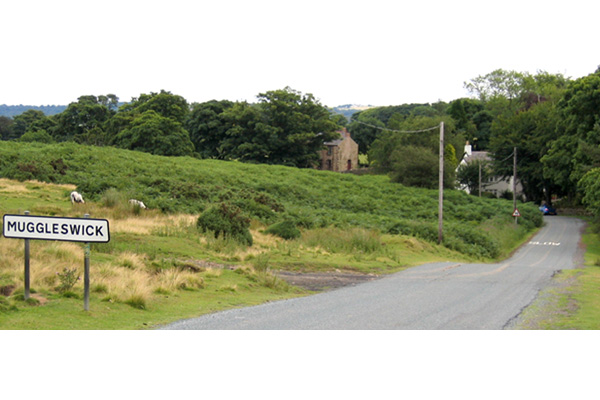
Any Harry Potter fan visiting the region might be forgiven for thinking Muggleswick represents a place where no witch or wizard is welcome to step foot. In truth it is another place whose name has a number of rumoured origins. Explanations include the term being derived from the name of a nearby farm, or it being taken from the Scotch word 'mickle' meaning large village. Personally my favourite explanation is that it is named after a giant, Mug, who along with two other neighbouring giants spent their days throwing a hammer to one another. The surrounding valleys and hills around the Consett area are a result of that hammer being dropped on the floor.

9. Cockfield

Now when sitting down and logically thinking about the explanation of how Cockfield got its name, it is not exactly difficult to fathom. Invariably at some point this small village situated just 8 miles south west of Bishop Auckland was notable for the presence of cockerels, or at least that of it being farm land, a contrast with the surrounding area which was heavily involved in coal mining and other industrial use. However this explanation doesn't seem to help in stopping certain humorous images springing to mind when seeing the name 'pop up' as you're driving along the A688.

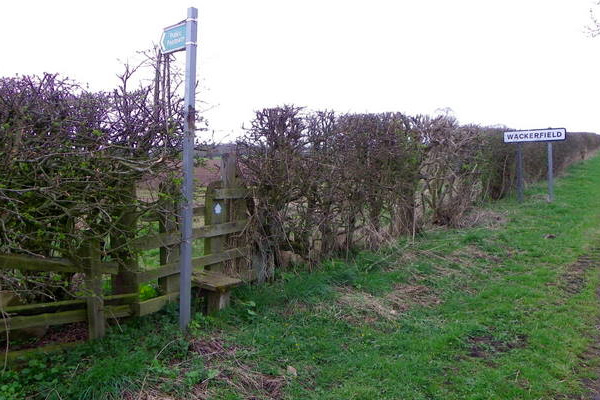
8. Wackerfield

Similarly to Cockfield this place name tends to conjure up a rather humorous albeit infantile image. Its factual origin is taken from the viking name Vakrfeld, which essentially means watching or wakeful field, which is much less rude and hilarious.

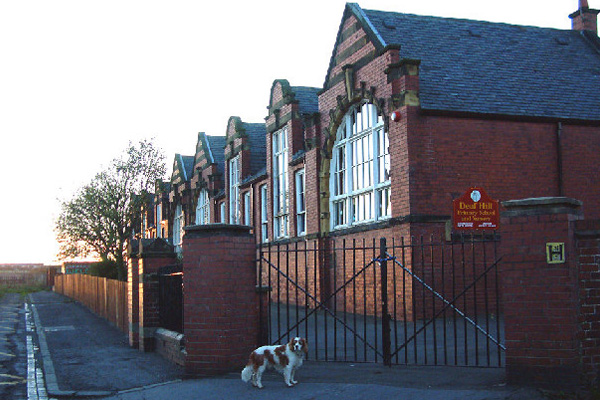
7. Deaf Hill

Located smack back next to the seemingly unproductive spot of Sleepy Hill is this little village of Deaf Hill, located just east of Trimdon Colliery. I SAID IT'S LOCATED JUST EAST OF TRIMDON COLLIERY! Oh, never mind! Anyway, there doesn't seem to any definitive explanation as to how the village acquired its name. Theories include it at one time being referred to as 'Death Hill' or derivative of such, either as a result of it gaining a morbid reputation, or due to it being a particularly baron or infertile stretch of land for farming.

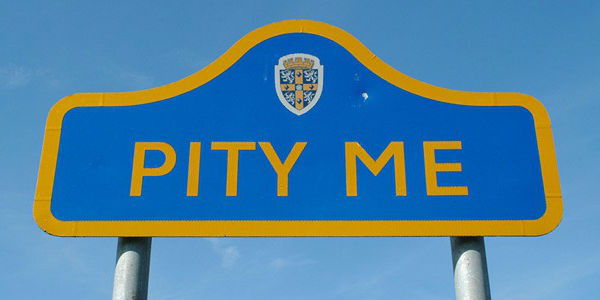
6. Pity Me

There are few people in the North East that haven't heard of this oddly named little suburb on the outskirts of Durham City. Oh the laughs that can be had with foreigners of the region when they see it for the first time, and subsequent jokes usually follow regarding the emotional state of its inhabitants. The origins of how it got its title are not entirely clear, with arguments ranging from it being a result of geographical characteristics, former land use, and even religious mythology.

5. Wallish Walls

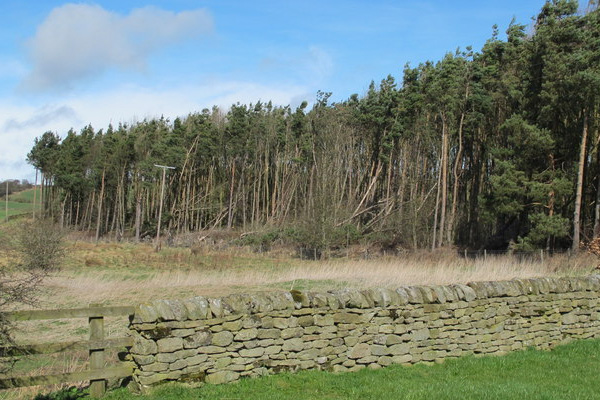
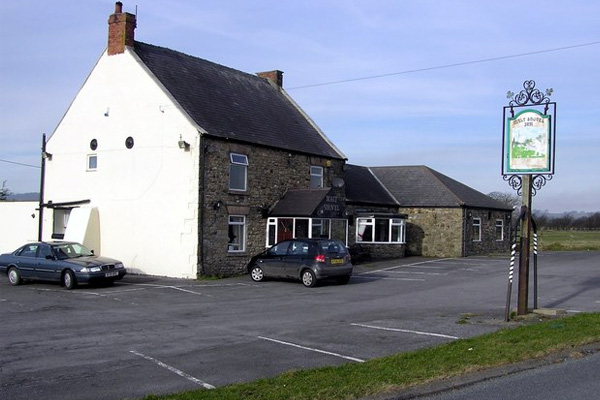
A name which always commands a double take when taking a trip up to Northumberland, Wallish Walls doesn't offer itself to any immediate solution as to how it came about. You could be forgiven for thinking that a visit would present you with the most wondrously quintessential looking wall you will ever see. The picture above showing specifically 'Wallish Wall' in Wallish Walls demonstrates this presumption is misplaced - to be honest that looks like a pretty standard stone wall to me. In actual fact part of the name - 'wal' to be precise - is thought to derive from the word 'Welsh' used by Anglo-Saxon invaders in regards to foreigners.

4. Wham

The funny little place was founded in the latter 20th century by a group of fanatical music fans, who were self professed as the ultimate aficionados on the all things George Michael. What an utterly life affirming explanation that would be, alas you may have correctly recognised this as being more than a little factually flawed. The town, which actually includes a 'High Wham' and 'Low Wham' is actually thought to derive its name from the Nordic word 'Hvammr' meaning a small hollow or opening located on steep ground. One that would have been utilised by famers to gain access to the other side of the incline.

3. Foggy Furze

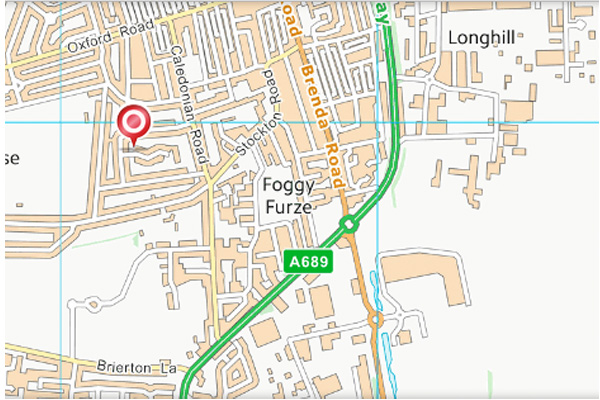
While sounding more like the birthplace of Fozzie Bear, Foggy Furze is actually the old name of a well established farm, which has since been swallowed up to become part of Hartlepool. Taking each word separately, Foggy while being the name attributed to low level mist or cloud, also refers to an area of land where particularly coarse or rough grass can be found. The old Nordic word for grass simply was 'fog'. The Furze part is thought to be from the old English word 'fyrs', which relates to a kind of native shrub similar for gorse or bramble.

2. No Place

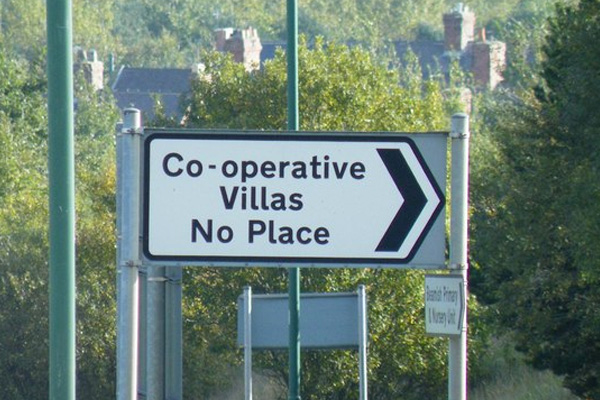
Oh the fun/infuriation that must be had when inhabitants of No Place have to give their address to someone; Caller - "Congratulations Sir we can confirm you have won the lottery. For verification purposes please could you provide me with your full address" Inhabitant - "Yes of course - I live in 1 Front Street, No Place" Caller - "Sir if you don't take me seriously I can't authorise your cheque" Inhabitant - "Really, I live in No Place" Caller - "Ok, I'm sorry I must have the wrong number" How this village between Stanley and Beamish quite got its name is not clear. It is thought that it could be derived from the original name of something similar to 'North Place' or 'Near Place'. If Derwentside Council got their way back in 1983 the name would have been lost forever, succeeded by a lot less obscure title of 'Co-operative Villas'. Following protests by residents the name was kept for the most part how it was, with many road signs now listing both 'No Place' and 'Co-operative Villas'.

1. Fanny Barks

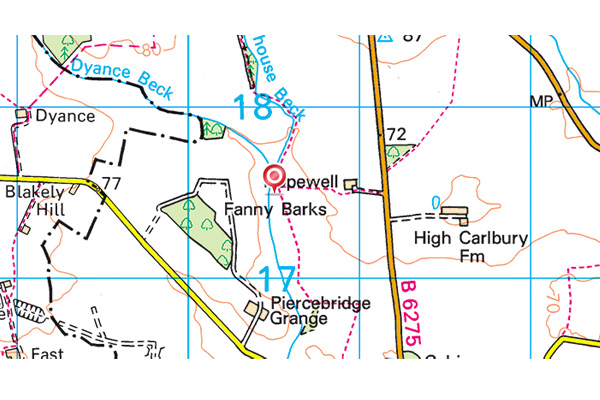
Try to read out the name of this small forest without chuckling. Go on.... see I knew you wouldn't be able to! Located close to Piercebridge in the south of the county this wood is perhaps one of the lesser known places on this list. I cannot find nor offer any corroborated origin story for how Fanny Barks got its name. Although needless to say it could be fun to speculate. Can you think of any strange place names close to you? Share in the comments section below.

Contributor

Dan Powell hasn't written a bio just yet, but if they had... it would appear here.