14 Real Life Heroes Who Have Changed The World
They are definitely super human.

Whenever you hear the word 'hero' you probably automatically put the word 'super' in front of it and pictures the Avengers beating up some alien things coming out of the sky over New York. These heroes of yours are always ridiculously good looking, they're built like a tank and they always have some distinctive outfit or cape which sets them apart from the rest of the group.
Your hero is perfect in every way; they can do no wrong, they always arrive on time, they look impeccable and they stick to a moral guideline which is built in to them. They become a somebody by saving 'ordinary' people on a daily basis and everyone wants to be like them. Everyone wants to be different. No one wants to be the Max Dillon's of the world where they feel like they don't exist and they're just another number instead of an actual human being.
Superheroes have set the standards pretty high because they're this ideal person who always puts others before themselves, they're good people right down to their bones and they will not think twice about giving their lives in order to save yours. But surely this type of person can't exist? Well, there have been a number of people throughout history whose actions have changed the world, whether that it was their intention or not, their actions and conviction in doing the right thing have made them heroes.
Unfortunately, the internet isn't big enough to write down the names of every single person who has made a difference, because despite how you sometimes feel, there is still some good left in this world. The people on this list are a true inspiration and it's their determination to do what is right that makes them a superhero in their own unique way.
14. Kyle Carpenter
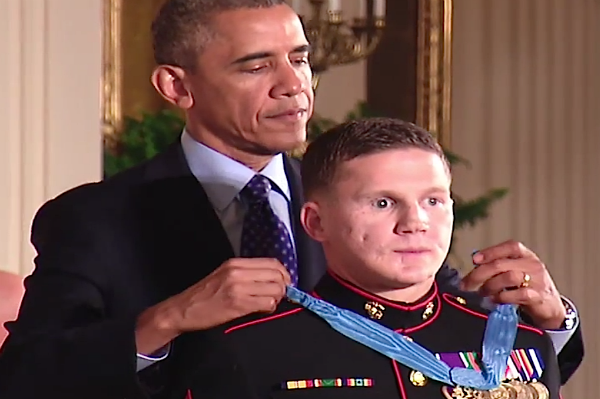
William Kyle Carpenter is the youngest living soldier to ever receive the Medal Of Honour. He received the prestigious award for his outstanding bravery whilst on a tour of Afghanistan. Carpenter shielded his friend from a hand grenade that was thrown onto the rooftop they were based on in November 2010. Both men survived thanks to Kyle's actions.
Carpenter was 21 at the time and throwing his body onto a live grenade resulted in him losing most of his teeth, his right eye, he shattered his jaw and broke his arm in a number of places. He says that he cannot remember the blast and as there were no eyewitnesses, doctors confirmed that his injuries were the result of his decision to throw himself on top of the grenade and shield his friend.
"I'm still here and kicking, and I have all of my limbs, so you'll never hear me complain."
After this, you can never complain about having a cold again.
13. Stephen Hawking
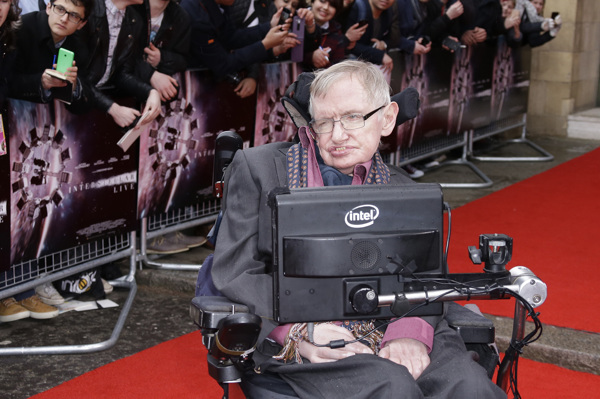
A man who has defied all physical, emotional and academic boundaries in his lifetime. Hawking suffers from amyotrophic lateral sclerosis, a motor neuron disease that has left him paralysed and people will mostly recognise him for the American, robotic sounding speech generating device which allows him to communicate.
Not only has his determination to defy the doctor's predictions of his two year life expectancy in 1963, but he has also dedicated his life to the world of academia. His book A Brief History Of Time discusses his own theories of cosmology and he is the director of Research at the Center for Theoretical Cosmology within the University of Cambridge.
Despite his disease which is a severe disadvantage not only for his personal life, but for his research too, he is still married with children and is continuing his research in order for us to better understand the world in its scientific form.
12. The Unknown Protester
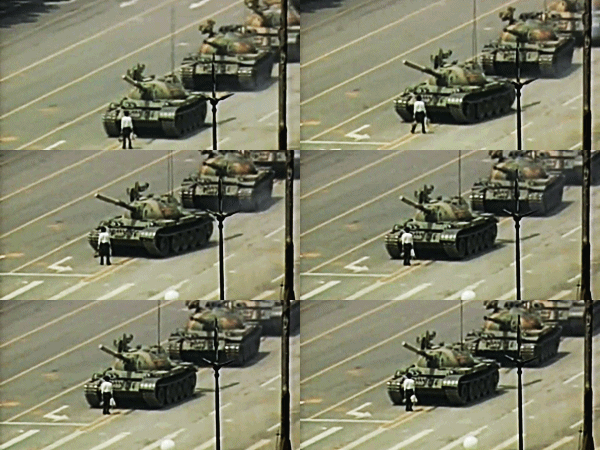
This man hasn't revealed himself so he is simply referred to as the Tank Man or the Unknown Protester. The Tank man temporarily stopped the progression of a column of tanks on the morning of June 5th 1989, armed only with two shopping bags that he carried in each hand. Despite the tanks trying to drive around him, he simply continues to step in front of their path in an attempt to stop them. Considering the man was carrying his shopping implies that he was on his way home and that this action wasn't planned.
This occurred on the day after that the Chinese government declared that they would violently crackdown on all Tiananmen protests and after speaking to one of the crew members of the tank, he quickly stands in their way as they once again try to manoeuvre around him. The man was later dragged away so that the tanks could move on their way but no one knows what happened to the Tank Man or even if he is still alive.
11. Candy Lightner
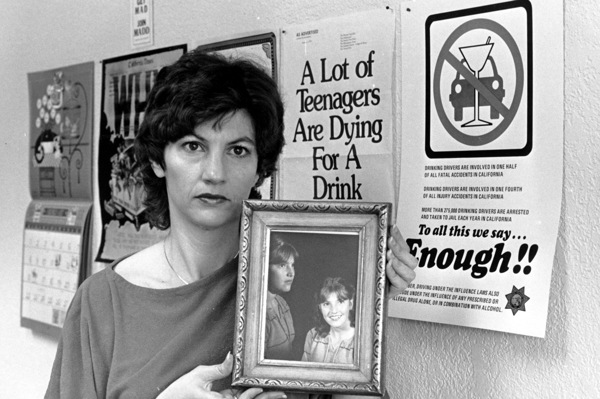
Candace Lynne Lightner is the reason that there are laws against drinking and driving. She is the organiser and president of MADD which stands for Mothers Against Drink Driving and the object for the organisation was to promote the dangers of driving whilst intoxicated. She was also trying to create a legislation that would make this act a criminal offence and how tougher sentences should be implemented.
This is the result of her thirteen year old daughter being killed by a truck driver who was driving whilst intoxicated. It was also a hit and run from a repeat offender. She received the President's Volunteer Action award for her humanitarian services to the public and she is later became the President of the We Save LIves campaign which campaigns against those who drive whilst drunk, are distracted, or are under the influence of drugs.
10. Rosa Parks
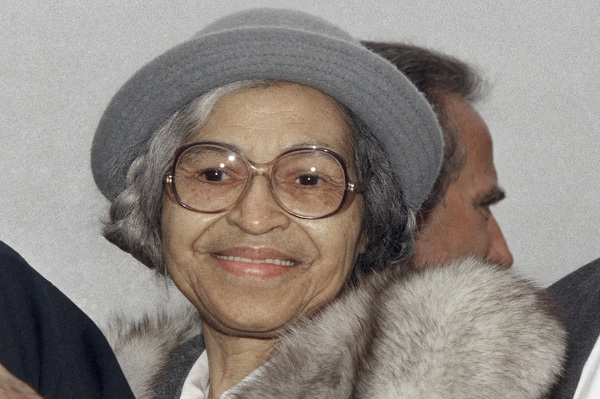
Rosa parks is famous for one thing, and that is refusing to give up her seat to a white man on a bus. Rosa was a African - American woman who is now known as the 'first lady of civil rights' and 'the mother of the freedom movement' for this act of defiance. It all began on December 1st 1955 when Rosa refused to listen to the bus driver who ordered her to give up her seat for a white commuter in the coloured section, as the white section was full up.
"People always say that I didn't give up my seat because I was tired, but that isn't true. I was not tired physically, or no more tired than I usually was at the end of a working day. I was not old, although some people have an image of me as being old then. I was forty-two. No, the only tired I was, was tired of giving in."
Rosa was arrested for this act of defiance, all because she had a different colour of skin. She became a symbol for of resistance against racial segregation and the Montgomery Bus Boycott and although in the long run, the fight of racial equality was achieved, Rosa's personal life became like a living hell. She lost her job and received death threats for years because of her involvement in fighting for civil rights.
9. Jane Addams
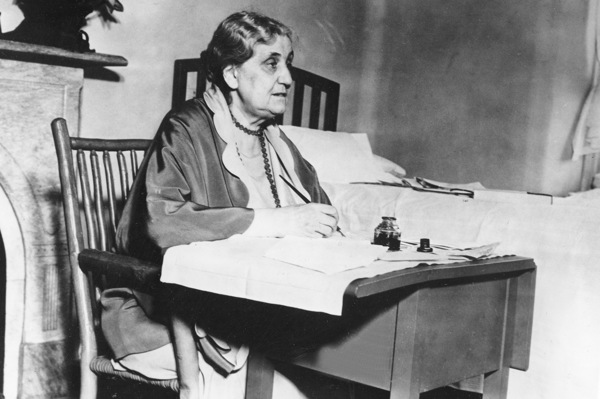
Not only was Addams a pioneer for women's suffrage, she was also determined to make world peace a reality in her lifetime. She was a committed pacifist and peace activist and even won the Nobel Peace Prize in 1931 for her efforts her humanitarian campaigns. She founded the Women's International League For Peace in 1919 and worked tirelessly for years to get governments to sign peace agreements.
Addams helped a lot of groups that were considered minorities at the time; women, children and immigrants. She worked hard to stop the exploitation of child labour, she helped the poor and she set up centres for immigrants. She taught women that they were valued more than their ability to be mothers and called on the middle class to use their time and wealth to help exercise their civic duties.
8. Joan Of Arc

Whether you believe her Divine rights and revelations or not, Joan Of Arc had a positive influence over the French army before her execution in 1431. It is claimed that Joan could hear voices in the form of saints in her head and she saw them clearly when they came to her to deliver her a message from God.
Whether the call from God was in fact a call from God at all, her involvement in the planning and execution of military decisions were positive, not only for morale but they were able to advance. For a girl who died at nineteen, her determination to do what she believed was right is admirable, and despite people thinking that she was a witch or the voices were that of the Devil, she had to gain their trust and in doing so, helped the King fight a war.
Bearing in mind that this was the daughter of a farmer who couldn't read or write and the King trusted her with her advice, you could say that she was sort of a big deal.
7. Emily Davison

In 1906, Davison joined the Women's Social And Political Union which was formed three years earlier by Emmeline Parkhurst. The members of this group were women who were determined to fight for women to have equal rights as men and created history in doing so.
Davison joined the group full time but became a violent and militant activist who went against the etiquette of WSPU and was arrested nine times and was force fed on a number of occasions. Whilst it isn't believed to have been a suicidal intention to the cause, Davison died in 1913 when she collided with the King's horse and was trampled to death.
It was most likely her intention to grab the bridle or attach the WSPU flag to the horse, but this wasn't the case and Davison sadly died due to her injuries. Whilst her life was a lot to give to the Suffragette cause, it's important to remember the lengths that Davison and your ancestors went through in order to simply have a say in how their nation is governed. Be sure to use your vote.
6. Mary Wollstonecraft
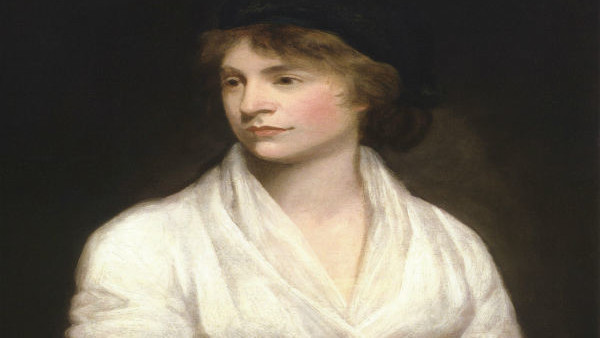
Wollstonecraft is potentially one of the first feminists to directly state how and why change needs to happen. Mary was an English writer, philosopher and a pioneer for women's rights. She wrote A Vindication Of The Rights Of Woman in 1792 and despite her clear understanding of how to socially address the problem of women living in a patriarchal environment, she was more famous for her relationships than her writing.
She argues that the only reason that women are seen as inferior to men is because of their lack of education (which wasn't allowed), and that both men and women should be treated as having a rational mind. She is considered one of the first feminists and her work is still considered important today.
5. Witold Pilecki
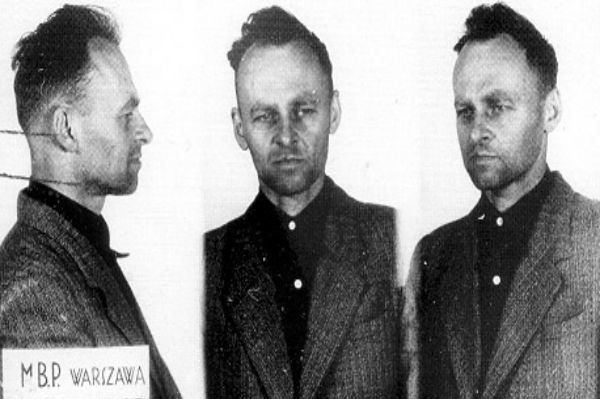
Pilecki experienced the true horrors of war...voluntarily. Witold Pilecki was a member of the Polish resistance and when these unknown camps started appearing all over Poland during the 1940s, he made it his mission to discover what secrets the Nazi party were hiding. He deliberately got himself arrested by the Nazis so that he could infiltrate one of the camps, Auschwitz.
He spent two and a half years in Auschwitz sending back his intelligence to the Polish government so that they were able to convince their allies that the concentration camps were death camps. He sent his intelligence through a radio that he built in the camp with smuggled parts. He later escaped and sent information to London where they assumed that the figures provided were clearly exaggerated. They did not believe that 5 million people were killed over 5 years at the camps.
His own country then sentenced him to death with charges of espionage and the illegal crossing of the borders under a false name. Poland killed their greatest war hero of all time but he was later rehabilitated and given a promotion to Colonel in 1990, 42 years after his execution.
4. William Wilberforce
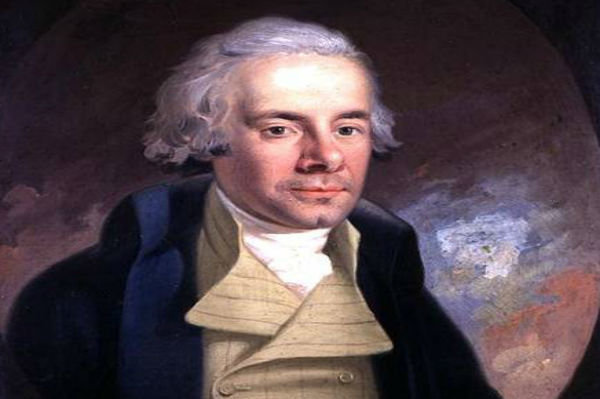
William Wilberforce was an English philanthropist and politician who actively fought against the abolishment of the slave trade. Britain initially became involved in the slave trade in the 16th Century and although the trade saw Britain being a superpower of the world, it came at a cost, and a moral one at that.
Slaves were used and treated worse than animals for manual labour and Wilberforce was one of the few people who saw this as being morally wrong. Wilberforce urged others to see that slavery was a national crime and it must be addressed and eradicated within society. It took him and a group of others years to show people how corrupt society had become and that these slaves were human beings too. The abolishment of slavery occurred in 1833 and Wilberforce died three days after hearing that the legislation has been passed.
3. William Shakespeare
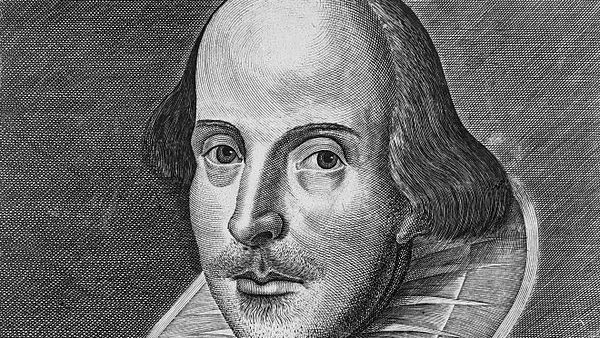
William Shakespeare is one of the world's most famous playwrights and his work has shaped and influenced the English language. What made Shakespeare's work stand the test of time was how well he was able to capture the true colours of humanity; he understood people and he broadcasted this knowledge to the entire world through his art.
He was an exceptional anthropologist and his plays and sonnets are basically revealing the true nature of humans. Whether it's jealousy or love, he is able to capture how these emotions drive someone and how it can affect themselves and others. He also created sayings that we still use today, and that's pretty impressive.
2. Oskar Schindler
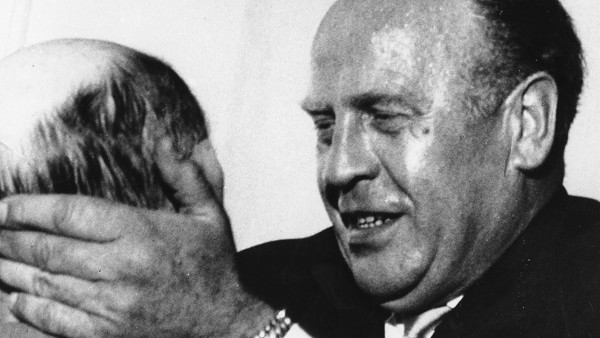
Oskar Schindler was a German industrialist who was part of the Nazi party and is credited for saving the lives of over one thousand Jewish people. He did this by employing them in his factories in Poland where he provided the army with enamel cookware and as time went on, he then bribed members of the Nazi party with money and gifts so that they would not harm his Jewish workers. Initially his business was set up in order to make him a wealthy man and he hired Jews because they were allocated a cheaper wage because of the Nazi regime which was implemented.
This however changed when Schindler learned of the devastating goings on inside the concentration camps, and he fought to protect as many Jewish people as he could. After the war, he was in danger of being arrested as a criminal of war and he was made bankrupt after spending all of his money on bribes and on his employees. He later survived on donations from Schindlerjuden (Schindler's Jews) sent from all over the world by the jews that he saved during the war.
1. Martin Luther King, Jr

Martin Luther King Jr is considered to be one of America's greatest orators and he was eventually assassinated because of his work in advancing the civil rights campaign. He was an activist and humanitarian, as well as a devout Christian who believed that he could change the world with non-violent protests; which he did. He organised marches, parades and campaigns against racial segregation and dedicated his life to overcoming this racist policy which the government held in place.
"I have a dream that one day on the red hills of Georgia, the sons of former slaves and the sons of former slave owners will be able to sit down together at the table of brotherhood... I have a dream that my four little children will one day live in a nation where they will not be judged by the colour of their skin but by the content of their character."
He was killed for his determination to bring justice to people who were judged and treated horribly because of the colour of their skin.
If you have any other heroes that you would like to give praise to, feel free to write in the thread below.