19 Mind-Blowing Facts You Didn't Know About Monopoly
Did you know the criminal in jail actually has a name?

There are certain things everybody knows about Monopoly. It's probably why anybody outside of The City knows anything of the geography of London, there's some important life lessons in there about being a landlord, and the only reason the current generation is aware of what thimbles and irons are.
It's kind of got a cursed reputation thanks to the amount of rainy Sunday afternoons it's spoilt, with many families banning it to the back of the cupboard or else children with short attention spans (thanks to MTV) (or whatever) can't actually make it through a whole game. The constant presence of the board game in almost every house throughout the land means it's not an object that often gets much attention. Which it should, because it's actually a lot more interesting than some people give it credit for.
From marathon games to the shortest possible amount of moves to win a game, the surprising origins of the board game to it's peculiar future, here are nineteen mind blowing facts about Monopoly.
19. You Can Play It With A Credit Card Now

Deciding on who should be the banker during a game of Monopoly has always been a strategic decision in itself, before even the first die has been cast. Do you go with the person who will almost certainly cream some off the top for themselves (and maybe cut you in), or do you go with the honourable player?
It's a moot issue now, since Parker Brothers introduced a version of the game that was based on the 70th anniversary edition, called the Electronic Banking Edition. It was totally paperless, instead relying on a credit card for each player.
18. It Was Originally Rejected For Having "52 Fundamental Errors"
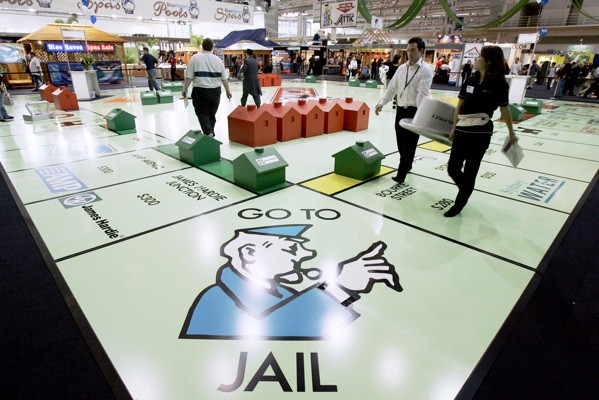
Seriously, people are crazy for Monopoly. It wasn't an immediate success by any stretch of the imagination, with the initial form of the game rejected for by Parker Brother for 52 fundamental errors including the game's length, theme and complexity.
Nowadays, though, more than a billion people have played the game around the world. It's currently produced in 47 languages and sold in 114 countries.
17. There Have Been Twenty Different Tokens
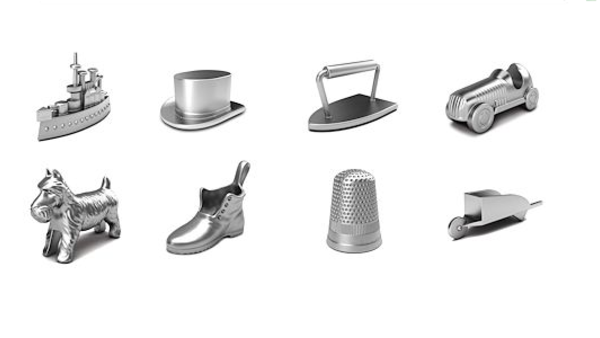
The first Monopoly pieces were made from materials found in creator Charles Darrow's home, with the shiny die-cast tokens being metal charms from the his nieces' charm bracelets.
The first proper game had an iron, purse, lantern, racecar, thimble, shoe, top hat, battleship, cannon and a rocking horse. Since then there have been twenty different player tokens including an elephant, purse, and a bag of money.
16. The Longest Game Ran For 70 Straight Days...
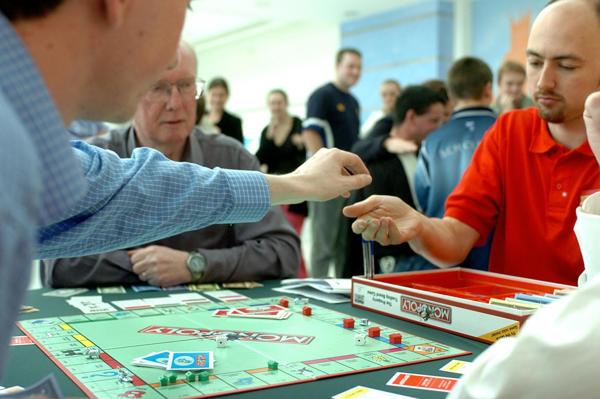
That's right, seventy days. That's 1680 hours. Those were some pretty determined players. There are also, surprisingly, statistics for the longest game of Monopoly played in a treehouse (286 hours), underground (100 hours), in a bath tub (99 hours) and upside down (36 hours). Weird locations seem to be a thing for record-breaking Monopoly games.
As well as being played underground and on a ceiling, it also kept the crew of the US nuclear submarine Seawolf entertained during the sixty days it was submerged.
15. ...But You Can Win A Game In 21 Seconds
On the other side of the coin, it's possible to complete a game of Monopoly in equally record-breaking time. Provided you've only got two players around the board, anyway. The shortest possible game requires only four turns and nine rolls of the dice, according to sociology professor Daniel J Myers. Well, it can happen, anyway.
It involves buying all the houses on one stretch and then the other player getting the Chance card which sends them to those houses, which would render them bankrupt with the amount they had to pay. Which, statistically speaking, would happen once every 253,899,891,671,040 games.
14. The Most Expensive Set Cost $2 Million
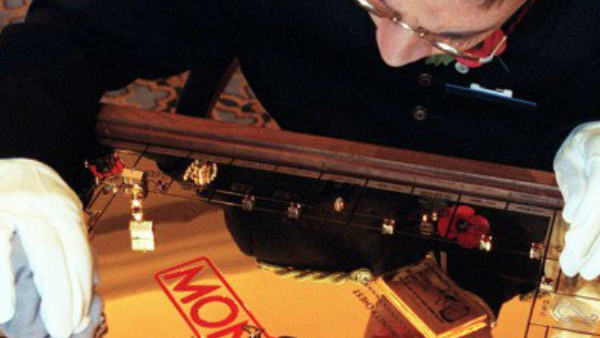
Some people are content playing with a Monopoly board bought from a car boot sale, with half the tokens missing and replaced with office equipment, the box taped together, the rules long since lost so nobody can decide on what's supposed to be done with that darned FREE PARKING space.
Not so Sidney Mobell. The San Francisco jeweler created the most expensive version of Monopoly in existence in 1998, including a full-size 23k gold-plated board whilst the tokens, hotels, houses, and dice done in solid 18k yellow gold with diamonds, rubies and sapphires. It was pricey.
13. There's A Monopoly Championship
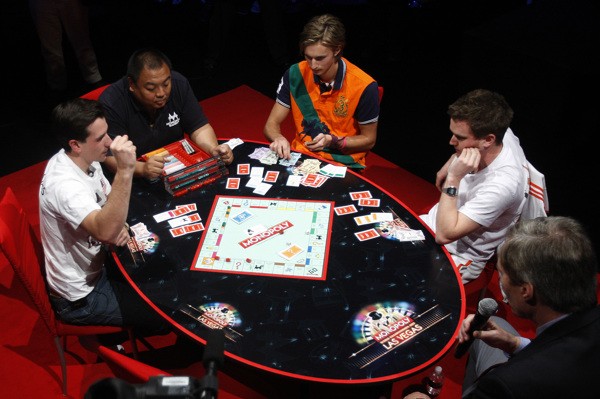
And it takes place every year, no less. In fact, the Monopoly World Championships have been played every year since 1973, with the top prize is $20,580. It's actually a whole thing, with regional qualifiers and everything, as if it was a proper sport or something. Which it...sort of is?
It varies from country to country and year to year, but right now to qualify you arerequired to get 80% correct on a 20-question quiz that tested your knowledge of Monopoly strategy and history, submit an essay on the game, and then you could play through the regional competitions before jetting to Las Vegas for the final.
12. There Are Over 300 Different Versions...
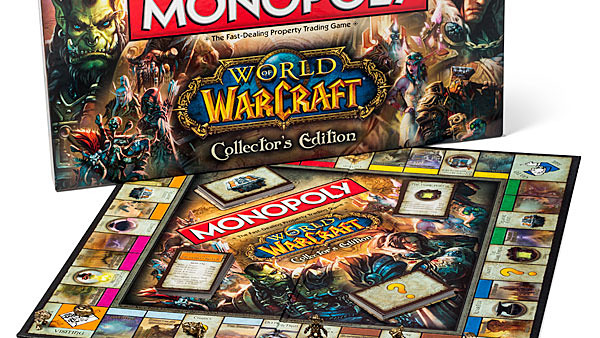
People love Monopoly. But even more so, people love playing alternate versions of Monopoly. To date more than 300 licensed versions have been produced, with themes varying from sports to TV shows and movies and different locations.
Monopoly Junior hit the scene in 1990 but then there's also Sherlock Monopoly, Adventure Time Monopoly, a Monopoly for basically any town in existence, including two incredibly obscure Wisconsin cities that also have their own officially licensed versions: Fox Cities and Manitowoc.
11. ...Including A Chocolate One
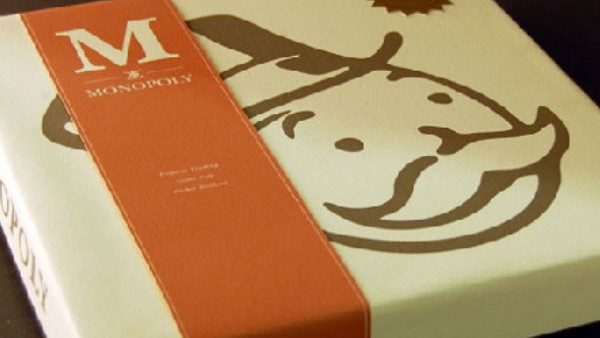
If you want a less permanent alternate version of the game, well, you're out of luck. If you'd been around in 1978 and were particularly well off, meanwhile, you could've sent away for a $599.99 edition from the Neiman Marcus Christmas catalogue. Which was made out of chocolate.
Probably not a great addition to the family cache of board games, admittedly, and also a pretty crummy investment. Because, you know, it would melt pretty quickly. It would also be unplayable, since it was made entirely out of chocolate.
The board, the tokens, the money, the cards...
10. The Policeman And Criminal Have Names...

Yes, surprisingly, there is some back story to the characters on the Monopoly board. Besides just being colourful illustrations, all of the people who appear amongst the properties actually have names and histories. Very involved interpersonal histories, in fact.
The guy stuck behind bars in jail is called Jake The Jailbird, and who put him there? Why, it was the rozzer who points players to go directly to jail, whose name is Officer Edgar Mallory.
Which is far less fanciful than Jake The Jailbird. But also more realistic. Sort of.
9. ...As Does The Monopoly Man
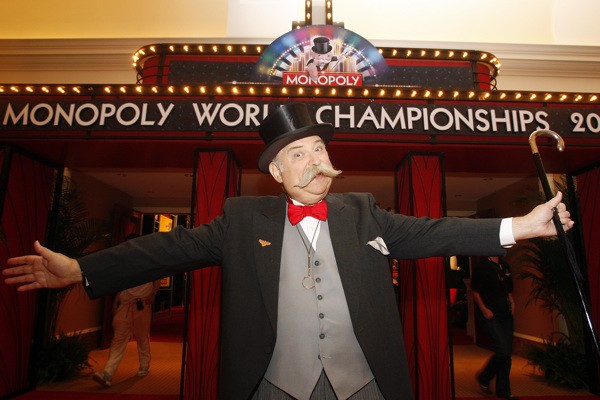
You probably just know that monocled gentleman with the coat tails and the top hat as the Monopoly Man, but he does have an actual, official title in the same manner as the policeman and the jailbird. Originally, that name was the somewhat unimaginative Rich Uncle Pennybags.
As time has gone by, they've become less enamoured with that title despite it being pretty accurate and sticking it to the man and as a result of thousands of dollars spent on focus tests, re-branding experts and marketing, renamed him...Mr Monopoly.
8. The McDonald's Monopoly Game Was A Scam

No doubt you've seen the Monopoly promotions McDonald's have had over the years, where each item of fast food you buy is accompanied by a peel-off-sticker that includes a prize in the form of a location on the board, or...it comes with nothing, and you feel a bit ill for eating all those Big Macs.
You needed to collect all the properties to get the ultimate prize of $1,000,000. Except nobody ever managed to get that prize: because the game was rigged.
Turns out Simon Marketing, the group who put them together, ran a scam where they'd steal the best game pieces, give them to friends or family members, then split the money. Oops.
7. More Monopoly Money Is Printed Per Year Than Real Money
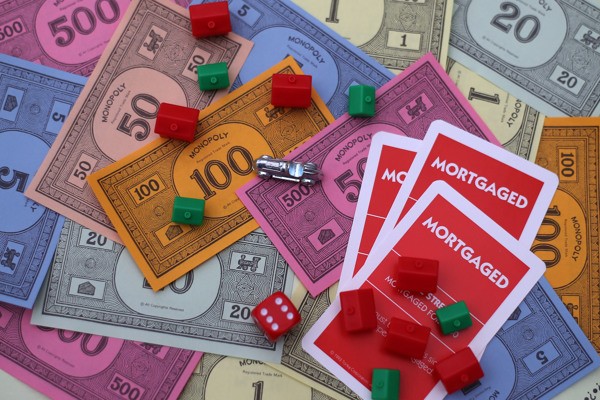
For real though, Parker Brothers actually produce more currency per year than the US mint manages to. Which implies that the economy in Monopoly world is in far better shape than in the real world, in which case we should probably all move in with and friends.
The company says it prints $30 billion in Monopoly money every year. The US Bureau Of Engraving And Printing, meanwhile, prints something like $500 million a year.
New money, anyway, because the same bureau prints a lot a year to replace crummy old money. Yes, they literally throw money away. Also a good fact!
6. It Was Used To Smuggle Stuff To POWs
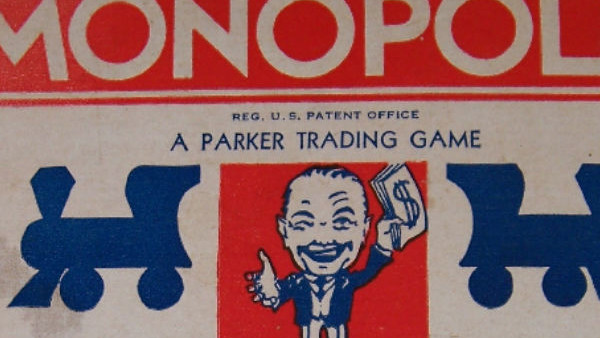
It's true! In fact, there's a very long and involved history about how Parker Brothers expanded their empire into the UK in the run up to the Second World War, with the franchised company Waddingtons eventually being called upon by the British government in order to help with the war effort.
Specifically, a ultra-secret section of the secret service was in charge of getting tools for break outs to prisoners of war behind enemy lines. One of their bright ideas? Sending cheap Monopoly sets with a map, a compass, and food in concentrated form.
5. There's An Anti-Monopoly
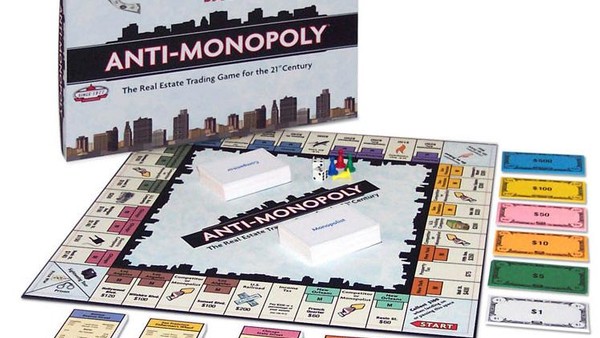
Made by San Francisco State University Professor Ralph Anspach in response to Monopoly, the game was originally called Bust The Trust but later changed to Anti-Monopoly. Because it was designed to be exactly that, with Anspach wishing to balance out the "lessons" taught by the mainstream game.
Anti-Monopoly starts with the entire board already owned by the bank, with the aim being for players as federal case workers to bring indictments against each monopolized business in an attempt to return the state of the board to a free market system.
4. Ridley Scott Has Been Working On A Movie Adaptation For Years
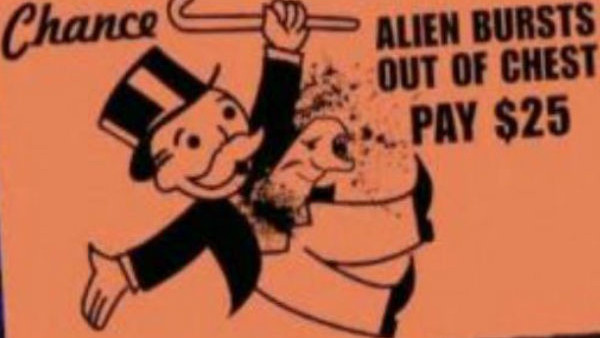
Because the world is insane and people weren't all that impressed with Exodus: Gods And Kings, one of Ridley Scott's upcoming film projects is apparently a big screen adaptation of Monopoly.
How exactly do you bring a narrative to a board game? Ask the makers of that Battleship film that got made! Or don't, because that film was terrible, and barely had a story.
Apparently Ridley Scott's treatment is a comedy thriller that might end up starring both both Kirsten Dunst and Scarlett Johansson. Possibly wearing top hats and monocles.
3. Originally It Was Open Source...
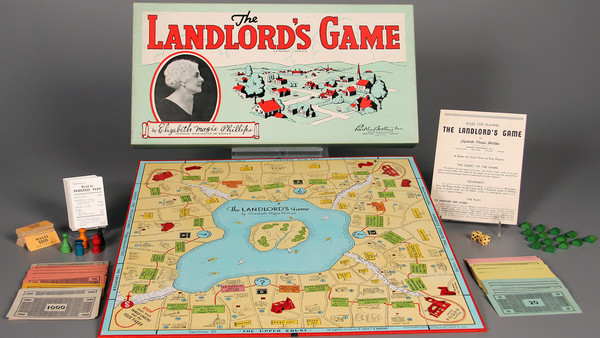
Whilst it was Charles Darrow who sold the rights to his Monopoly design to the Parker Brothers, he didn't actually come up with the game. Originally it was called The Landlord's Game, and it was developed by a Quaker and economist Elizabeth Magie.
The Landlord's Game was patented but it was not taken up by a manufacturer until 1910. In the meantime Magie made her own home made versions and widely disseminated the rules and designs through friends and family to spread the good word. About monopolies.
2. ...Until Parker Brothers Monopolised It

Charles Darrow wasn't the first to try and develop his own version of The Landlord's Game. Magie's educational board game was mostly self-published, meaning that pretty much anyone could get away with making variations on that original theme. It's just Darrow was the most successful.
In fact, during the early 20th century there were dozens of different takes on The Landlord's Game. After he ironed out some of the kinks, Darrow sold the rights to his own rules to Parker Brothers, who began publishing their game in 1935.
Having properly patented it and becoming crazy popular, they effectively monopolised the game.
1. It Was Designed To Inform About The Dangers Of Monopolies
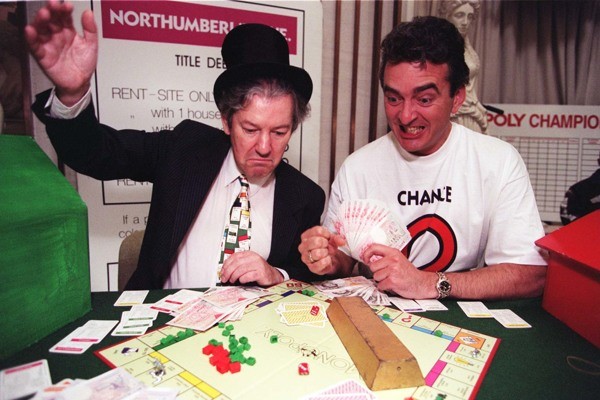
Rather ironically, the Parker Brothers buying the exclusive rights to produce the game off of Charles Darrow was kind of a monopoly in itself. Which is especially ironic when you consider Elizabeth Magie's The Landlord's Game was designed to warn against the dangers of real-life monopolies. It wasn't supposed to be fun at all. It was supposed to be educational.
Magie was a follower of the economist Henry George, and designed the game to be a "practical demonstration of the present system of land grabbing with all its usual outcomes and consequences". She wanted to show how rents enrich property owners and impoverish tenants.
Instead, it turned friendly people into crazy capitalists and divided families. Where did it all go wrong?