20 Mind-Blowing Facts About The London Underground
Mind the gap... and the mice.
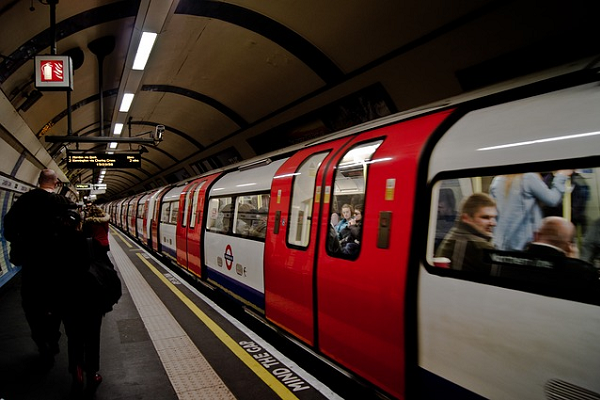
20. Trains Travel 43 Million Miles Annually
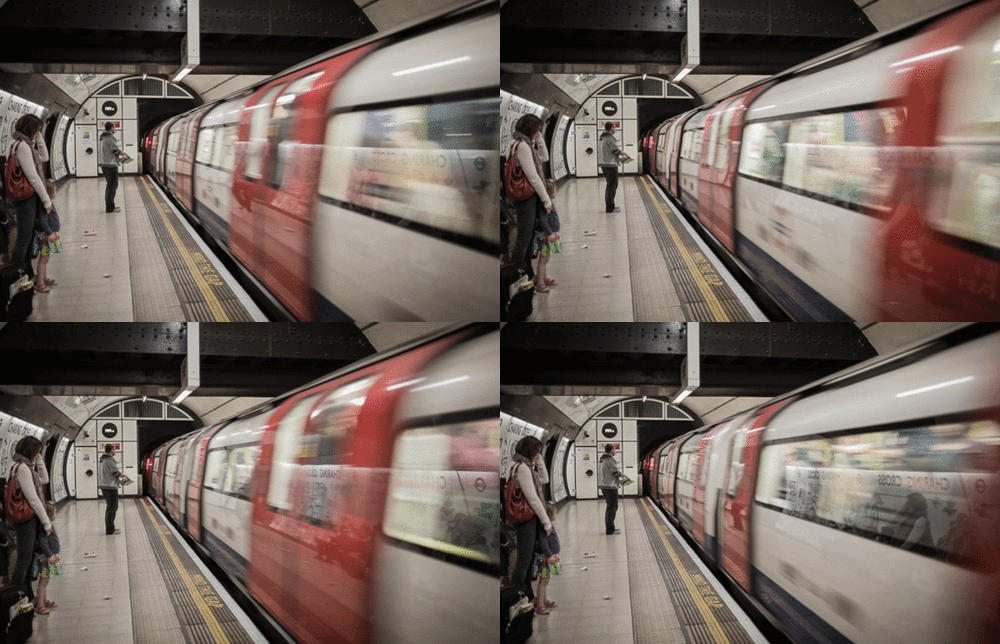
19. The Stations Lines Lie About The Number Of Steps
Most tube stations have stairs back to the surface but you'll rarely use them. After all, the stations also have lifts and escalators and you're no chump. You're not going to waste your time with energy-expending walking when you can be carried up by a machine. But when every so often you get impatient with the queues and decide to take the old fashioned route, there are helpful signs telling you exactly how many steps there are in each staircase. Except...they don't. These signs are notoriously inaccurate- Belsize Park claims to have 219 steps, for example, but a quick count tells us it's actually 189. Hard to say why no one has fixed these discrepancies but it's an A+ troll job by Transport For London.18. The Tube Was Invaluable In World War Two
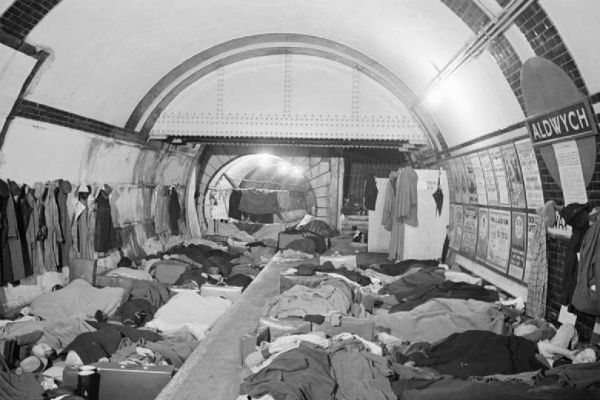
17. Eisenhower Camped Out In The Underground
And it wasn't just the English who benefited from the underground systems during the war. American General Eisenhower (later President Eisenhower) operated out of a a bunker in Goodge Street station. It was said to be where he did a large portion of his planning of the D-Day Normandy landings and subsequent invasions. The bunker ceased being used by the army in the 1950s but has been renamed The Eisenhower Centre and is used to store relevant archive documents and videos. One access point is still visible on Chenies Street, around the corner from the station entrance.16. The Very Long Escalator At Angel
15. Two Babies Have Been Born On The Tube
There are signs on the tube warning that if you feel ill during your journey, you shouldn't pull the emergency stop but wait until arriving at the next station before receiving help. What these signs mostly serve to do is instil horror in passengers by making them imagine how awful it is being sick on a speeding subterranean metal box. Spare a thought, then, for the two women who have given birth in the Underground system. The first was in 1924 and was in a tube carriage at the Bakerloo line section of Elephant & Castle. The second was in 2009 on a platform at Kingsbury station, Jubilee line. Both mothers and babies survived the surely traumatic experience.14. Covent Garden To Leicester Square Is A Waste Of Money

13. The Green Park Transfer Is A Nightmare
12. The Circle Line Has Always Been A Joke
Let's be real here: the Circle line is kind of a joke. It's the most confusing of the many extremely confusing tube lines, it seems to be hit with more signal failures than any other line and even when it is working, it is rarely the line of choice for commuters. It's also not a line that stands on its own two feet, preferring to piggyback on the District, Hammersmith & City and Metropolitan lines' glory. The reason for this confusion is that when the Circle line opened, it was run by different companies in each direction, with the Metropolitan company providing clockwise trains and the District company providing counter-clockwise. So if you find the Circle line baffling now, imagine the confusion when it was operated by two organisations who charged different amounts for their journeys.11. There's A Plague Pit Under Aldgate

10. There's Dead Bodies Surrounding The Piccadilly Line
9. The Longest Journey Is On The Central Line
8. Hampstead Is The Deepest Station
Despite being called the London Underground, more than half of the system is in fact above ground (some of it a long way above ground- Amersham station is 147 metres above sea level). However, the feeling of descending into the bowels of the earth will be familiar to most Londoners. It'll be particularly familiar to any passengers who frequent Hampstead station, which is the deepest one on the system at 58.m metres below the surface. It's amazing there's not been an epidemic of the bends in north London.7. There Are 49 "Ghost" Stations

6. Hitchcock Has His Own Station
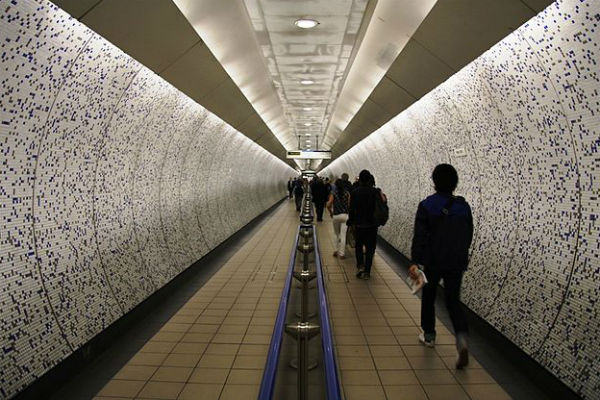
Though he made his career in America, the director Alfred Hitchcock was born in Leytonstone in east London in 1899. He built his early career in the city before being spotted by a Hollywood studio and heading over the ocean to thrill a wider audience. In honour of their famous once-resident, Leytonstone tube station, on the Central line, features a stunning series of mosaics inspired by Hitchcock's films. They were unveiled in 2001 to commemorate the centenary of his birth (suggesting that they either took longer than expected to complete or someone at TFL isn't great at maths).5. It Is Sometimes Faster To Exit And Re-Enter A Station
4. There Are A Lot Of Mice Down There

3. East Finchley Is Adorable
A lot of the tube stations have little touches relating to their names. One entrance to Baker Street is guarded by a statue of Sherlock Holmes, the fictional detective who made his home there. The walls of Archway station are patterned with small arches. One of the sweetest examples is at East Finchley station, which is in zone 3 in north London. The tiles throughout the building are lined with black and yellow. This unusual colour scheme was chosen to mimic the finch, which is a (usually) black and yellow bird. The station also features a statue of an archer, signifying the area's historical importance for hunters.2. The Tube Map Is Not At All To Scale

1. The Time TFL Did A Nice Thing For A Widow