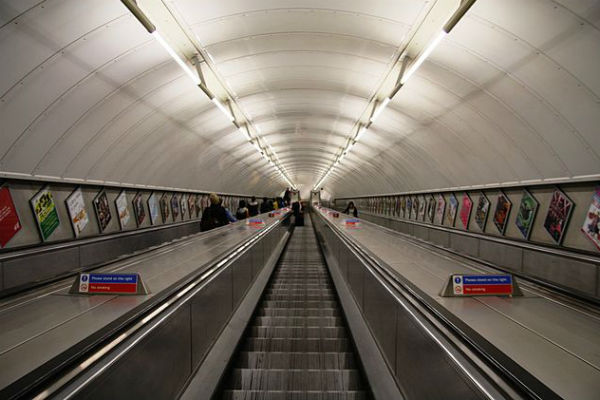
20 Mind-Blowing Facts About The London Underground

Mind the gap... and the mice.
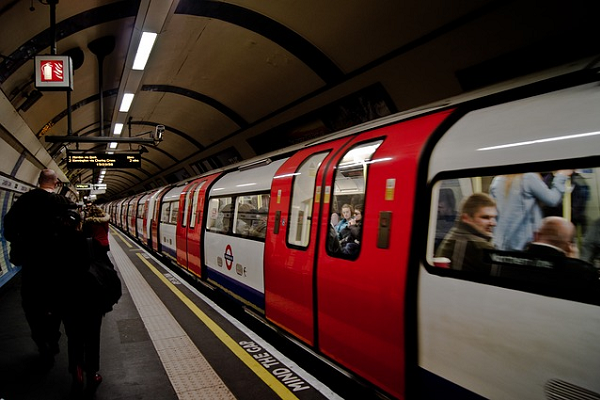
The London Underground, also known simply as the Tube, is one of the most famous transport systems in the world and was the first ever rapid transit system. Since opening (in a very limited form) in 1863, it has expanded to feature 11 lines, 270 stations and over 1 billion passengers a year. It is one of the busiest metro rail systems in the world and one of the most iconic and recognisable parts of London life. Despite its rich and proud history, commuters can find catching the tube more of a necessary nightmare than a pleasurable experience. It's much too hot all year round, meaning that you'll stick to the seats in summer and sweat through your coat in winter. Unless you live at the end of the line, you're unlikely to ever get a seat during peak hour and so will start many of your days pressed into a stranger's armpit. When doing battle with other commuters and (especially) tourists and their bags, it can be hard to remember that the tube is a fascinating system with a million little quirks and idiosyncrasies. So next time you feel frustrated, bring to mind a few of these brilliant facts about the Underground.

20. Trains Travel 43 Million Miles Annually
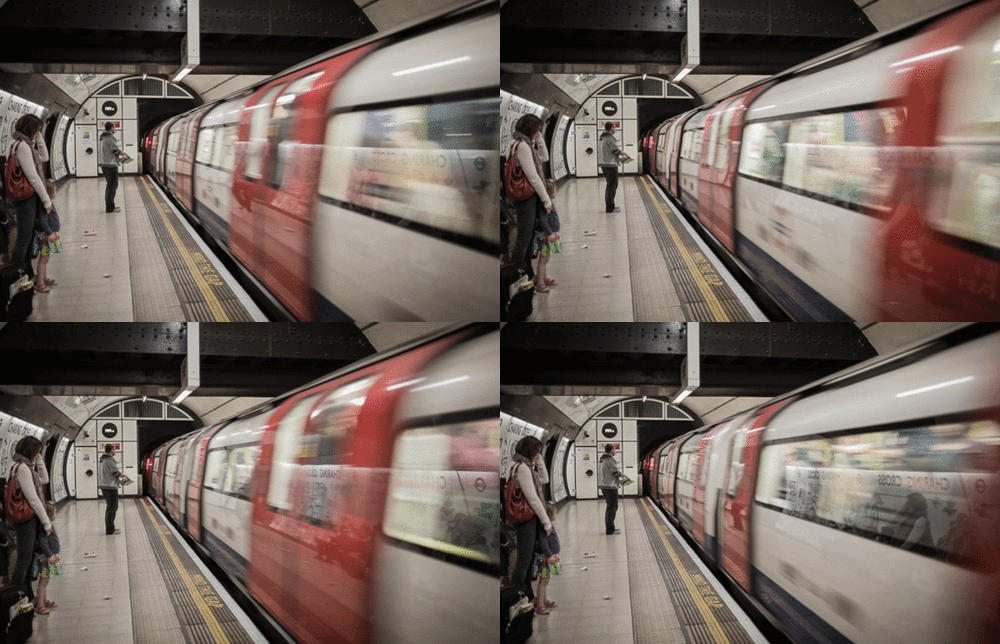
The Proclaimers' promise to walk 500 miles (and 500 more so...1000 miles) and Savage Garden will fly you to the moon and back but both those offers pale in comparison to what the tube can do for you. Trains on the Underground travel 43 000 000 miles annually. MILLION! That distance will take you around the world almost 2000 times, halfway to the sun and on 9 return trips to the moon. It kind of seems a shame you're just using it to go back and forth between Brixton and Oxford Circus, doesn't it?

19. The Stations Lines Lie About The Number Of Steps

Most tube stations have stairs back to the surface but you'll rarely use them. After all, the stations also have lifts and escalators and you're no chump. You're not going to waste your time with energy-expending walking when you can be carried up by a machine. But when every so often you get impatient with the queues and decide to take the old fashioned route, there are helpful signs telling you exactly how many steps there are in each staircase. Except...they don't. These signs are notoriously inaccurate- Belsize Park claims to have 219 steps, for example, but a quick count tells us it's actually 189. Hard to say why no one has fixed these discrepancies but it's an A+ troll job by Transport For London.

18. The Tube Was Invaluable In World War Two
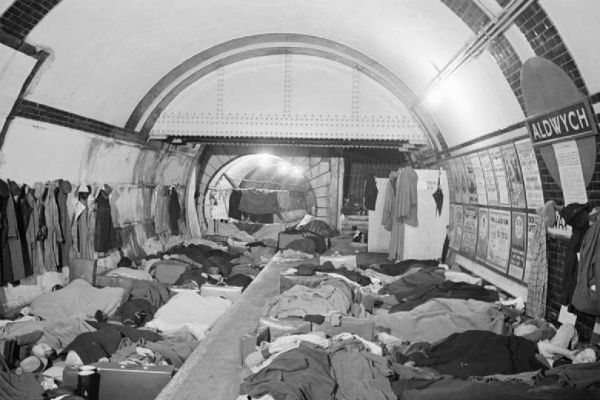
While these days we're pretty grateful to the tube if it manages not to breakdown or unexpectedly boot us off at Hammersmith, it has historically been a literal life saver. During World War Two, trains were suspended as thousands of Londoners began to use tube stations and tunnels as air raid shelters. Though the government was initially against the idea, they eventually caved and provided bunks and amenities. They also periodically used the tunnels for government offices, war rooms and, on one part of the Central line, an aircraft factory. In addition to shelters, the tube was used for rescues and evacuations. It is estimated that over 200 000 children were sent out of the city via tube lines over the course of the war.

17. Eisenhower Camped Out In The Underground

And it wasn't just the English who benefited from the underground systems during the war. American General Eisenhower (later President Eisenhower) operated out of a a bunker in Goodge Street station. It was said to be where he did a large portion of his planning of the D-Day Normandy landings and subsequent invasions. The bunker ceased being used by the army in the 1950s but has been renamed The Eisenhower Centre and is used to store relevant archive documents and videos. One access point is still visible on Chenies Street, around the corner from the station entrance.

16. The Very Long Escalator At Angel

Angel station is not one to frequent if you suffer from vertigo or have a particularly short attention span. The Northern line station boasts the longest escalator on the Underground network, stretching 60 metres (or about 200 feet) and with a vertical rise of 27 metres (89 feet). If you've entered or exited this station you'll probably feel like this is the longest escalator in the world but in fact, it's only the 4th longest in Europe. Still, the good news is that there is often a man selling roasted chestnuts at the top of the station, so at least it's a pleasant smelling journey.

15. Two Babies Have Been Born On The Tube

There are signs on the tube warning that if you feel ill during your journey, you shouldn't pull the emergency stop but wait until arriving at the next station before receiving help. What these signs mostly serve to do is instil horror in passengers by making them imagine how awful it is being sick on a speeding subterranean metal box. Spare a thought, then, for the two women who have given birth in the Underground system. The first was in 1924 and was in a tube carriage at the Bakerloo line section of Elephant & Castle. The second was in 2009 on a platform at Kingsbury station, Jubilee line. Both mothers and babies survived the surely traumatic experience.

14. Covent Garden To Leicester Square Is A Waste Of Money

One of the more popular journeys on the Underground is from Covent Garden to Leicester Square on the Piccadilly line. Both stations sit in the middle of some of London's biggest tourist attractions so are favoured by visitors to the city. However, using the tube to get between these stations is, frankly, absurd. Covent Garden to Leicester Square is the shortest distance between tube stations on any line. The journey itself takes a piddling 45 seconds but getting in and out of those stations is such a nightmare that passengers will be looking at something in the region of 8 minutes for the entire journey. By contrast, walking distance between the stations is (maximum) 5 minutes. And the cost of this inconvenient journey? £4.80. Ouch.

13. The Green Park Transfer Is A Nightmare
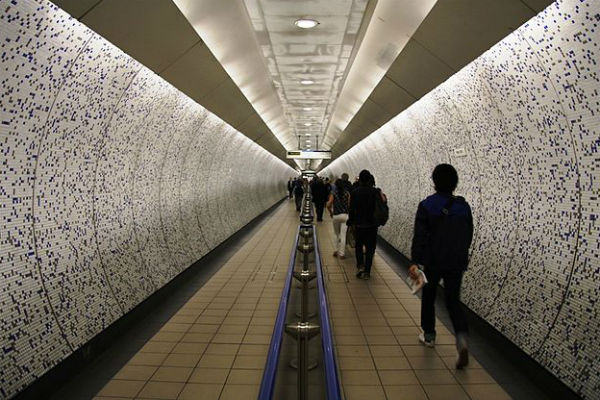
The walking distance between Covent Garden and Leicester Square stations is so short that it's dwarfed by distances within stations. Yes, it is possible to spend more than 5 minutes simply trying to change lines at some of London's largest interchanges, particularly during rush hour. One of the most time-sucking stations is Green Park which is served by the Victoria, Piccadilly and Jubilee lines. Originally intended only for the Piccadilly line, the station was forced to expand into the monstrous, bloated building it now is when it added the other two lines. The walk between the Piccadilly and Jubilee lines is the longest on the network and is significantly greater in distance than Covent Garden to Leicester Square.

12. The Circle Line Has Always Been A Joke

Let's be real here: the Circle line is kind of a joke. It's the most confusing of the many extremely confusing tube lines, it seems to be hit with more signal failures than any other line and even when it is working, it is rarely the line of choice for commuters. It's also not a line that stands on its own two feet, preferring to piggyback on the District, Hammersmith & City and Metropolitan lines' glory. The reason for this confusion is that when the Circle line opened, it was run by different companies in each direction, with the Metropolitan company providing clockwise trains and the District company providing counter-clockwise. So if you find the Circle line baffling now, imagine the confusion when it was operated by two organisations who charged different amounts for their journeys.

11. There's A Plague Pit Under Aldgate

If you needed further convincing that the Circle line is cursed, consider the case of Aldgate station, which is the only station in London to have platforms dedicated just to the Circle line (it also contains Metropolitan line platforms). This station proves that nothing good comes from an association with the Circle. If you've ever felt a little shiver as you enter this Zone 1 station, it may be because it is built on the site of a "plague pit", one of the mass graves used for victims of the Bubonic Plague that struck London in the 17th century. There are an estimated 1000 bodies buried under Aldgate so tread lightly on your way into town.

10. There's Dead Bodies Surrounding The Piccadilly Line
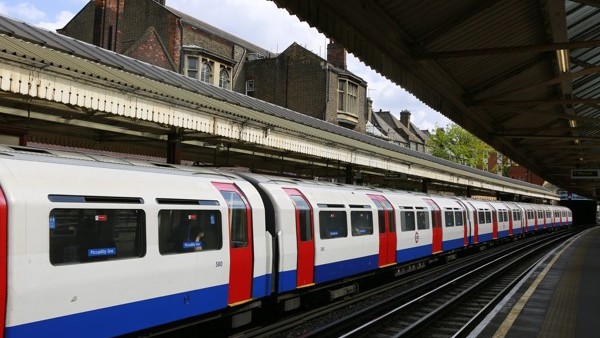
While we're on the topic of Underground horror stories, have you ever noticed that the Piccadilly line makes an odd detour heading east out of South Kensington? The fairly straight line shifts dramatically as it heads through the tunnel for one very good reason. The intended route for the line- which would take it through Hyde Park- was found to be unusable as there were so many bodies buried in the area that the ground was filled with skeletons, making construction impossible. So whenever you head through the tunnel, there are bones pressed against the walls on the other side. Something to keep in mind tomorrow morning.

9. The Longest Journey Is On The Central Line
Though lines such as Victoria and Waterloo & City focus more on serving central London, some are set up to connect the farthest reaches of the city, allowing passengers to travel great distances without ever changing tubes. The longest of these journeys is on the Central line, from West Ruislip (zone 6 out west) to Epping (zone 6 east- technically in Essex, not London). This trip covers 34.1 miles and takes approximately 90 minutes. Fortunately a fair whack of the Central line is above ground so it's not too grim a trip.

8. Hampstead Is The Deepest Station

Despite being called the London Underground, more than half of the system is in fact above ground (some of it a long way above ground- Amersham station is 147 metres above sea level). However, the feeling of descending into the bowels of the earth will be familiar to most Londoners. It'll be particularly familiar to any passengers who frequent Hampstead station, which is the deepest one on the system at 58.m metres below the surface. It's amazing there's not been an epidemic of the bends in north London.

7. There Are 49 "Ghost" Stations

Quite apart from the probably-literally-haunted stations (see points 11 and 10), there are no fewer than 49 disused or "ghost" stations scattered throughout the Underground. Most were closed due to low usage or line rerouting and several have gone on to have non-transport related purposes. Several were used as part of the air raid shelter network previously mentioned. A couple are still owned by the army though are primarily used for storage. Perhaps most interesting is Aldwych station, which housed valuable antiquities during the war (including the Elgin Marbles) and has since been used as a set by a number of films, television shows and music videos.

6. Hitchcock Has His Own Station

Though he made his career in America, the director Alfred Hitchcock was born in Leytonstone in east London in 1899. He built his early career in the city before being spotted by a Hollywood studio and heading over the ocean to thrill a wider audience. In honour of their famous once-resident, Leytonstone tube station, on the Central line, features a stunning series of mosaics inspired by Hitchcock's films. They were unveiled in 2001 to commemorate the centenary of his birth (suggesting that they either took longer than expected to complete or someone at TFL isn't great at maths).

5. It Is Sometimes Faster To Exit And Re-Enter A Station
Spend any amount of time talking to London commuters and they'll start spilling their conspiracy theories and "tubehacks" for easier commutes. They'll tell you about the best carriage to get on to ensure you get a seat and which stations to never, ever change at (including Green Park, as explained in point 13). They'll also tell you feverishly that in some cases, it is easier to exit the station entirely and reenter at a different point than to change between lines inside the station. Though TFL won't confirm this (as it ruins their congestion-flow-planning), anecdotal research suggests that the stations most suited to the out-then-straight-back-in approach are King's Cross, Waterloo and Bank.

4. There Are A Lot Of Mice Down There

Up to 4 million passenger journeys take place on the tube every day. Well, around 4 million human passenger journeys. There's also a few thousand dogs, the occasional cat in a carrier, birds, ferrets...and mice. So many mice. It is currently estimated that there are half a million mice living and travelling around in the London Underground system. At present, it's not unusual to catch a glimpse of them running across the tracks while you wait for your train but experts suggest they may be in for a rough future. With the introduction of the night tube, several lines which had formerly been safe sleep-zones for the rodents will now be running all night, which will disrupt their patterns significantly.

3. East Finchley Is Adorable

A lot of the tube stations have little touches relating to their names. One entrance to Baker Street is guarded by a statue of Sherlock Holmes, the fictional detective who made his home there. The walls of Archway station are patterned with small arches. One of the sweetest examples is at East Finchley station, which is in zone 3 in north London. The tiles throughout the building are lined with black and yellow. This unusual colour scheme was chosen to mimic the finch, which is a (usually) black and yellow bird. The station also features a statue of an archer, signifying the area's historical importance for hunters.

2. The Tube Map Is Not At All To Scale

Just as you shouldn't trust any of the signs in the tube stations- regarding numbers of steps, the best way of changing lines or any of the billion ads for subpar West End musicals- so should you not trust the Underground map itself. Sure, the stations are in the right order but otherwise it is in no way representative of the geography of London. Due to the wildly-not-to-scale nature of the map, people frequently take unnecessarily complicated journeys across the city. A recent estimate suggested that up to 30% of passengers are taking longer trips than they need to, so it's always worth checking an actual map before planning a new Underground adventure.

1. The Time TFL Did A Nice Thing For A Widow

Oswald Lawrence was an actor and voice artist working in the 1960s and for a long time, it was almost always his voice passengers on the tube heard telling them to "Mind The Gap". Over time, as systems were updated, his recording was phased out across the network until it was only heard at Embankment station. When that station also phased out the recording in 2013, Lawrence's widow contacted Transport For London asking them to reinstate it as she missed hearing his voice. She explained that, since his death in 2001, she had often visited the station just to listen to him. TFL complied and Lawrence's voice is once again heard on the northbound Northern line platform at Embankment.

Contributor
Contributor

Brydie is an Australian writer and performer living in London and she complains exactly the same amount about the weather as every other Australian living in London. Yes, that is her natural lip colour, no, she will not be taking any further questions at this time.