27 Astonishing Things You Didn't Know About London

Think you know London? Think again!
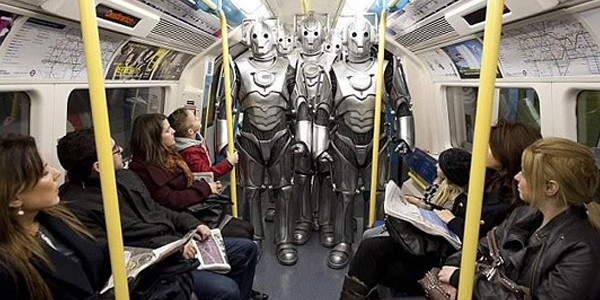
When it comes to describing London, Dr. Samuel Johnson said it best: "When a man is tired of London, he is tired of life." Perhaps that's why London seems to be the Earth city that aliens most like to invade, as seen in countless TV programmes and films. The UK's capital city is stuffed to its Tudor rafters with reminders of its long and convoluted history. Somehow, thousands of historic sites have survived myriad disasters, from the Black Death to the Great Fire. And that's something both residents and visitors can be truly grateful for. Not all the landmarks in London are beyond reproach, however. Richard Rogers, the architect behind the Cheesegrater and the Lloyds building was unforgettably described by Prince Charles as €œThe worst thing to happen to London€™s skyline since the Blitz." London doesn't just offer architecture, of course. There are countless things to do as well as see, and there are endless fascinating stories of Londoners' misadventures and triumphs. Even people who have lived in London all their lives are often surprised by facts about the city and what can be found there today. For example, more than half of the underground train system is, despite its name, actually overground. Here are thirty-three more awesome facts about London, from weird locations to incredible tales from its past, that everyone needs to know.

27. London Had "Elvis Chapels" For Quickie Weddings
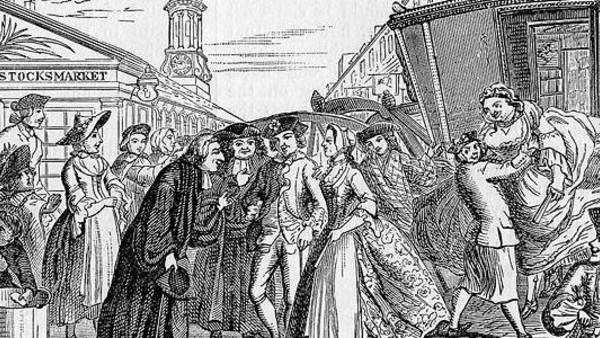
Need to get married right now, no questions asked? Once upon a time, you could in London. For a reasonable fee, of course. Between 1613 and 1754, unique bylaws meant that quickie marriages could be carried out in an area surrounding the Fleet Debtors' Prison called "the Liberties of the Fleet". In this precursor to Scotland's famous Gretna Green, couples could be married without posting banns. Because the clergy there were immune from prosecution, couples could walk in off the street and get legally married in less than 15 minutes, just like in modern-day Las Vegas. By the 1740s more than half of all London weddings were performed within these boundaries. Most of these newlyweds weren't teenagers suffering from puppy love, either. The average groom was 29 and the average bride was 23. Changes to the law in 1754 ended the honeymoon period for the area around the prison. Knowing the end was coming, hordes of love-struck couples rushed to the Liberties of the Fleet and 100 couples alone were wed on the very last day of the arcane legal permissiveness, causing the notoriously debauched area to go out with a bang.

26. Inmates Of Fleet Debtors' Prison Could Pay To Live Outside

Fans of Charles Dickens' books know all about debtors' prisons. He was inspired to write about them because his own father and mother were once locked up in one, forcing the 12-year-old Charles to fend for himself until they were freed. Dickens used this hard-won knowledge to write about Fleet Debtors' Prison in his first novel, The Pickwick Papers. This prison has a fascinating history of its own, quite apart from the hordes of lovers getting hitched all around it. For a start, the warders in the prison charged fees for every service going: removing manacles, opening doors, giving prisoners their mail... In exchange for sufficient compensation, they'd even let prisoners live outside the prison. Since the inmates were locked up because they didn't have any money, it's a wonder how they could pay for all these charges. The corrupt warders, however, came up with a variety of interesting ways, such as allowing the prisoners to beg at a window.

25. Trafalgar Square Has The UK's Smallest Police Station
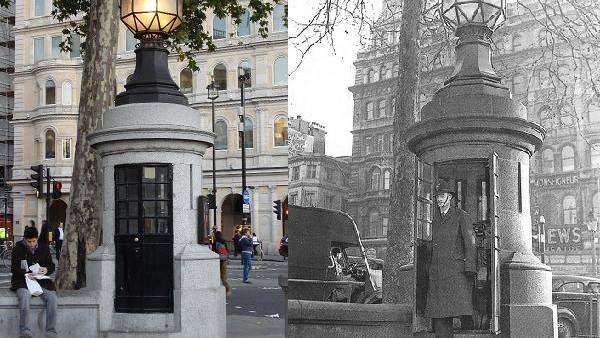
Everyone delights in the beautiful fountains of Trafalgar Square (one of London's most popular spots), but there's a building near them at the southeast corner that's usually overlooked. It's a small, round lamp with a minuscule room in its base. The building was originally an auxiliary police station, used as a lookout point to monitor people in unruly crowds. Sadly, it now stores cleaning equipment for the council.

24. The Charing Cross Memorial Is Actually A Copy (And It's Not Even In The Right Spot)
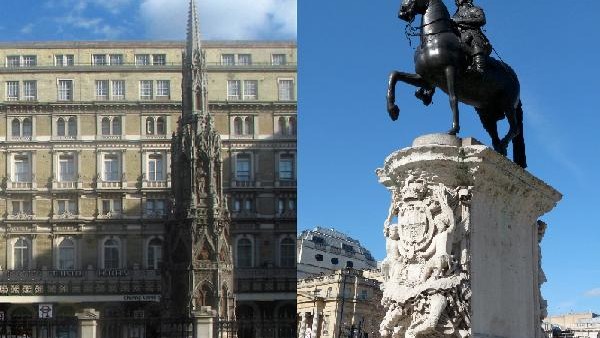
The memorial in the forecourt of Charing Cross Station is stunning, there's no doubt about that. But it just so happens to be a Victorian replacement for the original. The copy is situated 180 yards away from where it originally stood - that spot is now occupied by a statue of Charles I riding a horse. Charing Cross has nothing to do with Charles I, though. The original memorial was erected in 1290 by the grief-stricken Edward I following the death of his wife, Eleanor of Castile, after 36 years of marriage.

23. Sir Walter Raleigh Was Once Drenched In Beer To Stop Him Burning To Death
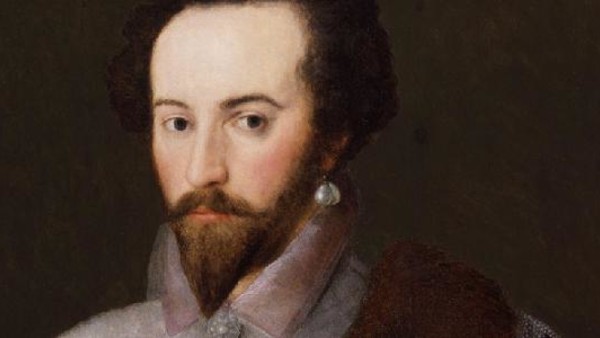
The Elizabethan courtier, Sir Walter Raleigh, was almost as famous for smoking as he was for exploring. In fact, he was considered by many to be the patron saint of smoking! But his expensive hobby came with some unexpected health risks. While living at Durham House on the Strand, Raleigh was caught puffing away by a servant. The servant wasn't well acquainted with the newfangled habit and assumed his master was on fire. So he did what any good servant would do and tried to put out the fire by drenching Raleigh with the nearest liquid at hand. Which was, as it turned out, beer. History does not record whether Raleigh was grateful for the attempted rescue. Or the waste of beer.

22. The First Globe Theatre Was Destroyed By A Cannon
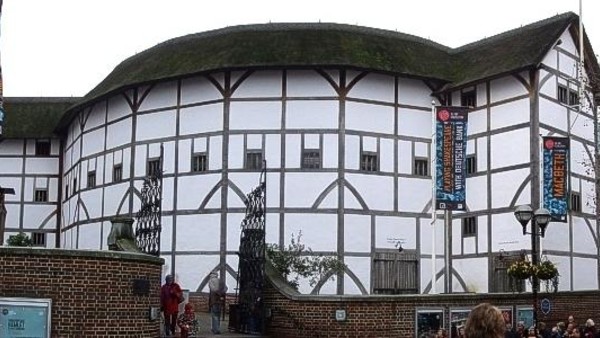
Given that it's amongst the most famous theatres in the world, the original Globe had a surprisingly short lifespan. It opened in 1599, built by a company of actors that, as everyone knows, included the most famous playwright of all time, William Shakespeare. For 14 years, the Globe provided Shakespeare with a venue for many of his most famous plays. But then it burnt to the ground in 1613. The cause? Its thatch was accidentally set on fire by a cannon during a performance of Henry VIII. A second, bigger Globe theatre was built in 1614, but even this grander version lasted only three decades, being demolished in 1644 when plays were banned by the killjoy Puritan parliament. Due to the efforts of Sam Wanamaker, the first Globe theatre was reconstructed and opened to the public in 1997. The rebuilt "best guess" at what the Globe looked like can be found on the banks of the Thames in Southwark, only about 750 feet from the site of the original theatre. Hopefully, modern performances of Henry VIII are more careful with the cannons.

21. The Stock Exchange Was Originally A Coffee Shop
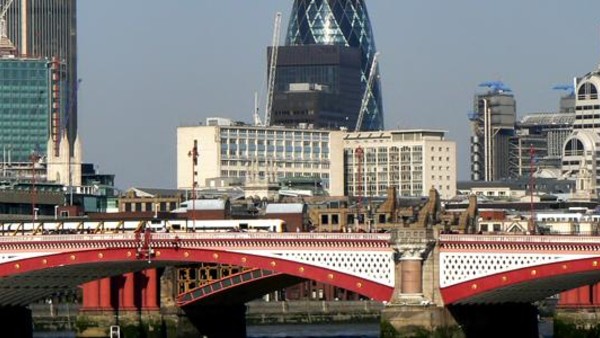
The London Stock Exchange has a long history going back over 300 years. Its origins start in a coffee shop of all places. The coffee shop in question was Jonathan€™s, which opened its doors in 1680 near the modern Tube station, Bank. By 1690, the joint had become the required place for trading shares in the City of London, with the traders meeting there to peruse the latest financial news written up on chalkboards behind the bar. When the coffee house burnt down in 1748, the rich brokers immediately paid to rebuild the shop. The rebuilt Jonathan€™s was later renamed the Stock Exchange in 1773. These days, the exchange is based in a much less interesting collection of office buildings. The coffee's probably not as good, either.

20. The Houses Of Parliament Were Built On An Island
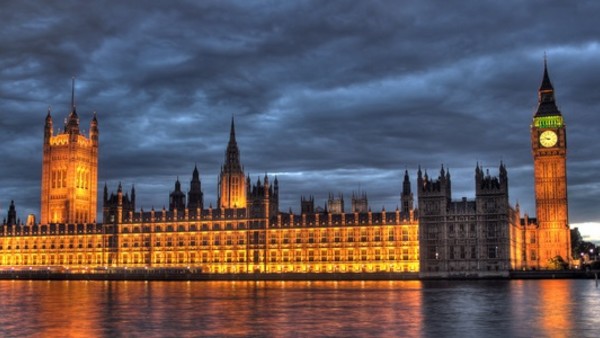
Yes, that's right, the most famous landmark in all of London sits on an island. Specifically, Thorney Island. This "charming" spot was originally formed by a loop of the Thames and the Tyburn River, before the level of the land rose and the area was built over. Although Thorney Island has long since disappeared, the name lives on in Thorney Street, just off Horseferry Road at the back of the MI5 building. Back in the eighth century, documents described the island as a €œloco terribili€ (terrible place). The island's modern name is no less off putting, coming from the thorns that covered it.

19. One Head Bizarrely Refused To Rot
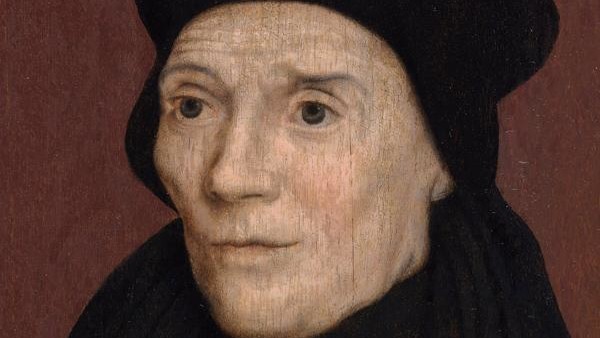
Starting with William Wallace in 1305, London Bridge was used to display traitors€™ heads. These heads, impaled on spikes, served as a grotesque warning to others. At times, there were as many as 30 heads skewered on iron spikes along the bridge. To stop the heads decomposing too quickly, they were often boiled and dipped in tar. However, one head caused problems by appearing to get fresher the longer it was kept up there. The head belonged to Bishop John Fisher, who was executed in 1535 for suicidally refusing to accept Henry VIII in place of the Pope as head of the Church. Over the course of 14 days, his head perversely seemed to look better and better. So many people came to view the grisly miracle that there were serious traffic jams. To stop the Bishop mocking the King from beyond the grave, the head was quietly chucked into the Thames under the cover of darkness. No one got the better of Henry VIII.

In this post: 
London
 
Posted On: 
Contributor
Contributor

Mike has lived in the UK, Japan and the USA. Currently, he is based in Iowa with his wife and 2 young children. After working for many years as a writer and editor for a large corporation, he is now a freelancer. He has been fortunate enough to contribute to many books on Doctor Who over the last 20 years and is now concentrating on original sci-fi & fantasy short stories, with recent sales including Flame Tree, Uffda, and The Martian Wave. Also, look for his contribution on Blake's 7 to "You and Who Else", a charity anthology to be released later this year. You can find him on Tumblr at https://www.tumblr.com/blog/culttvmike