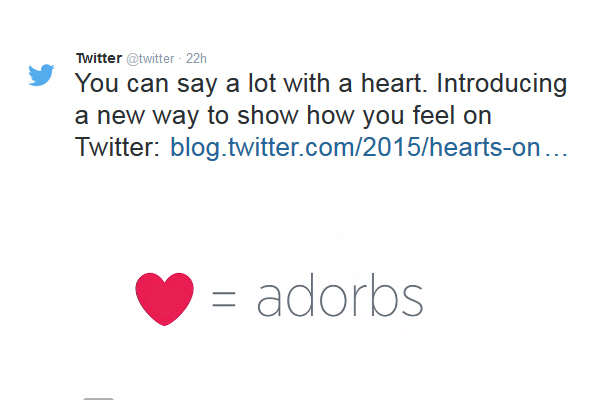
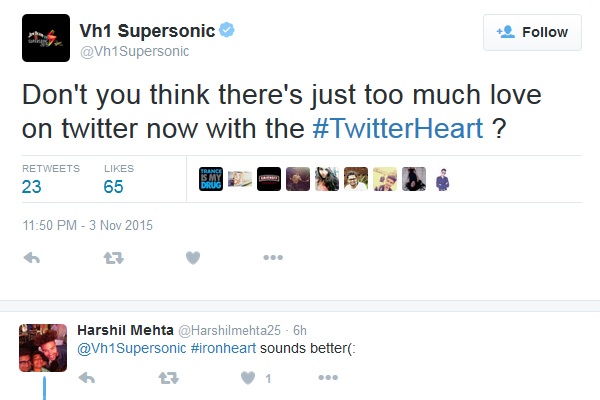
Twitter made enemies of a lot of its members yesterday, when it introduced its new "likes" feature, which would allow users to mark tweets with hearts. The feature replaces the stars that had previously represented "favourites" on the social networking website. Over the years, favourites had been used in various ways by users, whether as a way of bookmarking beloved tweets, saving an article to read later or simply as an acknowledgement of replies. The company has proudly trumpeted the change since it was introduced, with a gradual roll-out set to occur across the various applications that people use to access their tweets. In the company's eyes, the heart is a "universal symbol" that will help to "make Twitter easier and more rewarding to use" for new users as well as the early adopters who have been rampantly retweeting and happily hashtagging for years. However proud Twitter is about this decision, though, they are some way from winning over their user base. Beyond that, the logic behind the change is deeply flawed and the heart symbol does not seem to gel with the general ethos of Twitter. Time will tell whether the Twitterati will open their hearts to the new feature, but for now it seems like an utter waste of time.
5. Doesn't Work With Public-Facing Folder
Twitter has always made the "favourites" folders of its users public. Any user can see another's favourites via a link on their profile screen. That link has now been replaced by a "likes" folder of tweets that have been marked with a heart. This public-facing nature of the "likes" feature makes its personal touch seem rather out of place. If likes truly are to be a personal expression, then it would make sense for them to be hidden, rather than publicly trumpeted via the profile page. In its blog promoting the change from stars to hearts, Twitter made plenty of noise about the personal and emotional dimensions of the heart symbol. The fact that these emotional statements from users are to be made public may make users considerably less likely to use them. The disconnect between Twitter's desire to make "likes" something personal and their positioning as public accessible is a major problem with the change.
4. Too Personal
Twitter is perhaps the least personal of all of the major social networks. The majority of profiles are left unlocked, with tweets available for anyone to peruse at their leisure. There's an emphasis on discussion and debate rather than friendship, which suited the ambivalence of a star symbol pretty well. That's not the case for the heart, which has intimate connotations of love and relationships. These are connotations that don't fit particularly snugly with the discussion forum nature of Twitter. The heart is simply too personal to work in the Twitter environment. The concepts of hearts and "likes" are far more at home on websites like Facebook and Instagram, which tend to encourage more personal relationships than those of Twitter followers. It's odd to see Twitter veer so solidly off course in its presentation of its users, suggesting a concern about the popularity of other networks with a more personal choice. Twitter does what it does very well. What it does, though, is not a personal touch.
3. Change For Change's Sake
There's the nagging sense with the heart symbol that Twitter simply felt the need to make a major change to their user interface in order to appear as if they are innovating. It's no secret that the website has struggled to showcase itself as being backed by a profitable business model. The latest figures for the company's finances, released in October, said that the company is currently operating at a loss of $132 million after tax. In order to court advertisers, Twitter needs to be seen to be making constant changes to improve the experience for its users, encouraging them to spend more time using the site. The seemingly unnecessary alteration from "favourites" to "likes" is change for change's sake. The difference between the two is so subtle that there can't be any real reason for the decision, particularly given its clear unpopularity with the loyal user base that is surely the key driver for advertisers to invest in Twitter.
2. Ignores Multiple Uses Of Favourites
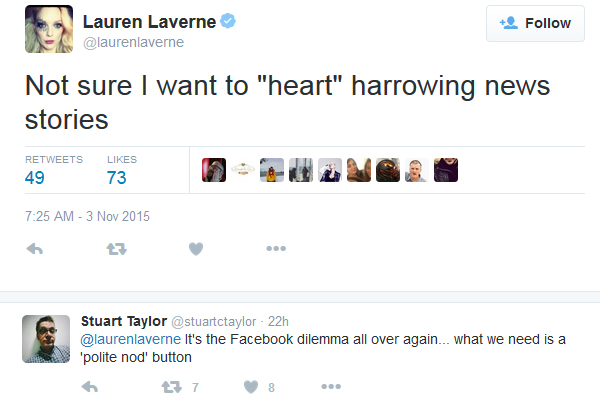
One of the best things about the "favourites" feature on Twitter was its versatility. The stars could be used to mark out genuine favourite tweets, bookmark interesting articles to read through later or simply acknowledge a reply from someone in a conversation in lieu of a reply. Whilst it is still theoretically possible to use the new "likes" feature in the same way, the heart symbol makes several of these uses problematic. For instance, as presenter Lauren Laverne commented, very few people will feel comfortable marking a particularly horrifying news story to read later by clicking a glittery heart. In fact, it would be downright appropriate to do so. In the case of this use for the feature, the star symbol identical to the bookmark symbol in many web browsers was ideal. The heart symbol also feels out of place for the purpose of simply acknowledging replies. Whilst a favourite had no emotion attached to it, the same is not true of a heart. Marking a reply with a heart signals a level of personal approval that simply wasn't there before. The same aspects of the heart symbol that made it so appealing to Twitter, according to their announcement post, make it a wholly inappropriate replacement for the incredibly usefully favourites function.
1. Comes Across As Copying Other Networks
The most damning thing about the heart symbol and the associated addition of the "likes" feature is that it seems like a lift from both Instagram and its parent company Facebook. These two services are perhaps Twitter's biggest competition in the current social media landscape, so it seems bizarre for Twitter to make the conscious decision to ape their most popular features, sacrificing its own uniqueness in the process. In the past, Facebook and Instagram have often borrowed features that were made famous by Twitter, such as the @reply function and the use of hashtags to group posts and showcase trends. Twitter has always seemed like something of a leader in terms of innovation, whilst the other networks have trailed behind, forced to acknowledge that Twitter often leads the way. The copycat adoption of another website's major features feels like an admission on the part of Twitter that they have had their moment in the sun and must now cede to the competition. Twitter should not abandon something as useful as its multi-faceted "favourites" system, which has long served a variety of different purposes for a variety of different people. The adoption of likes and hearts simply serves to slide Twitter further into the homogeneous social media landscape, which really undersells its position as an innovative online service.
Freelance film journalist and fan of professional wrestling. Usually found in a darkened screening room looking for an aisle seat and telling people to put away their mobile phones. Also known to do a bit of stand-up comedy, so I'm used to the occasional heckle.