6 Myths About William Shakespeare That You Wrongly Believe
Ignorance about Bill is the curse of God; knowledge is the wing wherewith we fly to heaven.

William Shakespeare. The name may make you shudder with the memory of English classes, or revel in your passion for his works. For many, he is the greatest English writer of all time, at the least certainly the most well regarded by modern culture.
People quote lines from plays they have never read and use words and phrases he created in everyday parlance, often without realising ("A laughing stock", "In stitches", "Vanish into thin air", and "Method in my madness" are just some examples from his works.)
The BBCs 2002 poll of the 100 Greatest Britons placed him at number five between Charles Darwin and Isaac Newton, and yet there remain doubts as to who this man really was. Academics have been making cases since the 19th century suggesting that Shakespeare did not write the plays credited to him, that they were instead the work of one or a number of other writers at the time. The truth is, well, we don't know the truth.
Due to a combination of becoming a legendary cultural figure and a lack of comprehensive paperwork from the 16th century, there are a number of myths and assumptions made about the man and his life that, although commonly held, are not correct.
6. Writing Was His Profession

By the turn of the 17th century, Shakespeare had started to make a name for himself in London for his writing and work around theatre, but back in his hometown of Stratford he was better known as an esteemed businessman.
Yes, he wrote plays and sonnets, but according to a number of late 16th century documents, Shakespeare's profession during his time in London was actually acting. As an actor he performed in other people's plays as part of groups such as the Chamberlain's Men, as well taking small roles in his own work.
Shakespeare's first biographer, Nicholas Rowe, wrote about rumours that Shakespeare had once played the ghost in Hamlet himself. Other sources suggest he may have also played Adam in As You Like it and King Duncan in Macbeth. One man in his time plays many parts, it seems.
5. His Birthday

When is Shakespeare's birthday? 23rd April, 1564 of course! OK, maybe it's not that obvious, but the truth is his actual birthday is unknown. What we do know from records is that he was baptised on 26th April, and custom of the time dictates that 23rd April - three days before - is a reasonable estimate for his birth.
There is an argument that since his birth date is only an approximation, history could have allowed the date to be adjusted so that England's greatest playwright just happened to be born on 23rd April: St.Georges Day. Still, things get more complicated. In 1582 the Julian calendar was replaced with the Gregorian (Western) calendar. By adjusting the date, Shakespeare's baptism would move from April to 3rd May, putting his birthday somewhere close to 1st May by modern calendars.
Perhaps all those Midsummer Night's Dream allusions to May Day are not so coincidental?
4. He Was Published In His Lifetime

During Shakespeare's life, the convention was that playwrights would sell their work to acting troupes. Having purchased a new play, the troupe would ensure copies were not made so competing companies couldn't put on a rival production of the same play.
Having a printer make copies would have been considered madness. Amazing as it may seem, the complete works of Shakespeare you read today would not exist if it were not for the work of actors John Hemminges and Henry Condell, who edited and compiled the original collection of 36 plays under the title 'Mr. William Shakespeare's Comedies, Histories & Tragedies' after Shakespeare's death.
Today, the 900 page collection is better known as the First Folio. Two plays were excluded from the first publication that were included in later printings.
3. Shakespeare's Globe

The building in Southwark known as Shakespeare's Globe Theatre is a reconstruction that opened in 1997 - almost 400 years after the original was built.
The original was ruined by fire after an accident involving the firing of a cannon during a 1613 production of Henry VIII. It was rebuilt the following year only to be demolished in the 1640s under Puritan pressure.
The reconstruction, founded by American actor Sam Wanamaker was built as close to the original site and accurate to the original building as modern safety rules allow. It sits around 700ft away from the original site and holds a capacity of approximately 1,500.
2. He Was Elizabethan

The Elizabethan era is most strongly linked to the work of Shakespeare and he is usually referred to as an Elizabethan playwright. In fact, around 14 of his works, including some his most revered - Othello, King Lear, Macbeth, Coriolanus, The Winters Tale, and The Tempest - were all first performed in the Jacobean era.
The timing of his life and work straddled not just the transition from Elizabeth I to James I, but the turn of a new century. His style of work changed with the shift in culture in this period. As the people looked for dramatic satire, Shakespeare's plays featured less tragedy through romance, and more caused by the corruption of men.
1. He Worked Alone
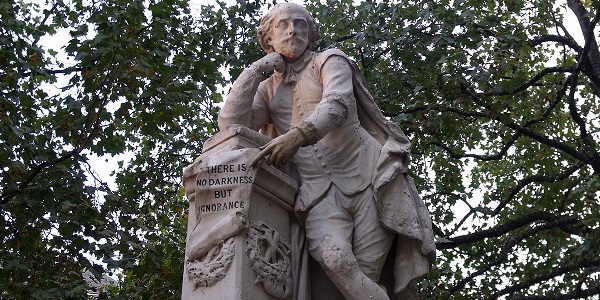
As with most playwrights of his period, it was not unusual for Shakespeare to work in partnership with other writers. A number of plays that are simply attributed to Shakespeare are in fact thought to be collaborations.
Two we know for sure were collaborations were left out of the original version of the first folio: The Two Noble Kinsmen and Pericles. Pericles was a joint effort with George Wilkins. It is thought Wilkins wrote the first half and Shakespeare completed it.
The 1634 publication of The Two Noble Kinsmen had the names of both William Shakespeare and John Fletcher on the title page and again it seems each man wrote half. Scholars regularly come up with research that suggests many Shakespeare plays including Macbeth, All's Well That Ends Well, Titus Andronicus, and Henry VIII have elements that reflect the work of other writers of the time but as with so many things about the man, no one will ever know for sure.