Wikipedia/OliScarffThe question of authorship has always been a fascinating one. When a book is published, people tend to take for granted that the person who wrote it is a real living, breathing human being. With a brief author's bio and a smiling picture, why would you question it? What would be the point of making up an identity? As it turns out there are plenty of reasons why a person or company might want to present somebody as real when they're not: like if that person happens to be saying nice things about your company, or is purporting to have lived an incredibly interesting (and marketable) life. On top of that, the further back in time we travel, the harder it is to truly prove a person's existence, even those figures who are considered household names. From the Bard himself William Shakespeare to a certain troubled teenager whose diary has been in print for over forty years, here are seven famous writers who might not have actually existed...
7. Homer
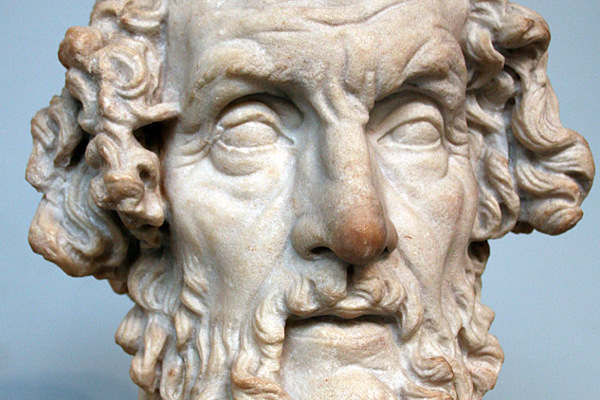
WikipediaNo, I'm not talking about the yellow-fleshed Simpson. I'm talking about one of the most influential writers in human history, the man responsible for penning two literary cornerstones, the Iliad and the Odyssey. The Iliad details events during the Trojan War, a ten-year siege of the city of Troy. Specifically, it deals with the quarrel that takes place between King Agamemnon and the warrior Achilles. The Odyssey, on the other hand, concerns Odysseus, focusing on his journey home after the fall of Troy and the various challenges he encounters along the way. When most people think of Homer, they think of a writer from ancient Greece, but what most people don't know is that even they considered Homer to be a legendary figure from long in the past. It turns out that we aren't even sure that Homer was a real person. We certainly don't know when he lived or whether he actually did. Historical accounts of Homer differ wildly, frequently placing his life centuries apart. This is mainly due to the fact that anybody who ever wrote about him was doing so from a time hundreds of years after he supposedly lived. In fact, there are many scholars who actually believe that Homer was merely a pseudonym that was used by multiple different writers.
6. Carolyn Keene
StratemeyerYou may not have heard of Carolyn Keene, but you've almost certainly heard of her series of children's books, the Nancy Drew Mystery Stories. Since their first publication in the year 1930, the series has become wildly successful, selling at least eighty million copies around the world and being translated into over forty-five languages. Pretty good going, right? Carolyn Keene must have been extremely wealthy. Well, maybe she would have been had she actually been real. As it transpires, Keene hasn't been writing the Nancy Drew series in a long, long time. It makes sense, though, seeing how the series is still going over eighty years later. Yet it turns out that Carolyn Keene may never been writing the series in the first place. Over the years the Nancy Drew series has been written be countless ghost-writers, who upon trying to reveal their identities have been firmly denied by the series' publisher Edward Stratemeyer as having any part in the whole thing Stratemeyer has also threatened various people with legal action over such claims. In fact, the company has been so vehemently secretive about the whole thing that it's difficult to know whether someone named Carolyn Keene ever actually existed. Was she inspiration for the pseudonym? Did she start the series off and then quit, agreeing to lend her name to the series only? The truth we may never know.
5. Geoffrey Chaucer
WikipediaDespite Shakespeare being one of the most famous and influential writers to ever live, there's one figure who towers above him when it comes to English writing. Geoffrey Chaucer is widely regarded as the Father of English literature and one of the greatest English poets to put pen to paper (or quill to velum, as it may have been). Chaucer is known for works such as Troilus And Criseyde, The Book Of The Duchess and most famously The Canterbury Tales, which follows a group of diverse travellers who make pilgrimmage from London to Canterbury in order to visit the shrine of Saint Thomas Becket. Along the way the group tell stories and interact with each other, often with hilarious consequences. Despite the fact that we have much work attributed to Chaucer, there are still theorists who claim that he was not a real man. They point to the fact that we known very little about the precise date and location of his birth, as well as the fact that large portions of his life are very uncertain, including his death. Some claim that Chaucer's writings were actually penned by talented peasants eager to upset the higher classes and monarchy by satirizing the hierarchical system, an attempt to incite members of the lower class into trying to enact change.
4. Maria Monk
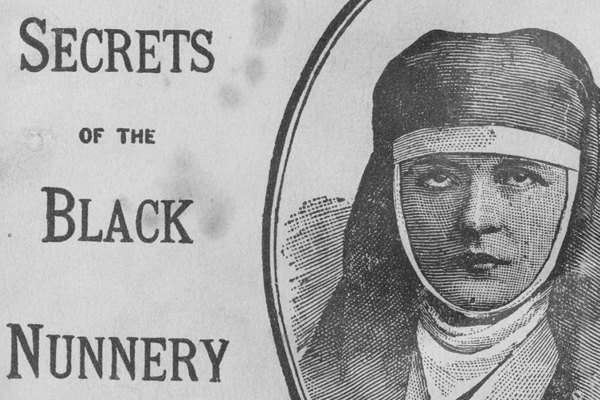
TwitterMaria Monk is credited with writing a book with one of the lengthiest titles ever ascribed to a literary work: Awful Disclosures Of Maria Monk: As Exhibited In A Narrative Of Her Sufferings During A Residence Of Five Years As A Novice, And Two Years As A Black Nun, In The Hotel-Dieu Nunnery At Montreal. With a title like that, who needs a blurb? Monk's book was published in 1836, and claimed to expose systematic sexual abuse of nuns and the killing of the resulting children by Catholic priests in a convent in Montreal, Canada. At the time of its publication, the book did extremely well, immediately becoming a best-selling title and causing a huge amount of controversy. Some time after, however, many began to speculate that Monk for which there is some evidence of a potential brain injury as a young child was manipulated into playing a role, saying and doing things that she wasn't convinced herself were true for the purpose of her publisher and ghost writers. Despite the fact that Awful Disclosures Of Maria Monk has been reprinted multiple times over the years and has been translated in various languages, some scholars believe the whole thing was a hoax in order to generate profit and discredit the Catholic church, and that Monk may not have been a real nun, merely someone hired to play a public role. Scholars point to inconsistencies in Monk's claims as well as the fact that a sequel was published too.
3. David Manning
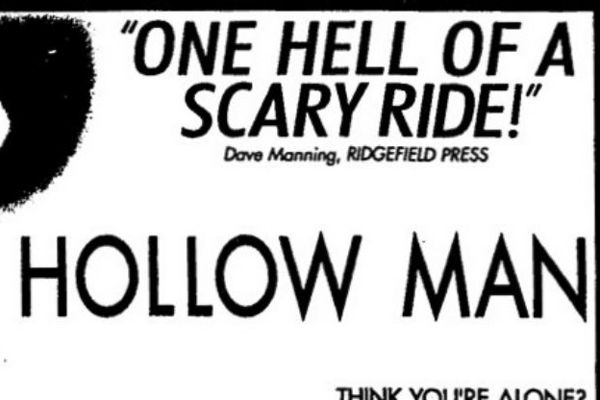
TwitterWhat do you do when your film studio's movies are getting universally terrible reviews? Why, you pay somebody to write good ones, that's what! At least, that's what Sony thought would be a good idea back in the early 2000s, prompting one of the most controversial examples of fictitious writing in recent memory. Manning was said to be a writer for The Ridgefield Press, a small weekly publication based in Connecticut in America. Among various reviews Manning praised A Knight's Tale, describing Heath Ledger as this year's hottest new star! and comedy The Animal, claiming it was another winner!. After a little bit of journalistic investigation, however, it transpired that The Ridgefield Press had never heard of David Manning, and Sony was caught in its lie. The question lingers, then, as to whether or not Manning ever existed. We know for certain that he didn't write for The Ridgefield Press, but someone was clearly writing the false reviews. Whether or not there was one singular person or a group of people was used remains a total mystery. It's likely that the name David Manning was made up in order to protect the identity of multiple people, but there are those who claim The Ridgefield Press had a deal with Sony to protect Manning's identity, and were completely aware of what was going on.
2. William Shakespeare
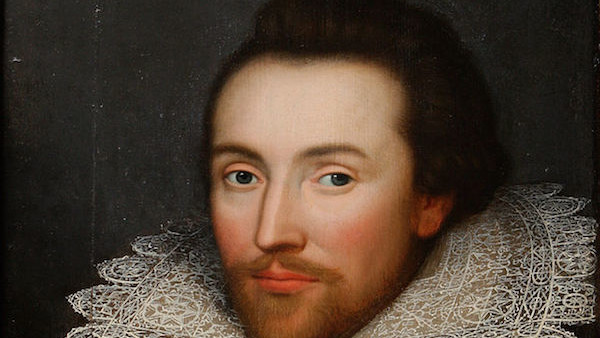
WikipediaOut of all the writers who might not have actually existed theories, the authorship of William Shakespeare is probably the most famous. Considered one of the greatest writers ever to have lived, Shakespeare's influence on modern literature and storytelling in general is practically unparalleled, and cannot be overstated. From Romeo & Juliet, Macbeth and King Lear to Hamlet and Othello, listing the Bard's masterful contributions would take multiple lists of its own. Which is why the fact that there's a legitimate question as to whether or not Shakespeare was a real person or indeed the author of all those plays is so shocking. In fact, there's a prominent theory known as the Shakespeare authorship question that states that William Shakespeare was nothing more than a front used to shield the identity of multiple other real authors. Other theories point to the name William Shakespeare being used as an alias by other prominent figures of the age. The most notable of these include Sir Francis Bacon, one of the great intellectual thinkers of Jacobean England. There's also Christopher Marlowe, himself a very well-known dramatist, who is believed to have died under incredibly mysterious circumstances very early in life. Curiously, Marlowe was considered a great influence on Shakespeare too.
1. "Alice"
Prentice HallPublished in 1971, Go Ask Alice is a novel about the life of a drug-addicted teenage girl. The novel is a compilation of diary entries which deal with everything from high-school romance to sexuality, isolation and experimentation with drugs. When it was first published, Go Ask Alice was marketed as a compilation of extracts taken from an actual diary. The book was promoted as non-fiction and its author credit was merely Anonymous. Shortly after its publication, a woman by the name of Beatrice Sparks began to make media appearances promoting the work, claiming to be its editor. Sparks said that the diary was taken from a patient named Alice, and that the vast majority of it was transcribed, though a few fictitious alterations were made. This all seemed fairly suspect until Sparks unveiled a second diary project titled Jay's Journal. Jay's Journal was supposedly based on the diary of a boy who committed suicide after becoming involved with the occult. The boy's family, however, were very much real, and were not happy with the book, claiming that Sparks had only used a few of his diary entries. Whether or not this means that Alice DID exist and her diary was merely inspiration or she was completely fabricated is still hotly debated. Regardless, Go Ask Alice is still in publication over forty years later.