8 Bizarre Psychological Disorders Affecting Modern Man

We might have wiped out smallpox but much stranger things are taking its place.

The human race has come a long way in the past 100,000 years. Gone are the days of the hunter-gatherer (unless you€™re spending your gap year with some sort of Amazonian tribe) but there€™s no denying that our modern way of life carries with it its own hardships. Sure, you€™re significantly less likely to encounter a sabre-toothed tiger on your way to the corner shop than your ancestors were on their way to the berry bush but they didn€™t have to deal with the debilitating information overload of the digital age. That's not even an exaggeration; Glasgow researchers recently reported the existence of Busy Lifestyle Syndrome, which is a form of amnesia brought about by constant social media bombardment. Our species€™ wonderful inventiveness may have allowed us to give polio the boot but it seems there€™s no stopping brand new disorders from developing within our own heads. This article contains a whole host of weird and wonderful psychological conditions that have crept into existence in the past few decades all thanks to humanity€™s unique and insatiable desire for culture, technology, travel and social interaction. You€™ll be locking yourself in the attic before you can so much as fashion yourself a tinfoil hat.

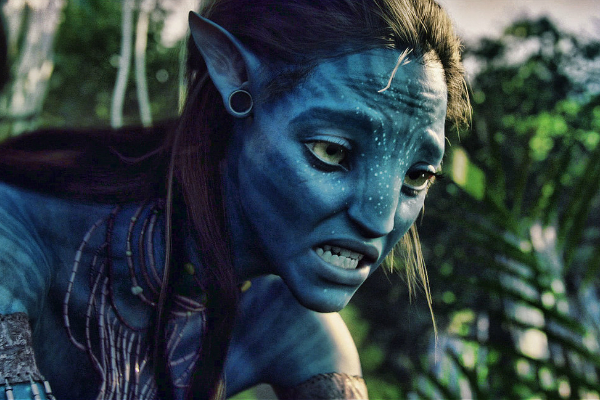
8. Post-Avatar Depression

We€™ve all seen James Cameron€™s Avatar; big blue Na€™vi tribespeople living a wonderful life in communion with nature surrounded by what can only be described as eye-candy. In fact it turned out to be such a magical experience that, upon leaving the cinema, a number of viewers fell victim to what colloquially became known as post-Avatar depression, as they came to the realisation that Pandora was a completely imaginary and unattainable utopia. A support thread soon appeared on avatar-forums.com and garnered over 3500 replies. The thread€™s creator, known as Zoconno, stated that people were struggling to come to terms with the fact that €œthe dream can't actually come true€, which was soon backed up by users like Namash, who alleged to have come to a sudden standstill while walking back to the car, claiming €œI realized none of it was real, and I realized I could never experience it for myself€. The thread and others like it eventually escalated to the point that some users reported suicidal feelings. One poster, Jefz, said he had found himself thinking €œIf I would kill myself, I might start over again as a Na€™vi (sic)€ but two days later announced that he was €œlosing the depression€ and had realised that €œit€™s just a movie€. Importantly, there is no evidence of an individual being diagnosed with actual clinical depression after experiencing the post-Avatar blues but the wave of sadness and futility that briefly swept the internet after the movie€™s release demonstrates the effect that a seemingly innocent three hour piece of film can have on us. Try to top that for the sequel, Cameron.

7. Paris Syndrome

Sci-fi movies aren't your thing? You€™re far from safe; a holiday in a beautiful capital city might be all it takes. Since 1986, psychiatrists have reported hundreds of cases of a peculiar condition known as Paris syndrome. This unusual disorder seems to affect tourists and migrants who have arrived in the French capital with an idealised view of the city, particularly Japanese nationals. Specialist Dr Hiroaki Ota describes the condition as a form of culture shock that occurs due to the contrast between the flawless Parisian images presented in Japanese media and the rather imperfect reality of life in large European cities. The symptoms include anxiety, dizziness, disorientation, changes in sex drive, aggressive tendencies and delusions of paranoia, prejudice or grandeur. There are some reported cases of suicidal behaviour or uncharacteristic criminal activity, such as one man who went on a prolonged car-jacking spree having never broken the law in the past. A similar condition known as Jerusalem syndrome is characterised by visitors to Jerusalem entering hysterical, obsessive or psychotic states of a religious nature, even affecting atheists. Sufferers often publicly read psalms, sing hymns or deliver their own sermons and may develop an unhealthy compulsion to be clean, frequently fashioning themselves a robe from white bed linen. As with Paris syndrome, the most effective treatment is to simply return the patient to their home country and recommend plenty of rest. So, it seems a perfectly healthy tourist (ie. you) can arrive in a bustling capital city and, in just a few days or weeks, find themselves plagued by hallucinations, paranoia or generally unhealthy behaviour. I hope my travel insurance covers delusional car theft.

6. The Strawberries With Sugar Virus

So science fiction movies and international travel are off the cards but perhaps you€™d sooner stay at home with a bottle of wine and a TV guide anyway. In that case, be careful what you watch. In May 2006, over a dozen Portuguese schools reported an epidemic of what came to be known as the Morangos com Açúcar virus. A typical case consisted of a rash, dizziness and shortness of breath, with hundreds of students being affected. The unusual thing about this disease however, was that it was almost identical to a completely made-up illness that had plagued a school on an episode of a teen soap opera a few days prior. The name of the disease comes from the TV show€™s title, Morangos com Açúcar (Strawberries with Sugar), because all scientific evidence points to the fact that the entire event was nothing more than a case of mass hysteria brought about by the events of the soap. The children developed actual physiological symptoms simply because a fictional disease had afflicted some fictional students at a fictional school. Let€™s just hope that everyone on Eastenders can keep their ailments in check.

5. The Tetris Effect

Here€™s a little experiment for you; shut your eyes and think about what you can see. Probably not much. That€™s good. It means you€™re not suffering from the Tetris Effect. Named after the classic arcade game, the term can actually be applied to a number of stimuli but was first reported in those who spent prolonged periods of time watching those familiar, pixelated shapes falling down the screen. Such behaviour can result in Tetris blocks entering a person€™s dream or even manifesting themselves as a series of conscious hallucinations. The sufferer might see shapes falling from above when they shut their eyes or spot them in the corner of their vision while they go about their day-to-day lives. Many patients report a desire to determine how everyday objects, such as furniture, could fit together to form tidy lines for the ultimate high score. These kinds of symptoms can occur for all sorts of stimuli that a person may be overexposed to. Computer programmers may see lines of code when their eyes are shut, professional Rubik€™s cube solvers can be afflicted with mental images of the 3D puzzle flipping around in mid-air and one report even describes multiple cases of drivers forgetting that their cars weren€™t equipped with weapons in the mid-90s thanks to prolonged sessions with a video game called Descent. A similar effect that can be caused by video gaming is known informally as Guitar Hero eyes or scientifically as the motion aftereffect. Put simply, staring at a constant scrolling stream of guitar notes for too long can cause a visual illusion in which the whole world appears to still be scrolling even after the game has been switched off. The effect does not normally last more than a few minutes and can also be caused by staring out of a train window or travelling down a straight road. Nevertheless, it probably wouldn€™t hurt to take those gaming health warnings a little more seriously.

4. Zero Stroke

Irrespective of your TV, gaming or travel habits, there are some potential triggers that are inescapable. Even contact with the most basic daily commodities can cause all sorts of psychological problems. Money, for example, is an inevitable part of every person€™s life but could well be the cause of a rather bizarre condition under the right circumstances. 1920s Germany was plagued by devastating hyperinflation after the First World War, with the value of the Deutschmark taking a complete nosedive. Prices for everyday purchases reached dizzying heights, with a loaf of bread costing an unbelievable 200 billion marks by November 1923. For the bank clerks, accountants and bookkeepers who had to handle these huge and ever-growing numbers throughout the working week, unusual symptoms began to occur that were described by medical professionals as zero stroke. Sufferers, men and women, were strangely compelled to write endless rows of zeros over and over for no good reason. They also seemed eager to solve incredibly difficult calculations for fun and there were some reports of individuals who struggled to communicate numbers effectively, stating that they had several million children or were a few billion years old. Just one more reason to hope that we don€™t live to see another recession.

3. Gourmand Syndrome

Money isn€™t the only commodity that can get into your psyche. Gourmand syndrome, most famously studied in a Swiss stroke patient, is typified by a sudden obsession with gourmet food after brain injury. The condition was only discovered in 1997 and dozens of cases have since been observed. Sufferers, who can seem otherwise completely healthy, not only seek to engage in fine dining but also spend much of their time talking and writing about it. Indeed, the aforementioned Swiss patient immediately quit his job as a political writer upon being discharged from hospital and became a food critic. All it takes is an unfortunate injury to the brain€™s frontal lobe and you could well find yourself completely unsatisfied by cheese on toast for the rest of your life, craving caviar instead. It doesn€™t bear thinking about.

2. Retired Husband Syndrome

Imagine how you might feel on your 70th birthday. If you can look beyond the fear of impending death, you might be able to picture yourself being excited at the prospect of having a pension to spend and lots of free time to fill with your newly retired spouse. And then it hits you. A tragic case of retired husband syndrome. I assure you that I've not just made that up. This is another condition primarily occurring in Japanese people, affecting almost two thirds of the nation's women. As her husband approaches retirement age, a patient may find herself experiencing depression and anxiety but may also become physically ill with rashes, asthma, ulcers and raised blood pressure. The theory behind the condition is that Japanese women are often expected to serve their husbands in a stereotypical housewife role when he gets home from work in the evenings. The knowledge that the husband will soon be at home seven days a week may seem incredibly daunting to some women and causes feelings of stress and depression. So yet again, prehistoric man has got one up on us here. The moment humanity invented retirement, we doomed generations of housewives to years of depression and anxiety.

1. Walking Corpse Syndrome

Fear not. Despite all of these psychological problems that are caused by movies, games, money and just about everything else you encounter on a day-to-day basis, there are some redeeming cases where the opposite is true. Take the story of Haley Smith, a teenaged girl from Alabama, who was diagnosed with Cotard€™s syndrome (also called walking corpse syndrome), a condition characterised by the patient€™s delusion that they are dead. Some sufferers completely reject the existence of parts of their bodies and may think that they do not need to behave in a safe and healthy manner anymore. Miss Smith claims she stopped talking to her friends, began eating whenever she liked (under the impression that she could no longer gain weight) and fantasised about visiting graveyards. After eventually seeking help from a therapist, she states that her recovery had a lot to do with the fact that she began watching Disney movies. Apparently, the warm feelings that she felt when watching these films did not correlate in her own mind with the fact that she was dead and she began to accept the reality of the situation. Indeed she was quoted saying €œHow could I be dead when Disney makes me feel this good?€ She eventually recovered from the condition and accredits much of her progress to the movies. Which brings us full circle. Avatar might give you depression but Disney movies could be the perfect cure for delusional behaviour. In that sense, it would probably be wrong to say that technology and culture have doomed us to centuries of suffering. Sure, we might be faced with a whole selection of ultra-modern problems that didn€™t exist in 100,000 BC but it's a scientific fact that spear-wielding cavemen didn€™t have Netflix or pizza, so who's the real winner?

 
Posted On: 
Contributor

Peter Austin initially joined WhatCulture as an occasional contributor to our Film, Gaming and Science sections, but made the mistake of telling us that he'd been making videos in his bedroom for over a decade. Since then he's been a vital member of our YouTube team and routinely sets the standard for smart-casual wear in the office.