8 Crazy Cryptids That Could Exist
The world is full of fantastic creatures that are not scientifically accepted. But should they be?

Cryptozoology is the study of animals whose existence has not yet been confirmed by science. This does not mean, however, that they are not real. Creatures that fit this category are commonly known as cryptids. Stories about these creatures can be found all over the world, from the UK to the Congo.
Many famous cryptids exist and have been perpetuated through pop culture. Take the Loch Ness monster, or Big Foot for instance. Some of these have been disproven, such as Big Foot, with the original “discoverer” announcing he lied about its existence on his deathbed.
However, many other cryptids have been confirmed by science. For example, the duck-billed platypus was once considered a cryptid for many years by the scientific community. To be fair, if you were told about a creature no one else had seen that had the bill of a duck, webbed feet, the body of a beaver and elbows with that can inject venom, you would likely be on the same page.
Therefore, there is potential for many of the creatures that have yet to be disproven to one day be fully discovered and established by science.
With all that taken in consideration, here are eight of the cryptids with the most potential to actually exist.
8. Chupacabra

The Chupacabra (Chew-pah-cab-rah)
is a
cryptid that reportedly drinks the blood of livestock, especially goats. Hence
its name, being derived from chupar, meaning to suck,
and cabra, meaning goat.
It is often described as a 3-4 ft (0.9-1.2m) dog-like reptile with scaly skin, and has multiple quills running down the length of its back.
Stories about this creature can be found all across the Americas, the first of which came from a small village in Puerto Rico. In March 1995, a sheep herder found eight of his flock fully drained of blood, each exhibiting three puncture marks on their chests. Similar attacks had occurred in 1975, but were attributed to another cryptid, The Vampire of Moca, though most now agree that it was the Chupacabra.
After this initial report in 1995, several other comparable incidents occurred all across North and South America, and have continued to this day. Some people even believe that it may even exist in other continents. In 2018 there were many reports of Chupacabra attacks in India.
No credible explanation has been given for many of these events. This in conjunction with the sheer animal-like behaviour of the attacks as well as the commonality between the stories and reports make many believe that the creature must be real.
7. Beast Of Exmoor

The Beast of Exmoor is one of many stories of large, phantom cats that roam the countryside of mainland Britain. This particular cryptid seems to remain in the counties of South West England, mostly in Exmoor National Park, hence the name.
Accounts of the beast often describe it as a large leopard, 8ft (2.4m) from nose to tail, that is incredibly agile and violent. Something that is not native to the British isles.
Although the first sighting was reported in the 1970s, it wasn’t until 1983 that this cryptid gained notoriety. Farmer Eric Ley claimed he had lost over 100 sheep in three months, with those that he found having their throats ripped out. People soon attributed this to the attack of a big cat species. Thus, the legend was perpetuated nationwide. Many also remarked that these stories were similar to many others around Britain, often attributed to other phantom cats. These attacks were reported until 2001.
On three separate occasions, photographic evidence has been taken of such a cat wandering the fields of Devon, with a farmer even claiming to have found a panther skull near his farm.
In addition, many believe that it could be an escaped or released pet, as the first sighting occurred around the time it became illegal to own big cats outside of zoos. However, the lifespan of leopards is only around 15 years maximum, meaning that if all these sightings are true, it has to be something science does not yet recognise.
6. Megaconda

Those of you familiar with the Anaconda film series may also be familiar with this cryptid. The legend goes that deep within the South American jungles live a subspecies of anaconda that have grown to an impossible scale.
Some descriptions of these creatures range from 30 ft (9.1m) to a staggering 300 ft (91m), fully capable of taking down any and all that unfortunately cross its path.
Stories about this snake monolith have been circulated since Brazil and other areas surrounding the Amazon rainforest were first colonised. These stories have continued on almost a yearly basis even to this day. One notable example is when explorer Algote Lange wrote that a Brazilian rubber worker was attacked by a 53ft (16.2m) snake that would have swallowed him if not for three others with very large guns.
The explanation behind these creatures from many cryptozoologists is that anacondas, or at least these anacondas, keep growing for their entire lives. It is possible that this subspecies may live much longer than their usual evolutionary cousins. This allows them to reach this extraordinary size.
Other explanations say that it could be a prehistoric snake species that has managed to survive in the remote, uncontacted areas of the jungle. For instance, the Titanoboa that grew upwards of 42ft (12.8m), thought to have gone extinct millions of years ago. As no one has fully explored these areas, this could hold true.
5. Bunyip

The bunyip (bun-yip) is a creature derived from the beliefs and traditions of Australian aboriginals. This cryptid is said to lurk around bodies of water all across Australia and eats whatever it can, including humans.
Descriptions of the bunyip vary greatly depending on what tribe and what belief system they originate from. For example, the Moorundi people of the Murray River describe it as a water-spirit that changes its form. Some see it as a long-necked creature with a very small head. Whereas other might describe the creature as cross between a hippo and wolf. Whatever the case, all who know of the bunyip fear it.
Accounts of the bunyip do not only stem from aboriginal folklore. There are many accounts from European settlers of such ferocious creatures. One such example is when Hamilton Hume and James Meehan found the bones of an unknown creature in a lake in New South Wales. The naturalists were scared off by an unidentified creature whose description fits perfectly with the bunyip stories of the tribes of that area. Even after being offered large sums of money to collect the full skeleton, they never returned, due to their fear of the lake.
Many other stories similar to this have been cited throughout the 1800s and do not seem to stem from already confirmed animals, such as crocodiles. The fact that so many unconnected people, including those in the scientific community, have stories about this cryptid has led many to believe in its existence.
4. Mokele-mbembe
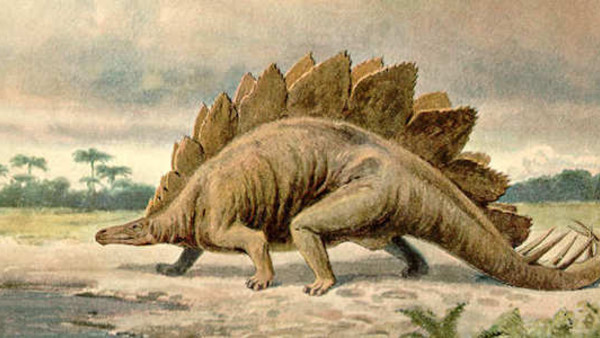
This story stems from the people of the Congo River Basin. Very similar to tales of the Loch Ness Monster, Mokele-mbembe (mo-keel-m-bem-bay) is said to be a water dwelling dinosaur-like creature. The name Mokele-mbembe means “one who stops the flow of rivers”. Therefore, it is likely that this creature was once attributed to times of great strife when rivers in the area would dry up.
The first reports surrounding this animal came in the early 1900s, when a big game hunter had been told of an elephant-dragon by two different, unconnected native people in Rhodesia (modern Zimbabwe). Further reports soon came out of other similar creatures around the Congo River Basin. As the descriptions were similar to that of dinosaurs, which were the craze at the time, these reports caused a sensation across the media the world over. This was further enhanced by stories of an unidentified animal that was killing hippos, elephants, and crocodiles alike.
Further information by many top governmental officials soon led many to believe in its existence. Many large hunts for the creature have since been launched till today, with even the BBC series “Congo” taking part in the expedition.
However, due to many socio-political problems in the countries where sightings are commonly reported, it is almost impossible to survey and search the entire area. Many believe that if it does exist, Mokele-mbembe stays in areas not explored by modern humans.
3. Black Shuck

Black Shuck is the name of a large, black, ghost dog that is said to roam the countryside and coastline of East Anglia in the United Kingdom. The creature is often found around churches and graveyards. Its name comes from the word “Scucca” meaning devil or fiend.
Commonly described features of the cryptid include large demonic red eyes, long bared teeth and black matted fur. Some stories depict Black Shuck as an omen of death, whereas in others it is companionable to the good and only attacks those that do evil and cause harm.
The most prominent story accredited to Black Shuck occurred in 1577. It is said that the large black dog burst through the doors of Holy Trinity Church in Blythburgh, Suffolk and grabbed a man and a boy to eat them. When the church congregation tried to stop the demonic entity, the church steeple collapsed through the roof, allowing it to escape. As it left the church it is said to have left scorch marks on the door, which can still be seen to this day.
Ever since, tales of Black Shuck have been disseminated world-wide and throughout popular culture. From British rock band The Darkness, video games like Assassin's Creed: Valhalla, and even as the basis of the Grim in Harry Potter, many different tales have stemmed from this cryptid.
In late 2014, an excavation near the church found the remains of a dog, said to be over 7ft (2.1m) tall. Carbon dating suggested the animal was buried sometime in the 1600s. Nearby were also the remains of humans, whose bones showed that they had been gnawed upon. Could this be the dog that originated the legend?
2. Mapinguari

The Mapinguari (ma-ping-gu-aray) is a monster from Brazilian folklore that is said to live in the Amazon Rainforest. Its name means “a thing that has a bent foot”. According to the stories, the creature was once a shaman that discovered the secrets of immortality and so angered the gods. He was punished by being transformed into a cycloptic monkey creature, cursed to wander the forest for all eternity.
Early descriptions of the beast from the 1930s described its appearance as a hairy, humanoid with one central eye and a large gaping mouth in its abdomen. It is said to be incredibly agile and strong, often killing humans within a single blow with its huge claws. The large mouth in the torso is also meant to give off a horrendous odour that should alert you to its presence. However, many more contemporary descriptions of the creature liken it to a giant sloth, a creature thought to have gone extinct in the last ice age.
Although largely thought to be herbivorous, many livestock mutilations in Brazil have been attributed to Mapinguari. For instance, many sheep and cows have been found with their tongues ripped out, which is believed to be part of a shamanic ritual.
Several eyewitness testimonies of similar beasts have been found across several countries and unconnected peoples throughout the Amazon. This, alongside its stunning likeness to the giant sloth, means that many people think that it may actually be a surviving subspecies of giant sloth that has remained undiscovered by science, resulting from the remote nature of the rainforest it inhabits.
1. Kraken

The Kraken is a legendary sea monster that occupies the waters between Norway and Greenland. The beast is often depicted as taking down ships and terrorising sailors that unfortunately cross its path. Its name is derived from old Norse for octopus or squid and is still considered by many sailors to be taboo. In these superstitions, the sheer mentioning of its name will summon it.
Most descriptions of the cryptid suggest that it is an enormous squid-like monster, capable of bringing down large ships and crushing them with its huge tentacles.
Stories began in around 1250 CE when first described in an old Norwegian natural history book, that described two of these creatures feeding in the seas around Greenland. This evolved into the stories of the Kraken in another book published a few decades later that described two sea monsters, one of which being the eponymous creature. Tales of this beast were told the world over, being merged with other tales from ancient sources, and has since never left popular culture.
Anecdotes of similar creatures in modern times were often immediately dismissed by the scientific community as silly sailor superstitions and exaggerations of the size of squids. Despite numerous reports by very credible sources. It wasn’t until the late 1900s and early 2000s that live specimens were collected and caught on camera that scientists began to believe in such creatures.
It has since been suggested that these tales of the Kraken simply stemmed from sightings of colossal squid, now known to be real, that would have easily been able to destroy ships of the era and were likely found in the waters surrounding Greenland. Some believe that even larger species could exist, meaning that the stories could in fact be real.