8 Famous Political Assassinations That Shook The World

The days the Earth stood still.
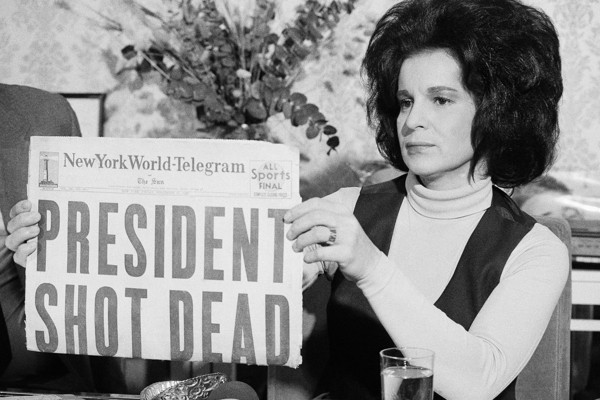
Political assassinations are a rare occurrence yet they seem to be commonplace due to the publicity with which they receive. Many politicians are even perhaps more famous due to the fact they were murdered in office than they otherwise would have been. However, there is also a good reason for this mass hysteria - political assassinations change the course of history. Even since before the times of the Ancient Greeks, high-profile figures have been killed in order to send a political message or to remove them from a position of power. Assassinations horrify, fascinate and intrigue the world because they are such unusual events - but many of them have ensured the political, religious and moral landscape of the contemporary world is the way that it is today. Here are eight of the most famous political figures ever to be assassinated - and how each of their deaths impacted on the world...

8. King Faisal bin Abdulaziz Al Saud (Saudi Arabia)
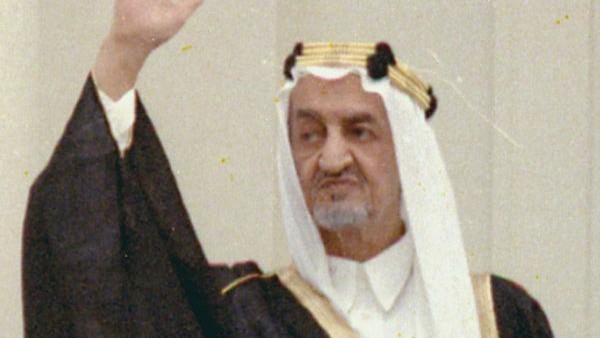
The killing of a king, or regicide, is often described as the most heinous and evil act that a human can commit - after all, if kings really are appointed by God then it is an act betraying the will of the Creator Himself. Seemingly then, killing a king is the worst-possible crime. Well, not exactly - what about if you kill the king who also happens to be your uncle? As was the case when King Faisal bin Abdulaziz Al Saud was murdered by his nephew Faisal bin Musaid. The Saudi Arabian monarch had reigned on the throne for 11 years (1964-1975) - overseeing a complete modernisation of an ancient Middle Eastern kingdom into a largely modern and semi-reformed nation - by abolishing slavery and removing many outdated practices. A vehement anti-Communist and pro-Palestinian nationalist, King Faisal was a major proponent of unifying all Muslims into one nation (pan-Islamism) and was arguably the most well-received monarch in Saudi history. However, his half-brother€™s son - Faisal bin Musaid - returned to Saudi in March 1975 having spent time in America to attend an open invite to the King€™s residence. Musaid arrived at the residence, gun in hand. When his uncle walked up to hug Musaid, the latter whipped out his pistol and shot his King twice - first in the chin and then in the ear. Although he was rushed to hospital, paramedics were unable to save King Faisal after a blood transfusion and he died that day. Although Musaid was officially declared as €œinsane€ during the trial, Saudi medical experts later determined that he was fully-sane when he committed regicide. It is believed he was attempting to avenge the death of his brother, who was killed by a policeman following a mass violent protest against public reforms. He was found guilty of the crime and beheaded in the public square in Riyadh. Saudis still mourn the loss of arguably their most-revered leader.

7. Benazir Bhutto (Pakistan)

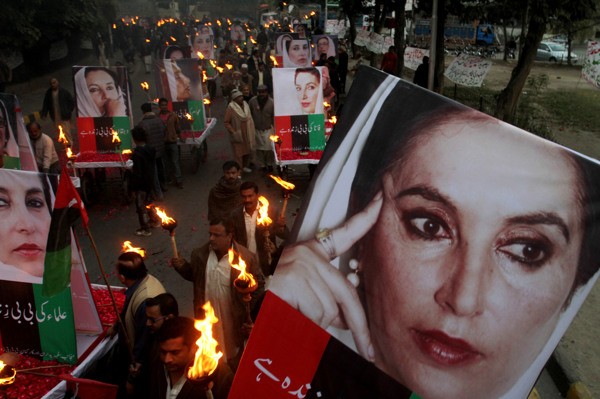
The most-recently assassinated on the list, Benazir Bhutto will forever be remembered in Pakistani history due to the ground-breaking moments she achieved throughout her much-heralded political career. The first woman elected to lead a Muslim nation, the only-ever female Prime Minister of the modern country of Pakistan - having been elected twice (between 1988 and 1990, and then between 1993 and 1996) - and the first female Chair-Person of the Pakistan Peoples Party, Bhutto is a trailblazer for many of the reforms which have subsequently occurred on the subcontinent. Her assassination - 25 years after her father was also killed - shook the Pakistani nation and left the liberals of the country yearning for the return of their former leader. In fact, following her murder, riots broke out across Pakistan and more than 20 people were killed as a result. On December 27, 2007, Bhutto was leaving a political campaign rally at the Liaquat National Bagh when she was shot. Despite being whisked away from the event in a bulletproof vehicle, Bhutto wanted to address the crowds so she opened the sunroof in order to wave. A lone gunman then fired numerous shots at the former PPP leader before a blast from an explosive killed 20 people in the surrounding area of the vehicle. Interestingly, the gun-shot wounds did not kill Bhutto €“ it was in fact the impact of fragments blown into the air from the explosion. The responsibility for the attack was claimed by Al-Qaeda commander Mustafa Abu al-Yazid, and the Pakistani government issued an arrest warrant for the mastermind behind the explosion, Baitullah Mehsud.

6. Abraham Lincoln (USA)

Abraham Lincoln Assassination €˜Honest Abe€™, the €˜Great Liberator€™ and the 16th President of the United States of all America - Lincoln€™s life was ended on April 15, 1865, while he was four years into his presidency. The Unionist leader during the American Civil War, Lincoln defeated the Confederate States and ensured that the USA remained a united nation going forward. In the process, Lincoln also ensured the abolition of slavery - although whether this was his original intention before the war began is something historians will seemingly forever debate - and increased the power of the federal government, before being made President in March 1861. The name John Wilkes Booth has become commonplace in pub quizzes around the world for one reason and one reason only - he was the man who killed the 16th President of the United States. Booth was a famous actor in Maryland, yet he was also a Confederate spy who made it his sole mission to bring down Lincoln. Originally, Booth intended to kidnap Lincoln and then hold him ransom to ensure the return of Confederate prisoners. However, after witnessing Lincoln speak on voting rights for African-Americans, Booth became determined to kill the Unionist leader. With Lincoln attending an enactment of Our American Cousin at Ford€™s Theatre in Washington DC, Booth crept up behind the unguarded President and shot him from point-blank range, leaving him to bleed to death in the following hours. Booth then stabbed Major Henry Rathbone and went on the run for 12 days before he was tracked down to a farm in Virginia and, after refusing to give himself up, he was killed.

5. Julius Caesar (Roman Empire)

Julius Caesar €œYou too, Brutus?€ will forever be connected with Julius Caesar€™s death - although the words derived from William Shakespeare€™s play have no historical basis at all. Yet the assassination itself remains one of history€™s most brutal removals of a leader. Being a dictator is certainly not an easy job - there is always the constant fear that someone will try to oust you - and Julius Caesar fell victim to such a plot in 44 BC. A conspiracy led by 40 Roman senators - including Gaius Cassius Longinus and most-infamously Marcus Junius Brutus - saw Caesar stabbed next to the Theatre of Pompey on the Ides of March. Incredibly, 23 stab wounds were found on Caesar€™s body - as a result of him falling to the ground when blinded by blood during an attempt to escape - but only one, to his chest, had actually been lethal. Brutus and Longinus€™ revolt was supposedly motivated by Caesar€™s recent dictator perpetuo declaration, which made many senators fear that the Emperor wanted to remove the Senate and continue a tyrannical rule. Despite the senators€™ so-called intention to restore the Roman Republic following Caesar€™s removal, this did not occur and instead a Liberators€™ civil war broke out throughout the Roman Empire.

4. Mahatma Gandhi (India)
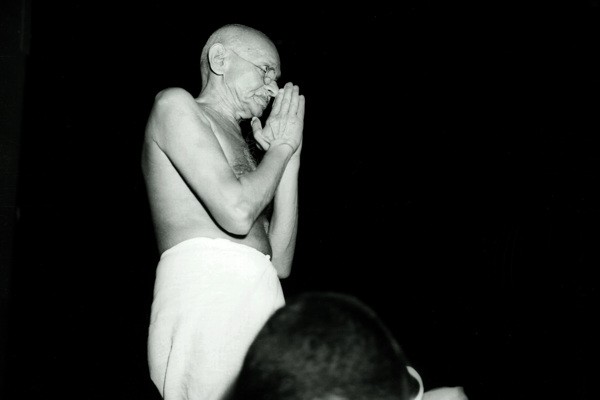
Why would a man associated with non-violence, civil rights and peace be assassinated? Well, when you are the forerunner to the leadership of the independence movement in British-controlled India, there are always going to be some people who don€™t like you. Mohandas Karamchand Gandhi - better known by the name €œMahatma€, meaning €œvenerable€ €“ vehemently opposed British rule on the subcontinent and led a non-violent civil disobedience movement which inspired civil rights activists across the globe. Although a large proportion of the Indian population loved Gandhi, some Hindu nationalists were not supporters of his methods. When Gandhi walked into the garden of the former Birla House in New Delhi on January 30, 1948, alongside his grandnieces on his way to pray, he was shot and killed with three bullets fired by Nathuram Godse. Godse, a member of an extremist group named Hindu Mahasabha, hated Gandhi€™s non-violent approach to protest and believed him to favour Pakistan€™s cause over India€™s. After being tried in 1949, Godse was executed for the murder of Gandhi - whose last words are believed to have been €œHe Ram€ (€œOh God€), which are written on an epigraph on his memorial. Following Gandhi€™s death, more than two-million people lined the streets to witness his five-mile long funeral procession. In death, Gandhi has gone on to symbolise India€™s independence as a nation.

3. Martin Luther King Jr. (USA)

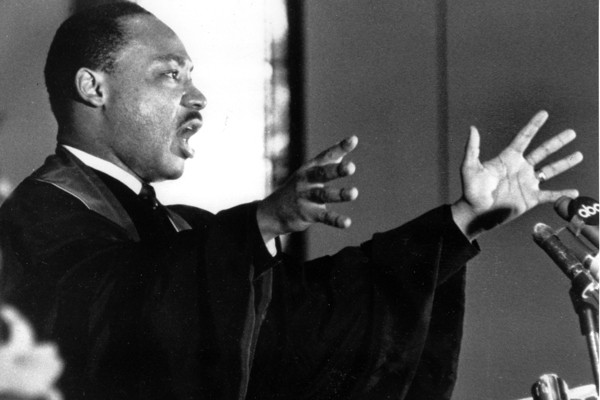
No list of political assassinations would be complete without the mention of Dr Martin Luther King Jr. - the leader of the African-American Civil Rights Movement through non-violent disobedience. A Baptist Christian minister, King Jr. changed his name in order to honour German reformer Martin Luther - and was also inspired to lead a movement against the oppression of African-Americans in the USA. Having already orchestrated the Montgomery Bus Boycott of 1955, King Jr then founded the Southern Christian Leadership conference in 1957, before organising mass non-violent protests in Georgia, Alabama and Washington DC - earning him the Nobel Peace Prize in October 1964. Most famously, King delivered his €œI Have a Dream€ speech to a mass crowd after his March on Washington in 1963 - a piece of oratory which inspired African-Americans to continue the Civil Rights Movement, but which also ultimately led to his assassination. While in Memphis, Tennessee, in April 1968, King was staying in room 306 at the Lorraine Motel. He walked out on to his balcony and was shot through his right cheek. Eventually the bullet smashed through his spinal cord and lodged into his shoulder, killing him almost instantly. With race riots erupting in Chicago, Baltimore, Washington DC, Kansas City and many other cities around the US in the immediate aftermath, King Jr€™s death hit the African-American community hard - although it also strengthened their resolve to continue to fight for Civil Rights. Eventually, James Earl Ray - who held a strong prejudice against African-Americans - was arrested at London€™s Heathrow Airport two months after the assassination and charged with the murder, being sentenced to 99 years in prison. Ray did however claim that an alias by the name of €œRaoul€ had also been involved in the assassination plot, although this was never proven and no man was ever found.

2. Archduke Franz Ferdinand

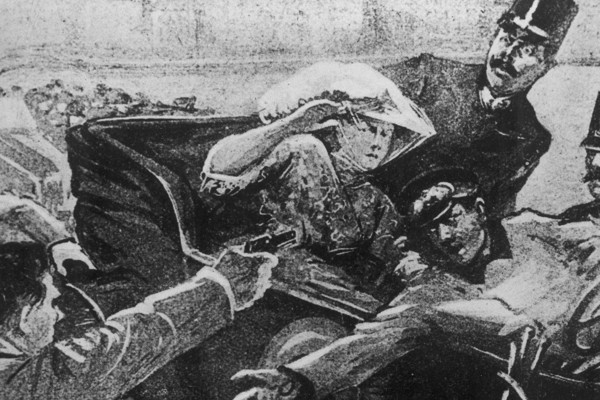
Never in the history of mankind has one murder directly caused such a bloody and destructive response. The assassination of Austro-Hungarian Archduke Franz Ferdinand in June 1914 was one of the key factors leading to the outbreak of the Great War - and as a result the death of 16million people around the globe. While Franz Ferdinand and his wife were touring Sarajevo, the capital of Austro-Hungarian-controlled Bosnia and Herzegovina, in June 1914, they made their way around the city in an open-top car. Originally, Nedeljiko Cabrinovic of the Black Hand movement had attempted to kill the Duke by throwing a grenade at his car - but he missed and it detonated behind the vehicle. In response to the attempted attack, Franz reportedly shouted: €œSo this is how you welcome your guests - with bombs?€ The Duke then requested to visit the hospital to see who had been injured by the bomb, giving another assassin - of the Young Bosnia movement - the chance he needed to kill Franz Ferdinand. Many Bosnians wanted independence from the Austro-Hungarian empire, and many terrorist acts had been committed in the region in an attempt to force secession. One of these radicals, Gavrilo Princip, who had been sitting in a cafe across the road, walked over to the car and shot the Archduke€™s wife before aiming a bullet at Franz Ferdinand€™s neck. Franz Ferdinand flopped over his wife and sobbed as they both lay dying. Following Ferdinand€™s assassination, Austria-Hungary declared war against Serbia. This in turn precipitated many more declarations of war across Europe, leading to the outbreak of World War One and the destruction that conflict brought with it. Arguably, Archduke Franz Ferdinand€™s assassination had a greater impact on the course of history than any other murder ever has done.

1. John F. Kennedy (USA)

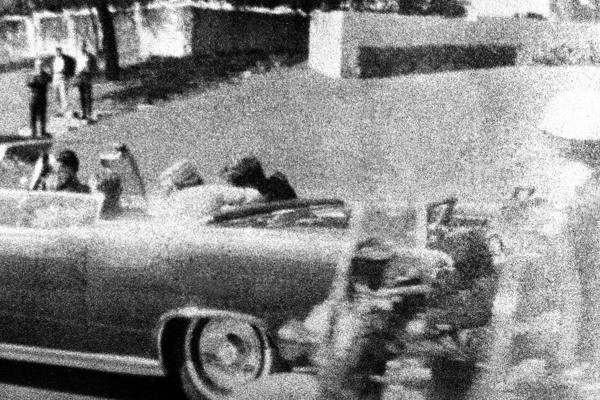
In perhaps the most famous assassination in the history of the western world, John F Kennedy was shot dead on November 22, 1963. The 35th President of the United States, JFK had been in office during some of the most turbulent events in American political history - the Cuban Missile Crisis, the building of the Berlin Wall, the Bay of Pigs invasion, the Vietnam War and an increasingly-vocal African-American Civil Rights Movement. Seen by many as the first €œcelebrity€ President, JFK knew how to use mass media to get his message across and he was recognised nationwide due to his charm and oratory. Infamously, Kennedy is also remembered for his supposed extramarital affairs with notable figures including Marilyn Monroe, Judith Campbell and Mimi Alford. However, what he is most remembered for is unfortunately his untimely death. While on a political trip to Dallas, Texas, in November 1963, Kennedy was being driven through the city in an open-top car along with his wife Jackie and other Democratic figures. He was shot three times - in the throat, upper back and fatally in the head - and was killed instantly, forcing Lyndon B. Johnson to be sworn in on Air Force One while still in the air just eight minutes after Kennedy€™s death. Lee Harvey Oswald - another whose name still remains a favourite in pub quizzes worldwide - was arrested and charged with the murder due to the fact he was an employee of the Texas School Book Depository, from where the bullets were fired. He denied the murder and was subsequently killed by a man named Jack Ruby just five days later, before he could be tried. Although LBJ€™s Warren Commission into the death found Oswald to be the lone assassin, conspiracy theories have abounded ever since and many still believe there were more than one gunmen involved. It may forever remain a mystery, but it will never cease to remain an enthralling topic of debate.

In this post: 
JFK
 
First Posted On: 
Contributor
Contributor

NUFC editor for WhatCulture.com/NUFC. History graduate (University of Edinburgh) and NCTJ-trained journalist. I love sports, hopelessly following Newcastle United and Newcastle Falcons. My pastimes include watching and attending sports matches religiously, reading spy books and sampling ales.