8 Historical Figures Who Were Worse Than Hitler

When playing the Hitler Card just won't do.

"You, sir, are worse than Hitler." It is said that any argument - particularly an online argument - will eventually end when one person plays the Hitler card. Also known as the Nazi card, Godwin's Law of Nazi Analogies, and Reductio ad Hitlerium, the tactic is often used to derail an argument when one person knows that they have already lost. Invoking a ruthless dictator, responsible for the deaths of millions, is generally accepted as a sign that you've run out of better, more coherent, arguments. This is generally the point at which a previously heated, if logical, discussion will devolve into name-calling and profanity. Linking an idea with Hitler or Nazism has become a common means of creating a sense of guilt by association. It only works, really, because Hitler has become the benchmark against which all evil has been measured since the Second World War. But there are many criminals, most of them the rulers of countries and or the leaders of organisations, who have committed crimes that are on a par with Hitler's. There are some which are arguably worse. We've rounded up a list of of the worst crimes in history and the men who perpetrated them. So the next time someone online compares you to Hitler, you'll be prepared to one up them with the likes of Stalin, Caligula, and Ghengis Khan.

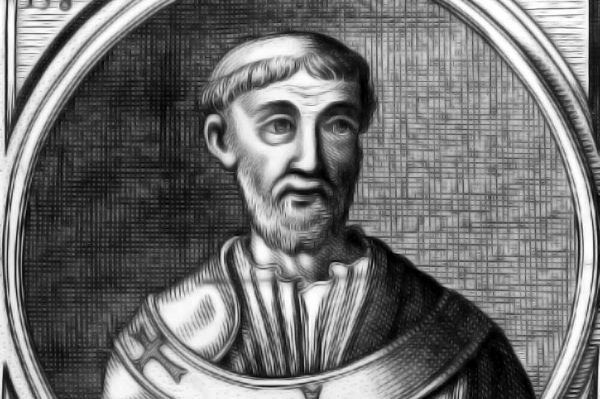
8. Urban II

A Pope should be many things. He should be pious for starters. A strong leader is definitely on the list. Forgiving, loving, generous and charitable are all up there too. But what about warmongering? In his defense, Urban II didn€™t have it easy when he became pope in 1088. For one thing, he had to deal with a rival anti-Pope, Clement III, whose supporters kept him out of the Vatican for several years. For another, Europe was in a state of chaos at the time. In his first few years, Urban fell out with the Holy Roman Emperor and was forced to excommunicate the King of France. To make matters worse, things were looking pretty grim in the Middle East. Some things never change. Urban eventually hit on a brilliant problem to solve all of his problems in Europe by uniting its Christian population against a common enemy. Thus began the First Crusade to reclaim the Holy Land from Muslim control. Although numbers are a bit shaky, it is estimated that around 200,000 people died in the first three years of the First Crusade. This might seem low compared to the other men on this list, but the First Crusade provided the main inspiration and justification for all of the Crusades that followed. As a result, Urban II's actions have been attributed to over 200 years of intermittent war in the Middle East. There's also the small matter of Urban being the leader of a religion that is supposed to be based on loving your neighbor rather than cutting his head off. Launching a war to solve your own political problems is definitely not what Jesus would do.

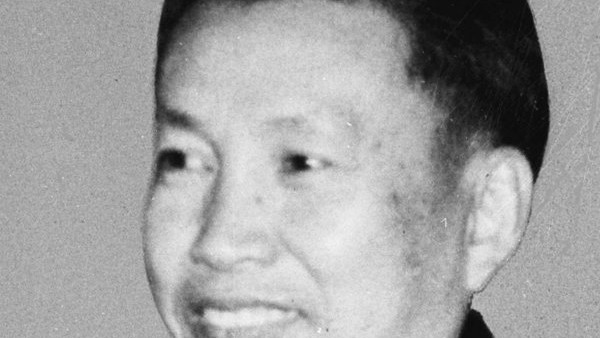
7. Pol Pot

Moving into the 20th Century, we come to Pol Pot, leader of the Khmer Rouge and ruler of Cambodia between 1975 and his death in 1997. The Khmer Rouge€™s main aim was to transform the country into a classless society free from the interference of other countries. This began, predictably, by isolating Cambodia from the rest of the world. What followed was a series of bizarre moves that read like something out of a dystopian novel. Under Pot's leadership the government outlawed all education, religion, and finance. Because they were deemed dangerous to the regime, anyone who was already deemed educated was executed. They then abolished private property and began a program of moving people from urban populations into the countryside, where they were forced to labour in communal farms. In total, it is thought that between 1 and 3 million people died under Pot€™s regime. This might seem low, but the deaths accounts for about 25% of the population of Cambodia. So while in absolute figures this isn't nearly as high as many as some of the other people on this list, the death toll is significantly higher in terms of percentages.

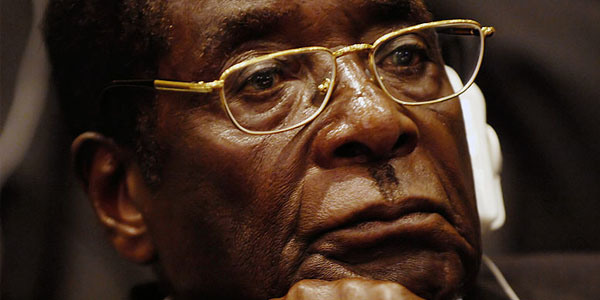
6. Robert Mugabe

Like many of the men on this list, Mugabe has a long history of human rights violations including the persecution of homosexuals, In his time as the president of Zimbabwe, Mugabe has been accused of everything from economic mismanagement and corruption to fixing elections and repressing large sections of the population. Mugabe instigated a plan of land reclamation in 2005 that resulted in the loss of home or livelihood for more than 700,000 Zimbabweans and had a negative impact 2.4 million more. One of the biggest was the destruction of the large shanty towns in Harare, leaving 10,000 people homeless. Mugabe later built a new palace less than a mile from the destroyed shelters. Many have alleged that the mass bulldozing was politically motivated because many of the residents in the area were thought to have supported the Movement for Democratic Change opposition party in the previous election. Today, Zimbabwe has the lowest life expectancy of any country in the world, and corruption is widespread. Like Pol Pot, Mugabe's negative impact on humanity is not measured so much in terms of absolute numbers as it is in the proportion of his population that have died under his regime. It is thought that 6 million people, roughly a third of the population of Zimbabwe, have died or disappeared under Mugabe's rule.

5. The Kim Dynasty

If you separate out all the members of Kim Dynasty, they would need a list of their own. To date, the Kim Dynasty have ruled over North Korea for three generations. Founding member Kim Il Sung is generally credited with creating the North Korea we all know and fear today, largely with the help of men and arms purchased from Soviet-era Russia. Kim Jong Il took over from his father in 1994. North Korean media described Kim Jong Un as a devoted father and a national hero. Less official statements, on the other hand, created an image of an irrational, power-hungry man who allowed his people to starve while he enjoyed dancing girls and cognac. Most recently, Kim Jong Un, North Korea€™s current leader, is believed to have executed his uncle using long-range anti-aircraft guns. Over a hundred members of the ruling family have since been exiled or executed by the regime. We still don€™t know if North Korea was involved in last year€™s attack on Sony. In terms of human rights violations, North Korea is really in a class of its own. The Korean War resulted in the deaths of roughly 2.8 million people, including American and Russian soldiers. Since then, it is estimated that somewhere between 700,000 to 3 million dissidents and political opponents have vanished under the regime. Finally, some 3.5 million people died during a widespread famine in the 1990s, the effects of which are still felt today.

4. Hong Xiuquan

Hong Xiuquan started life as a provincial scholar in 19th Century North China. He was, by all accounts, a brilliant scholar in his early years despite his humble beginnings. However, Xiuquan suffered a nervous collapse in his early twenties after failing an Imperial exam, and things started to get pretty weird from there. During his recovery, he had a series of visions which led him to believe that he was the younger brother of Jesus. After coming to this conclusion Hong began destroying idols and enthusiastically preaching his (somewhat shaky) interpretation of Christianity. Hong began destroying Buddhist and Confucian statues, temples, and books, attracting a large group of supporters as he did so. He went on to become the leader of the Taiping Rebellion, which saw the deaths of some 20 million people, most of them non-Christian civilians. Although many of the deaths were the result of plague and famine at the time, it is estimated that the Third Battle of Nanking in 1864 saw the deaths of more than 100,000 people in three days. In 1853, the Rebellion reached its peak and Hong Xuiquan was able to take control of the city of Nanjing, converting it into the capital city of his new Holy Kingdom. Hong ruled the Kingdom as the son of God and introduced sweeping reforms including outlawing polygamy (while keeping several concubines himself) and introducing a complex system of civil bureaucracy. Everyone knows that bureaucrats are evil. And, like many of the men on this list, he fell into the habit of executing those he saw as rivals.

3. Joseff Stalin

This is the name most people come up with when asked to name a historical figure who was as bad as, or worse than, Hitler. Stalin was a founding member, and leader, of the Soviet Union from the early 1920s through to his death in the 50s. He became one of the most feared a reviled people in the eyes of the West following the end of the Second World War. It was under his control that the Soviet Russia entered into the decades-spanning Cold War with Western Europe and America. However, while Hitler tended to focus on specific social groups (mostly Jewish and Romani families), most of the people killed by Stalin's orders were his own citizens. As a general rule, anyone who stood in his way or was deemed a potential threat to his authority was killed. Estimates on the total number of people directly killed under Stalin's regime range from 10 to 30 million. Starting from 1934, Stalin organised a massive purge of the party, government, armed forces and intelligentsia, in which millions of 'enemies' of the Soviet people were imprisoned, exiled or executed. The reforms also implemented the Holodomor, or "Hunger-extermination;" an artificially-created famine in the Ukraine that killed somewhere between 2 and 8 million people.

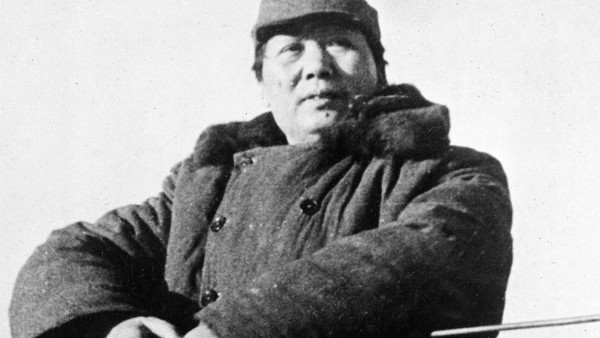
2. Mao Zedong

Chairman Mao, as he is known to most of the world, was the leader of the Chinese Communist Party and the People€™s Republic of China, which he ruled from 1949 to 1976. After winning the Chinese Civil War, Mao began a prolonged campaign to encourage the growth of both China€™s economy and population, and under his leadership the Chinese population almost doubled from around 550 million to over 900 million. However, a subsequent large-scale economic and social reform project that Mao dubbed the Great Leap Forward resulted in an estimated 45 million deaths between 1958 and 1961, mostly from starvation. About 2.5 million people are thought to have been beaten or tortured to death as counter-revolutionaries in this period. In 1966, Mao€™s government launched the Cultural Revolution, sparking a period of political recrimination and social upheaval which lasted until his death in 1976. Mao's Cultural Revolution included a range of human rights violations, including the instigation of the One Child Law, restrictions on religious freedoms, and banning any rival political parties. Because most Chinese families prefer male over female children, the One Child Law alone has been blamed for the abandonment and deaths of 100 million infant girls, most of whom are thought to have been abandoned or killed as a means of circumventing the law.

1. Genghis Khan

While it is an irrefutable fact that Genghis Khan conquered much of Asia in order to build his Mongolian Empire, your opinion of him will vary wildly depending on where you live. In modern day Asia, particularly Mongolia and areas of China, he is treated as a cultural hero who built one of the greatest empires in human history. Conversely, in much of the Middle East and eastern Europe Genghis Khan and his regime are credited with considerable damage, destruction and loss of population. The opinion is particularly low in the Middle East and Iran, where it is commonly believed that Genghis Khan's assorted troops killed up to three quarters of the population of the Iranian Plateau, roughly 15 million people. While this isn't as high as the impact that Mao had on the population of China, it is estimated that Iran's population did not reach the same level again until the middle of the last 20th century. Unlike many of the men on this list, Khan appears to have contributed to the human population nearly as much as he took away from it. To this day, it is thought that as many as 8% of the men in China (which account for about 0.5% of the world's total) are descendants of Khan. While having a lot of children doesn't make you worse than Hitler, there's something about knowing that the descendants of Khan are still running about that is slightly disconcerting. At least Hitler didn't have any children.

In this post: 
Adolf Hitler
 
First Posted On: 
Contributor
Contributor

With a (nearly) useless degree in English literature and a personal trainer qualification he's never used, Freddie spends his times writing things that he hopes will somehow pay the rent. He's also a former professional singer, and plays the saxophone and ukulele. He's not really used to talking about himself in the third person, and would like to stop now, thanks.