8 Science Facts They Probably Didn't Teach You In School
Won't somebody think of the children?

School, as you might be aware, is where we go to learn (shocker, right?). But they don't tell you everything.
For one thing, this would take an impossibly long time, for another, there are some things that simply aren't appropriate for the classroom, even if they are true. Remembering just how much sniggering your science class did at even the most basic anatomy lessons, you can perhaps understand why teachers prefer to leave some things up to the internet to teach our young minds.
It could be that they're too rude, too sexy, too gross or just too damn depressing. Whatever the reason, they're left off the syllabus and out of the classroom and, frankly, more's the pity.
Perhaps more kids would stay on and study science subjects if they were taught the more colourful aspects of sexuality, or the more violently fascinating behaviour of animals or even just the grossest facts their teacher knows (everyone loves gross science, don't deny it). We could be missing out on a whole generation of young scientists, because we were all made to stick to the yawntastic chemistry syllabus.
Well, we're here to right some wrongs, so here are some of the things your science teacher never told you.
8. Monkeys Can Be Taught To Use Money... But Use It For Gambling And Prostitutes
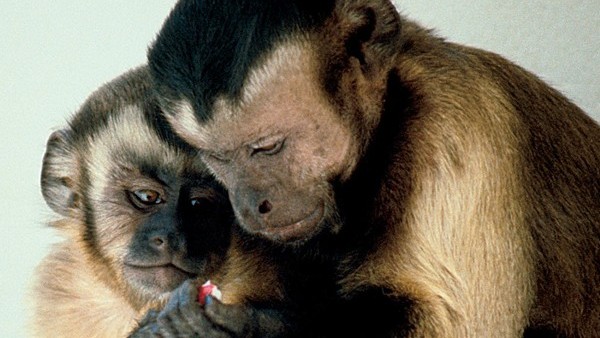
The more we learn about our primate cousins, the more we discover how similar we are. Unfortunately, that also includes some of humanity's more unsavoury aspects.
Amazingly, Capuchin monkeys can actually be taught how to use money. In 2005 Keith Chen and his colleague Laurie Santos, trained a troop of capuchin monkeys to use a made-up currency of little silver discs with a hole in the middle. The monkeys would trade the disks with the researchers for grapes and little cubes of jelly. They even managed to grasp the concepts of inflation and market value.
They also, however, grasped the concept of gambling, making the same irrational decisions and showing the same signs of superstition as human gamblers. What's more, they quickly figured out that the money could not only be used to get jelly and grapes, but also sex.
One day, one of the researchers spotted a transaction being made between two monkeys out of the corner of his eye. He saw a male monkey exchange some silver tokens for sex with female monkey. In different experiments, male rhesus macaque monkeys have been observed "paying" (using juice as currency) to see female rhesus macaques’ bottoms. It's kind of like the simian version of tipping a stripper.
7. The Penis Is That Shape For A Good Reason
No, not long and thin, we know why it's that shape. No, we're talking about the , ahem, end.
The flared out tip of the penis is thought to be that way so that it can scoop out any souvenirs from the last guy that had sex with the lady in question in order to increase his chances of fathering offspring. Obviously, this means that the genes for the scoop-shaped penis are more likely to get passed on to any progeny, and the trait becomes common through the species.
Humans aren't the only one to do it either, the male damselfly’s member also has a wee little scoop on the end of it for exactly this purpose.
Damn, nature, you crafty.
6. Dolphins Are Just The Worst
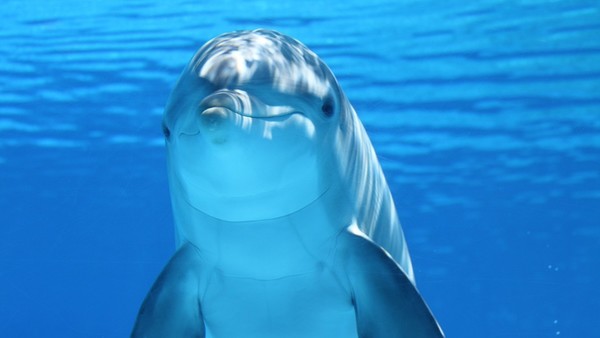
Dolphins are living proof of the power of good PR. Despite their cutesy reputation, they are more like sex-crazed sea demons than happy little water puppies.
Some of the most common diseases dolphins get are STIs and that's no surprise, seeing as they will screw pretty much anything that moves. Males dolphins have been known to penetrate each others blowholes with their prehensile penises, whereas female bottlenose dolphins have been known to use those noses for more creative purposes (dlidos, guys. Dolphin dildos).
When there isn't a random dolphin orifice within reach, dolphins will Macgyver a mastabatory aid from somewhere. They have been known to use live eels to get themselves off, and here's a video of one using the body of a dead fish, just in case you hadn't had enough weird internet for the day.
5. Why Do Guys Like Boobs So Much?
This is a really fascinating anthropological quandary, but you can certainly see why no one has ever thought to teach it in schools.
It certainly seems obvious, but in reality, there's no good reason why boobs would be naturally sexy. They're secondary sexual organs, whose only actual job is to feed offspring and, what's more, not all cultures sexualise breasts - at least not to the point of taboo as is the case in many western cultures.
They're obviously a sign that a woman has reached sexual maturity, and nipple stimulation can trigger the release of oxytocin. However, the former doesn't explain why some cultures don't find them inherently, eye-poppingly sexy, and the latter is more to do with the bonding of mother and child during breastfeeding.
There's a lot of debate as to whether the fascination is evolutionarily hardwired or culturally reinforced but, essentially, no one knows for sure why people love boobs so much.
4. Your Face Is Covered In Poop
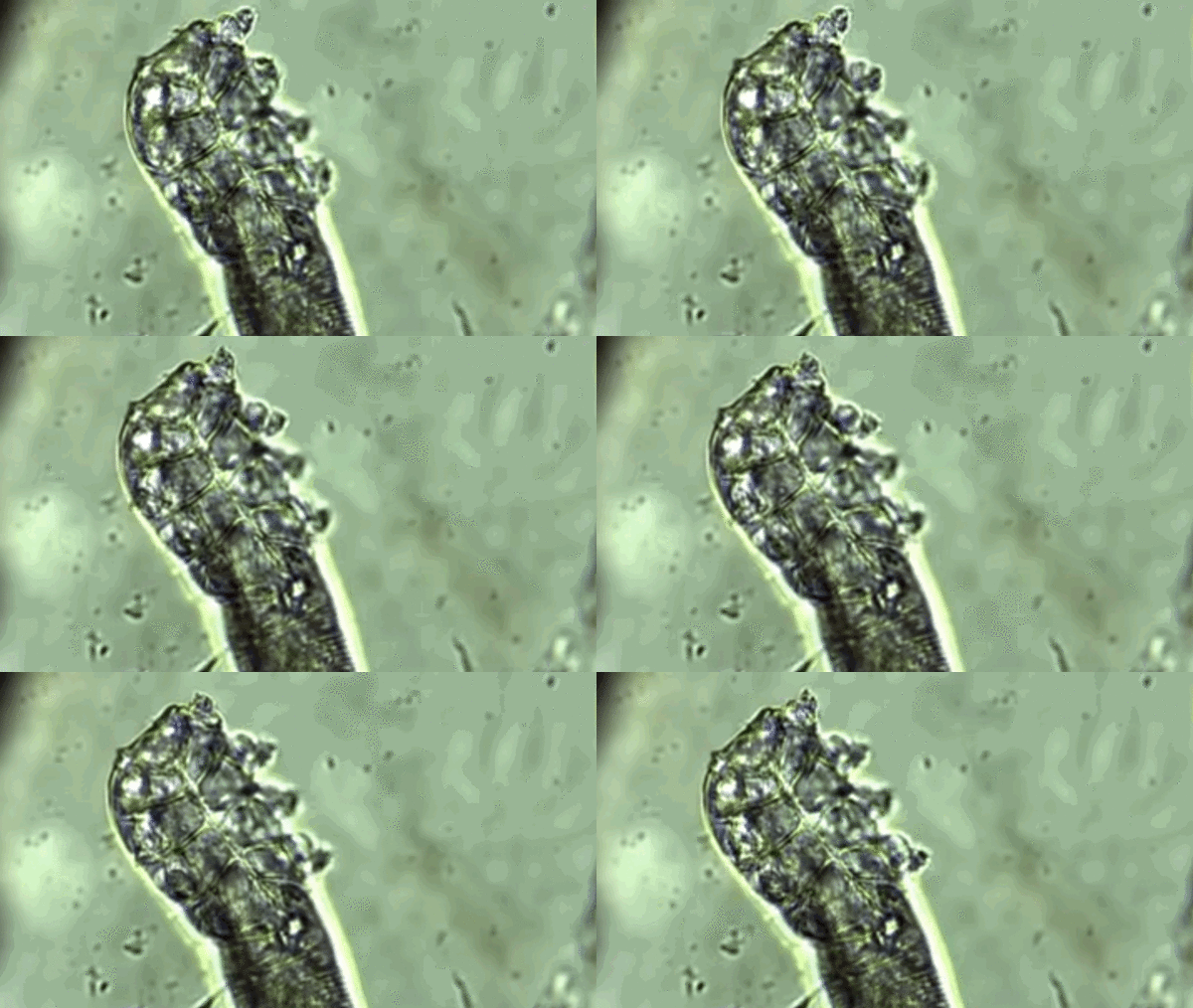
As you might be aware, you have little mites that live on your skin, in your pores and on your eyelashes. In case you weren't aware, fun fact, you have little mites that live on your skin, in your pores and on your eyelashes.
They tend to munch on the oils and dead skin there and, as with all living things, food generally gets turned into poop in the end. The only problem is that your face mites don't actually have an anus, so all of the waste product simply builds up inside them over time.
This is great for you ... while they're still alive. When they die, however, they explode tinily and messily all over your face, showering you with a microscopic lifetime's worth of poop all at once.
3. It Takes Longer To Drown In Saltwater
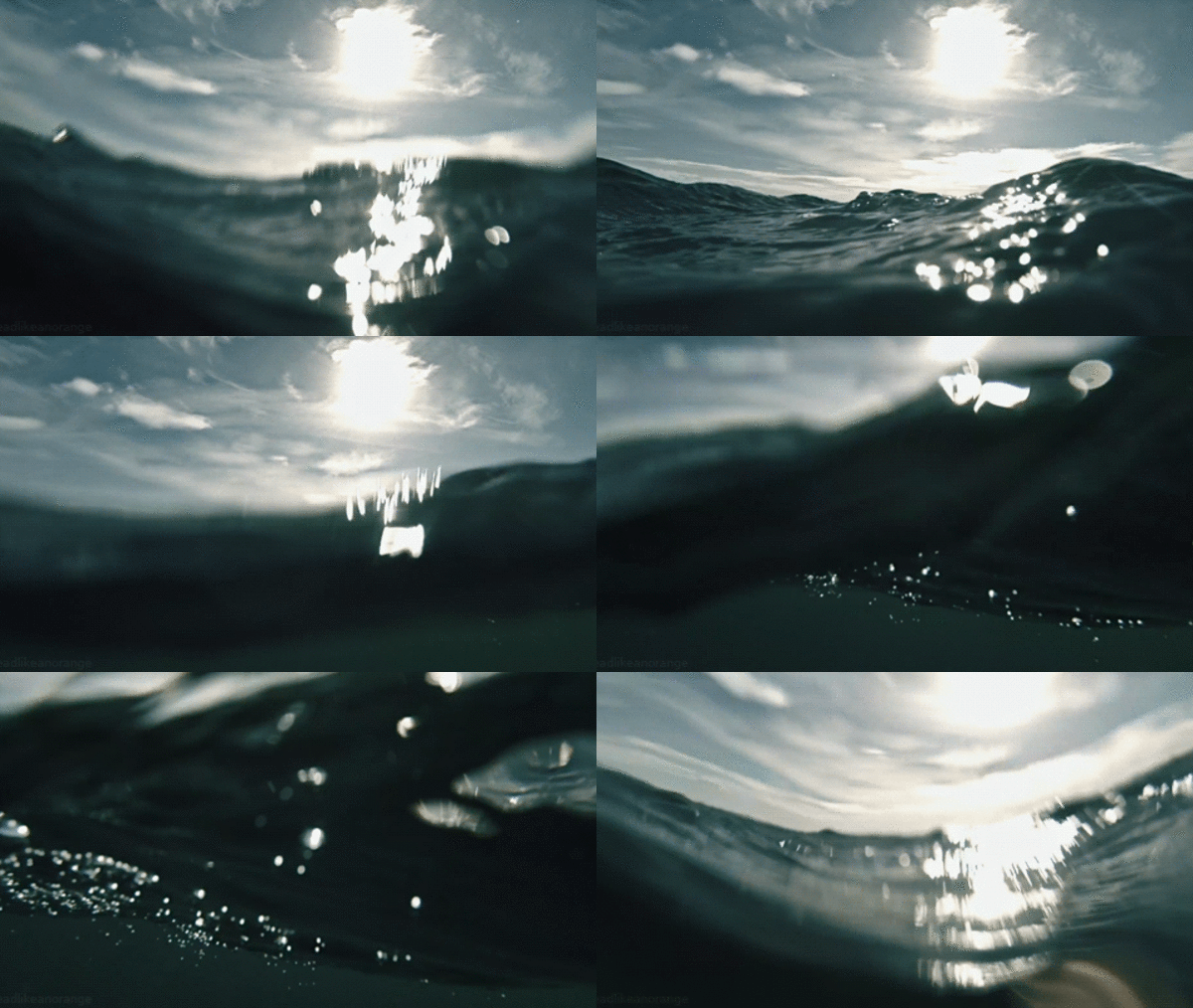
Any way you look at it, drowning is no picnic and is probably best avoided, but if you really can't help it, then you should know the difference between drowning in freshwater and saltwater.
The processes are actually very different, and its all to do, unsurprisingly, with the salt content. When drowning in freshwater, the water is drawn into the bloodstream, causing the cells to swell and burst, leading to cardiac arrest. In saltwater, however, it's the other way around and blood is drawn into the lungs and prevented from absorbing oxygen, essentially causing suffocation.
For this reason, death by freshwater is much quicker, and the victim is more likely to be unconscious at the point of death, whereas death by saltwater is much more drawn out and can take as much as 10 minutes longer.
2. Noble Harambe?
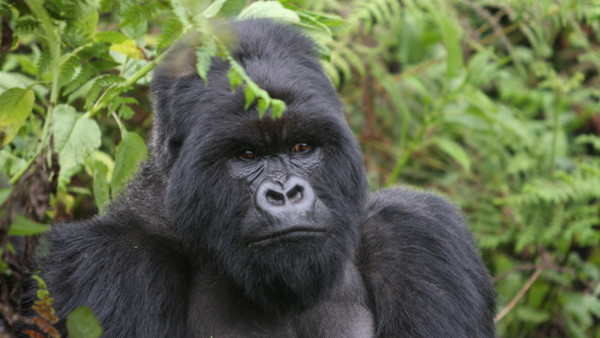
We tend to think of nature as a harmonious, Lion King style set up, and humans as the vicious, warlike exception, but animals can commit horrific atrocities too.
Chimpanzees are known to regularly "go to war" with rival clans, stealing, killing and eating babies, raping fertile females and killing the rival adults. This is no Circle of Life, this is out-and-out territorial bloodshed.
War is not, as many anthropologists might have you believe, a product of human culture. This passage from Harvard Magazine describes the atrocities committed in primate warfare:
The chimps did not stop to eat, and they did not make any of their normal calls and shouts. Instead, they crept silently into the territory of a neighboring group and hid until they saw a lone chimp. Screaming with excitement, they would ambush the victim, hold him immobile and beat him to death, sometimes twisting the victim's leg until the muscles ripped, or tearing off flaps of skin while he was still alive. In one well-documented case in Tanzania, a group of male chimpanzees used such ambushes to eliminate a whole band of neighbors.
And this is where Harambe comes into it:
Further research found that such violence was not limited to chimpanzees. Male gorillas, for example, were observed ripping infants out of their mothers' arms and smashing them to the ground in often-successful attempts to entice the mothers to mate with them. One theory is that the male gorillas do this to demonstrate their strength and to show how valuable they would be as protectors.
1. Sad Penguins
Sometimes it feels like growing up is just a string of horrifying realisations that the world is not the fluffy happy place that Disney promised you. So, in keeping with this theme, here's one:
Sometimes, penguins get depressed and commit suicide by wandering off into the icy wilderness.
No one is really sure why, and we haven't managed to get a good understanding into what is going on, but it really does appear as though the penguins are wandering off of their own accord, for no good reason, and are fully aware of what they're doing.
Not quite the world that we were promised by Happy Feet.
You could write for WhatCulture Science! Click here to find out how you could get paid to write about what you love.
If science gives you the warm fuzzies, like us on Facebook or follow us on Twitter to stay up to date.