8 Scientific Reason Why People Are The Worst
The science behind the very worst parts of human nature.

My god, people are just awful, aren't they? And when we say "people" we, unfortunately have to include ourselves in that.
As it turns out, people aren't just awful in day-to-day life, as well as all of the anecdotal evidence that we have, they're also jerks when you study them in the lab. There have been numerous scientific studies into the darker side of human behaviour, and a lot of them have forced us to come to the conclusion that we're a mean, selfish, stubborn bunch of cynics who would trust their own grandmothers as far as they could throw her.
A lot of this dark side to human nature can be traced back through our evolutionary roots and, at one point, probably served a useful purpose. In our modern world of bus stops, rush hour and Donald Trump, however, they get channelled into being generally awful to one another.
Like, we've done some good stuff too, curing smallpox was pretty good, Mother Teresa was a canny lass and all, but light without the darkness is blinding and luckily we're all doing our best to balance out the good in the world by being terrible people. And you'll be pleased to know that it all starts at birth...
8. Children Are Inherently Selfish
Lets start from the very beginning.
You were probably a child at some point, which means that you were almost certainly a selfish one. Don't feel bad about it, everyone was. Up until about the age of five or so, kids are completely egocentric, meaning that they have an excessive reliance on their own point of view and are pretty much incapable of seeing things from another person's perspective. Even though, when asked what they think another person is feeling or thinking, children will often offer a suggestion (rather than simply saying "I don't know"), this is usually just a projection of a child's own feelings.
This egocentrism means that very young children are simply unable to even comprehend the concept of sharing. Even when we do start sharing, the theory goes that we're only doing it because we get something out of it, whether it's a like-for-like reciprocation or an increase in reputation or status. A study by Yale and the University of Chicago found that children are more generous when they know that other people will know about it, whereas if their generosity is anonymous, they are considerably more selfish.
Although we (hopefully) grow out of our pathological egocentrism, we unfortunately don't grow out of this second stage of strategic pro-sociality. To test whether you have or not, just ask yourself whether you would be more likely to make a large donation to charity anonymously or with some kind of public acknowledgement ... and be honest with yourself about it or it won't work.
7. The "Hate Circuit"
As much as "The Hate Circuit" sounds like a Nirvana EP, it's actually a little vortex of hate lodged deep in your own brain.
According to researchers at UCL, there are structures in your cortex and sub cortex that kick into overdrive when you see someone that you hate. This is distinct from fear or disgust and wouldn't be activated if you looked at a picture of a spider, for example. Conversely, areas associated with fear, anger and threat, such as the the amygdala and the hippocampus, are not activated when you feel feelings of hate, seemingly indicating that hate is not associated with our danger avoidance instincts.
So which parts of the brain does the hate circuit interact with? Well, it actually shares a couple of brain structures, specifically the putamen and insula, that are associated with feelings of love. And this, ladies and gentlemen, is why we can't have nice things.
It is thought that this has something to do with "the preparation of aggressive acts in a romantic context" which means ensuring that love rivals don't get between you and your need to procreate (i.e. having a punch up in a car park over a girl). The scientists at UCL think that this crossover between love and hate could be the actual, scientific reason behind with there is classically such a fine line between the two.
6. You Need To Feel In Control
Unless you're one of the few hippies that genuinely just go with the flow, you're probably the same as most of the human population in that you have an almost neurotic obsession with feeling as though you're in control of a situation. This is completely normal and nothing to be ashamed of, no matter how many self-help manuals try tell you otherwise.
Studies have shown that our need for control is written into our biology. When we feel as though we're in control of a situation, everything is hunky dory, our stress levels are low and our immune systems even work better. However, when that goes down the pan, the brain essentially throws a massive tantrum. Cortisol (the stress hormone) levels soar, brain function jams and everything from our immune system to our pain threshold goes out the window. We may lash out to try and gain control back or even start to engage in behaviours like "learned helplessness" which will make us even less able to deal with situations in the future (thanks, brain). In the real world, this translates into people punching each other on aeroplanes.
In fact, this need for control is so strong in humans that, if we don't have it, we'll just make it up. A 2008 study found that people who lack control of a situation are more likely to imagine patterns and derive meaning where there is none. They will literally see and hear things that don't exist to try to project some kind of order on the world again. If that isn't pathological then nothing is.
5. You'll Argue To Win For The Sake Of It
As humans, we generally pride ourselves on our ability to reason. However, studies find that we use our unique ability, not in the noble pursuit of truth, but as a stick to beat people with in arguments.
Some research has shown that we're actually pretty bad a pure reasoning outside of an argumentative context. Unfortunately, our ability to "reason" means that we're less likely to view things objectively and more able to twist things around to fit with our world view, which explains our propensity for confirmation bias and why your infuriating cousin still thinks that the Illuminati were behind 9/11. This is basically rooted in the human drive to win.
This instinct has been bred into us over the course of our evolution (seeing as the people who win tend to be the ones who pass on their genes). The drive to be at least perceived as right trumps the drive to be actually right and so our ability to reason is used, not to find the truth, but as a tool of rhetoric to convince others that you're right. Evolutionarily speaking, sticking to your guns is a sign of strength and admitting you were wrong is a sign of weakness. Our brains are all about building up a model of the world that works, but this is a very complex process and it uses a lot of cheats and shortcuts to do it. It takes much less energy to prop our world views up on a throne of lies than tear the whole thing down and start again.
So long as our wrongly held views are not going to take us out of the gene pool (i.e. "I think there's a God that lives on the mountain" as opposed to "I could survive a fall from this cliff"), it benefits us to be pigheaded.
4. You Don't Really Care About The Economy, The Future Or The Polar Bears
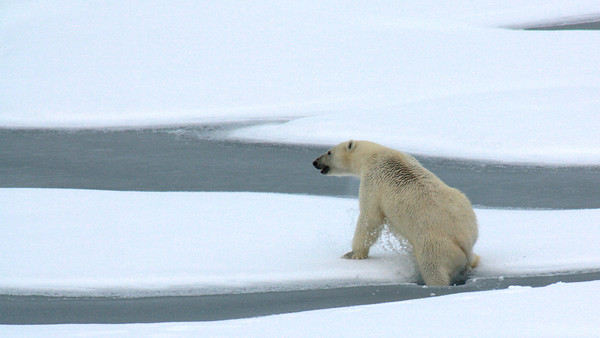
Climate change is a Bad Thing, probably one of the worst things that is ever going to happen to humanity. But, if you're honest with yourself, it's probably not something that keeps you up at night, is it?
A researchers at NYU designed an experiment in which participants were given a sum of money and the option to "invest" it in preventing climate change. If, as a group they were able to hit the target, then they would recieve an additional $60 reward, but if they didn't then they would get nothing (and those who did invest would lose their investment). They also varied the amount of time the participants would have to wait between their investment and their reward and (perhaps unsuprisingly) found that the longer that time was, the less willing people were to part with their cash. They found that most people would would not invest and hope that the rest of the group would hit the target anyway.
In one version of the experiment, the reward for investing their money was that the $60 was spent on planting oak trees to absorb carbon emissions and not a single person put their money towards it. This selfishness is a really good survival instinct, but unfortunately it paints a pretty bleak picture of our ability to come together as a species.
The experiment shows how catastrophically bad we are at delayed gratification and has serious implications for how we tackle inter-generational problems such as climate change (or the economy, or education or anything really). All of this talk about "investing in future generations" is just talk. What we actually need to do is get off our high horses and admit that what we really want are immediate and tangible rewards for our efforts. Short of a species-wide personality change, owning our own selfishness will ultimately benefit the future generations more than pretending we care.
3. Spitefulness Is Actually Useful

Scientists have devoted a lot of time, energy and research to behaviours such as aggression, selfishness, altruism and love, but surprisingly little research has been done on a subtler and more complex human behaviour: Spite.
Countless experiments, such as the Stanford Prison Experiment, have shown humans' willingness to inflict pain and misery on others when given the chance, but spitefulness goes a step further in people's urge to inflict pain and misery on others even at a cost to themselves. In one study, a survey was conducted on 1243 people containing question such as "I would be willing to take a punch if it meant someone I did not like would receive two punches" in order to develop a new 17-item "spitefulness scale".
It was found that men tend to be more spiteful than women and young people tend to be more spiteful than older people and that levels of spitefulness were correlated with callousness, Machiavellianism and poor self-esteem. Unsurprising, perhaps, but evolutionary theorists believe that it might be a bit more complicated than "bad people are spiteful". It is thought that a lot of spiteful behaviour is actually born out of an instinct for cooperation and fair play. There's an idea that it's actually a form of altruistic punishment and a good mechanism for maintaining fairness and justice.
It is thought that spitefulness could even be a necessary evil in a self-regulating society. A study at Tufts University found through a gaming experiment that a community completely made of either spiteful or spite-less people is less likely to function as well as a mixture of the two. The willingness of some people to punish rule-breakers, even if their actions didn't directly effect them actually enhances the "fairness" of the rest of the society.
2. Nice Guys Really Do Finish Last
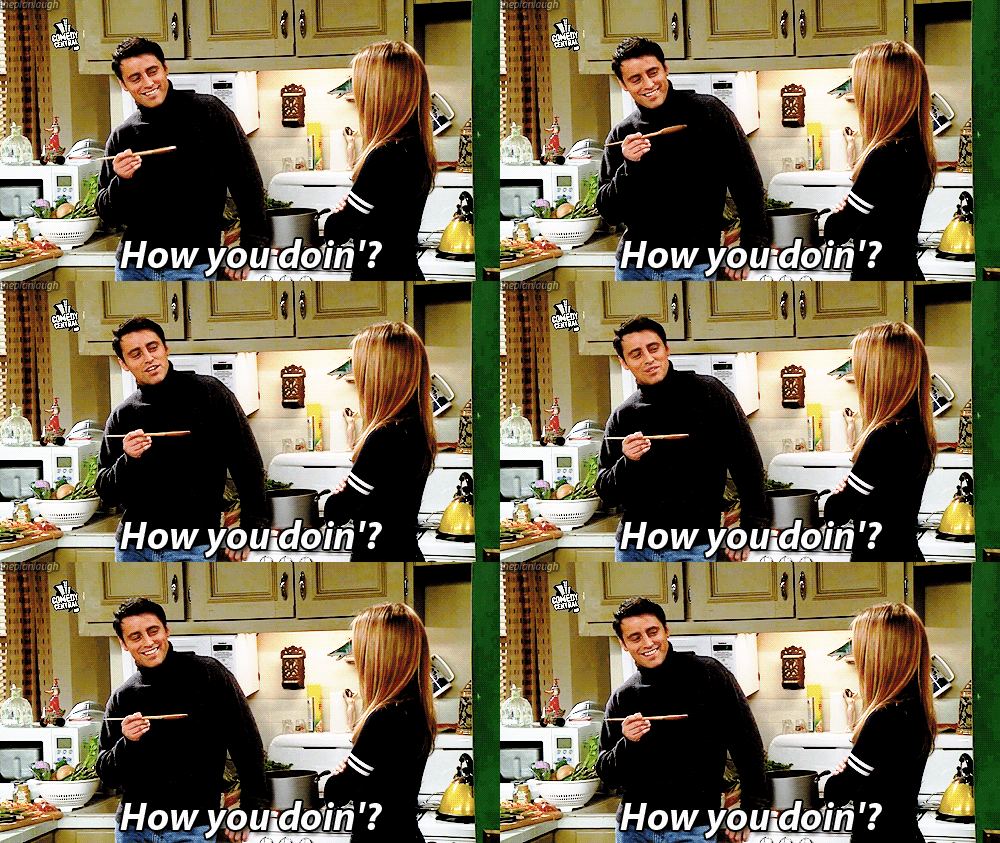
You know that whole "women only go for jerks" stereotype? Well there's probably a kernel of truth in it. Before you blokes get on your high horses, this is a trait shared by both men and women.
When looking for short-term partners, men and women tend to favour looks over personality (shocker). Whilst ovulating, women will tend to seek out the men who display the characteristics that we're evolutionarily programmed to associated with good genes - chiseled jaw, big muscles, symmetrical face - and men are more likely to overlook personality flaws in women if they think they're attractive enough.
So, people like to date hot people. Not exactly groundbreaking.
However, there have been actual links made between being physically attractive and a bit of a douchebag (that's the technical term). A study in the Journal of Research in Personality found a positive correlation between socially averse behaviour and symmetry of the body. We're programmed to find bilateral symmetry attractive as it is an indicator of good genes. The researchers found that people who were more symmetrical were more likely to be aggressive and neurotic, whereas less symmetrical people were more prone to traits of empathy and agreeableness.
Whether or not this is a result of less-attractive people having to "compensate" (and more attractive people not having to bother to develop a nice personality), or whether there is some intrinsic biological link between attractiveness and being a jerk, remains to be seen, but it turns out that nice guys (and girls) really do finish last.*
*within the context of partner selection for short term relationships, before anyone gets all butthurt. The effect is reversed for long-term relationships, but we're talking about character flaws at the moment so sit down.
1. You're An Untrusting Cynic

If you're smart, you'll trust people as far as you could spit them, that's the received wisdom, right? Turns out that us humans are a pretty cynical lot and we tend to massively underestimate the trustworthiness of others.
In a study published in Psychological Science participants were asked to rate the trustworthiness of strangers. 120 participants were given 7.50 and asked if theyd like to hand it to another person. If the other person made the same decision the pot would increase to 30 - so they would each get 15 in total, but so would a person who didn't hand over their winnings, you would have to just trust that they did. They found that people only trusted the strangers 52% of the time, whereas 80% of them were actually trustworthy. This is due to an asymmetry in the feedback we usually get about the trustworthiness of others.
In the real world, we generally only find out whether we can trust someone after we choose to do so and we never really find out if were were wrong not to trust someone. If, for the sake of demonstration, we trust 50% of people, but are let down by 50% of those people, that brings the total amount of untrustworthy people up to 75% in our minds because the 50% we chose not to trust were implicitly untrustworthy, even if that was not really the case.
This constant confirmation bias that basically everyone is a bunch of bastards only serves to make matters worse. In the study, it was found that this cynicism fell away when the participants found out whether they were right or wrong when they didn't trust someone as well as when they did, and their trust rates went up to about 71%.
Basically, people aren't as bad as you think they are, except for in all the ways outlined in this article.
You could write for WhatCulture Science! Click here to find out how you could get paid to write about what you love.
If science gives you the warm fuzzies, like us on Facebook or follow us on Twitter to stay up to date.