8 Shocking Crimes That Were Secretly Committed By Governments
Think you're safe within your own borders? Think again.
All things considered, there's quite a lot of trust involved when it comes to Governments. You trust that, if you abide by the law and get your taxes in on time, that your garbage will be collected, you trust that your local services will be well funded, and that'll they'll keep you safe from any marauding bands of savages.
And on the whole they usually do, but if you're also trusting them not to commit terrible atrocities and frame other people for it... well... yeah, history says that trust's probably misplaced. It's quite a tricky business running an entire country you see. As well as all the pressures of keeping millions of people fed, clothed and obedient, you've also got virtually all your other major powers (and their plans) to contend with. Sometimes you have to bend the rules, sometimes you have to straight up indulge in savagely brutal criminal behaviour - you just have to hope that by the time the truth outs you're long dead.
Sadly for scurrilous and evil world leaders the good folk of planet Earth are pretty good at getting to the bottom of things on their own. Especially when literally hundreds of them have been caught up and killed in the offending acts. So from thinly-veiled pretences for war, to all out covert campaigns against "problematic" members of the public, dip a toe into the murky pool of false-flags, conspiracies, and times governments have become the very thing they're sworn to protect you from.
8. The Italian Police Plant Explosives At The G8 Summit
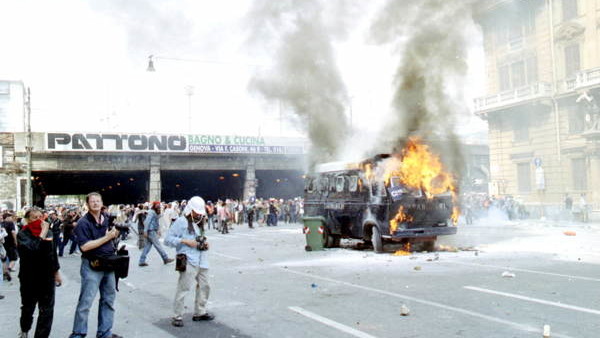
In 2001, the G8 Summits being held in the Italian city of Genoa were met with heavy protesting. Around 200,000 anti-globalisation protesters took to the streets in organised marches, before eventually clashed with the notoriously heavy-handed Geona Police Department. During one of the protests, a police officer was reported as having being stabbed by a member of the public and, knowing that the bulk of the group's organisation was coming from a local school dormitory, a night raid was organised.
93 arrests were made, and two improvised explosives were found at the scene. During these arrests over 72 protesters were injured, with witnesses speaking of riot police beating them with clubs, smashing windows and destroying computers in the raid. Screams were heard by local residents, and blood was later found on virtually every surface of the school. The police claiming that both the stabbing and the explosives were justification enough for their actions.
However given the startling stories and figures that emerged from the incidents, a number of inquests were launched and, two years later, both the stabbing and the bombs were discovered to have been planted there by members of the Genoa Police Force. Senior police chief and head of the Central Operations Services Franco Gratteri, concluded in the hearing that the stabbing of an officer had been "knowingly simulated".
7. The USS Maine Sparks The Spanish-American War
Although not a war many people in the present are familiar with, the end of the 19th Century saw the short but significant Spanish-American War. Largely concerned with the Cuban War of Independence - itself the the result of years of hostility between the Cubans and their Spanish occupiers - the US sought to intervene in the ongoing conflict and "liberate" the island for their own ends.
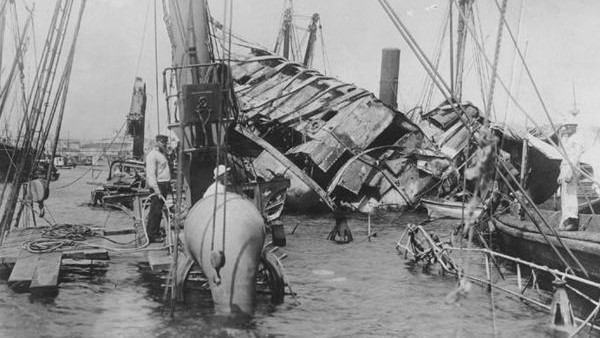
With American newspapers successfully stirring up anti-Spanish sentiment, and the existing garrison on the island already depleted from skirmishes with the locals, the US government had a prime opportunity to strike. However with no easily justifiable interest in the island, they lacked any clear mandate to intervene. That was until the USS Maine, and armoured cruiser deployed in the region, was mysteriously sunk. Still in service despite being hopelessly out of date and previously put forward for decommissioning, Maine found itself stationed in Havana Harbour.
A series of explosions ripped through the hull, and sent over 260 sailors to their deaths. The US blamed everything, from a naval mine planted by the Spanish, to Cuban revolutionaries mistaking it for a Spanish ship. After demanding Spain give Cuba their Independence as an apology for the destruction of the Maine, war was formally declared. Over 100 years later, both Spain and Cuba's official view on the incident is that the ship was deliberately sabotaged by the Americans as a precursor for war.
6. Operation Himmler
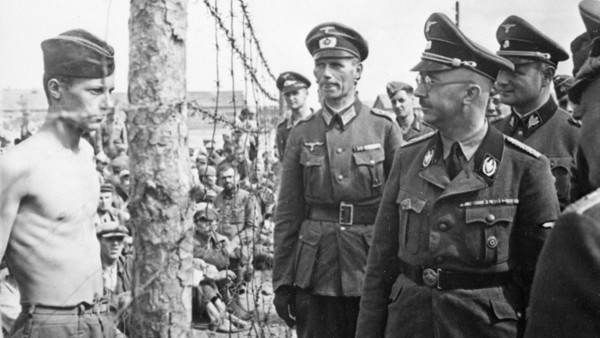
Whilst the principal point of the Nuremberg trials was to prosecute the remaining high-ranking figures of the Nazi Germany for the war crimes of the Second World War, an unexpected side-effect was the number of plots it exposed. With war an inevitability, and Hitler keen to make the first moves, a campaign of national and international propaganda was launched by the Nazis.
In it they accused Polish authorities of ethnically cleansing Germans living in Poland. However this alone wasn't enough to justify a full military invasion. On August 31st, under cover of darkness, SS personnel disguised as members of the Polish Army began to storm German border towns; attacking a number of train stations and customs houses. Finally, a radio station in the city of Gleiwitz was hijacked and began broadcasting anti-German messages. When the authorities turned up, they found a number of dead Polish soldiers at the scene - in fact already dead Polish occupants of a nearby concentration camp who had been dressed up to appear like members of the military.
The German press proudly displayed the images of these dead Polish soldiers and, with the world happy to accept that Germany had a justifiable reason to defend its borders, Hitler ordered the invasion the very next day. Officially recognised as the very first maneuver of the Second World War, the entire premise for the attack was exposed six years later.
5. The Soviets Bomb Their Own Town To Invade Finland
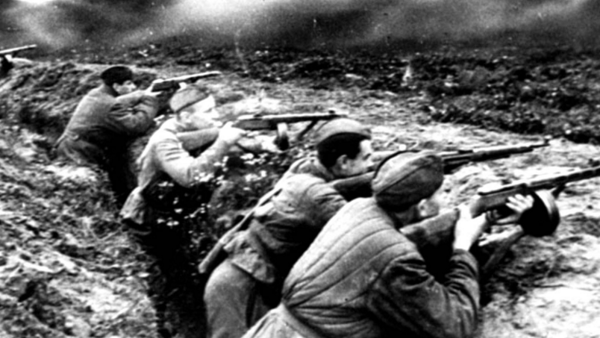
Not wanting to be outdone by their German counterparts, the Russians also manufactured an excuse for themselves to enter the war. Although, in typical Stalinist style, they took things a little bit further. Presumably aware that it was actually German forces behind the skirmishes on the Polish border - and almost certainly worried about how exposed the city of Leningrad was to an aggressive German military - Soviet forces began shelling one of their own towns.
Based mere miles from their Finnish border, the Red Army levelled parts of Mainila with artillery fire and immediately began a public propaganda campaign to blame it on Finland. With only the most basic of garrisons based anywhere near the border, and no suitable artillery even close to being in range for such an attack, the Finnish government strongly denied any responsibility. A neutral investigation was proposed, and immediately dismissed by the Russians in favour of tearing up their non-aggression treaty. Four days later Russian forces crossed the border, sparking The Winter War that dragged on for months longer than anticipated at the cost of nearly 500,000 lives.
Over a decade after the end of the Second World War, the then Soviet Premier Nikita Khrushchev wrote that the Mainila shellings were in fact organised by Russian forces. Boris Yeltsin even going so far as to denounce the entire Winter War as a calculated act of aggression on behalf of the Russian military.
4. COINTELPRO
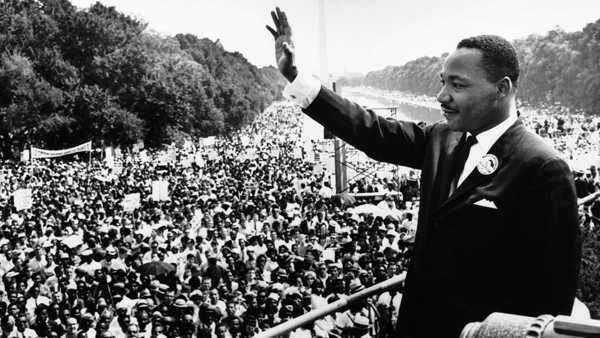
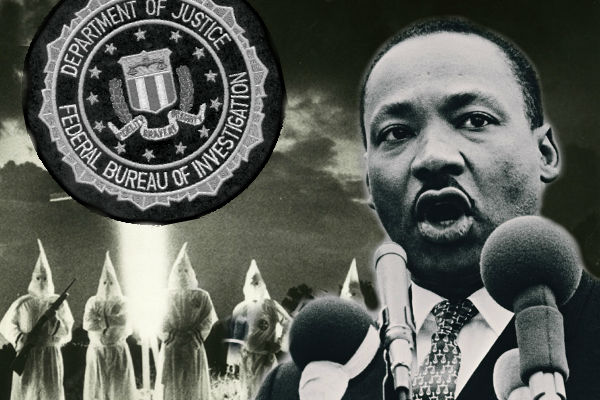
Still allegedly being run to this day, COINTELPRO (Short for Counter Intelligence Program) was a campaign of carefully orchestrated infiltrations of political organisations by the American FBI. Confirmed targets of the operations have been the most vocal of civil rights movements, notable journalists opposed to the Vietnam War and, most specifically, Dr Martin Luther King.
After King's landmark march on Washington in 1963, then President Herbert Hoover personally charged the FBI with infiltrating King's organisations, telling the organisation "We must mark him now, if we have not done so before, as the most dangerous !*$% of the future in this nation from the standpoint of communism, the !*$%, and national security". Within weeks, King's people were finding bugs and listening devices in every hotel room he was provided. Both journalists and historians have repeatedly claimed that King was sent so-called "suicide packages" by the FBI.
One of which allegedly contained, amongst other things, audio confessions claiming to detail depraved sexual encounters King had had, along with a note that read "there is only one way out for you. You better take it before your filthy, abnormal, fraudulent self is bared to the nation". King declined their kind offer. When King attempted to expose the work of COINTELPRO, government friendly newspapers and political figures themselves branded him "the most notorious liar in America" and blamed any actions on the work of white-supremacists and political activists.
3. Operation Ajax
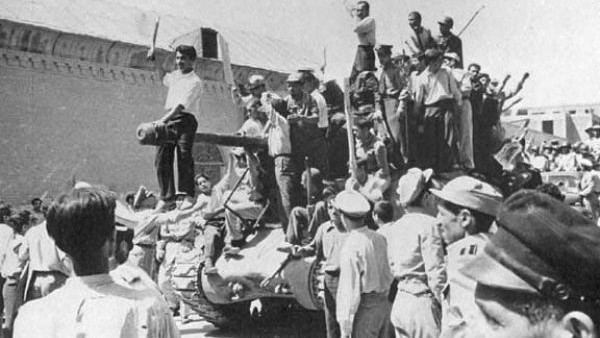
In 1953, British and US intelligence agencies conceived of a plan to overthrow Iranian leader Mohammed Mossadegh - who'd been elected fairly in what was then a democracy - and install a Shah who was far more in favour of ties with the United States. With Iran firming up its plans to nationalise its oil industry, Britain eventually convinced its United States counterparts to support to a series of clandestine operations designed to destabilise the entire country.
From protests, to riots, even staging a bombing at the home of a notable Muslim cleric, Operation Ajax turned the general population against their leader. Iranians, secretly working for the CIA, infiltrated Mossadegh-supporting communist groups and began threatening politicians and religious leaders. With some 500 people dead, the Operation eventually bore fruit when the Shah was reinstated to deal with the perceived unrest in the country.
In exchange for their help in dealing with the situation, the Shah handed over control of the Anglo-Iranian Oil Company to the British - a company now known the world over as British Petroleum, or BP. Were it not for a series of CIA documents released under the Freedom of Information Act, it's likely this coup would have remained a secret.
2. The Lavon Affair
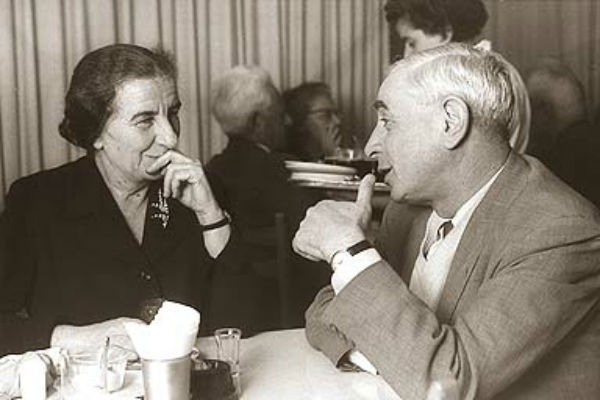
A year after the commencement of Operation Ajax - and presumably in some part inspired by it - Israel launched its own campaign of covert misdirection. Given the codename Operation Susannah, it consisted of a series of bombings, planted by Israeli operatives, against British and American-owned communities.
Primarily targeted at libraries, cinemas and schools, the operation aimed to frame the Muslim Brotherhood, assorted Egyptian Communists and, according to released files, a alarmingly vague series of "unspecified malcontents" or "local nationalists". The idea, such as it was, would lead to a complete destabiliSing of the region and perceived civil, religious and political unrest. Leaving the Egyptians with little choice but to request that the British Government step in and assume military control of the Suez Canal zone. However, after a series of successful attacks, a poorly-rigged bomb caught one of the operatives in the blast, leading to his capture and the exposure of the entire plot.
The issue went as far a public trial, and ended in the execution of two of the spies. After being labelled as "Unfortunate Affair" or "The Bad Business" by the Israeli government, the incident was finally dubbed "The Lavon Affair" after the aftermath forced the country's defence minister - Pinhas Lavon - to resign.
1. The Reichstag Fire
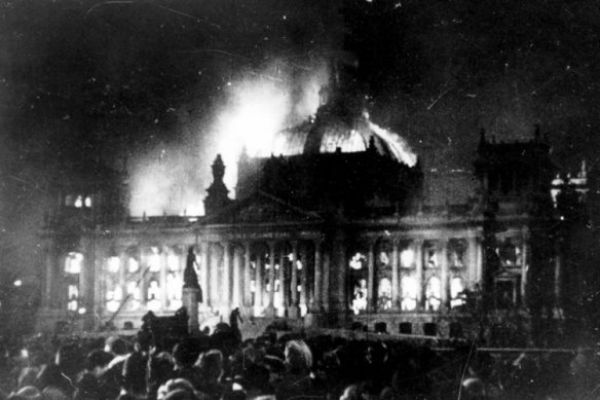
Arguably the most famous government-inspired atrocity, simply by virtue of it being the only one currently on most National Curriculums, The Reichstag fire was one of the key catalysts in Adolf Hitler's ascension to power. Some 6 years before the Second World War - February 1933 to be precise - the Reichstag, home of the German parliament, and the building at the very heart of the country's political infrastructure, was burned down in an arson attack.
A young Dutchman named Marinus van der Lubbe was arrested at the scene, claiming that he was acting on behalf of communism to "take revenge on capitalism". One of the first political figures to arrive at the scene was, conveniently, Prussian Interior Minister Hermann Goering who immediately outlined plans to "quell an uprising" and ordered the arrests of several notable communists. With the general population relieved to see justice being swiftly done, little was made of the convenience of the suspect's confession, the speed at which his fellow supporters were apprehended, or the government's eagerness to blame them.
From there, the coalition of the Nazis and the German Nationalist People's Party capitalised and, masquerading under "emergency powers" suspended the Communist's right to assembly and freedom of speech. Removing, in the process, their most vocal political opposition in the run up to the war. Goering would deny involvement for the remainder of his life, but several witnesses during the Nuremberg Trials would later testify to his, and the party's involvement.