8 Times Harry Potter Was On Trial

Taking "if you spoil Harry Potter for me, I'll shoot you" to new heights of realism...

The Harry Potter series is unfathomably lucrative. In 2011, the Harry Potter brand was valued by Business Insider at over fifteen billion dollars. Fifteen billion €“ that's more billions than double the number of people on this Earth. More than four-hundred million copies of Harry Potter books have been sold worldwide. There's a Warner Brothers helmed film franchise, a theme park, video games, and innumerable other kinds of merchandise. It's only natural, then, that certain people would see Rowling's vast success and want a share of that Gringotts Bank-tier profit. The temptation must be ridiculously strong. Any connection or similarity to anything in the Harry Potter series €“ regardless of how slight €“ has the potential to rake in hundreds of thousands, maybe even millions€ Of course, with great success comes great legal defence. Pursuing a claim with no legitimacy is practically financial suicide, but sometimes people just can't see beyond the pound signs in their eyes. Here are some of the most foolish examples of times when people tried to take Harry Potter to court.


8. A Canadian Folk Band Didn't Want To Be Mistaken For A Wizard Rock Band

Everyone remembers that (fairly cringe-worthy) scene in Harry Potter And The Goblet Of Fire, the one with the wizard rock band at the Yule Ball singing a song about hairy trolls and hippogriffs. In the film, the band (which is called the Weird Sisters) is portrayed by a host of amazing real-life musicians, including Jarvis Cocker of Pulp, plus Jonny Greenwood and Phil Selway of Radiohead. In 2005, when Warner Brothers was preparing to make the film adaptation of Goblet Of Fire, a Canadian folk band called the Wyrd Sisters contacted the studio. The band feared that Harry Potter fans would mistake the Wyrd Sisters for the Weird Sisters, and be confused when they showed up and the band wasn't playing songs about bubbling cauldrons and slimy frogs. It's reported that Warner Brothers offered the band fifty-thousand dollars as compensation, but the band decided they'd like a bit more of that sweet, sweet franchise cash, and pursued damages of around forty-million dollars. Unfortunately for the band, the Ontario Court did not take their side, and ordered the payment of one-hundred and forty thousand dollars in court costs. Warner Brothers simply removed the name Weird Sisters and continued to rake in ludicrous profits. Take about looking a gift Hippogriff in the mouth...

7. An American Writer Claimed She Invented Muggles (Even Though They Were Mutants)

It's incredible just how quickly the credibility drops off on this one. In 1999, the American author Nancy Stouffer accused J. K. Rowling of stealing ideas from her own books, infringing her copyrights and trademarks. For a start, Stouffer had written a book that contained a race of beings known as Muggles. She had also written a book titled Larry Potter And His Best Friend Lillly. Okay, well Larry Potter sounds like Harry Potter...and Harry's mum was called Lily€ Lucky for Rowling, Stouffer's Muggles were a race of mutant humanoids. The similarities between Larry and Harry were that both wore glasses. And what else did she cite as proof of infringement? Both stories feature wooden doors. When it finally went to court, Stouffe was fined fifty-thousand dollars for bad conduct, including attempts to fraudulently update her stories with more frequent usage of the word Muggle.

6. Rowling Was Accused Of Plagiarising The Adventures Of Willy The Wizard

Or to give it its full title: The Adventures Of Willy The Wizard: Livid Land. In 2009, the estate of deceased children's author Adrian Jacobs sued Bloomsbury for five-hundred million dollars, claiming she had plagiarised large parts of Livid Land for use in Harry Potter And The Goblet Of Fire. The Adrian Jacobs estate's claims, however, were just as shaky as the title of Jacobs' book. They claimed that both Willy and Harry have to work out the nature of a contest, they both receive help in a bathroom and that they're both attempting to rescue human hostages from half-human, half-animal fantasy creatures (don't worry if that last one lost you €“ it lost me too). Of course, once the estate realised that it had literally no chance of getting any money from anybody, it changed tactic and filed suit against Rowling's American publisher Scholastic. What did they want? Oh, not much €“ just for the publisher to burn every existing copy of Goblet Of Fire. Needless to say, the case went nowhere, and the existence of the forth entry in the Harry Potter series was spared.

5. China Published A Harry Potter Book That Was Just Tolkien's The Hobbit With Name Changes
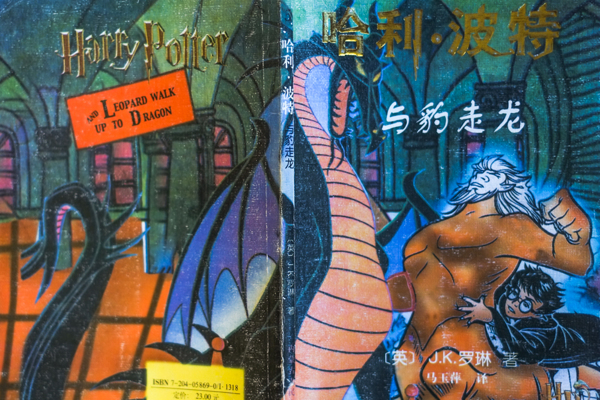
In a hole in the ground there lived a wizard. At least it makes a change from a cupboard under the stairs€ In 2002, a Harry Potter sequel was published in China. In English, the title was something similar to Harry Potter And Leopard-Walk-Up-To-Dragon. Sounds exciting, doesn't it? Exactly like something J. K. Rowling would write... The book was essentially the text of J. R. R. Tolkien's The Hobbit but with all the names changed to those of Harry Potter characters. It didn't take long for the world (and specifically Rowling and Warner Bros) to get wind of this, and they took steps to cease its publication. In the end, the Bashu Publishing House paid one-thousand, six-hundred pounds and apologised in China's Legal Times. As of 2007, it's estimated that there are around fifteen million copies of fake Harry Potter books being circulated in China. So...they're doing a great job on curbing that.

4. Warner Brothers Reduced A Fifteen Year Old Harry Potter Fan To Tears
Talk about magical. In 2000, during the lead-up to the release of Harry Potter And The Philosopher's Stone, Warner Brothers attempted to seize the domains of a number of prominent Harry Potter fan websites, claiming that in order to protect their copyright, the websites had to be shut down. This act in itself was enough to garner negative publicity, as it was seen as stifling fan communities and fan enthusiasm. But things got even worse when a teenager by the name of Claire Field was targeted. Claire ran a website called the Harry Potter Guide, which was basically just a fan site dedicated to the characters, locations and other various magical elements found in the Harry Potter book series. Upon receiving an intimidating letter from Warner Brothers, Claire's father reached out to a British newspaper, which detailed how young Claire was left in tears over the letter, and the insisted termination of her fan site. Media backlash was so prominent that Warner Brothers was forced to spare Claire's website, as well as changing its stance. Fan sites would be tolerated as long as they didn't claim to be official or affiliated with Warner Brothers' movies.

3. A Publisher Banned Consumers From Reading The Half-Blood Prince (Even Though They'd Already Bought It)

Surely this is the final evolutionary manifestation of spoiler culture. In 2005, Harry Potter And The Half-Blood Prince was on the cusp of being published throughout the world at large. Everywhere was on spoilers crackdown, with publishers ensuring that no part of Rowling's new book was leaked to the public. Unfortunately for Rowling, a Real Canadian Superstore grocery store mistakenly sold several copies of the book before the release date. Fair enough, you might think €“ a regrettable mistake that is pretty much inevitable regardless. Rather than warn fans to be vigilant about spoilers, however, the book's Canadian publisher Raincoast Books managed to obtain an injunction from the Supreme Court of British Columbia which essentially banned the people who had bought the book early from reading it. This lead to a massive media and legal discussion over whether or not human beings have a right to read, and a right to freely access information. In the end, it was ruled that copyright law has basically nothing to say about what people can do with a book once they've bought it.

2. Asda Accused Bloomsbury Of Charging Way Too Much For Harry Potter Books

There's just nothing quite as soulless as two massive corporations duking it out over profit. In 2007, Bloomsbury and Asda waged magical (and financial) war on each other over the price of the upcoming Harry Potter And The Deathly Hallows book. Asda accused Bloomsbury of unfairly fixing their prices, as the supermarket wanted to sell the novel for around half of Bloomsbury's recommended retail price. According to Asda, Bloomsbury was €œholding children to ransom€. Not only that, but Asda's press release featured plenty of cringe-worthy Harry Potter puns, including the line €œBloomsbury need to do a quid-ditch as they have sent their prices up north on the Hogwarts Express€. Yikes. Bloomsbury responded by accusing Asda of libel, and claiming that their prices were publishing industry standard. They wanted nothing to do with supermarket price-wars. Bloomsbury also cancelled all of Asda's orders (around five-hundred thousand copies). Asda, realising it was about to miss out on the most profitable book event in the history of literature, quickly complied, apologised, retracted their statement and essentially bowed at the lucrative statue of Harry Potter (and in turn, Bloomsbury). Good work, team.

1. A Security Guard Tried To Shoot A Journalist Over Harry Potter Spoilers
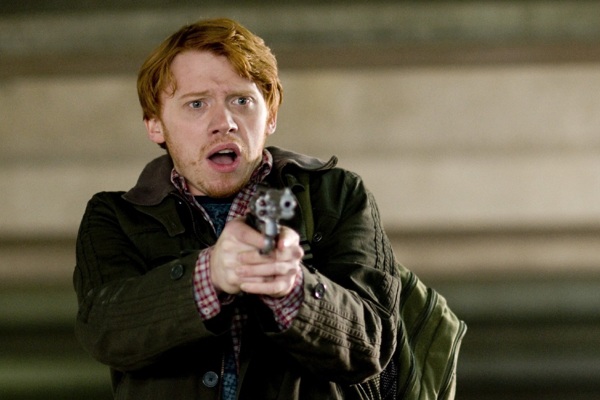
It's easy to forget just how crazy people were going over Harry Potter spoilers back in the day. The whole world was desperate for just another shred of information about the books that hadn't yet been published. Spoilers were valuable €“ not just for the purposes of bragging, but legitimately financially valuable. In 2005, an English security guard by the name of Aaron Lambert pilfered six pages from Harry Potter And The Half-Blood Prince, a massive six weeks before it was due to be published. Clearly Lambert had his sights set on earning a bit (or more likely a substantial amount) of cash, as he was arrested the next day after trying to sell them to a journalist from The Sun. Things probably would have turned out very differently if it wasn't for the fact that negotiations turned violent, and Lambert reportedly fired a shot from his imitation Walther PPK. Lambert later admitted to threatening the journalist and attempting to blackmail Bloomsbury. What caused the altercation we'll never know, but it's likely Lambert wanted a monetary figure much larger than The Sun journalist was offering. Later, Rowling claimed that The Sun had tried to blackmail her into a photo opportunity in exchange for not leaking the manuscript.

Contributor
Contributor

Commonly found reading, sitting firmly in a seat at the cinema (bottle of water and a Freddo bar, please) or listening to the Mountain Goats.