8 Ways Astronauts Could Die On Their Trip To Mars

You'll want to cancel your ticket off this planet.
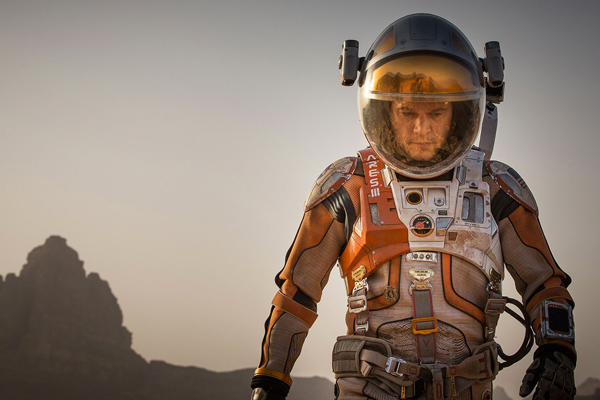
Astrophobia - The fear of outer space. There€™s just something about the cosmos that evokes a unique mixture of awe and pants-wetting terror in all of us, and while we feel generally safe and happy looking up at the night sky safely down here on Earth, a few brave souls have their sights set on getting to Mars in the next few decades. But are our fears founded in reality? Well, whether we like it or not, the universe is entirely indifferent to us. So as it turns out, zooming through our solar system in a tin can and crashing into an alien planet happens to be a health hazard In fact, there are many, many ways astronauts can (and possibly will) die on their expedition. Here€™s just a few...

8. The Launch

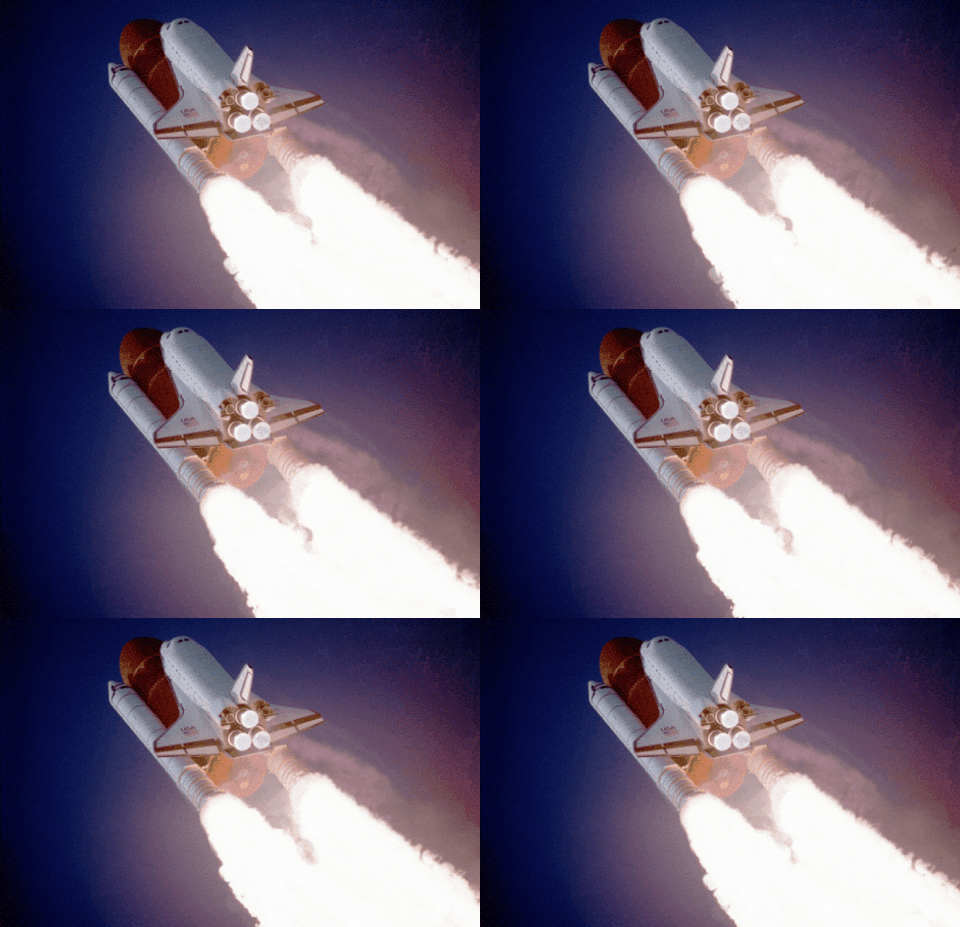
To quote Mark Watney in The Martian: €œWhat would an Apollo astronaut do? He'd drink three whiskey sours, drive his Corvette to the launchpad, then fly to the moon in a command module smaller than my Rover. Man those guys were cool€. Launching off our happy humble little planet is something reserved for bad-asses only. First off, there€™s the thousands of gallons of explosives being ignited within a few seconds. But not only that, there€™s the sheer speed required to launch from our planet. Earth€™s exit velocity is a spine crushing 6.96 miles per second (11.2 km). You read that right; per second. Astronauts also expect around 3 g's of force, making your few extra pounds still hanging on from Christmas weigh triple the amount. Why Is This Bad News? Space-person steps into metal box with a couple of his or her equally ballsy mates. Space-person takes a seat on top of a few hundred thousand gallons of explosive and makes themselves comfortable. Space-person is then hurtled at almost 7 miles a second off planet Earth, with fingers crossed that the engineers got good grades at school and didn€™t forget to carry the one in some of their calculations. Provided adequate training, the g€™s won€™t kill the astronaut. Nor will the noise, albeit it probably wouldn€™t be music to their ears. However, 1986€™s challenger disaster and the subsequent deaths of all 7 crew-members aboard provides a haunting analogue of what could happen when we attempt to exit the surly bonds of Earth. As good as our propulsion technology gets it€™s still essentially a controlled, prolonged explosion. An OH&S nightmare.

7. The Vastness Of Space

Mars is far away. Like really, really far away. It€™s our close neighbour, but when we talk of things that are €close€ in a cosmological sense, we€™re on a different scale completely. So although hitting a target the size of a planet with a lander at least the size of a van sounds like an easy task when you consider what a football player gets paid millions of pounds to do, it actually isn€™t. The Earth moves at about 66,500 miles/hour (107,000 km) and Mars moves about 53,900 miles/hour (86,900 km) around the Sun along different paths. At their closest approach, Mars and Earth are still around 37,180,000 miles away from each other (59,840,000 km). That€™s the equivalent distance of 1500 or so trips around the Earth. A launch to Mars will have to take all these factors into consideration to hit the target. Why Is This Bad News? In 1992 the Mars Observer was lost prior to Mars arrival. In the 80s the launches of Phobos 1 and 2 were both lost near the moon of their namesake. Accidents, whether it be technical or human, happen. A manned Mars mission could have the same fate. A lander that missed the mark would either transit deep space indefinitely or get pulled in by the gravitational force of another planet, moon or the Sun. Any of these options wouldn€™t be ideal to say the least. Let€™s face it, there€™s a reason astronauts are tethered during space walks. The prospect of drifting through the infinity of space wouldn€™t be as glamorous or fun as Star Trek might make it seem.

6. The Radiation

Unless you€™re talking to the likes of Peter Parker or Bruce Banner, being exposed to radiation is a bad time. In general, it weakens or breaks our DNA causing cell mutations €“ leading to a plethora of malignant cancers and disease. Sadly, not possible spidey sense or super powers. Yet, for various reasons like modern medicine, technology such as air travel, or even certain food stuffs, radiation is a huge part of our human existence. Putting some numbers on this, the background radiation that most normal folk like you or I can expect to be exposed to is around 2.4 mSv a year. Comparatively a single CT scan is around 3 times that much, yet with these amounts we can thankfully still be happy and healthy. But how much is say, a return interplanetary transit to and from the Martian surface? A DNA crunching 780 odd mSv or radiation €“ essentially 325 years€™ worth of normal radiation dosage in a fraction of the time. Why is this bad news? What€™s scary is that without the warm embrace of Earth€™s atmosphere and magnetosphere that keeps us sheltered, this radiation dosage is at very fatal levels. In fact, this dosage is so large that it€™s around 6-8 times the safe NASA approved limits of what a 35 year old male can be exposed to. To make matters worse, flares from the Sun contain huge amounts of radiation and are largely unpredictable, putting the astronaut€™s dosage largely to chance. Radiation is such a huge hurdle with a mission to Mars that some research expects hundreds of tonnes of shielding material alone may be needed to keep the astronauts unharmed. Lead vests anyone?

5. The Cold

Although Mars is one of our neighbours and comparatively warm to other planets, chances are astronauts going to the red planet probably won€™t need to pack their NASA approved bikinis and sunscreen. To be fair, Mars colonists expect arguably better forecasts than those of Britain; with temperatures in the peak of summer at the equator expecting a balmy 20 degrees C in the daytime. However one thing Britain has that Mars does not is a suitable atmosphere. When the evening cool change on Mars comes in, the mercury falls to a nippy -90 C. Going north on Mars to see the sights? Bring a jacket, forecasts expect -225 C at the poles €“ only 48 or so degrees warmer than absolute zero. Why is this bad news? Although comparatively to some of the other Mars mission hurdles, temperature is one of the easiest to combat as us mammals make our own heat, thankfully. However regardless of our level of technology, spacesuit or habitation malfunctions are always possible. With temperatures of -90 C on the equator and a thin atmosphere that doesn€™t maintain heat, it wouldn€™t take long for a person to freeze to death. Adding insult to injury, accessible water in the form of Ice is more present the closer to the -225 C degree poles the astronauts go. Choices are freeze to death, or be really, really thirsty.

4. The Vacuum Of Space

You don€™t have to watch or read much sci-fi to know that if you€™re exposed to the vacuum of space, you€™re going to have a pretty miserable time. In fact, sci-fi writers love the concept of a vacuum. As we€™ve all seen, vacuum-related deaths usually range from exploding body parts to instant freezing. Strangely enough, what actually would happen to a person exposed to a vacuum is relatively well documented and also very different to what is portrayed in Hollywood. But first off, the nice bits. You definitely wouldn€™t turn into a frosty astronaut calippo. In order for heat to exit your body, it generally needs to travel across some sort of medium €“ which is severely lacking within a vacuum. You also wouldn€™t explode either. All that lovely connective tissue is more than strong enough to keep all your organs safe and sound inside the body. But don€™t get too comfortable with the idea of a vacuum, you€™ll definitely end up dead, there€™s no doubt about that. But instead you€™ll die in different, equally horrifying ways. Why is this bad news? When initially exposed to a vacuum, the lack of pressure means that all the air in your body that€™s close to some orifice will unceremoniously rush out of your body at once. But this is far preferable to option two, as any of the air you€™ve managed to keep in your body will instantaneously expand, likely causing ruptures of vital organs such as the lungs. Next, the moisture on places like your eyes and tongue will begin to bubble and boil as exposure to the low pressure means a far lower boiling point. The cherry on top? Thankfully, you€™ll likely still be alive while all this is happening. It€™ll take a good 10-15 seconds of clawing the emptiness around you while gasping for air before you finally meet your demise from hypoxia. I€™d almost prefer the sci-fi special €“ blowing up in an instant.

3. The Unknown

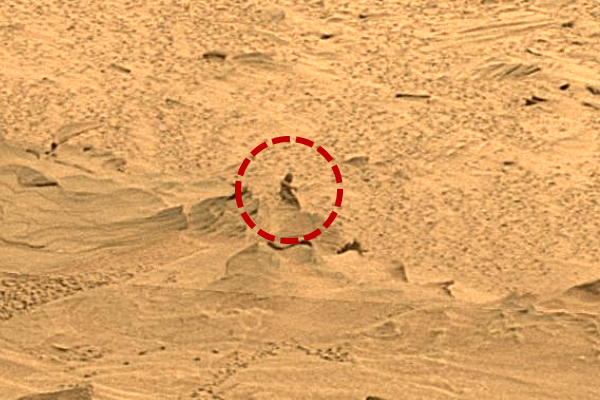
Whoever said €œwhat you don€™t know won€™t hurt you€ was an idiot and definitely wasn€™t planning a mission to Mars. In fact, humanity have always had a fear of the mysteries of Mars. Upon discovery of lines across the Martian surface, humanity took that to mean the presence of canals constructed by intelligent life. Or even in the War of the Worlds, humanity was naïve to the power of other intelligent life forms. We€™re scared by the unknown. Recent discoveries have indicated running water and the presence of methane on the red planet €“ both being very vital signs of life. Could we be the alien invaders to the existence of some other life-form? Why is this bad news? Although we€™ve probed the Martian surface fairly thoroughly with rovers like Curiosity and Pathfinder, we€™ve still only dipped our toes into the vast ocean that is Mars. With the discovery of running water and methane on Mars, the probability of finding simple life such as bacteria has increased substantially. A human expedition to Mars would be grossly unprepared for what they may find. Could Martian bacteria or pathogens be harmful to us in the same way the common cold brought down the invaders in War of the Worlds? Furthermore, what could be found underground on Mars, away from the harmful radiation of the Sun? Although the chances of intelligent life are incredibly slim, I certainly wouldn€™t want to be the first person to come across an underground and unknown species of Mars-Snake or Mars-Spider.

2. The Mental Breakdown

In submarines, crew-member mental breakdown is ranked second only to fire in the hierarchy of potential hazards. Crew-members inside subs can look forward to confinement, lack of personal space, claustrophobic conditions, monotonous routine and a constant awareness of impending doom from warfare. Sadly, astronauts on a 180+ day flight to Mars can expect similar conditions. With the constant possibility of death (from many of the reasons outlined in this article), as well as the quality of living environment, mental health breakdowns or mutiny is a very real threat. Why is this bad news? While testing has been undertaken in order to thoroughly understand how to prevent mental health issues, a mission to Mars really is like stepping into the abyss. The entire return journey can take around 3 years and the fact is we don€™t have any similar analogues that are even close to that duration of time. Preventative measures like the selection of correct crew-members, counselling and adequate habitation module design all look to combat mental health issues. However all preventative methods could be null and void when confinement and the real threat of death is a daily aspect of astronaut life. In a tin can somewhere in the darkness of space, anarchy could ensue.

1. The Physical Breakdown

With modern medicine and the everyday safety a first world existence brings us, sometimes we like to think of ourselves as indestructible. Whether we like it or not, humans are animals that require a very specific environment. Regardless of our level of technology, space exploration involves putting very healthy people into very unhealthy circumstances. A good few billion years of species deviation and evolution has led to us being very adapted and dependent on the confinements of our cosy blue planet. We humans regard things like gravity, a breathable atmosphere and the availability of sustenance as rather important. Space, for all intents and purposes, lacks all of these things. Why is this bad news? Even on short term journeys, major physical effects are felt. You can expect to lose about 30% of the muscle in your legs and back within just a few months, while your bones become brittle as they lose 1-2% of their density every month. The lack of gravity means the heart also isn€™t required to work properly and steadily becomes weak and abnormal. As a result, movement becomes harder and blood fails to clot properly meaning any small cut can become deadly. Your immune system even goes haywire. A multitude of latent viruses such as herpes simplex emerge, even if they weren€™t a bother on Earth. And once you€™re home, things don€™t fix themselves right away. Recently, astronaut Scott Kelly just did a yearlong shift on the International Space Station. He felt things he didn€™t expect, like the intense burning of his skin from touching foreign substances for the first time in 12 months. This is all on the time scale of 6 months to a year. What will happen when it could be 3 times as much? If science makes your brain box fizz, like us on Facebook or follow us on Twitter for plenty more.Want to write for WhatCulture Science? Click here to find out how you could get paid to write about what you love.

Contributor

Konner Blunt hasn't written a bio just yet, but if they had... it would appear here.