8 Ways To Tell If You're A Psychopath
Read this after you've returned those videotapes.

Psychopaths are, broadly speaking, unable to feel empathy, fear or emotions. They feel no compassion and have no problem with tricking, manipulating, harming or stepping on others to get their own way.
They have fascinated us ever since we figured out what they were back in the 19th century. Back then, doctors noticed that some of their patients were exhibiting all of the behaviours of "insane" people, but without the insanity part. They called it manie sans dlire, which roughly translates as "insanity without confusion" as those patients tended to appear to be completely compos mentis, and yet still engaged in risky, anti-social and self-defeating behaviour.
We tend to picture psychopaths as dangerous, cold, calculating killers but the reality is a bit more complicated than that.
Sure, most psychopaths aren't exactly cuddly, but we should think of psychopathy as less of an on/off deal and more of a broad spectrum consisting a various disorders. As such, the world of the psychopath is mysterious, complicated and often surprising.
Because psychopathy is a complex and mysterious condition that we still don't fully understand, psychopaths can sometimes be tricky to define. Not all psychopaths want to wear your skin or stab you in the shower, they crop up in every walk of life in all shapes and sizes and you can't necessarily tell by looking.
It could be your boss, it could be you mum, it could even be you.
8. Psychopath Or Sociopath?
"Psychopath" and "sociopath" tend to be used practically interchangeably, but they are definitely not the same thing.
Whilst the two tend to display similar anti-social tendencies, sociopaths tend to struggle more emotionally. They are more prone to outbursts and have trouble fitting in with mainstream society. They have the same disdain for laws and conventions, but in a more disorganised way.
Psychopaths, on the other hand, are not subject to emotions and empathy. This, conversely, makes them much better at slipping comfortably into society and are usually very good at mimicking social "norms". They're likely to be charming, intelligent and perfectly agreeable because, in our cooperative culture, it is this kind of behaviour that can allows one to "get ahead".
7. Is It In Your Genes?
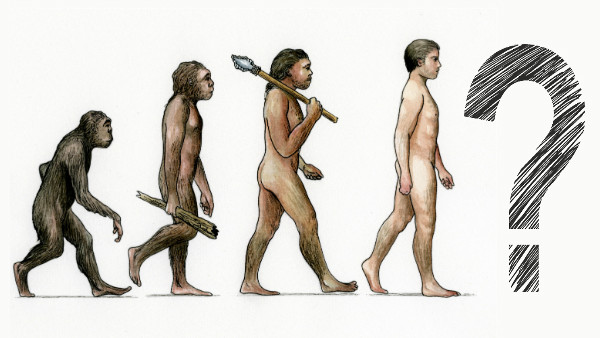
There are some, including the guy who came up with the standardised psychopath test, who theorise about the psychopath from an evolutionary perspective. As it is generally accepted that there is a genetic component to the disorder, it must be passed down through the generations.
Although it seems like an unlikely trait to pass on, as people don't generally like to settle down and build a life with somebody who is completely devoid of empathy, there are certain aspects of psychopathy that would actually make them incredibly successful, evolutionarily speaking.
In the context of our ancient ancestors, risky behaviour, competitiveness and the goal-oriented nature of psychopathy are all good survival strategies. Studies also seem to suggest that risky behaviour even makes men more attractive to the opposite sex. This coupled with the fact that psychopaths tend to be successful and powerful would make them pretty attractive options.
It is, however, the anti-social nature of psychopaths that might have prevented it from becoming an overwhelmingly common trait. Anthropologists tend to think that it is the cooperative side of human nature that is responsible for much of our evolutionary success. The aversion to altruism in psychopaths would likely have kept them as a fringe group, but one that perpetuates all the same.
6. Is It In Your Gender?

We tend to find that males psychopaths vastly outnumber female psychopaths, possibly by as much as 20:1, but that could be that we're just not as good at spotting them.
For a start, most of our figures on psychopathy come from prison inmates. Prisoners, by their very nature, are the ones that got caught and some think that the lack of female psychopaths on the records could be that they get away with the "typical" psychopath crimes because we don't expect women to commit them. It could also be for this reason that women who exhibit psychopathic tendencies are often given diagnoses of histrionic or borderline personality disorders.
There is always the possibility that there really are fewer female psychopaths, or at least violent ones that are likely to get caught, and this could be down to genetics.
The aggression gene that has been linked to violent psychopathy, MAOA, is passed down in the X chromosome. Females receive two X chromosomes, and so the effect of the gene could be diluted out, but males only receive on X chromosome, and therefore MAOA is more likely to be expressed.
5. Hooked On Dopamine?

Dopamine is one of those neurotransmitters in your brain that fall into the "feel good" category. It activates the reward centres and makes us feel great when we do things like eat, take drugs and have sex.
In a study at the Vanderbilt University in Nashville, it was found that psychopaths' brains produce much higher levels of dopamine than non-psychopaths. They also found that the psychopathic brain "values" it much more than the "normal brain".
It's unlikely that this is the cause of psychopathy, but when you combine this with the inability to empathise and the tendency to prioritise the self over others, it could offer an explanation as to why psychopaths are more likely to commit crimes, take risks and abuse substances. The dopamine high from engaging in antisocial behaviours could be as addictive to a psychopath as drugs or alcohol to an addict.
4. Are You A "Normal" Psychopath?

When we think of psychopaths (like you do) it's the "criminal psychopath" that tends to spring to mind. The ones who tortured animals as kids and committed terrible crimes with absolutely no remorse.
Whilst those psychopaths definitely exist, and they are definitely overrepresented in prisons, with estimates for true psychopathy in US prison inmates as high as 15% compared to the 1-5% of the general population, the stereotype of the violent psychopath perpetuates because those are the ones that are the easiest to study.
The thing is about prisoners, is that you always know where to find them and they're often the subjects of psychological scrutiny. Plus, the psychopaths that go on to commit terrible crimes tend to be the ones that attract our attention the most - a psychopath that lives a relatively private, non-violent life is unlikely to either come to the attention of a psychiatrist, nor seek the help of one.
3. Are You A "Prosocial Psychopath"?
In keeping with our stereotype-busting theme, it turns out that not every psychopath is necessarily "evil" or even "bad".
It is now thought by many that what "type" of psychopath a person turns out to be is as much to do with their upbringing as it is their genes and that those with a stable, caring start in life are more likely to grow up into "prosocial psychopaths".
One such example of this is a neuroscientist by the name of James Fallon. Fallon comes from a long line of psychopaths, with several murderers occupying branches of his family tree. His career as a neuroscientist was mostly focussed on studying the brains of psychopaths and violent criminals, so when he found out about his heritage, he knew just what to look for as he began scanning the brains of his family.
His whole family turned out to be normal, but when Fallon scanned his own brain, the results were that of a textbook psychopath. This was certainly a surprise for the quiet family man who donates to charity and regularly takes on leadership roles in his community. Fallon acknowledges that he gets a "kick" out of helping his community and being seen as the good guy, in much the same way an anti-social psychopath might get a kick out of getting one-up on another person.
The supportive early years for the "prosocial psychopath" could mean that, although he still lacks empathy and emotion, he finds that behaving positively in society can offer as many personal advantages as behaving negatively. You could still consider it a form of manipulation, but with fewer victims.
2. Do You Speak Like A Psychopath?

Many psychopaths can blend almost seamlessly into society, playing by normal social rules and using their charm to manipulate. However, they do have some "tells", and researchers at Cornell University figured out one of them by analysing their speech patterns.
The researchers interviewed 52 convicted murderers, 14 of which were diagnosed psychopaths, and then fed their responses into a computer for analysis.
They found that psychopathic killers have a few distinguishing traits in their speech that non-psychopathic killers lack. Because the psychopaths have no emotional response to the crimes they commit, they tend to speak about them in a much more detached manner, often describing them in the past tense. They also used a lot more "dysfluencies" - words like "um", "uh" and "like" - which researchers think could be fore the purpose of trying to make themselves sound more "normal".
They also found that psychopaths had a higher use of subordinating conjunctions. These are words like "so" and "because", which indicate that they think of their crimes as logical cause-and-effect affairs.
Non-psychopaths are also much more likely to talk about or even justify their actions with "higher levels of need" such as family and self-esteem, whereas psychopaths tend to stick to the more primal needs for resources such as food or money.
1. How Do You Score In Psychopathy Tests?
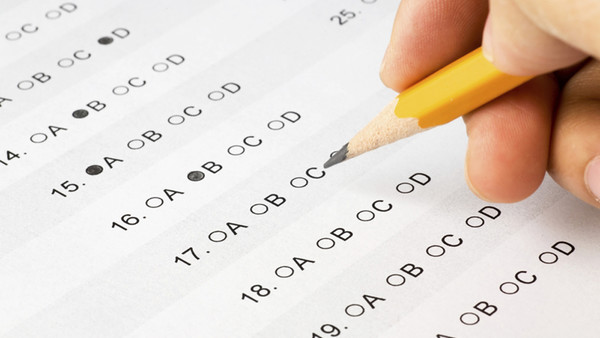
Professor Robert Hare, a criminal psychologist, is the man credited with devising the official PCL-R or "psychopath test". The test is simple enough and relates to a list of 20 traits with the subject's scoring dependent on how much they apply to them.
The full list of traits are thus: glibness and superficial charm, grandiose sense of self-worth, pathological lying, cunning/manipulative, lack of remorse, emotional shallowness, callousness and lack of empathy, unwillingness to accept responsibility for actions, a tendency to boredom, a parasitic lifestyle, a lack of realistic long-term goals, impulsivity, irresponsibility, lack of behavioural control, behavioural problems in early life, juvenile delinquency, criminal versatility, a history of revocation of conditional release, multiple marriages, and promiscuous sexual behaviour.
Obviously, you need to get your head looked at by an actual professional for any kind of official diagnosis, but there are plenty of tests all over the internet intended for educational purposes, that can give you a vague idea as to where you score on the psychopathic scale.
Love science? Of course you do. Like us on Facebook or follow us on Twitter for plenty more where that came from.