9 Amazing Inspirations Behind Your Favourite Stephen King Books

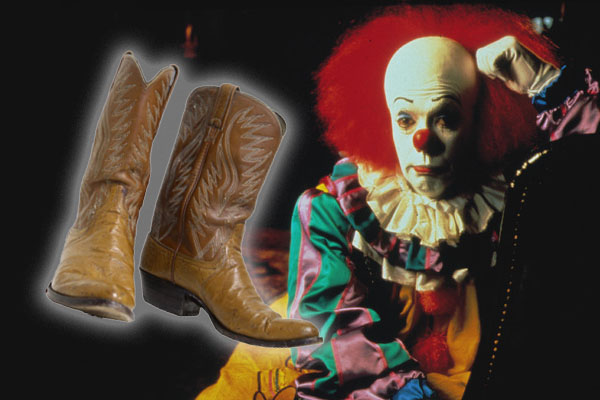
How did cowboy boots inspire Pennywise?
In the last forty years, Stephen King has written over fifty novels, ten short story collections, multiple novellas and several works of non-fiction. When you get over how impressive his output is (if that's even possible), the question of inspiration is a particularly pertinent one. How do so many consistently adored, critically acclaimed stories come to life? King is responsible for some of the world's most famous horror novels: Carrie, The Shining, It and Misery are all textbook examples of incredible, terrifying stories. And while they all share similar ideas, they are wildly diverse (a fact furthered by King's hopping between genres), and each obviously has its own very specific source. Though many of King's stories take place in Maine €“ the American state where King was born, grew up and currently lives €“ there's no way that a single place alone could inspire so many diverse stories. In reality, it's the innumerable things that King has experienced in Maine that repeatedly fuels his prolific writing. Some of his most famous stories stem from the smallest of incidents, while others are a curious amalgamation of different sources.

9. The Shining Was Inspired By A Dream King Had In A Deserted Hotel
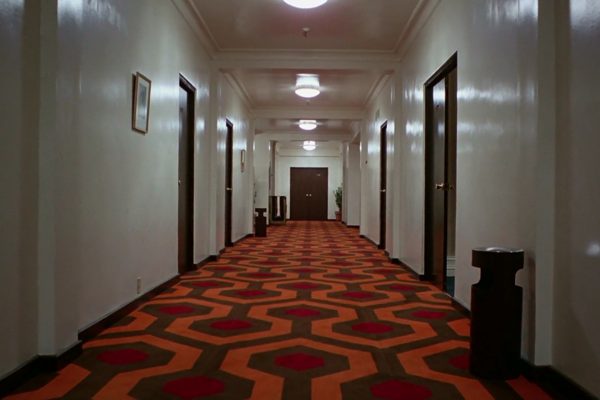
Undoubtedly one of the most famous novels King has ever written (and the cause of many debates regarding the merits of Stanley Kubrick's 1980 adaptation), The Shining was first published in 1977. Unlike It, King's inspiration for The Shining caused him to start writing almost immediately. King describes his inspiration like this: around September of 1974, he and his wife Tabitha spent the night in a massive old hotel in Estes Park, Colorado. Though they weren't aware before checking in, it transpired that King and Tabitha were the only guests in the entire hotel, as the next day the hotel was set to be closed for winter. While pacing the hotel's deserted hallways, King decided the vacant hotel would be an absolutely perfect setting for a ghost story. It wasn't until a dream later that night, however, that the idea really crystallised. King dreamt that his three year old son was running around the hotel, terrified for his life, being chased by a fire-hose. The dream was so intense that King got out of bed, lit up a cigarette and began to construct the narrative outline of The Shining.

8. "It" Was Inspired By King Walking Across A Bridge In Cowboy Boots

It is one of Stephen King's most iconic horror novels (that's saying a lot when you consider the sheer amount he's written). Pennywise the clown (portrayed by Tim Curry in the 1990 television mini-series) has haunted the nightmares of kids and adults since the book was first published in 1986. Strangely, inspiration for the story that launched a million clown phobias came from a bridge. The idea for It and Pennywise was knocking around King's head for almost ten years before it was published, as early as 1978. Around that time, King and his family were living in Boulder, Colorado. One day, after lunch, their car broke down in the middle of a busy street. It was hauled to a dealership for repairs and several days later King was contacted to come and pick it up. The dealership was three miles away, and King decided he would walk out to collect the car rather that getting a taxi. While walking, King came across a bridge. He was wearing cowboy boots at the time, and so walking across the bridge made a curious noise. Suddenly King began to think about the Three Billy-Goats Gruff fairytale, and considered the possibility that a troll might be living underneath. This caused King to begin formulating his own story about a troll living underneath a bridge, only in this case the bridge was the city of Bangor, Maine, and the troll was Pennywise.

7. Christine Was Inspired By A Car Odometer

This is a simple one, but it nevertheless goes to show how for King, a tiny spark can fuel an entire novel. King was inspired to write haunted car story, Christine, upon noting the odometer in his car changing from nine-thousand nine hundred and ninety nine point nine to ten-thousand. King thought it would be humorous to write a story about an odometer that ran backwards, with the car getting younger and younger until it eventually fell to pieces. The very next day King set to work on writing this story, expecting it to be rather short-lived. In the end, this small inspiration became an entire novel, and Christine was born.

6. The Stand Was Inspired By The Lord Of The Rings And Chemical Warfare

This post-apocalyptic wasteland story tells of a group of people attempting to navigate the world after it's been ravaged by biologically weaponized influenza. It was inspired by a 60 Minutes segment (60 Minutes is a CBS news broadcast that investigates a particular subject within sixty minutes) on chemical-biological warfare. King cites the horrifying image of test mice suffering the effects of chemical weaponry as fuelling the story, as well as a chemical spill in Utah, which travelled through the air and killed a flock of sheep. In a more general sense, The Stand was inspired by The Lord Of The Rings. For a long time, King had wanted to write a fantasy epic akin to Tolkien's masterpiece. He even cites The Stand's depiction of Las Vegas as his own version of Mordor.

5. Carrie Was Inspired By Two Girls King Knew During High School (And Also The Bible)

According to King, the character of Carrie was the amalgamation of two girls he knew while studying at high school. It's hardly surprising that the inspiration came from that period of his life: Carrie is very much about female empowerment and sexuality, and male anxiety in reaction to those changes. Carrie was also inspired by the story of Samson as told in Judges in the Old Testament, in which a man with incredible god-given physical strength. As even the most casual of Bible fans will know, the key to his power is his hair - a secret he divulges to the wrong person and is shorn of his locks and imprisoned. When his powers (and hair) return he takes revenge by pulling the castle down from the inside, killing his enemies and himself in the process. The most iconic scene in Carrie is inspired by this tale, as Carrie decides to kill everyone in her school by trapping them inside and starting a massive fire.

4. 'Salem's Lot Was Inspired By A Class King Taught At High School
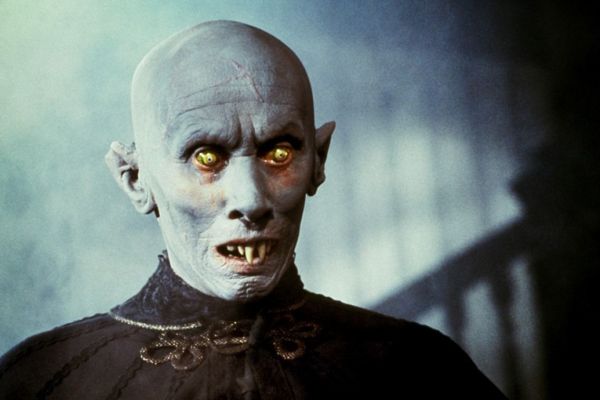
'Salem's Lot tells the story of a writer called Ben Mears, who returns to a town in Maine to find that many of its residents are becoming vampires. Mears hasn't been to the town in twenty-five years, but he begins to notice strange deaths and disappearances, which fuels his investigation and subsequent discovery of the truth. The novel is absolutely one of King's greatest, and one that the author himself is particularly fond of. The inspiration for the book, however, is quite humorous. During his stint as a high school English teacher, one of the classes that King taught was Fantasy and Science Fiction, during which they studied Dracula, eliciting a great response from the students. One night before bed, King asked his wife Tabitha what she thought might happen if Dracula returned in the twentieth century. Tabitha responded that he'd more than likely be hit by a taxi on Park Avenue and killed. This short exchange prompted further consideration from King. Sure, he might be struck and killed by a taxi in bustling New York City, but what if he returned in a small country town? Trying to work out the answer to this question was ultimately what inspired King to write 'Salem's Lot.

3. Cell Was Inspired By King Mistakenly Thinking A Man Was Crazy
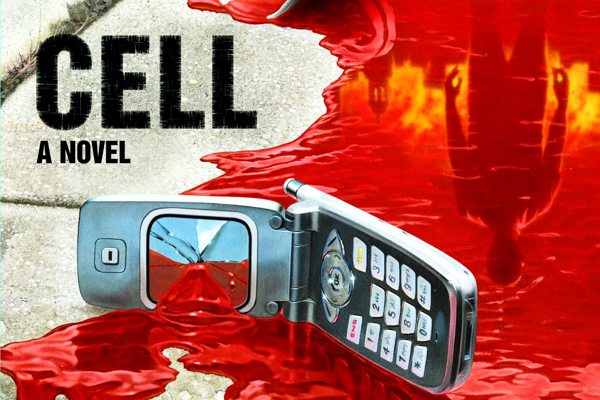
Cell is an example of another small incident that birthed a fully-fledged novel of its own. Published in 2006, it follows an artist from New England who struggles to reunite with his son after a strange broadcast over the global cell phone network renders the vast majority of society vicious, bloodthirsty monsters. King was walking through down town New York City when he spotted a man dressed in a business suit talking to himself. King became wary of the man, but soon discovered that he was actually talking on his mobile phone using a headset. King thought that it was interesting that he had initially been slightly apprehensive of the man (thinking he was probably crazy) and yet he was merely interacting with technology. The closeness of these two conclusions greatly fascinated the author and got his creative juices flowing. Cell was also written during a time when mobile phones' technological capacity was dramatically increasing. This incident, coupled with an already present technological anxiety, became the basis for the story.

2. Misery Was Inspired By Angry Fans And A Short Story

One of King's most twisted novels is Misery, which tells the tale of a writer named Paul Sheldon, who is rescued from a car crash by an obsessed fan, and is subsequently held hostage (and forced to write a new book). The novel acts as a sort of demented, fun house mirror version of reality. After the publication of King's The Eyes Of A Dragon in 1987 €“ a novel that was straight fantasy rather than horror €“ there was a massive backlash from fans, who felt disappointed that he had deviated from his known genre. In Misery, Sheldon feels shackled to the Misery series he writes, just like King was beginning to feel shackled to horror fiction. Not only that, but King was also battling drug and alcohol addiction at the time, and so feeling trapped and contained was a feeling he was very familiar with. Another inspiration came from the short story The Man Who Loved Dickens by the English writer Evelyn Waugh, which details a man who is held prisoner by a chief in South America. The chief falls in love with Dickens' stories, and forces the prisoner to repeatedly read them.

1. Pet Sematary Was Inspired By The Death Of His Daughter's Cat

First published in 1983, Pet Sematary tells the story of the Creed family, and the nearby woods which houses a cemetery gifted (or perhaps cursed) with the ancient and mysterious powers of resurrection. The inspiration for this one is quite specific. Around 1979, King and his family lived in a place called Orrington in Maine, which bordered an extremely busy major truck route that was known for frequently killing cats and dogs. The route was so infamous for killing animals that the local kids created a cemetery for deceased pets in the middle of the nearby woods. One day, while King was serving as a writer-in-residence at the University Of Maine, his daughter's pet cat wandered out onto the road and was killed. When it came to trying to navigate the tragedy (and bury the deceased cat) King was faced with the difficult task of telling his young daughter. King wondered what it might be like he if could resurrect the pet in the nearby cemetery €“ and could such a place be used to resurrect a human being?
"I can remember crossing the road, and thinking that the cat had been killed in the road €“ and (I thought) what if a kid died in that road? And we had had this experience with Owen running toward the road, where I had just grabbed him and pulled him back. And the two things just came together €“ on one side of this two-lane highway was the idea of what if the cat came back, and on the other side of the highway was what if the kid came back €“ so that when I reached the other side, I had been galvanized by the idea, but not in any melodramatic way. I knew immediately that it was a novel."
It's amazing how such an expansive idea can stem from such a small, ordinary incident. Which of these Stephen King inspirations is your favourite? Share your own revelations below in the comments thread.

Contributor
Contributor

Commonly found reading, sitting firmly in a seat at the cinema (bottle of water and a Freddo bar, please) or listening to the Mountain Goats.