9 Deadly Fashion Trends That Actually Killed People
"Fashion victims" on a whole other level.

We all like to look good but, for most of us, this means putting on some slightly nicer jeans and maybe using conditioner. For some, however, getting the look could be a matter of life and death, with poisoning, injury and disease lurking around every stylish corner.
Much of this deadly fashion is from The Olden Days - you know, when people were all thick and ignorant - but some of them are still very much alive and well in the 21st century. Sure, we don't put cocaine in our cough drops any more, but people are still very much willing to risk their health for their looks.
With cancer, blood poisoning and even a bit of strangling on the cards, what would you risk in the name of beauty?
9. Bikini Wax

The desire to be bare down there has driven many men and women to rip their body hair out with hot wax on a regular basis. Mmm, sexy. Generally speaking, the only thing you have to worry about with a hardcore bikini wax is the initial pain and short-term irritation, but sometimes stripping that garden can land you in hospital.
One woman was rushed to hospital after developing a sky-high fever following a bikini wax, she was diagnosed with the life-threatening condition, cellulitis (a disease that killed 30,000 people in 2013). The state of New Jersey even considered banning the beauty treatment after the hospitalisation of two women and the death of an Australian woman with type 1 diabetes.
As well as removing hair, waxing can strip off the top layer of skin, essentially creating thousands of open wounds and opening a handy little doorway for any bacteria that may be lurking around down there.
8. Asbestos Clothes
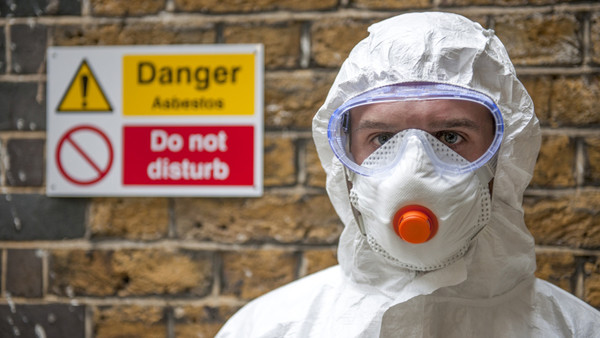
Because asbestos is amazingly flame proof, it has been used since ancient times for everything from protective clothing to magic tricks. It's just a real shame that that stuff will kill ya. Horribly. Asbestos, which not many people know is actually a naturally occurring substance that is mined like coal, is made up of tiny fibres.
When these fibres are breathed in by humans, all kinds of bad things happen to the lungs. Asbestosis is a fibrosis of the lungs that turns them into honeycomb (but significantly less delicious), calcified plaques will also build up in the lungs which can impair breathing and all forms of asbestos are considered to be carcinogenic.
7. Belladonna Eyedrops
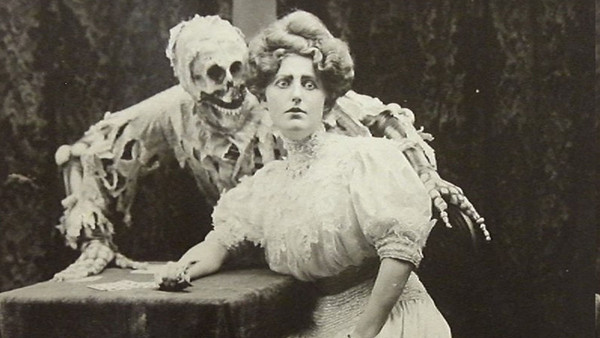
Those big doe eyes sported by Disney princesses are certainly desirable, and women in the Renaissance went the extra (dangerous) mile to achieve the look. Belladonna, or the slightly less euphemistic Deadly Nightshade, is a type of poisonous plant. Naturally, people thought that the best place for this poisonous plant was in their eyes. The deadly eye drops would act as a muscle relaxant, causing the pupils to dilate.
The pupils dilate naturally when you're aroused and so large pupils are a kind of unconscious indication of sexual availability. Unfortunately, it turns out that putting poison in your eyes is a pretty bad idea, with hallucination, elevated heart rate, damage to the nervous system, permanent blindness and death by accidental poisoning all on the cards. Maybe just invest in a good mascara.
6. Arsenic Dye
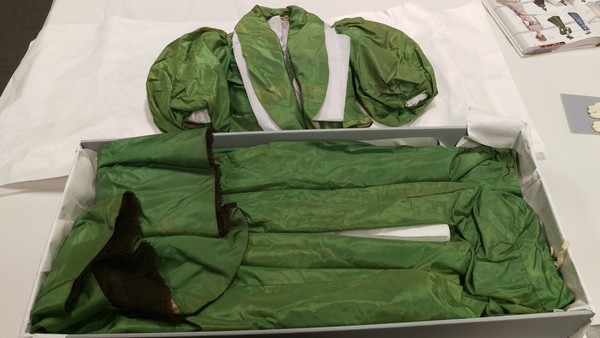
The Victorians were famously obsessed with "sea air" and all of its curative properties. It turns out that it may have felt so good for them, simply because everything in their homes was poisoning them, and a day at the seaside gave their poor bodies a break. Aside from the gas in their leaky lights, the mercury in their medicine and the lead in their baby bottles, they were also merrily lacing their belongings with lots of lovely arsenic.
Before we could whip up any colour dye in a lab, new colour trends were a huge deal in Victorian society and when the bottle green of arsenic-based dyes hit the market, they went mad for it. Arsenic went into wallpaper, book coverings, dresses and even pills for libido and would either flake off when brushed or be absorbed through the skin when people sweated through their arsenic clothes (or just absorbed into the blood when they took arsenic pills) causing diarrhoea, vomiting,vomiting blood, blood in the urine, cramping muscles, hair loss, stomach pain, convulsions, coma and death.
But, hey, at least they looked great.
5. "Health Restoring" Radium
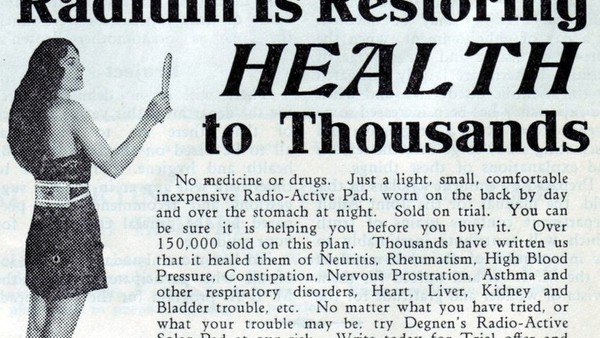
Radium, first isolated by Marie and Pierre Curie in 1898, is a naturally occurring radioactive element that we know can cause all kinds of health problems. At least, we know that now. Shortly after its discovery, radium was all the rage, and people thought that it's eerie radioactive glow was evidence for its "energising" qualities.
It was put in everything from fabric to health tonics to suppositories (that's the thing you stick up your butt), but it was its use in the watchmaking industry that revealed the horrors of radiation. During World War 1, it was used to illuminate watch faces without compromising blackout, but this meant that those watches had to be painted by hand.
The women that painted them would lick the tips of their paintbrushes, ingesting radium in such high quantities that they were soon exhaling radon and glowing in the dark.When one of them died (of radiation sickness), her bones were found to be so radioactive that they left marks on photographic film.
4. "Muslin Disease"
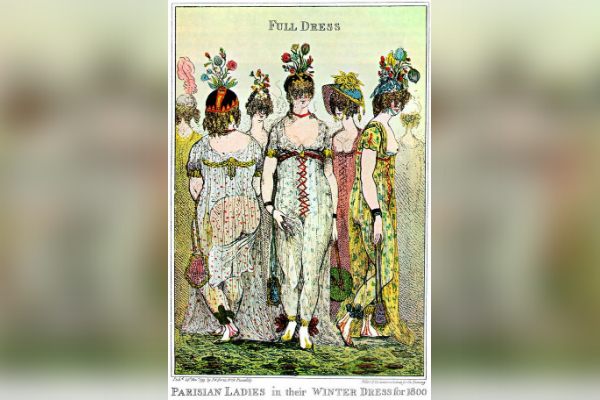
Don't throw out your floaty summer clothes just yet, it's not the muslin that is inherently dangerous here, but the way 19th century women wore it. Around this time, the fashion was for white, flowing muslin dresses. Some women, however, thought this was a little frumpy, and so took to dowsing themselves with water before getting dressed so that the material would stick to them and turn semi-transparent.
Many of them also went commando to remain under the 3.5 kg weight limit for clothes (a law designed to prevent people wearing rich, bourgeois fabrics), also making the look even more revealing. All very titillating, except it seems that none of them ever listen to their mum's "you'll catch your death" speech, and there were outbreaks of pneumonia and influenza throughout the bitter Parisian winters, both of which could be a death sentence in the early 1800s.
3. Tanning Beds

That holiday glow sure makes you look nice and healthy, but this couldn't be further from the truth. In pursuit of the perfect tan, people who use sunbeds are as good as signing their own death warrant, with a Scottish study finding that people who use a sunbed for just 12 minutes every eight days are 90% more likely to develop Squamous cell carcinoma - one of the most common forms of skin cancer.
Regular use can also increase the risk of the even deadlier melanoma by 75%. That's a big price to pay for a tan. The rising use of sunbeds, or even just holiday tanning, since the 70s has seen melanoma overtake cervical cancer as the most highly diagnosed cancer in women in their 20s.
Seriously, if you're that desperate for the golden glow, get it out of a bottle.
2. The Stiff High Collar
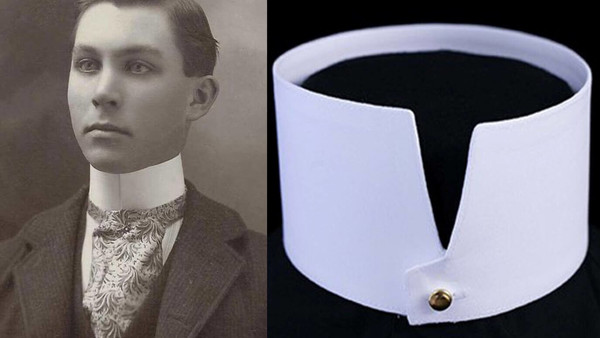
The detachable collar sound innocuous enough, but in reality it was a deadly hidden killer. Known as the "Vatermorder" (father killer), this collar was designed to keep the necks of men straight and, er, erect (you can guess what parallels they were attempting to draw there).
This meant that they were essentially corsets for the throat. The stiff, high collar could easily cut off blood circulation and air supply, leading to death by asphyxiation at the slightest pressure or swelling, and there were even reports of the torture collars literally cutting through the neck of the wearer.
1. Foot-Binding
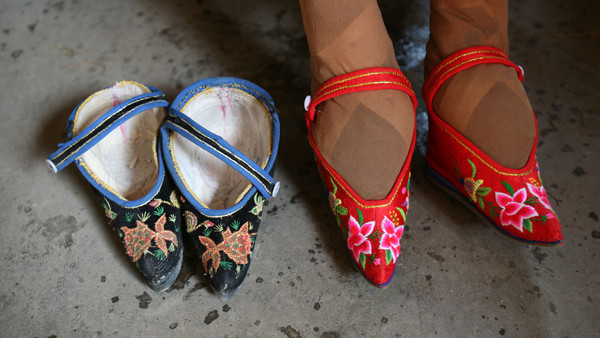
There's nothing worse that a woman galumphing around the place with her normal-sized feet, is there? Well, something just had to be done. Foot binding was practiced by the Chinese for more than a thousand years, and is thought to have claimed the lives of more than a million women during that time. First, a girl of around four years old was treated to a nice foot spa of vinegar and botanicals. He toenails were then removed, her feet broken and bent in on themselves and wrapped in tight bandages.
The broken and bound feet were highly susceptible to infection, and bits often dropped off due to lack of blood supply. If a girl's feet were still considered too big, shards of broken tile were sometime inserted into the bindings to encourage the toes to fall off through infection.
Death by septic shock was common, as was gangrene and broken bones from "falling off" bound feet.