10 Stupid Questions With Amazing Answers

There's no such thing as a stupid question. Except for when there is.
Your teacher may once have told you that there's no such thing as a stupid question. They probably instantly regretted it, as anyone who has ever been around a group of teenagers will know that there definitely is such thing as a stupid question. However, not all stupid questions are created equal, some stupid questions actually have surprisingly clever answers. More often than not, these are just those things that you come across in everyday life and it never even occurs to you to question them. Luckily, that's what we have scientists for. They've been busily beavering away, answering the questions that we'd never even think to ask. Ever wondered what babies dream about, what trees are made of or what actually happens to your belly fat when you go on a diet? If you weren't wondering before, you might be now.

10. What Do Babies Dream About?

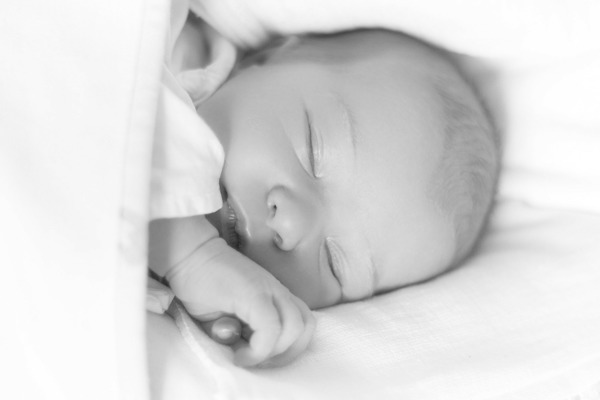
Aww, there's no more peaceful sight than a happily sleeping baby, but it could be a whole lot more peaceful than we originally thought. According to the psychologist David Foulkes, babies probably don't dream of anything. He reasons that dreams are largely based on the rich pool of experiences in our subconscious, but as babies have very few life experiences to draw on, and they sleep for such a lot of the time, They don't have much to go on. Stretching out the blurry images of a couple of toys and their parents' faces to a whole night of dreaming is a bit of a waste of resources when an infant's brain has so many other things to be getting on with. Babies still go into REM sleep, but neuroscientists reckon that it serves a completely different purpose in babies and young children. It is thought their brains are busy building the neural pathways that help us develop language, in the same way that baby birds learn their songs in their sleep. When children begin to develop spacial awareness and the ability to imagine rather than simply observe, around the age of 3, they begin to dream. Even then, Foulkes reckons that these dreams would be very simple, only developing into vivid, nocturnal adventures with structured narratives at the age of about 7.

9. What Are Trees Made Of?

Yeah yeah, trees are made of wood, but what is wood made out of? What gives them their mass? Is it the energy from the sun, meaning that they can convert energy into mass? Are they made of water or soil? Most people might think that they draw their nutrients out of the soil through their roots, but if this was the case then wouldn't all trees be surrounded by a big ditch after a while when they'd used all the soil up? In the 1600s, a man named Jan Baptist van Helmont performed an experiment in which he grew a willow tree in a carefully measured amount of soil. After five years, he weighed both the tree and the soil and found that the tree was 74 kg, but the soil was only about 60g lighter. This doesn't add up with the laws of the conservation of mass, so the tree's bulk had to be coming from somewhere else. As it turns out, trees are made of air. Or, more specifically, the carbon in the air. We all know that trees "breathe in" carbon dioxide and "breathe out" oxygen. This is handy for us oxygen-breathing life forms, but also means that the trees are doing something important with all that carbon, namely, making wood. When you burn wood, you release that carbon back into the atmosphere where it binds with oxygen to create CO2 all over again.

8. Why Do Pigeons Bob Their Heads When They Walk?

Pigeons get a pretty raw deal and their comical head-bobbing probably doesn't help their public image. The reason why they do it has been a topic of debate for quite some time amongst the kinds of people whole like to debate this stuff, and a pretty convincing theory has arisen from it. Contrary to what you might expect, the head-bobbing actually allows the pigeons to stabilise their vision. Different animals have different techniques for this; humans, for example, constantly twitch and readjust their eyes in order to keep everything steady. The bobbing motion has nothing to do with the walking mechanism, but the relative steadiness of their surroundings. In the 70s, some researchers put pigeons on a treadmill (hey, it was the 70s, you could do that kind of thing and call it science) and found that the head bobbing stopped due to the fact that the pigeons surroundings were no longer moving in relation to its eyes. The bobbing motion itself is actually something of an illusion. Frame-by-frame video analysis has shown that the head isn't actually bobbing back and forth, but more "locking" into position whilst the rest of their body catches up, at which point it shoots forwards again and locks. This is a bit like when you fix your gaze on something and move your head around. The poor pigeons might look a bit dorky, but it's just their way of dealing with things. They don't laugh at your twitchy little eyes so give 'em a break.

7. Why Don€™t I Remember Being A Baby?

Even if you try your very hardest, you probably can't remember anything from before your third birthday, and even then, the memories are probably made up of the odd still image and dark or blurry shapes rather than a "movie clip" type memory from when you got older. It's probably unlikely that the reason for this is just because it as a long time ago, you're no more likely to remember being two years old when you're 13 as when you're 30, but rather that the infant brain is simply not wired up properly at that age and can't form the memories in the first place. It's not that kids don't remember things (apart from that you have asked them to pick their clothes up off the floor at least five times), they remember who people are and to say please and thank you and all those kind of things. This is what is known as the "semantic" memory. What children lack is something called the "episodic" memory. This is the type that is responsible for remembering experiences. Whilst the semantic memory might help you identify what a cat is, episodic memory will take you back to a time you petted a specific cat. It is thought that the reason for this is that the hippocampus, the part of the brain responsible for tying together long and short term memories, doesn't really switch on until you reach about the age of three. It could be that, for the first couple of years of a person's life, their primary goal is to gather basic information about the world (using the semantic memory), and it's only after this groundwork has been laid that the brain can devote some of its energy to recording episodic memories. Your brain is simply too busy for frivolous stuff like remembering your first birthday party.

6. Why Does Cake Go Hard, But Biscuits Go Soft?

The difference between a cake and a biscuit (or a "cookie" if you're American) is that when they go stale, cakes go hard and biscuits go soft. We've all heard the famous story of McVities proving that the Jaffa Cake is indeed a cake by demonstrating that they go hard if left out. But why does this happen in the first place? When you bake a cake or a loaf of bread, the starch granules in the flour burst and start to absorb water, making the structure soft and pliant. However, over time the granules dry out and begin to recrystallise, resulting in the hard loaf of stale bread. Of course, biscuits contain flour too, but they also contain large amounts of sugar. Sugar absorbs the moisture from the air over time and causes then to go soft. Of course, if you remove the moisture from the air, your biscuits will remain crisp. What the two baked goods are doing is equalising their moisture content with their surroundings. A cake has a higher water content than the air, so the moisture escapes, whereas the biscuits are baked in such a way that the moisture is driven off to make them crisp, so the balance is redressed as they absorb the moisture around them.

5. What Came First, The Chicken Or The Egg?

It was thought that this age old debate had been settled once and for all and even brain-box Stephen Hawking assured us all the the egg came first because reptiles were hatching out of eggs long before chicken eggs came on the scene. However, if the egg we're talking about is a chicken's egg, then scientists made a discovery back in 2010 that would mean the chicken actually came first. There is a protein called ovocledidin-17 that is only found in the ovaries of chickens and controls the production of the shell by converting the calcium carbonate into calcite crystals which make up the shell. It is only when this happens that the egg can truly be called a chicken's egg, but if the protein is only found in the ovaries of chickens, then the chicken must have come first. Following? It doesn't really matter if you aren't because the argument is largely semantic. If the question is whether the chicken or chicken's egg came first, then the answer is chicken. If the egg is just any old egg, then the answer is egg (say egg one more time).

4. Why Does Scratching Relieve An Itch?

Ugh, there's nothing quite like the relief felt when you scratch an itch, but why should scratching relieve it in the first place? A study published in the journal Nature Neuroscience found that itches don't actually occur at skin level but deep in the nervous system (this is sometimes why you can get a "referred" itch when the itching sensation is felt in a different place to the stimulus). They found that the scratching sensation interferes with these nerve signals and essentially tells them to calm down. This is interpreted as a sense of relief in the brain. This is a similar principle to pain management, in the sense that rubbing a sore knee will make it feel better because one sensation blocks the other. However, the principles of pain management also throw a bit of a spanner in the works and could actually make itching worse. The scratching sensation is essentially interpreted as a pain signal in the brain. Pain, generally speaking is a Bad Thing as far as the brain is concerned and so it does its best to soothe the sensation by releasing serotonin. Serotonin suppresses the "scratch" signal and can also, unfortunately, boost the "itch" signal, making the whole thing worse and producing an itch-scratch cycle that can be tough to break.

3. Why Do Planes Dim Their Cabin Lights During Takeoff And Landing?

No, this isn't just so you get a good view out of the window, it's actually in case the plane comes screaming out of the sky in a deathly fireball. Hope none of you are scared of flying. The reason why the lights are dimmed during take off and landing at night is so that your eyes become acclimatised to the dark should you need to evacuate. Takeoff and landing are by far the most dangerous parts of the flight (largely because this is when there's an actual human in charge of the plane) and you're much more likely to crash then. If you need to get out and get out quickly then having your eyes already acclimatised to the darkness outside (presuming the plane isn't up in flames) will mean that you can see where the hell you're going as you run screaming from the twisted wreckage. This is also why they ask you to open your window blinds. This rule is not so that the pilot can see out the back if he needs to reverse, but so that the emergency services can see in if the plane comes down. It's handy for the firemen to be able to see the state of your mangled corpse before they rush in to rescue you. Happy flying, folks.

2. When You Lose Weight, Where Does The Fat Go?
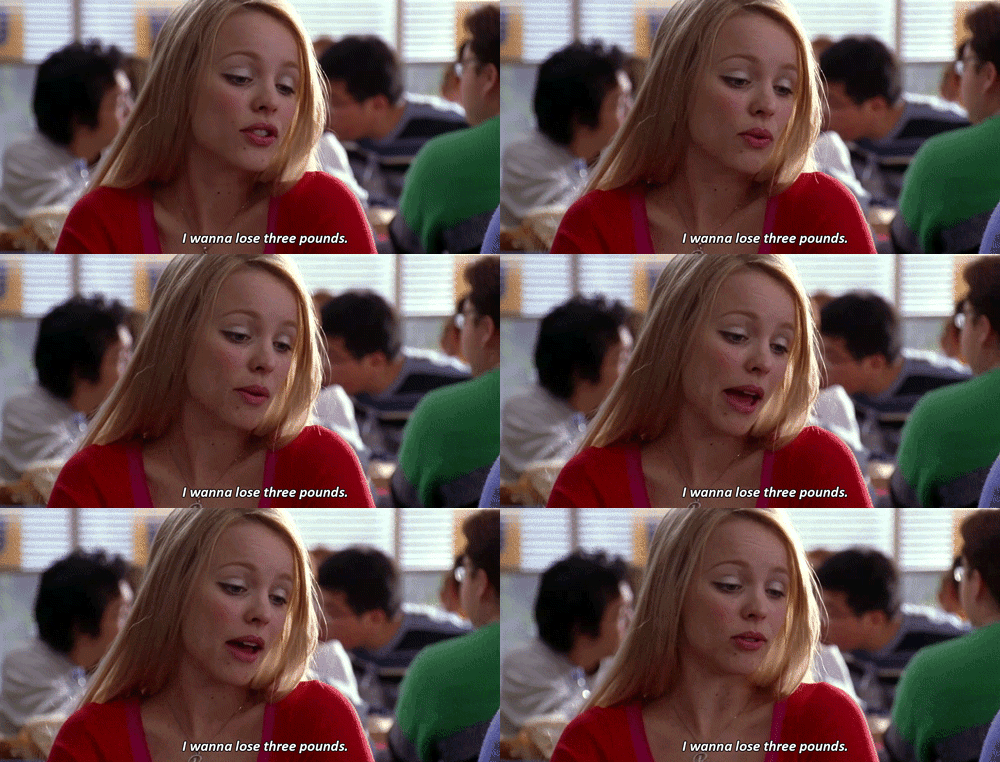
We often talk about "burning" fat, having the pounds drop off or melt away, but where are your love handles actually going? Is the fat running out of your pores? Are you flushing it down the loo? Is it lost as heat? Well, it turns out that you're actually breathing the majority of it out. When you eat to excess, the extra calories are converted into a compound called triglyceride which is made up of of carbon, hydrogen, and oxygen. This is what sits in your fat cells and plumps them up. When your body taps into your fat stores for energy, these are broken down into glycerol and free fatty acids which are then metabolised or "burnt" to produce energy. This converts them into carbon dioxide, which is exhaled, and water with is excreted through urine, faeces and sweat (or tears, you are exercising after all). This means that the lungs are primary organ for weight loss. This doesn't mean that you can just breathe your way to a beach bod, as breathing faster than your metabolism can handle will just cause you to hyperventilate and pass out. You need to raise your metabolic rate though exercise first and the heavy breathing will inevitably follow.

1. Could You Land On Jupiter?

There are four planets in our solar system that we call "gas giants", meaning that, instead of a rocky surface like the Earth, they're just enormous balls of gas. This leads a lot of people to wonder what it would be like to try and land on the surface of one of these planets. Do they even have a surface or would you just sail straight through? Even though scientists still aren't quite sure about what lies at the centre of a gas giant like Jupiter (a rocky core? A liquid ocean? A McDonald's drive thru?), we can have a fair crack at imagining what it would be like to land there with the information we do have. Presuming that you have a super-strong, pressurised space suit that shields you from dangerous levels of radiation, your first task would be defining the "surface". The gasses that make up Jupiter don't have a clear cut "edge", they just sort of peter out into space. So, when scientists talk about the "surface" of a gas giant, they're generally referring to the point where the atmospheric pressure is at 1 bar, roughly then same as on Earth. You wouldn't be able to stand, you would simply fall through, initially incredibly quickly, but as you fall, the atmosphere gets denser and denser, gradually slowing you down. As the atmospheric pressure ramps up, you'll have to equalise your ears unless you want your eardrums to implode. This, however, is probably the least of your worries. By the time you reach the brownish clouds that swirl around the surface, the atmospheric pressure will be at about 4 bar, the equivalent of SCUBA diving up to 30 metres. You'll also be swept along sideways by the enormous storms that rage across Jupiter. As you continue to fall through the planet, the temperature and pressure continues to rise. Your fall gradually slows to a stop at about 2,000,000 bar, where the density of the atmosphere is about the same as water and the temperature outside is about the same as the surface of the sun. This whole journey will probably take you about half an hour. If by some miracle, you're still alive (you won't be), you will be trapped in this pitch black inferno until the heat death of the universe. So that's a cheery thought. Psst, want some science? Like us on Facebook or follow us on Twitter and we'll hook you up.


In this post: 
Will Ferrell
 
First Posted On: 
Contributor
Contributor

Writer. Raconteur. Gardeners' World Enthusiast.