10 Best Football Documentaries Of All Time
All or Nothing: Leyton Orient?

Considering Spurs have declined from perennial top four finishers and Champions League finalists to mid-table also-rans with all the charisma of a bus shelter since swapping Mauricio Pochettino for Jose Mourinho, the upcoming fly-on-the-wall doc, All or Nothing: Tottenham Hotspur, promises to be both fascinating and hilarious.
The previous effort in the Amazon Prime series, which took sportswashing juggernaut Manchester City as its subject, presented an infallible team apexing under the intensity of a peak coach - and with it, very little drama. The Spurs version, given the looming turmoil creeping over the North London club, is likely to be a different - and vastly more interesting - story. Particularly if its privy to The Special One's demeanour behind-the-scenes. Is his volatility an act, or is he actually playing it down for the sake of PR? It'll be fascinating to find out.
The promise is there, then, but it'll have to go some lengths to distinguish itself as the finest football documentary of all time. For an industry which is oddly secretive about what goes on in the dressing room, there have been a surprising quantity of incredible, eye-opening flicks about the beautiful game. These are the most beautiful.
10. Orient: Club For A Fiver

Nature documentarians are much admired for their willingness to risk life capturing spectacular footage from some of the Earth's most precarious or inhospitable environments. Few, however, have showed as much courage as the student filmmakers at Open Media, who in 1995 placed their cameras in the volcanic furnace that was John Sitton's Leyton Orient dressing room.
The Channel 4 feature, Orient: Club for a Fiver, catches the O's in a tailspin, haemorrhaging funds after the Rwandan civil war causes the collapse of owner and lifelong fan Tony Wood's coffee empire. This scarcely credible setup is a footnote to the true story of the piece: manager Sitton's descent into despair, as he struggles to hold close the stitches.
The boss' astonishing, profanity-laden rants are the piece's highlight. After sacking club veteran Terry Howard - on camera - Sitton is shown laying into his underperforming, disobedient team at half-time, a goal down to Blackpool. Challenging two of his players to a fight, he tells them, "you can bring your f*cking dinner, 'cos by the time I've finished with you, you'll f*cking need it." The line has latterly became part of lower league football folklore.
9. An Impossible Job

From one end of the football pyramid to the other, An Impossible Job proves football really is a universal game, John Sitton's descent at the bottom of the (dinner) chain mirrored by Graham Taylor's in the country's top job.
Harry Kane and the Love Train heroics of 2018 might have temporarily sprinkled antidote around the rim of the poisoned chalice, but Gareth Southgate should watch this 1994 documentary for a stark reminder of just how enfeebling the England job inevitably is. Few get out reputation in tact.
The ex-Watford boss had no idea he was writing his own epitaph when he agreed to take part, an 18 month project ostensibly about him guiding the Three Lions to World Cup '94. Taylor hoped to demonstrate the unique differences between club and international management.
As England's campaign fell apart, the film instead chronicled his bitter downfall, no thanks to an evisceration by the pernicious sports media. Memorably, his infamous touchline exasperation, "Do I not like that", was caught on tape, helping turn a decent, respectable man into a national laughing stock.
8. Warnock

If you enjoyed Orient: Club for a Fiver, but thought it simply didn't feature enough profanity, then Warnock is for you.
The documentary's eponymous star - Neil to his friends, Colin to his detractors - has something of an ambiguous reputation in the English game as a foul-mouthed, Brexiteering touchline ogre, whose infamy for paleolithic football is belied by forty years of consistent, albeit lower league success. He's very easy to lampoon as a relic, but as this access-all-areas portrait demonstrates, the veteran manager's longevity is no fluke.
Whereas Sitton's rants erupt at the frayed edges of sanity, it's clear Warnock's are finely tuned for maximum inspiration. It's not all effing and jeffing: this is an intelligent man with a barbic wit, who clearly understands the game inside out. Warnock hasn't made it easy to like him throughout his career, but this documentary demands you respect him.
7. Trouble At The Top

Like many lower league sides overstretching on the promise of TV money which never materialised, the collapse of ITV Digital plunged Luton Town into financial meltdown. In the summer of 2003, chairman Mike Watson-Challis sold the Hatters for just £4 to a shady consortium headed by a man named John Gurney.
In the grand tradition of hyperbolic new owners, Gurney made outlandish promises - or threats, if you were a fan. The club would build a 70,000 seater stadium they had no hope of filling, a racecourse (yes!), and change their name to 'London Luton'. The owners' trade off for securing solvency was being able to do whatever the hell they pleased.
And that included firing the popular managerial team of Joe Kinnear and Mick Harford, a decision which was met with protests. In order to get Hatters supporters back on side, Gurney devised a ludicrous concept in keeping with television trends at the time: Manager Idol, a reality contest in which fans voted for the new boss.
Unfortunately, two of the candidates on the shortlist - the scorned Kinnear and poll-leader Mike Newell - had no interest in the position. At the eleventh hour, third-choice Mike Newell stormed into the lead - just as well, since he was the only one prepared to take the job.
The BBC2 documentary Trouble at the Top had the best seat in Kenilworth Road as the chaos unfolded. It's a remarkable, oft-forgotten story of English football, one which some years later, would thankfully end in the oleaginous Gurney getting his comeuppance.
6. The Class Of '92

It might be something of a fawning hagiography - the sort of old boys network circle jerk typical of a soft focus BT Sport special - but The Class of '92, which describes the evolution of a clutch of Manchester United hopefuls into bonafide legends of the game (and Chris Casper), is nevertheless a riveting history of some of the '90s football boom's chief protagonists.
Infamously, Alan Hansen opined that United couldn't win anything with kids, after an unfamiliar team whose collective voices had barely cracked crashed in a 1995 opening day defeat to Aston Villa. Five of the villains of the Villain's victory - Paul Scholes, Gary Neville, Phil Neville, Nicky Butt and David Beckham - would go on to become global superstars, as a decade of success cascaded onto the red half of Manchester.
This film stories that ascent, interspersed with glowing tributes from their high profile contemporaries and for some reason, pretend Newcastle fan Tony Blair. It's all very congratulatory, but still a wonderful trip back in time to Cool Britannia.
5. The Other Final

On 30 June 2002, the original Ronaldo completed his France '98 redemption, putting two goals past Germany in the World Cup final to crown Brazil champions of the world. On the same day the two lowest ranked sides in international football, Bhutan and Montserrat, met for a quite different prize: the right to not be called the worst.
With the Netherlands having failed to qualify for the big boys' extravaganza, Dutch filmmaker Johan Kramer pondered who the world's poorest team was. This embryo of an idea eventually resulted in a tiny Caribbean team, the island beset by recent volcanic activity, travelling nearly 9000 miles to a dramatic Himalayan setting. Could a side which had never won a game - never so much as kept a clean sheet - beat the statistically worst team on the planet?
This film showcases a touching tale a million miles removed from the pomp and circumstance of football's biggest prize, but one with arguably more emotion and heart.
4. Diego Maradona

Unlike the Class of '92, Asif Kapadia's documentary Diego Maradona is a hagiography in the truest sense: for the people of Naples, El Diego is a saint whose fresco sits right alongside Janaurius'.
Maradona signed for Napoli in 1984, and before he'd even kicked a ball, fans in the city welcomed him like the second coming of the Messiah. 75,000 people flocked to the San Paolo stadium just to see him perform a kick-up routine. It goes without saying, then, that there was considerable pressure on the Argentine to deliver - and he did, almost single-handedly dragging Napoli to two Serie A titles and a UEFA Cup triumph.
Much like Kapadia's previous benchmark Senna captured the personal turmoil motorsport heaped upon its eponymous subject, Diego Maradona chronicles the almost impossible demands only a player of his God-given talent could endure - and meet. Ultimately, it'd lead to his downfall. That makes this a fascinating, often uncomfortable watch.
3. Next Goal Wins
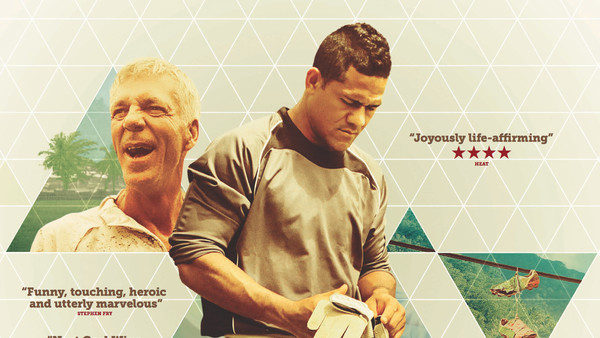
In the same vein as The Other Final, Next Goal Wins also shows the opposite face to football's glitz and glamour, following American Samoa on their quest to shake off the tag of worst team in the world.
The Polynesian side earned that ignoble epithet in 2001, after an infamous 31-0 defeat to Australia - the worst loss in the history of international football. Looking to use embarrassment as inspiration, American Samoa turn to Dutch coach Thomas Rongen, and ambitiously set their sights on making the 2014 World Cup.
Mike Brett and Steve Jamison's film is not a Hollywood underdog story: American Samoa, unsurprisingly, don't qualify - not even close. But they do win a lot of admirers with their effort, humility, and love for the game. Taika Waititi is currently adapting the documentary for the big screen, with Michael Fassbender starring as coach Rongen.
2. Sunderland 'Til I Die

Sunderland 'Til I Die managed to achieve the impossible: it made a Black Cats ally out of this Middlesbrough-supporting writer. Produced by ardent fans Fulwell 73, the Netflix series was initially conceived as a puff piece with club owner Ellis Short's approval, in a bid to attract potential buyers. Fly-on-the-wall quickly deteriorates into fly-on-the-sh*t, as an expected single season in the Championship actually becomes one - of the wrong kind.
As Sunderland lurch towards an unimaginable relegation to English football's third tier, the toxic mismanagement of the club is made startling apparent. Just as much as executive Martin Bain, with his Brentian scheming and ludicrous indulgences, is the piece's natural villain, the club's fans are its undeniable heroes. The importance of the team to a local area struggling after years of pernicious cuts and dying industry dispels the myth of the overly-passionate and laughably simple North East football supporter. It's a tie that binds all the teams of the region - even if historical rivalries so often hide the fact.
Season 2 is not quite as fascinating, but worth a watch for the rouge trousers and Ibiza tunes of Bain's successor, Charlie Methven.
1. The Two Escobars
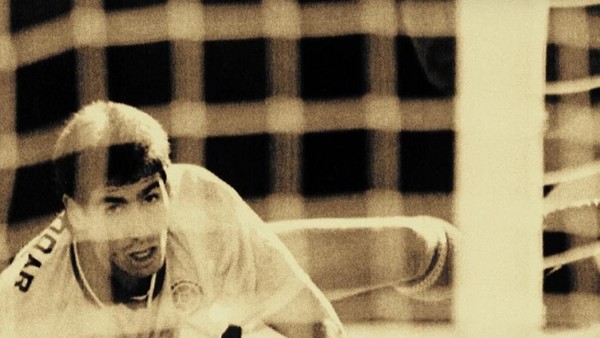
When Colombian defender Andrés Escobar turned into his own net against the hosts at USA '94, it didn't just end his nation's hopes of triumph, but tragically, his life. Five days after the South American side's elimination, Escobar was shot dead in Medellin - the killer shouting 'Gol!' after each pull of the trigger.
But the awful story ran deeper than an embittered fan. Coinciding with Colombia's sudden surge up the football rankings came the rise of another Escobar, cocaine baron Pablo. The cartel boss turned his lifelong passion for football into the perfect money laundering scheme, enriching the Colombian game with millions of dollars of drug money along the way.
As the country's drug trafficking spiralled out of control, so too did lawlessness and corruption, creating the circumstances that ultimately led to Andrés senseless slaying. The Two Escobars charts the intersectionality of the footballer and the underworld kingpin, painting a blood-soaked picture that's as gripping as it is haunting.