10 Failed Transfers That Would Have Changed English Football

Zlatan at Arsenal? Gazza at United? Cruyff at Leicester? They all could have happened.

The exaggerated hoopla over transfer deadline might be a bit too much, but we get excited about it because of one simple truth: transfers are game-changers. A goal poacher, a box-to-box midfielder, a body-on-the-line defensive stopper, they can all alter the course of a season. They can turn nearly-men to title contenders, and make relegation certainties into escape artists. But sometimes it's not the transfers that actually happen that excite - it's the could-have-beens, the never-weres, the ones that got away that tantalise us the most. Some of the stories behind these almost-signings are eyebrow raising, but they're all true. In an alternate universe somewhere Gazza wore the red of United, Ibra was performing scissor kicks at Highbury and Kenny Dalglish was a Hammers legend. Imagine what English football would look like today if these amazing transfers had actually happened.

10. David Hirst To Manchester United
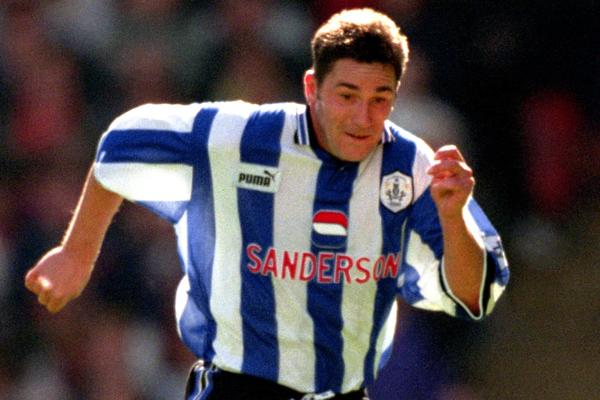
Eric Cantona was the most important signing in the modern history of Manchester United. The Gallic genius was the catalyst for the club's dominant era in the 90's after he signed from Leeds in November 1992. But did you know the Frenchman wasn't Fergie's first choice for a new striker? Had he got the man he really wanted, it could have all been so different. That man was Sheffield Wednesday's David Hirst, who can make a claim to being the most underrated English striker of the 80's and 90's. Hirst was the proto-Shearer, not the tallest but good in the air, strong, able to score poacher's goals and long range thunderbolts with both feet. United made a first move for the three-time England international in the summer of 1992, but a £3m bid (a huge sum at the time) was turned down by the Owls. In November of the same year, with the Red Devils' title charge flagging due to a paucity of goals, Ferguson again returned with a bid for the Wednesday talisman but was turned away once more. Soon after, Leeds boss Howard Wilkinson made an enquiry about the availability of United left back Denis Irwin. Irwin was not for sale, but Ferguson asked his opposite number about the availability of Cantona. A bargain £1m fee was agreed, and the rest is history - United went on to become the dominant force in English football and Leeds United failed to win another top flight league title. Hirst, meanwhile, continued to bang in the goals for Wednesday and Southampton until injury curtailed his career at the age of just 32.

9. Paul Gascoigne To Manchester United
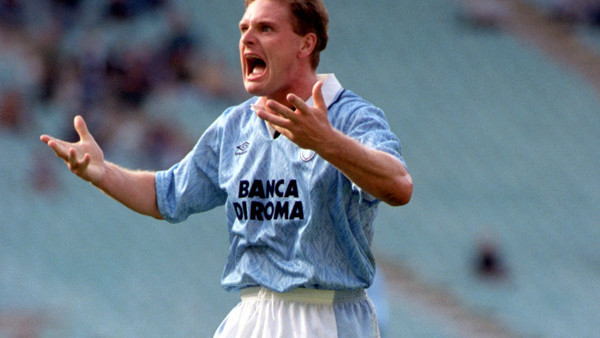
Paul Gascoigne was one of the most naturally gifted footballers England has ever produced but ended his career with just one FA Cup, two Scottish titles, a Scottish Cup and a Scottish League Cup to his name. One can only imagine what the list of honours might look like had he chosen Manchester United ahead of Tottenham Hotspur in 1988. At the end of the 1987/88 season, Gascoigne won the PFA Young Player of the Year gong for his stellar performances for his struggling hometown club Newcastle United. This prompted big money bids for the youngster from Man United and Spurs. According to his autobiography, the man they called Gazza promised Ferguson that he would sign for United. Confident the deal was done, the United manager jetted off to Malta on holiday, only to receive the news that the midfielder had instead signed for Terry Venables' Spurs for a British record fee of £2.2m. Ferguson alleged in his first autobiography that Spurs had convinced the midfielder to change his mind by offering to buy his family a house. Gascoigne himself has since confirmed this, and also added that they sweetened the deal further by buying his sister a sunbed! A serious injury in the 1991 FA Cup final overshadowed his Spurs' career and although he was a cult hero at Lazio and a success at Rangers, his career wound down with uninspiring spells at Middlesborough, Everton, Burnley, Boston United and Gansu Tianma in China. He remains an English football legend, but you have a wonder what kind of player - and person - a consummate man-manager like Alex Ferguson could have made of Gazza's potential.

8. Zinedine Zidane (And Christophe Dugarry) To Blackburn Rovers

I've mentioned this one before but it's such a good story it bears repeating. Kenny Dalglish had led Blackburn Rovers to the Premier League title in the 1994/95, with an almost all-British squad powered by the goals of Alan Shearer and Chris Sutton. For their title defence, the Scotsman wanted to add some Gallic flair alongside the club's British steel. To that end, Dalglish had lined up a deal for French duo Zinedine Zidane and Christoph Dugarry. Terms had been agreed in principle with the players and their club Bordeaux, and all he had to do was convince Rovers chairman Jack Warner to part with the cash to seal the deal. He wouldn't turn down a request from his title winning manager now, would he? He absolutely would. Warner did not see the need to improve the champions, asking Dalglish "why do you want to sign Zidane when we have Tim Sherwood?". Things didn't work out too well for Rovers and their English Zidane, and the champions finished just 7th the following season, after Dalglish had "moved upstairs" to become Director of Football, succeeded by Ray Harford. Zidane joined Juventus in 1996 and went on to become a Galactico at Real Madrid, while Dugarry left Bordeaux for Milan. He did eventually secure a Premier League switch in 2003 and became a cult hero at Birmingham City. These days, Blackburn wallow in England's second tier, but it could have been so different had the two future World Cup winners been strutting their stuff at Ewood park in the mid-90's.

7. Michael Laudrup To Liverpool

Picture the scene: it's the early 1980's, and Liverpool are a colossus that bestride the game both at home and abroad. You're a young, talented Danish midfielder who has made waves on the domestic scene with KB and Brondby. Bob Paisley's Liverpool are interested and make a bid for your services, You agree a three year contract and move is all set to go ahead, but then, at the last minute, the club request a small change - can the contract be four years instead of three? Absolutely not. You'll stay for three years, but four? Outrageous. You turn down the move, and join Juventus instead for a Danish record transfer fee. It might sound outlandish, but Michael Laudrup really did turn down Paisley's Liverpool over a length of contract dispute. Liverpool won the European Cup in 1984 while Laudrup watched on from Italy, where he was on loan at Lazio from Juventus. Laudrup did eventually lift the European crown with Barcelona in 1992, but he could have got his hands on it sooner had he agreed to bring his elegant passing to the Liverpool midfield.

6. Roy Keane To Blackburn Rovers

Roy Keane was the snarling box-to-box midfield general who led Alex Ferguson's Manchester United to seven Premier League titles, four FA Cups and a Champions League during his time at Old Trafford. Known for his hardman image, work ethic and rough tackling, the Irishman also had an underrated eye for a pass and could finish. He was much more than an angry caricature. Though he identity is forever entwined with the club where he spent the most glorious years of his career, Keane's move to Old Trafford in time for the 1993/94 season came within a hair's breadth of not happening at all. In the 1992/93 season, Keane renegotiated his contract with struggling Nottingham Forest to include a relegation release clause. He performed well for Brian Clough's side but could not prevent their relegation. Blackburn Rovers were the first Premier League club to make their interest concrete, agreeing a £4m fee with Forest and verbally agreeing a contract with the man himself. The deal was agreed on a Friday, but unable to obtain the necessary paperwork to force the move through on the day, Rovers boss Kenny Dalglish and Keane agreed to meet on the Monday to officially confirm the transfer. Ever the opportunist, Alex Ferguson saw an opportunity in the unforseen delay. He called Keane and, because his move to Rovers had not been officially confirmed, was able to convince him to move to Old Trafford instead of Ewood Park. Ferguson, unlike his fellow Scot, had the paperwork ready, and the transfer of Keane to Manchester United was confirmed on the Saturday. Dalglish, perhaps understandably, was livid. Ferguson and Keane weren't concerned, and together led Manchester United through an incredibly successful period. You have to wonder how much more Blackburn could have won with Keane's never-say-die presence driving them on from the centre of the park.

5. Kenny Dalglish To West Ham United

Kenny Dalglish has already appeared twice on this list in his role as manager of Blackburn Rovers, but in his playing days he was the subject of a failed transfer to West Ham United. Had things been different, the Celtic and Liverpool legend might have turning out for the Hammers instead. It was 1966. England had just won the World Cup with a side including West Ham heroes Bobby Moore, Martin Peters and Geoff Hurst, and Hammers boss Ron Greenwood wanted to build on that momentum. On the lookout for new signings, he invited a young Scottish schoolboy international down to London for a trial. The short, slight, fair-haired forward had undoubted skill but was deemed "too lightweight" for English top flight by Greenwood. He also had an unsuccessful trial with Liverpool in the same year. Young Dalglish returned to Scotland signed for Celtic (although he supported Rangers) and flourished in Glasgow, becoming a legend for the club before joining Liverpool to replace the outgoing Kevin Keegan, as the club sought to rectifty their mistake of '66. Often referred to as the club's greatest ever player, it's fair to say West Ham's loss was Celtic and Liverpool's gain. As Dalglish spearheaded a successful Liverpool side in the 70's and 80's, the Hammers slid into mid table obscurity. As disappointed as he might have been at the time, it's probably safe to assume Dalglish doesn't wonder about what might have been. West Ham fans of a certain age still might, though.

4. Robert Lewandowski To Blackburn Rovers

Polish international Robert Lewandowski is one of the most complete strikers in Europe. The Bayern Munich forward terrorizes defenders in the Bundesliga and the rest of Europe with his combination of strength, skill and unerring finishing. The rangy forward made his name in a Borussia Dortmund team known for polishing up rough diamonds, but if it wasn't for an Icelandic volcano Lewandowski could have been troubling Premier League goalkeepers in a trademark Sam Allardyce set piece routine. After top-scoring in the Polish top flight with Lech Poznan, Lewandowski was ready to make the next step in his career in 2010 and join one of Europe's big leagues. Allardyce, then in charge of Blackburn Rovers, had a bid in the region of £4m accepted by Poznan. The deal was set, with the striker due to fly in to watch a Blackburn game before signing on the dotted line. Unfortunately for Allardyce - but perhaps not for the player himself, as things turned out - the eruption of the Icelandic volcano Eyjafjallajokull and it's now-infamous ash cloud meant that the flight from Poznan was grounded. The deal was off and Dortmund stepped in to sign the man whose goals would fire them to two league titles, a German cup, and a Champions League final. Blackburn, meanwhile, were taken over by an Indian poultry company later that same year. Venky's sacked Allardyce, appointed the untried Steve Keane and led the club to relegation and ridicule. Just think, if it wasn't for that volcano, Lewandowski could have been a part of all that...

3. Zlatan Ibrahimovic To Arsenal

Zlatan Ibrahimovic is one of the few non-Brazilian footballers to be known by just one name - Zlatan. His name has even become a verb in his homeland of Sweden. "Zlatanera" has entered the lexicon and it means "to dominate". The man is a modern football icon, a supreme goalscorer capable of outrageous skill and famous for even more outrageous arrogance. Although his CV is full of big beasts like Ajax, Juventus, Inter, Barcelona, Milan and PSG, Zlatan has never played in the Premier League. He still could turn up on these shores in the twilight of his career, but if Arsene Wenger had got his way we would have been seeing a teenage Zlatan turn out for Arsenal. Wenger's might-have-beens could fill a book on their own, with the Frenchman claiming to have nearly signed every player in Europe, from Cristiano Ronaldo to N'Golo Kante, but it's Zlatan that he was closest to getting. The teenage forward was impressing for Malmo when Wenger invited him for a trial in 2000. He even presented him with an Arsenal shirt bearing the forward's name and the iconic number 9. Despite the overtures, Ibra rejected the Frenchman because Arsenal weren't willing to make a formal bid for his services, only offering him a trial period. The forward turned down the offer in his own inimitable style, telling Wenger: "Zlatan doesn't do auditions", and the following year he joined Ajax instead.

2. Johann Cruyff To Leicester City

These days Leicester City are top of the Premier League, mounting an improbable title challenge that can only mean we must all exist as bit-part characters in a dream Claudio Ranieri is having. The neutral's favourites play a scintillating brand of direct, counter attacking football in a squad filled with lower league finds, bargain signings and the cast offs from bigger clubs. It wasn't always going so well for Leicester, though. Back in 1981 they were a newly promoted side struggling to avoid relegation from the old First Division. Manager Jock Wallace knew that his youthful side needed an injection of experience, a leader on the pitch to guide them through the choppy waters of a relegation battle. Wallace identified that man as Dutch legend Johann Cruyff, then 33. The ex-Barcelona and Ajax player was a free agent after spells in the NASL with Los Angeles Aztecs and Washington Diplomats. Plenty of clubs looked at Cruyff but his outspoken nature and huge wage demands meant many potential suitors - such as Arsenal and Hamburg - decided the ageing superstar was not worth the risk. That meant that Wallace's Leicester were able to step in and take a punt, offering a £4,000 per match deal. Just when they thought the deal was sealed, Wallace was dismayed to see that Cruyff had decided to sign for Spanish second division outfit Levante instead. With them Cruyff would be getting fixed wages, plus additional bonuses based around gate receipt increases and promotion. Without Cruyff, Wallace's Leicester were relegated, while the man himself had a disastrous time with Levante, making only 10 appearances in an injury-hit spell before returning to Ajax in the same year. The master of Total Football might not have saved Leicester from the drop single-handedly, but how great would it have been to see him strutting his stuff at Filbert Street?

1. Diego Maradona To Sheffield United

Diego Maradona is a name instantly recognisable to football fans worldwide, whatever their generation. Revered in his homeland of Argentina for bringing home the World Cup in 1986, hated in England for his "hand of God" goal in the same tournament, Maradona is also beloved by fans of Boca Juniors, Barcelona, Napoli and Sevilla after successful spells at each of those clubs. If it wasn't for a lack of money at Sheffield United, though, the Argentine legend could have been a fan favourite at Brammall Lane instead. A 17-year-old Maradona was still at his first club Argentinos Juniors when he caught the eye of Sheffield United manager Harry Haslam, who was in the country on a scouting trip. He was so impressed with the precocious youngster that he agreed a deal in principle to bring him to England for a fee of around £200,000. That may sound like peanuts for a player as good as Diego, but it was a fortune at the time, especially for a side like the Blades. The club were in England's Second Division at the time, and the board vetoed the deal, balking a the asking price. Haslam didn't come away from Argentina totally empty handed. He was able to convince his board to part with the £160,000 needed to prise Maradona's countryman Alex Sabella away from River Plate. He quickly became a fan favourite but was moved on to Leeds United after the Blades suffered relegation to the Third Division. Maradona stayed with Argentinos Juniors until '81 before moving to Boca, then made the leap to Europe a year later with a move to Barcelona. Sabella, meanwhile, spent three years in England before moving back to Argentina. He may not have had as glittering a career as his would-be Sheffield United teammmate, but at least he did a better job of managing his home country, leading them to the World Cup final in 2014.

Contributor
Contributor

David is an office drone and freelance writer for WhatCulture and Moviepilot, among others. He's also foolishly writing a serialised novel on Jukepop and has his own irregularly updated website. He's available for freelance work. Reach out on Twitter to @davefox990