10 Reason Spurs Desperately Need Their New Stadium

Leaving White Hart Lane will be great for Tottenham Hotspur.
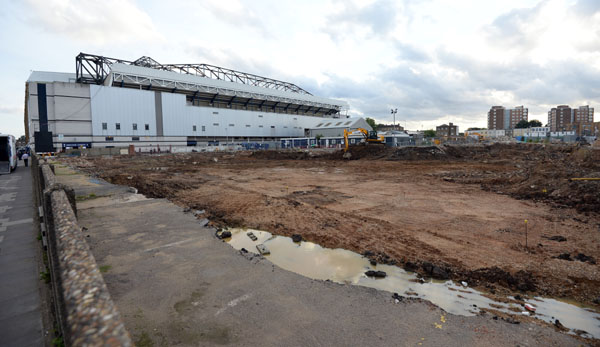
It's quite a well-known fact that Tottenham Hotspur are planning on moving to a new stadium. Spurs have been at their current ground - White Hart Lane - since 1899, following its erection in 1898. While the stadium has obviously undergone some major changes in that time, it is still somewhat lagging behind the country's major stadiums both in terms of its size and its facilities. White Hart Lane's 36,284 capacity is a far cry from the likes of Old Trafford's 75,635, the Emirates Stadium's 60,272 and even St James' Park's 52,405 and the Stadium of Light's 48,707 - and that's unacceptable for an English club who have aspirations to return to and maintain a place in the Champions League. A new ground is under construction. A site has been cleared right next to White Hart Lane and the project as a whole has been designated the title of "Northumberland Project", but it has recently been announced that delays based on problems with the land ownership mean it won't be ready for the 2017-18 season as was both planned and hoped. As a result, Spurs will definitely need to spend a season playing their "home" games at another ground. Ideas varying from Championship side Ipswich Town's Portman Road, Wembley Stadium and even bitter rivals Arsenal's Emirates Stadium have been thrown around as potential temporary homes for Spurs during the transition period between stadiums old and new - and that's going to be inconvenient to say the least. With that in mind - and bearing in mind several other factors - here are ten reasons why Spurs desperately need their new stadium...

10. So Arsenal Don't Have Bragging Rights
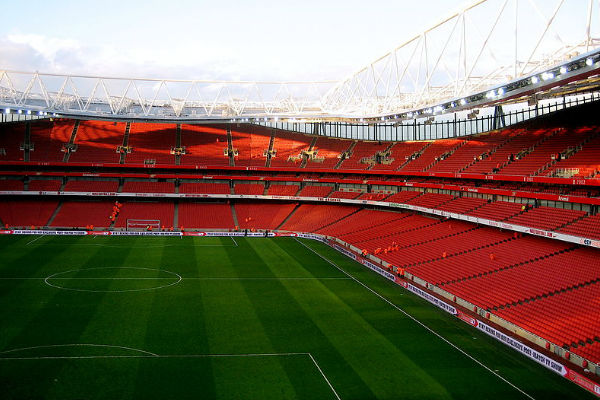
It might sound petty, but footballing rivals love getting one over on each other in whatever manner they can and, at the moment, Arsenal definitely have the bragging rights when it comes to who has the better ground out of the two North London Premier League teams. The Emirates Stadium is only eight years old, has a capacity close to 25,000 higher than White Hart Lane, has much better facilities and generally looks better than Spurs' older ground. Once Spurs get in to their new stadium, their status will elevate in a big way and they will no longer have to feel inferior in the ground stakes to their bitter North London rivals.

9. For Hosting International Games

It's not that Spurs haven't hosted international matches in recent years - a number of neutral friendlies have been held at White Hart Lane - but in the event that a major international tournament was to come to England, White Hart Lane would not be chosen as one of the venues for matches to be played at. That's a little bit embarrassing for a club who regularly battle for a place in the top four of the Premier League and something that would be rectified with the new ground opening. Indeed, as far back as 1996 - when the European Championships were held in England - White Hart Lane wasn't one of the grounds chosen to host matches. Wembley, Old Trafford, Anfield, Villa Park, Hillsborough, Elland Road, the City Ground and St James' Park got the nod instead, so Spurs definitely need to upgrade now that we're in to 2014.

8. Because Playing Away For A Season Will Suck
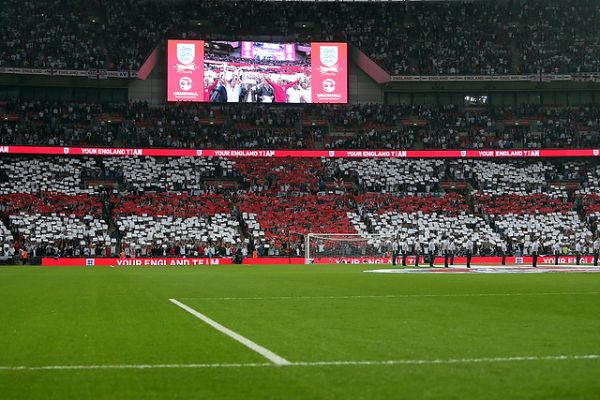
The as-good-as-confirmation that Spurs will have to play from White Hart Lane for a season that was given in a statement in the last couple of days emphasises just how much Spurs could do with their stadium being built as soon as possible. Home advantage is one of the key factors in football, with clubs generally performing better on their own ground due to familiarity with their surroundings and a dedicated and enthusiastic home support. Spurs will have that advantage somewhat negated for an entire season, as "home" matches are going to have to be played elsewhere. As we touched upon in the article introduction, ideas varying from Championship side Ipswich Town's Portman Road, Wembley Stadium and even Spurs' bitter rivals Arsenal's Emirates Stadium have been thrown around as potential temporary homes for the Lilywhites during the transition period, meaning that every "home" game will feel like it's being played at a neutral venue - at least until Spurs get used to their temporary new home. That could have a serious effect of Spurs' season.

7. Bigger Crowds

Spurs' new stadium will be a world class venue with a capacity of 56,250 - that's 20,000 higher than the capacity of White Hart Lane. That's good for several reasons; the first being that big players love playing in front of bigger crowds, the second being that it will mean more people getting behind the home team and the third being that it will obviously dramatically increase revenue. Basically, in the long run, a bigger stadium - which Spurs will be able to fill on a weekly basis with absolute ease, incidentally - will benefit the Lilywhites greatly. Most importantly, it will end up with them being a hell of a lot better off financially - and very little is more important than that in modern football.

6. Money From Naming Rights

If there's one thing that annoys football fans, it's renaming a classic stadium to something that includes a sponsoring company's name - you only have to look at the potential changing of Newcastle United's St James' Park to the Wonga Stadium for evidence of that. With that in mind, Spurs were very unlikely to ever bring in money by having a company sponsor White Hart Lane, because said company would undoubtedly want their name included in that of the stadium's. However, moving to a new stadium doesn't involve sullying the name of the previous one. Hence, when Arsenal moved from Highbury their new stadium was the Emirates Stadium. When Manchester City moved from Maine Road, their new stadium was the Etihad. When Stoke City moved from the Victoria Ground, their new stadium was the Britannia Stadium. And so forth. Hence, Spurs shouldn't have any issues naming their new ground after a potential sponsor - and a corporate sponsor is something they are said to be actively pursuing - and that could bring in a hell of a lot of money.

5. So Money Can Be Invested Elsewhere

While Spurs have not released the projected cost of their new stadium, it is estimated that the total cost will come to something around £400 million. It goes without saying that £400 million is an awful lot of money and, once the project is done and dusted, they will be able to set more money aside for other things - namely a higher transfer budget. While Spurs have actually spent some big money in recent years - £30 million on Erik Lamela and £26 million on Roberto Soldado spring to mind - their net spend on players is still some way off the biggest guns in the Premier League and their transfer record is too. With no money pouring in to a new stadium - and more coming in from its aforementioned bigger crowds - Spurs will have more money to use to improve the team.

4. To Generally Get With The Times

White Hart Lane is a very basic ground with poor facilities in comparison to Spurs' major Premier League rivals. The new stadium will simply elevate the club in to the 21st century, at long last, as the project boasts a number of state-of-the-art facilities and amenities. As well as the new 56,250 capacity, the new development includes a public square, located on a raised podium running from the High Road through to Worcester Avenue, redevelopment of the High Road, with a courtyard setting for retained historic buildings and new landscaping in front of the stadium, 275 new homes, Sainsbury's supermarket with parking, with club offices above, a primary school run by the E-ACT Free Schools Trust in partnership with the Department for Education and Spurs themselves, new offices for the Tottenham Hotspur Foundation charity, with state-of-the-art facilities allowing for even greater reach and impact, a Spurs club Megastore and museum, together with a new ticket office and cafe, as well as a University Technical College specialising in sports, science and health in partnership with Middlesex University. Essentially, the whole thing is going to be modern, state-of-the art, good for the community and it will look fantastic. Welcome to the new millennium, Spurs!

3. To Banish Bad Memories

There have been a lot of great footballing nights at White Hart Lane - great wins, great matches, great goals and great players - of that there is no doubt. But there have also been some terrible footballing capitulations on the part of the home team and, more importantly, some fairly nasty events. For example, in March 2012, during a televised FA Cup match between Spurs and Bolton Wanderers, Bolton player Fabrice Muamba suffered a cardiac arrest on the pitch, from which he recovered despite his heart having stopped for 78 minutes - thanks largely to the fast assistance of the Spurs medical staff and a heart doctor who happened to be in the Spurs crowd. The match was abandoned and, following medical advice, Muamba announced his retirement from professional football in August 2012. It will simply be nice to not remember Spurs' ground as "the ground Fabrice Muamba nearly died" and, on top of numerous poor footballing performances (White Hart Lane really has been far from a fortress for most of the Premier League era, for example), lots of bad memories will be banished in addition to the undeniable great ones.

2. A Stadium Worthy Of Champions League Football

Spurs are an ambitious club and they want to be playing Champions League football - a feat they have managed only once (which would have been twice had Chelsea not won the tournament and finished sixth in the Premier League when Spurs had finished fourth for a second time) - and they could really do with a stadium that is worth of showcasing big games in Europe's biggest and best club competition. Premier League teams playing in the Champions League could easily pull in crowds of 50,000 and more - any team in the Premier League could manage that in Europe's elite club competition - so the fact that White Hart Lane can only house just over 36,000 makes Champions League games a wasted opportunity for a guaranteed influx of revenue. Moreover, an intimidating, massive, state-of-the-art stadium can only be a good thing when opposing teams arrive and realise that the team they're about to face are a big deal - and White Hart Lane doesn't convey that at all.

1. To Attract Better Players

One thing any player considers when debating over agreeing to a potential transfer to a new club is the venue at which he is going to be playing. Spurs struggle to truly compete with the big teams on a lot of fronts when it comes to attracting players at the moment - the fees they can pay, the wages they can pay, the Europa League versus Champions League issue and, indeed, the poor stadium. The club already have a state-of-the-art training facility which impresses anyone who sees it - including players - so having a state-of-the-art ground to go with it will only add to the appeal of signing for the club. Essentially, with a bigger and better stadium, bigger and better players will be more likely to want to play for Spurs - and that can only be a good thing. So there you have it - ten reasons why Spurs desperately need their new stadium. Did you enjoy this article? Do you agree with the entries on this list? What other reasons make Spurs' new stadium a necessity? Let us know your thoughts in the comments section below. And please feel free to follow me on Twitter!

Contributor
Contributor

I'm a Tottenham Hotspur fan who loves comics and comic book movies.