10 Sportspeople Considered The Greatest Ever
Some are born great, some achieve greatness, and some have greatness thrust upon them.

Muhammad Ali has died at the age of 74. He wasn't just the greatest boxer of all time, but was arguably the greatest sportsperson of all time as well.
Almost nobody else can make such a claim. Ali's ability in one of few sports with legitimate global appeal, and his contrary, often plainly rebellious personality marked him out as a truly transcendent figure. His influence extended beyond his ability to box, as people generations apart who never watched his work in the ring were nevertheless inspired by the man.
The question of 'Greatest of All Time' is not so clear-cut for most other sports. The debates usually descend into provocative, hate-laden affairs, but everybody enjoys one of those. So here's ten (ten!) controversial opinions to argue with me about. One of them is cricket, though. Can anyone really work themselves into a fervor over cricket? The answer: probably. This is the internet, afterall.
10. Basketball: Michael Jordan

Iconoclasm is a funny thing. Eventually, attacking prevailing opinions on certain subjects becomes so in vogue and ubiquitous, that it almost becomes counter-cultural to renounce these new claims and concur with the prior status quo.
So, Michael Jordan then. Growing up in Britain, there was only one basketballing-man I knew: Jordan. Why? Because we were told he was the greatest.
Yes, that's a fairly spurious argument. One of Jordan's greatest achievements was in becoming the most aggressively marketed sportspeople of all time; a campaign of that proportion is always going to aggrandise the true talents of a man.
But such a widespread and successful branding exercise could never have succeeded without considerable sporting prowess to back it up, and Michael Jordan had that in spades. Five MVP trophies, six championships, ten scoring titles: the accolades speak for themselves.
Was Jordan the most technically proficient ball-basketer to ever step on a court? Arguably not (and argue you will). But his legacy dictates, and will always dictate, that he is. Plus: sneakers.
An Alternative Choice: LeBron James

If Jordan is the greatest only on a vaguely philosophical basis, LeBron may be the actual best with a ball beneath his hands. His abilities seemingly transcend human capabilities. In fact, the man himself transcends humanity. Just look at the guy; he's basically nine feet tall. Yet he's as graceful as ballet-dancing swan (depicting a graceful swan, in Swan Lake). Swans.
9. Snooker: Ronnie O'Sullivan

Being great and being popular are not always analogous. Yet despite his eccentric theatrics and often blasé attitude to the sport gradually losing him favour with ardent snooker fans, there's little question that Ronnie O'Sullivan was and remains an almost unmatched artist with a cue.
O'Sullivan's swift dismissal of balls on the baize earned him the sobriquet 'The Rocket', and there was no greater demonstration of this title than his belief-beggaring maximum break in under five and a half minutes at the 1997 World Snooker Championships.
It was not only his first professional 147, but also the quickest in the history of competitive snooker. The Essex Exocet would go on to score another twelve maximum breaks, as well as 824 century breaks - both records in the sport.
In 2001, O'Sullivan finally won his first World Championship, but by then he had already garnered a reputation as snooker's bad boy large enough to match his playing abilities.
Marking yourself out as a maverick in a sport as sedate as snooker isn't exactly difficult, but O'Sullivan's antics were often so dramatically and incongruously over the top that they wouldn't have looked out of place in the theatre (think Arthur Miller's The Crucible rather than Sheffield's Crucible, perhaps).
In 1998, O'Sullivan had been stripped of his Irish Masters title after failing a drugs test (the most remarkable part of the story being that drugs tests exist in snooker), and over the coming years endured a peculiar on-and-off relationship with the sport during which the capricious potter was likely to down cue at a moment's notice.
By 2013, O'Sullivan had stopped even practicing - but this still wasn't enough to stop him walking into the World Championships and claiming a fifth title without breaking a sweat. They say talent plus hard work pays off, but for 'The Rocket', only the former was necessary.
An Alternative Choice: Stephen Hendry

As far as concrete achievements go, Edinburgh-born Hendry eclipses O'Sullivan in every department. He has won the most world ranking titles, was snooker's world number one for eight straight years, and was the sport's youngest ever world champion. But he is the victim of his own efficient brilliance. Unlike Ronnie, Hendry's huge list of accomplishments were racked up in the most perfunctory of manners: always impressive, but never exciting.
Oh, and by the way, yes: snooker is a sport. Pacing around such a large table all day can be very tiring.
8. Tennis: Serena Williams

The new millennium really was a golden period for men's tennis. The depth of quality in the sport was remarkable, gilded by the mesmeric quartet of Roger Federer, Rafael Nadal, Novak Djokovic, and Andy Murray contesting some of the finest racket action of the open-era. With little separating the four, it's almost impossible to choose one as the greatest of all time - though it's doubtless the title belongs to one of them (well, except Murray).
The women's game is a different story entirely. With an utterly dominant career spanning two decades and a haul of 36 Grand Slams across all tennis formats, Serena Williams is without equal.
Though she lags behind Margaret Court and Steffi Graf for singles Grand Slam titles, Serena is far from finished. The younger Williams sister became the oldest number one ranked player in 2013, and has held onto the post since. It's telling of both women's tennis' relative dearth of quality and the supreme talent of Serena that at the age of 34, she continues to completely eclipse all her rivals.
Oh, she also has four Olympic gold medals to go with all those Grand Slams, not to mention career earnings surpassing $75 million. Serena is not just the greatest tennis player of all time, but also one of the greatest sportspeople of all time.
An Alternative Choice: Roger Federer

Yes, OK, I have contradicted myself. I know I said one couldn't possibly choose the greatest from men's tennis elite, but at a push, Federer just edges it. Like any great sportsperson, during his peak, his success bred resentment, and ultimately utter boredom as he strolled to title after title. It's a sign of a true great whenever an athlete is so supremely gifted that them winning becomes tedious.
7. Rugby Union: Jonah Lomu

I can't confess to have the most intimate knowledge of rugby, but even I know who Jonah Lomu is. The youngest ever All Black wasn't just one of the greatest rugby players of all time, but also a global sporting icon.
Though New Zealand lost out to hosts South Africa at the 1995 Rugby World Cup, left-winger Lomu's performance in the tournament was such that he became the new poster-boy for a sport set to break free of the shackles of amateurism.
Rugby union's first celebrity star, Lomu suddenly came under the same scrutiny footballers had endured since George Best aroused the interest of the media as far back as the '60s. The trappings of fame weren't to the generally reserved Lomu's liking, but away from the media glare he continued to do his loudest talking on the pitch.
He was again the star performer of an otherwise disappointing World Cup for the All Blacks in 1999, and Lomu's presence in the sport inflated match attendances to unparalleled levels. The apex of his influence came in a Tri-Nations showdown between Oceanic rivals Australia and New Zealand, in which Lomu secured a dramatic late winner in front of a staggering 109,874 people - a rugby union record.
Just as he was on top of the world, Lomu's career was ultimately ended by a rare kidney disease, nephrotic syndrome, that required dialysis five times a week. A kidney transplant in 2004 gave hope of a comeback, but it wasn't to be. In 2016, rugby's greatest ever star died suddenly from a heart attack. Lomu was just 40 years old.
An Alternative Choice: Dan Carter
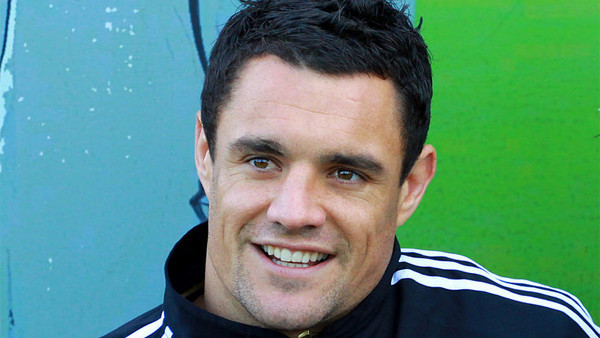
Arguments for Lomu's compatriot Dan Carter as the greatest ever rugby player pay much credence to his status as the sport's only dual world cup winner, though for many female fans of the sport it centres more on his chiseled physique and rugged good looks. Oh, and he's also the highest ever point scorer in Test match rugby. Guess that counts for something.
6. Cricket: Brian Lara

Cricket isn't exactly the most accessible or exciting sport, and that fact is largely borne out by its presence being rather restricted to Britain and its former imperial sphere of influence. So when a batsman comes along of such considerable aptitude that his name transcends a sport of largely esoteric names into mainstream culture, you know he must be something a bit special.
Lara burst onto the scene of Test cricket in January 1993 with a blistering debut tally of 277 for the West Indies against Australia, and from then on he had the proverbial runs for runs. The batsman capped off a stunning sequence of seven centuries in eight first-class innings with a record 501 not out for Warwickshire against Durham, and was promptly approached by Audiogenic to front their series of cricket video games. The name Brian Lara became a household name in the process, synonymous with cricket-sims for the next twelve years.
Three years before retiring, Lara famously racked up a quadruple century against England in 2004; the highest ever score in a Test innings. Mere months before finally putting his bat down for good, the West Indies legend became the first ever cricketer to surpass 10,000 ODI runs. Brian Lara cricket games ceased with his retirement, and no-one has come close to replicating his universal appeal since.
An Alternative Choice: Sachin Tendulkar
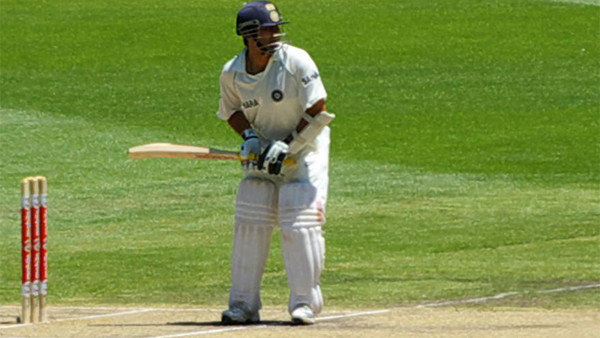
Whereas Lara broke records with his prolific batting, there was another following close behind. Across a near-quarter century career, Indian batsman Sachin Tendulkar not only matched Lara's 10,000 ODI runs, but ultimately surpassed it. Though his achievements owe much to his longevity as well as his ability, few can argue with the credentials of a man with 30,000 international runs - the only player in history to hit such a milestone.
5. Golf: Tiger Woods

Muirfield's recent vote to maintain its exclusion of women members demonstrates just how deeply ingrained golf's middle-class white man culture is. Minorities and the sport just don't mix (although 'women' hardly classifies under that categorisation). In 2016, it's all a bit of an embarrassment really.
African-American discrimination within the sport has been just as prevalent as overt misogyny. It wasn't until 1990 that Augusta admitted their first black golfer, and even then it was under duress. Though black people are not prohibited from golf, one can imagine how such endemic cultural barriers have restricted African-American players from making it big in the game.
So that arguably the greatest golfer who ever lived is black is a real testament to his extraordinary talent.
Tiger Woods turned professional in 1996, and by the end of the next year, he had already won his first major, and became the sport's world number one. It was merely the beginning of an utterly dominant career, virtually unparalleled, in which Woods claimed fourteen majors, sweeped the PGA Player of the Year award a record eleven times, and bagged more career wins than any other person in the history of the game.
Such success one would imagine to usher in a new era of African-American golfers, inspired by Wood's achievements in a hitherto seldom inclusive arena. That Tiger's glittering career did next to nothing to adjust golf's demographics is further evidence of how difficult the environment was for him to succeed in, and just how great he was to do so.
An Alternative Choice: Jack Nicklaus
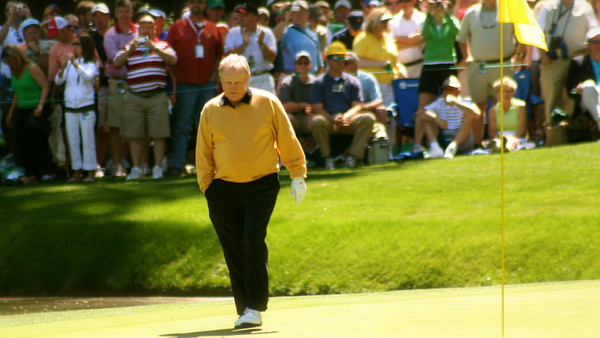
Arguments over which is better, Tiger or 'the Golden Bear' are difficult to settle. Let it just be said that I think a tiger would probably beat a bear in a fight.
4. Gymnastics: Nadia Comăneci

What's better than 'perfect'? Logically, the answer is nothing.
Women's gymnastics had been introduced to the Olympic Games as early as 1928, and for the best part of half a century, whilst technically possible, it was deemed basically unfeasible that any competitor could attain a score beyond 9.95 (out of a maximum of 10.0).
Then Nadia Comăneci turned up. Aged just fourteen, the Romanian took to the uneven bars in a dazzling display of flawless flexibility at the 1976 Montréal games. As she landed with a grin as stretched as her supple limbs, the hushed masses in the attendance gave way to a sea of confusion when her score was displayed: 1.00.
Such was the expectation that a flawless score could never be achieved, scoreboard manufacturer Omega SA had been informed prior to the event that a display showing four digits would not be necessary. It soon became clear that the paltry score of 1.00 was something even more unimaginable: a perfect 10.
Alongside a further six perfect scores, Comăneci also became the youngest all-around gymnastic gold medalist - a feat that is now impossible to legally match thanks to the competition's adjusted age requirements.
Comăneci's exquisite exhibition of equilibrium catapulted the popularity of gymnastics, and the teenager became one of the world's most iconic sports stars in an instant.
Others latterly managed the same hitherto unattainable score - Comăneci's rival Nelli Kim managed it later in the same games - but judges had never dared even consider a 10 until the Romanian came along.
An Alternative Choice: Larisa Latynina
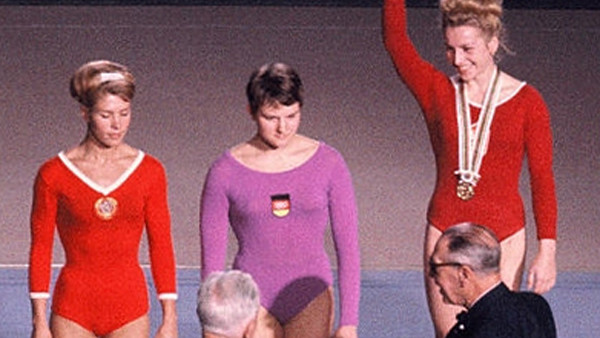
For reasons that weren't always necessarily entirely sporting, the Soviet Union monopolised the Olympics and in particular gymnastics during the Cold War. Latynina was the embodiment of the USSR's stranglehold, and her haul of 18 Olympic medals stood unmatched until Michael Phelps left her in his super-speedy wake. Just how good was Latynina? Consider this: she was untouchable in the 1958 World Championships, claiming five of the six available medals on offer - despite being four months pregnant at the time.
3. Formula 1: Ayrton Senna

Though his untimely and tragic death in 1994 has to some extent augmented Ayrton Senna's legacy, even had he avoided the accident that fateful day in Imola, the Brazilian would still likely be considered the greatest Formula 1 driver of all time. If anything, he probably would have added to his legacy.
Senna was more than just about winning races - though he did that too, his 41 podium finishes only being topped by four drivers. It was the way in which he won them that marked him out as the best.
Sometimes it seemed effortless, as though Senna had entered a state of pure driving Zen; one gained the impression he could ghost his way around the track with his eyes closed. And maybe he could - after all, the Brazilian believed it was God's will for him to succeed.
Unlike some more successful German drivers (you know who), Senna had the ability to excite. The heavens opened on Monaco in 1984, but God's fury had no effect on his chosen one; whereas Jesus could walk on water, Senna could drive on it.
A gearbox failure looked to wrest away victory on home soil in 1991, but Senna simply glided over the line in 6th gear. Runner-up Riccardo Patrese could do nothing but bow down to his supreme talents.
Pure theatre throughout his career, a tragic end was almost befitting a man who produced some of the most dramatic moments the sport had ever seen. It wasn't just Senna who died that day in San Marino, but a large part of Formula 1 as well.
An Alternative Choice: Michael Schumacher
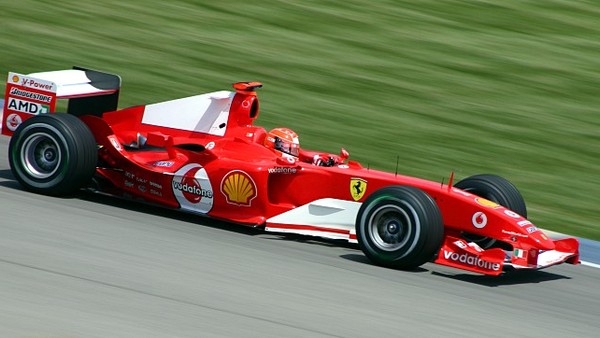
No driver has won more races, more championships, or more pole positions than Michael Schumacher. His Formula 1 accomplishments are without equal, and it's not likely they'll be bested any time soon. The problem with the German, however, was that he achieved all he did in a bit of a twatty way. Purposefully colliding with Damon Hill and Jacques Villeneuve in order to claim championships (the latter backfiring spectacularly), and general foul-play are not the hallmarks of a sporting great. Unlike Senna, who leaped out of his vehicle mid-race to check the condition of a crashed Erik Comas. Top bloke.
2. Football: Pelé

Pelé or Mardona. Maradona or Pelé.
Pelé? No, Maradona.
Actually it's Pelé. But maybe it's Maradona.
Fewer world cups? But he succeeded in Europe.
Yeh, but...look, stop all this: it's Pelé.
An Alternative Choice: Diego Maradona
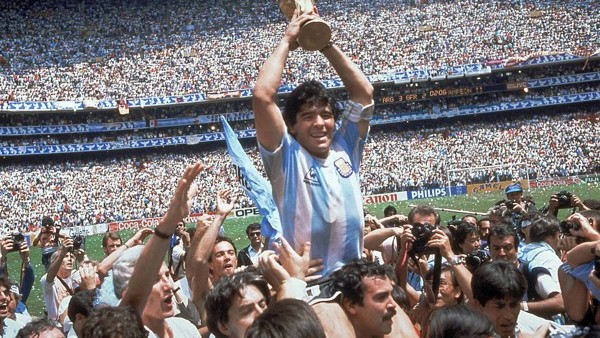
Or maybe it's Maradona.
1. Boxing: Muhammad Ali

"I’m not the greatest. I’m the double greatest. Not only do I knock ‘em out, I pick the round. I’m the boldest, the prettiest, the most superior, most scientific, most skillfullest fighter in the ring today."
- Muhammad Ali. 1942 - 2016