10 Things Lionel Messi Wants You To Forget About

Stand back. Things could get Messi.
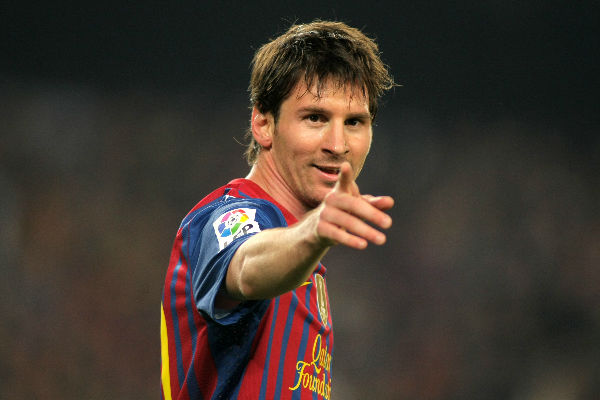
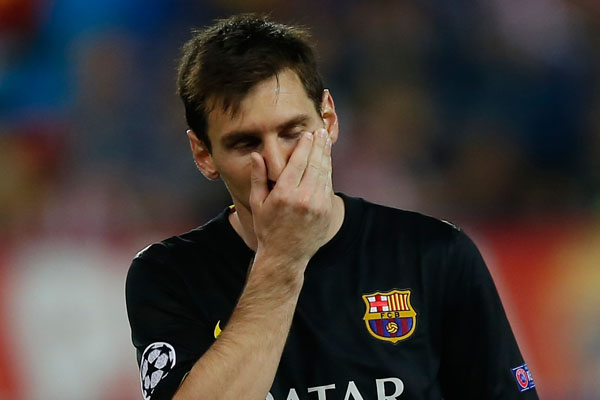
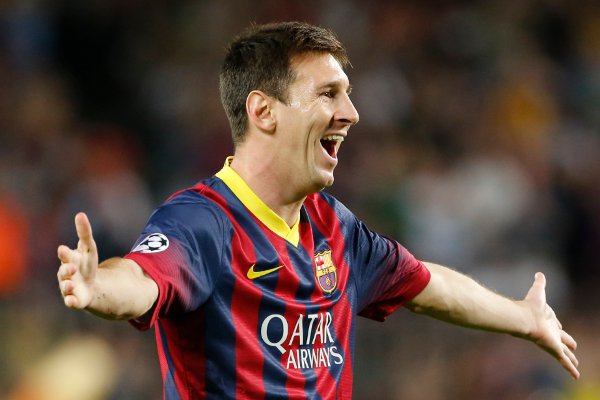
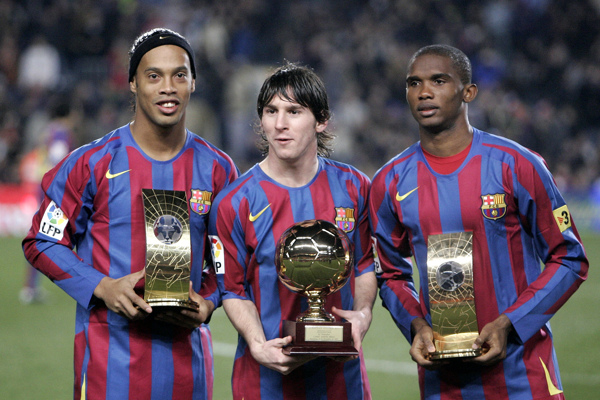
Lionel Messi is rightly regarded as one of the greatest players to ever step out onto a football pitch. Ever since breaking into the Barcelona team as a 17 year old way back in 2005, the man known affectionately as the atomic flea has gone on to win nearly everything in sight. With Barcelona he€™s won the La Liga seven times, the Copa Del Rey three times, and the Champions League an amazing four times, breaking all kinds of personal records and collecting four Ballon D€™Ors along the way. Yet outside of his undoubted ability, there is also something inherently likeable about Lionel Messi. He always seems intent on playing the game the right way, rarely indulging in the cynical theatrics of his Barcelona teammates. Despite the constant fouls he suffers, he always makes the effort to stay on his feet in favour of winning a cheap freekick. And whenever El Classico descends into a twenty-one man brawl, Messi is invariably the one player watching on. But in spite of all this effusive gushing, there must be something the world's greatest player wants us to forget. Turns out there is. Ten things, in fact.

10. The Tax Evasion Accusations

Messi finds himself currently embroiled in an ongoing tax evasion with the Spanish authorities over allegations he evaded more than ‚4m in taxes. The accusations date back to between 2007 and 2009, where Messi is alleged to have used Belize and Uruguay-based companies to funnel incomes based upon his image rights. Obviously Messi is hardly the first high profile star, or even footballer, to use such loopholes to avoid paying so much in taxes. Yet the timing isn€™t ideal, with Spanish authorities newly vigilant in clamping down on footballer€™s financial misdealings. Iker Casillas, Xabi Alonso and David Villa are just three footballers to have been fingered by the Spanish government in the last couple of years, with all three paying back millions to settle their cases out of court. Messi has himself paid a sum of ‚5m to the treasury in the hope of a similar resolution. Messi€™s legal team hoped the settlement, along with the defence that Messi is innocent by virtue of ignorance (his father deals with his financial earnings) would be enough to make the accusations go away. Spanish authorities appear less keen, however. And unlikely as it may seem, if found guilty then Messi could feasibly serve up to six years in prison according to Spanish law.

9. He's Prone To Losing His Temper With Teammates And Opponents
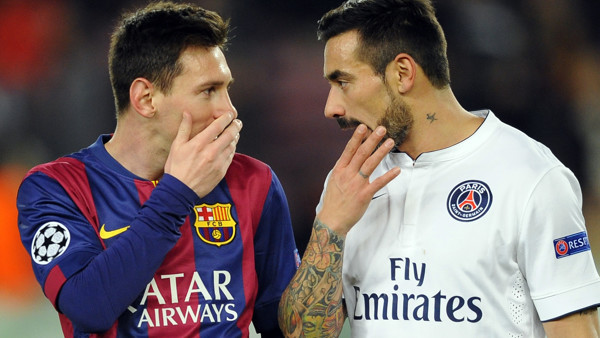
Messi possesses one of the most impeccable public images in football. Carefully cultivated by himself and his team of advisors, there€™s very rarely any salacious gossip or on the pitch controversies that could potentially muddy the player€™s brand. Yet occasionally the mask has been known to slip. Frustrations are known to mount. There€™s this time he insulted the mother of a referee, or the time he allegedly racially taunted then-Hercules opponent Royston Drenthe. He has even been known to take his frustrations out on his teammates. Reports arose in 2013 suggesting the hitherto-angelic Messi liked to bully his teammates. Quotes published in Spain€™s El Confidencial claimed he€™d reduced youngster Christian Tello to tears, as well as criticising Alexis Sanchez, apparently saying, €œConsidering how bad you are, I've no idea how you cost so much," and, "Stop shooting so much and give me the ball." These claims are admittedly little more than hearsay. Similar rumours are rife in every dressing room. But Messi does have previous when it comes to abusing teammates. This video shows David Villa bearing the brunt of Messi€™s frustrations, in an incident stemming from Villa electing to not pass the ball Messi€™s way.

8. That Coca Cola Incident

And continuing on from the revelations of alleged prima donna behaviour, former New York Red Bulls manager Hans Backe (who during this time managed ex-Barca players Thierry Henry and Rafael Marquez) recounts this anecdote, where Messi chooses to undermine then-coach Pep Guardiola€™s authority by drinking a can of Coke: €œIt was three hours before the match, all the players sit and eat when Messi says he wants a Coke. €˜No, no, we do not drink cola three hours before a fight,€™ said Guardiola. So Messi got up from his chair and comes back a few minutes later with a can of cola, which he opens and drinks right in front of Guardiola. Imagine what happens when a great profile as Messi goes against the coach in this way. It is a war that Guardiola can not win. It is impossible,€ said Backe. The story dates back to the 2008/2009 season, a season which ended with Barcelona winning the La Liga, Copa Del Rey and Champions League. All of which perhaps suggests that if Lionel Messi wants a can of Coke before a game, you let him have one.

7. He's Not Quite The Best Ever At Taking Penalties
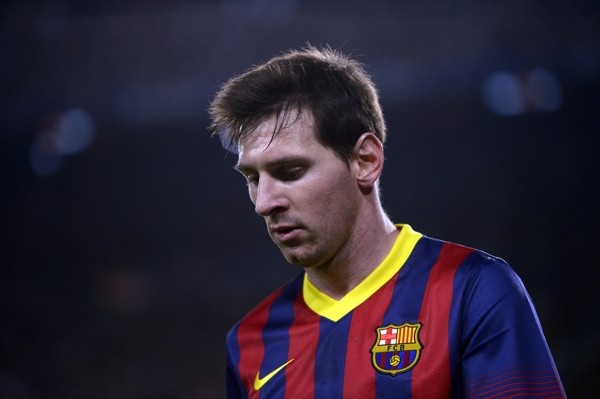
If there€™s one glaring weakness in Lionel Messi€™s game, it€™s probably his ability from twelve yards. It€™s something of an oddity that a player with such undoubted talents as Messi should struggle with something as relatively simple as a penalty. Perhaps he€™d have a better record from the spot if the act of taking a penalty involved beating two or three players in the run-up. Admittedly the last two penalties he took he scored, both for Argentina in the Copa America. The second of these was in the penalty shootout against Chile that Argentina went on to lose. In such a high pressure situation, Messi€™s finish was flawless, suggesting it€™s not necessarily a question of mental fragility. Yet with Barcelona, his penalty conversion record is far from impressive. Having taken over sixty penalties at club level, Messi has missed thirteen. That may not sound too bad, but it hardly yells world class. You could argue he€™s not even the best penalty taker at Barcelona, but given the perpetual race between Messi and Ronaldo to score the most goals, he€™s not going to all of a sudden relinquish the responsibility. Even if he continues to miss important penalties, such as this one in the Champions League semi final of 2012 that saw Barcelona crash out to eventual winners Chelsea.

6. Messi's Influence On His Managers

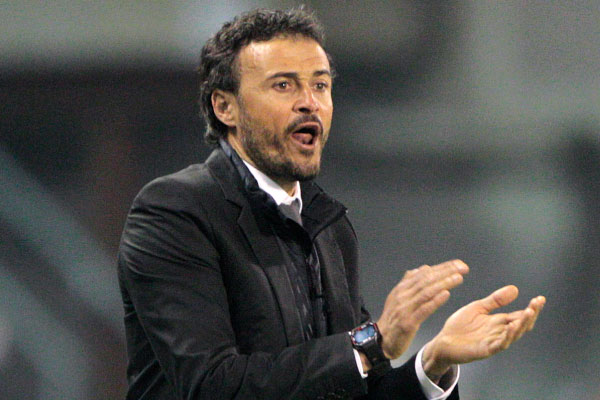
Much has been made in recent seasons of Messi€™s relationship with his managers. To be one of the greatest players of all time is a pretty big bargaining position, meaning appeasing Messi is fairly high on any Barca coach€™s to-do list. Luis Enrique was said to have fallen foul of Messi after benching him in the defeat against Real Sociedad in January. Messi€™s response was to miss next day€™s training, citing a bout of gastroenteritis as explanation. That didn€™t prevent Spanish media from speculating on a possible fallout between star and manager, leading to rumours of Luis Enrique€™s future for the remainder of the season. Then there is previous manager Tato Martino, whose appointment as Barca coach came as something of a surprise given his relatively undistinguished coaching career up until that point. Yet Martino happens to reside from Rosario, Argentina, birthplace of Messi, and many say it was Messi€™s father, Jorge, who pushed for the appointment. And then again the following year, when Martino replaced Sabella as Argentina€™s coach. Argentine journalist Marcela Mora y Araujo, writing in The Guardian, suggests the move was a way to appoint a manager happy to play second fiddle to Messi's needs.

5. His Far From World Class Fashion Sense
It happens all the time. Looking back at old photos of ourselves and wondering what in the hell possessed us to wear that. The upside for us is we generally don€™t have armies of trained photographers snapping our every fashion misadventure. Messi doesn€™t have that luxury, but then again he doesn€™t make it easy on himself. It was at the Ballon D€™or, football€™s very own Oscars ceremony, where he chose to unleash this garish looking polka dot tuxedo back in 2013. And if you thought that that look would take some beating, the following year he rolled up in this striking purple suit. Then again perhaps we€™re doing Messi a disservice here. After all, Messi finished runner up to rival Cristiano Ronaldo in the 2014 Ballon D€™or awards, yet it was Messi€™s sartorial inelegance that made the headlines. Perhaps that was the plan all along.

4. His Performances In An Argentina Shirt
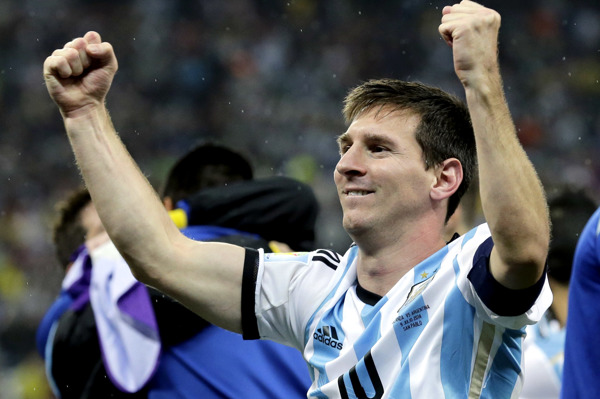
Ok, maybe this one is a little harsh on Messi. He€™s only human, after all, and Argentina€™s attempts at reclaiming the coveted Jules Rimet trophy seem constantly undermined by bizarre managerial choices. Great player though he was, did anybody really think Diego Maradona was the right man to lead Argentina to glory back in 2010? Is Tito Martino the best Argentina can currently hope for, hired a year after overseeing Messi€™s most difficult campaign in a Barca shirt? Then there are other variables to consider. The Argentina squad seems perpetually unbalanced, the dominance of Spain and of Germany being Germany, the inherent luck involved in winning cup competitions. Many people argue you must win the world Cup in order to be labelled an all-time great. After all, Maradona won the World Cup. So did Pele. For Messi, the most prestigious trophy in football still eludes him. The fact he€™s not quite as prolific in an Argentina shirt is understandable. International football is a different beast altogether. And he€™s still a quality player for Argentina, just not a World Cup winner, and most likely never will be.

3. He Isn't Quite So Loved In His Native Argentina

Closely aligned with Messi€™s international struggles is the fact he€™s never quite been accepted by the Argentine public as one of their own. In the wake of Argentina€™s disappointing Copa America final defeat to Chile, national newspaper Ole blamed Messi for their failure, criticising his apparent disinterest throughout the final and calling for him to be stripped of his captaincy. It was a harsh and emotive editorial, one that illuminates Messi€™s struggles amongst the Argentine people. Jere Longman€™s excellent piece published in 2014 in the New York Times explores the reasons why Argentina hasn€™t quite taken to their star player. At the heart of the problem is the fact Messi left the country at a young age, moving to Spain aged 13 and receiving his schooling at Barcelona€™s famed La Masia academy rather than the barrios of Argentina. He lacks that fight and determination better encapsulated by countrymen such as Carlos Tevez, a player less talented yet more revered. And then there is the subject of Diego Maradona. The comparisons have always existed between the two, not helped by instances such as this. Yet the main difference is Maradona€™s fight and dogged determination led his country to winning the 1986 World Cup, a feat Messi seems incapable of replicating.

2. The 'Messi & Friends' Series Of Charity Games
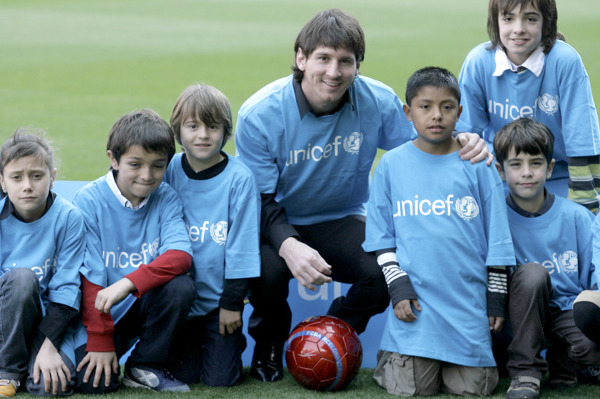
Like many of the world€™s biggest stars, Messi does his fair share for charity. He is a goodwill ambassador for UNICEF, has his own charity set up in his name, as well as making numerous other appearances and donations the world over. Yet it€™s the €˜Messi and friends€™ series of charity games that casts doubts on the veracity of these charitable endeavours. Germany€™s Der Spiegel claimed this year that they have evidence that Robert Lewandowski was offered ‚180,000 to participate in a €˜Messi and friends vs the rest of the world€™ charity game back in 2013. Lewandowski declined the offer, but plenty of other pros happily took part, presumably handsomely recompensed in spite of the game€™s supposed charitable nature. Der Spiegel doesn€™t stop there, however. They claim that of the $7.9m generated for charity, only $300,000 went to Messi's foundation. The rest appears unaccounted for, leading to suggestions the series of games were conducted primarily to line the pockets of footballers and agents alike.

1. His Use Of Human Growth Hormones

Ok ok, this is hardly the biggest skeleton rattling away in Lionel Messi€™s cupboard. The star€™s HGH past is well documented, after all, subsequently framed as an inspiring triumph against adversity. For those unfamiliar, Messi was born with a growth hormone disorder. At the time of diagnosis, Messi stood at 4€™2€. He is now listed as 5€™7€, which would€™ve been impossible were it not for the HGH treatment paid for by Barcelona. The controversy comes from the misuse of HGH as a performance enhancing drug. HGH is listed as a banned substance by most sporting organisations, including FIFA, and although Messi€™s treatment probably ended long before he made his professional debut, the damage caused by high profile drugs cheats means detractors can use Messi€™s own HGH past as a reason to discredit his achievements. All of which sounds incredibly unfair, especially as Messi had a genuine medical reason for his treatment. But Messi and his representatives rarely answer questions on the star€™s HGH-past, suggesting it€™s something they would like the public to forget about.

Contributor

Dale Armitage hasn't written a bio just yet, but if they had... it would appear here.