10 UFC Legends Who Barely Had MMA Skills

The days of the one trick fighters are over.

Nowadays a UFC fighter has to be versed in multiple disciplines, but not long back a good punch and basic wrestling would get it done. Take a look at successful guys who didn't exactly have a whole load of dimensions to the term 'MMA'. Today a "Mixed Martial Artist" is a master of several disciplines in a sport that is constantly evolving. They have to be athletes in addition to having the ability to implement techniques from several martial arts. However, not twenty years ago the majority of fighters in the UFC only knew one martial arts discipline. The point of the promotion at the time was to find the best fighting style and that is what drew the crowds to the sport. However, as time went on, fighters caught on that the more martial arts they knew, the bigger advantage they had on their opponents. Despite this there are many who are considered legends in the sport that had very basic fighting skills. They either specialized in striking or wrestling and were even able to survive into what could be considered the modern era. However, as the sport evolved they quickly found themselves outdated and irrelevant. That doesn't mean they still aren't legends, they just aren't great fighters in this current era. They are big names and they're varied but they are a part of history in the sport. Here are the top one dimensional UFC legends.

10. Mark Kerr

https://www.youtube.com/watch?v=Vkawzpnuc-0 At the height of his career, Mark Kerr was a force to be reckoned with. He was able to thrive in a clearly weak field in MMA in general at the time. After destroying everybody in the World Vale Tudo Championship 3 tournament, Kerr was invited to fight in the UFC 14 Heavyweight Tournament. Kerr ran through everyone in both that tournament and at UFC 15. Since at the time there was not a lot of money in the UFC, Kerr went where the money was in Japan with Pride Fighting Championships. Kerr continued to smash through opponents until he ran met opponent Igor Vovchanchyn at Pride 7 where he was originally defeated via TKO (the loss was later declared a no contest due to illegal knees). Due to a variety of factors such as his addiction to pain killers, relationship problems with his at the time girlfriend, and his inability to adapt the the changing landscape of MMA, Kerr's career went on a downward spiral. The events leading up to his loss to Kazuyuki Fujita in the Pride Grand Prix 2000 Finals were documented in the HBO documentary The Smashing Machine. It is truly sad to watch the career of such a promising fighter dwindle into another battle worn veteran. Following the events of The Smashing Machine, Kerr would go a dismal 3-10 in his career, trying several times to make a comeback but failing. It was Kerr's fierce ground and pound that led Kerr to become a monster in MMA and it was ironically enough his inability to expand past that technique that led to Kerr's downfall in MMA.

9. Gary Goodridge

https://www.youtube.com/watch?v=a1QaZYB-xzA If there was anyone who was more one dimensional in their MMA career it was Gary Goodridge. Goodridge first competed in MMA when he entered the UFC 8 tournament representing the Korean martial art Kuk Sool Won. He may have fought under the Kuk Sool Won banner but in reality he was a mercenary who was asked to represent the school in exchange for the art rank of black belt. While it was initially a gimmick, Goodridge turned out to be enough of a beast that he made it to the finals of the tournament. Ironically enough he faced Don Frye in the finals who was probably one of the first well rounded athletes in the sport. Goodridge would go onto spend the next fourteen years competing in the sport and in 1999 started competing in kick boxing as well. He experienced mixed success in both until about 1998 when both his careers pretty much went downhill. In fact he received so much punishment that he now experiences dementia due to the amount of head trauma he sustained. Once again it is sad to see a pioneer in the sport reduced to a shell of what he was. The fact of the matter is that Goodridge is was a striker and nothing more with very basic submission skills.

8. Kazushi Sakuraba

https://www.youtube.com/watch?v=GfRDE_asnMo Going from a striker back to a wrestler, we look at probably the earliest Japanese MMA pioneer of the modern era, Kazushi Sakuraba. Sakuraba was originally a wrestler who got into Japanese pro wrestling and made a huge career of it. In 1996 he competed in an event in Japan where he submitted to Kimo Leopardo. After that he competed in the UFC Japan tournament where are after a controversial stoppage he was re-entered into the tournament and won. From there he turned to Pride FC where he has his famous trilogy with Wanderlei Silva. He also made a name for himself as the "Gracie Killer" when he defeated four members of the Gracie family. Sakuraba actually had a long career in MMA and didn't slide until the last three years. He retired in 2011 after a loss to Yan Cabral at Dream 17. To this day he still competes in pro wrestling where he will probably make enough to retire on when he decides to. While he has yet to show the punishment he sustained in MMA, his one dimensional grappling based fighting style is still obvious. That is why he lost his last four fights in a row to fighters who could be considered average by today's standards.

7. Mark Coleman

http://www.dailymotion.com/video/x7yufy_bad-blood-mark-coleman-vs-mauricio_sport Mark Coleman is the definition of one dimensional in that he is known as "the Godfather of Ground and Pound". Coleman first appeared in the UFC at the UFC 10 Tournament where he ran through everyone and won the tournament by defeating Don Frye. He then ran through the UFC 11 Tournament before fighting Dan Severn for the inaugural UFC Heavyweight Championship. Then he hit a wall when he lost to a series of prototype sprawl and brawlers, revealing the holes in his ground and pound style. He was able to rebound after his first loss in Pride FC when he took the Pride FC 2000 Openweight Grand Prix. The rest of his fighting career consisted of ups and downs loosing to other sprawl and brawl strikers as well as submission specialists like Antonio Rodrigo Nogueira and Fedor Emelianenko. His last match was a submission loss to UFC Hall of Famer Randy Couture who started out as a wrestler but became successful because of his adaption into a far more well rounded fighter. To be fair Coleman did develop a little bit of a submission game but it was very basic. His striking never developed past his ground and pound ability. He did desire to go out on a win but after being released from the UFC Coleman called it a career almost three years after his last fight and fortunately didn't sustain as much punishment as some of his contemporaries.

6. Mirko "Cro Cop" Filipovic

https://www.youtube.com/watch?v=BxSksqCJqas Mirko "Cro Cop" Filipovic is considered by some to be one of the greatest MMA heavyweights in the history of the sport. One of the reasons for this is because of his dangerous striking which earned him 21 of his 29 career victories. His striking origins trace back to his career as a kickboxer before committing fulltime to MMA. However, most people probably noticed that aside from his striking Filipovic didn't have too many actual MMA skills. He'd developed an early sprawl and brawl game along with very basic submission skills but that was it. Filipovic first started out in his MMA career crossing over from his K-1 career and suffered only four losses in his first 28 matches. His first stint in the UFC only lasted three matches ending with back to back losses to Gabriel Gonzaga and Cheick Kongo. A rebound in Dream led to a return to the UFC but saw him loose to a much larger and better striker Junior dos Santos then slide into a three fight loosing streak by strikes. After this he returned to kick boxing for a while and crossed over into MMA again where he's been fighting primarily in Japan and Russia. It's good to see him fighting but not sustaining horrible punishment.

5. Wanderlei Silva

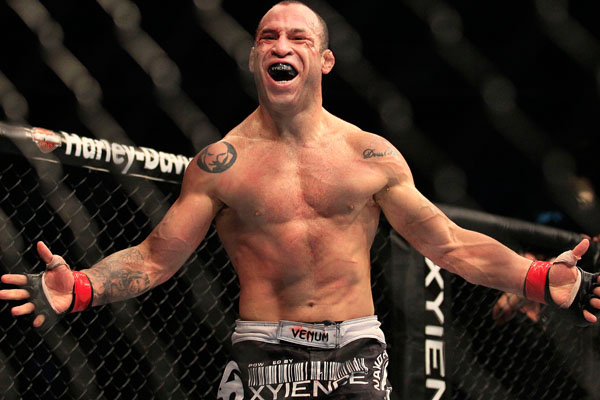
There is probably no other one fighter that could be described as dangerous other than the man known as the "Axe Murderer". Wanderlei Silva reigned violently as the Pride Middleweight Champion (unified rules light heavyweight) for close to six years dominating for most of that time. Of his 35 wins only one was an actual submission, a rear naked choke.That being said there could be no other one dimensional legend in the sport of MMA. He had basic sprawl and brawl techniques that helped him. It was that same violent striking game that led to Silva's up and down latter part of his career. A low point in his career was his three fight loosing streak to Mirko Filipovic, Dan Henderson and Chuck Liddell. He then experienced checkered wins and losses towards the end of his career with his final win being against Brian Stann. After that came his fall from grace with his on set brawl against Chael Sonnen on The Ultimate Fighter Brazil 3 and his refusal to submit to a random drug test which led to his lifetime ban. Regardless of his end of career controversy, Silva wasn't afraid to stand and trade with fighters to entertain the crowd.

4. Tito Ortiz

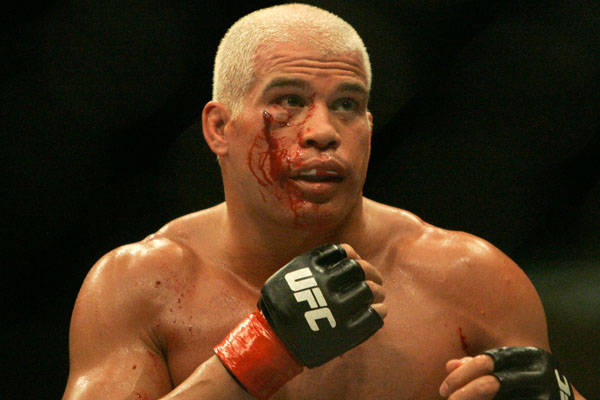
Tito Ortiz is the definition of a ground and pounder in MMA. The Huntington Beach Bad Boy burst onto the scene at UFC 13 as an amateur and lost to Guy Mezger in the second round by submission choke. He then won three in a row, avenging himself on Mezger before facing Frank Shamrock for the UFC Light Heavyweight Championship and loosing. Shamrock vacated the title immediately afterwards, giving Ortiz a second shot at the title. He won the title and went onto set a record five title defenses before loosing to the much older Randy Couture in his sixth title defense. After losing to Chuck Liddell immediately afterwards, Ortiz won five fights in a row before his career fell into a downward skid of loosing seven out of nine fights. In the majority of those fights he was unable to utilize his deadly ground and pound for various reasons. Following the second loss to Forrest Griffin, Ortiz initially decided to call it a career and retire. However, after a year away Ortiz decided to return and signed with Bellator where after a neck injury sustained during training he won two in a row. In both matches he once again utilized his wrestling, though his recent match with Stephan Bonnar was by no means pretty.

3. Ken Shamrock

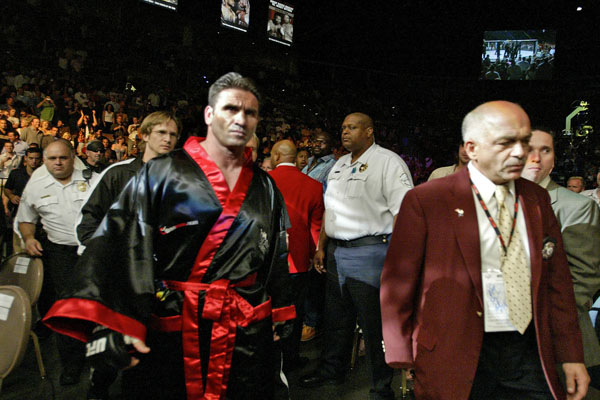
Ken Shamrock was one of the stars of the early UFC mainly because his catch wrestling style defeated most other styles of fighting. His only initial opposition in the early days of the UFC were fellow grapplers Royce Gracie and Dan Severn. He also had issues with Japanese catch wrestlers Minoru Suzuki and Masakatsu Funaki in the Pancrase promotion. Following his initial stint in the UFC Shamrock spent three years in the WWE (WWF at the time). He'd return to action in the Pride 2000 Grand Prix Finals. It was during this comeback in his career that his holes in his overall game came out. Shamrock's catch wrestling was what made him such a success in the early MMA events. The problem is that Shamrock sustained several knee injuries in the WWE causing him to try and shift his style to striking. His lack of skill in that category cause him to loose ten of his last fourteen bouts in MMA. It also didn't help that Shamrock continued fighting long after he should have retired.

2. Royce Gracie

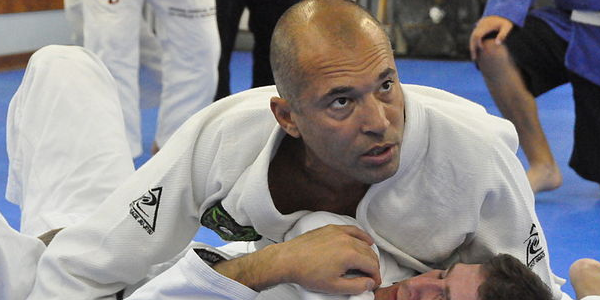
Royce Gracie was one of the reasons the UFC came into being. When plans were being made for the inaugural UFC 1 tournament, Royce's brother Rorion hand picked him to represent the Gracie family and show that technique could overcome size. Royce did exactly that, submitting all three opponents within three minutes and had similar success at the UFC 2 tournament. However, at the UFC 3 tournament, Royce withdrew when he was too exhausted to continue following a match with Kimo Leopoldo. He returned to his winning ways at the UFC 4 tournament and drew with Ken Shamrock before leaving the UFC due to his families dispute with the increased number of rules. Royce would spend almost five years off before returning to action in Pride FC. The problem was that rules had become more prevalent and because of this Royce only fought an average of once a year. In his last seven matches, Royce won three matches, lost two and drew in two special rules matches. The problem with Royce's latter part of the career is that MMA changed to a more well rounded fighting style. Royce Gracie was and is to this day a life long grappler and as a result never adjusted his style.

1. Chuck Liddell

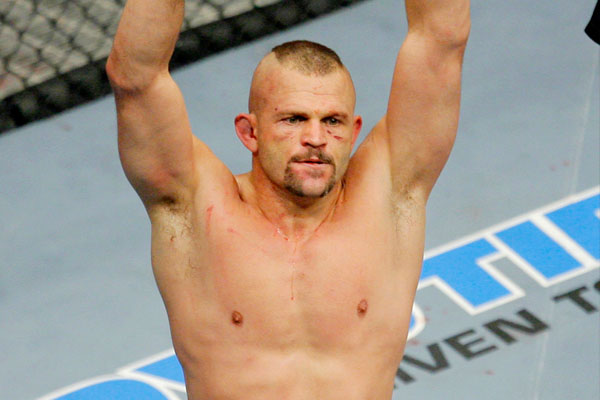
When most people think of the UFC during the early mainstream emergence is has to be Chuck Liddell. Known as the Iceman, Liddell first appeared at UFC 17 and won twelve out of his last thirteen fights. He had brief hiccups with losses to Randy Couture and Quinton "Rampage" Jackson, Liddell went on a seven fight winning streak which saw him avenge his losses to Couture and an early career opponent Jeremy Horn on his four fight UFC Light Heavyweight title defense streak. In a rematch with Jackson, Liddell lost the title which began his final career skid. He lost five out of his last six fights before deciding to call it a career. Compared to most on this list Liddell had several ranks in multiple disciplines. He holds a purple belt in Brazilian Jiu-Jitsu, black belts in two styles of karate and was a division one NCAA wrestler at Cal Poly San Luis Obispo. Yet despite all of those accolades, the only skill that distinguished Liddell in his MMA career was his striking. His grappling background only severed to help him in take down and submission defenses. As with many veterans it was his striking that ended his career as others defeated him.

Contributor
Contributor

Matthew Salzer fell in love with Mixed Martial Arts when he watched Pride Fighting Championships on Japanese TV. He is a lifelong wrestler having earned a Bachelor of Science at Missouri Baptist University. Matthew is the Senior Editor at MMA Freak and has written for Funky Monkey MMA, H4 Entertainment, and MMA Fiends.