11 Things That Only Amateur Footballers Will Understand

It's a game of two halves.
Is there really anything more glorious than falling out of bed €” perhaps not even your own bed €”on a Saturday or Sunday morning, only to go and voluntarily chase a spherical bag of air around an unkempt meadow? Anyone who has ever played football at a competitive level (and we do use the phrase lightly), will appreciate the full spectrum of joy, exasperation and humiliation that amateur 11-a-side brings with it. Not uncommon are 10-0 scorelines, ten-man brawls and referees who are actually just the opposition's reserve keeper, a reserve keeper who is actually just one of 'the dads'. This footballing version of Inception may appear shambolic to the uneducated eye, but the ordered chaos which envelopes grassroots football is actually a facet integral to its survival. When match officials don't turn up, for example, you'll see the absolute best of our utopian little society. In the absence of linesmen and flags, we'll accept lads waving t-shirts. If the very foe with whom battle is imminent fails to scrape together eleven men, we'll just lend them one of ours (albeit the kid with two left feet and an eye-patch). The beautiful game is in fact just that at all levels: beautiful. Some say La Liga's stunning football is reflected in the pearlescent smile of Irina Shayk, then the grit of grassroots was combed straight from the locks of Susan Boyle herself. Beauty is in the eye of the beholder, remember. Yes, dubious fitness levels and cynical fouls are commonplace at the lowest level of the football pyramid, but determination, integrity and plenty of shouting mean the game is played as passionately by grassroots players as by players anywhere. With this in mind, dive into these eleven key traits of the amateur game.

11. The Manager's Son

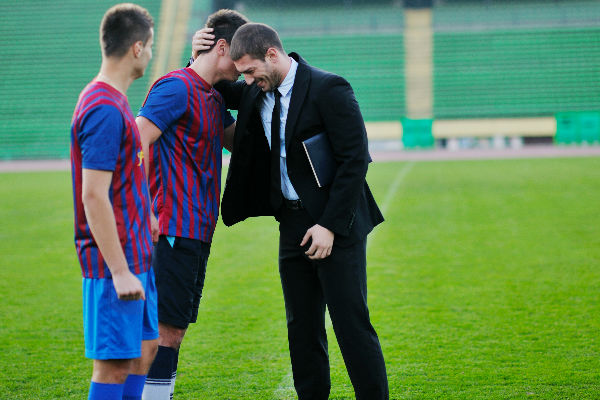
Ah, the seemingly unsolvable conundrum of the manager's son. The gaffer's lad will always be given more than a fair crack of the whip (just ask Steve Bruce), but more often than not this develops into blatant favouritism. In about 80% of cases, the manager's boy is the worst player at the club, but his position of power means he starts games week-in, week-out. Even worse than carrying the deadweight for 90 minutes is the unfortunate turn of events which have led him to believe his strongest position is that of lone striker, or worse, goalkeeper. It's a situation that raises questions about the boss's integrity and can certainly lead to unrest in an already fractious camp. He probably doesn't care though. After all, he only suffers the tag of manager because his son couldn't get a game anywhere else.

10. Scandalous Terrains

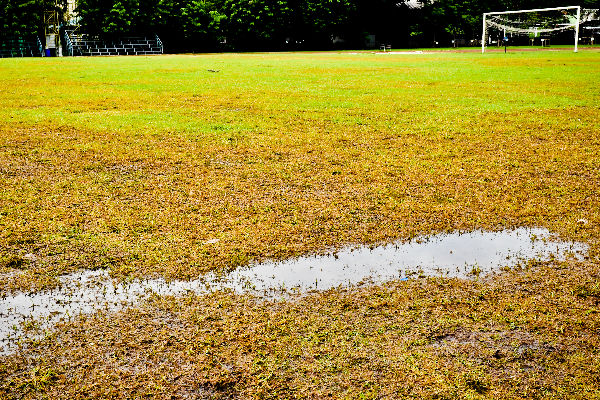
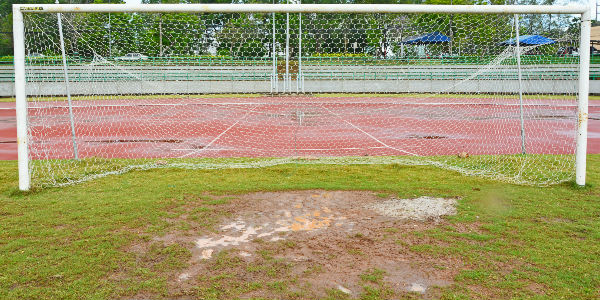
No matter what anybody tells you, playing football on anything other than a carpet is difficult. So when you're thrust into the elements of the city suburbs, battling wind and rain, only to discover you'll be playing on a recently defunct cattle farm, you begin to fear the worst. It's not even the cow pat and dog sh*t plastering the pitch that's problematic; give the shout and some brave soul emerges from where the touchline should be, wildly brandishing a shovel in the name of health and safety. It's the inability to see where the 'pitch' (we'll call it that for consistency's sake) starts and ends. It's the fact you're running €” no, the grass is far too long €” the fact you're wading uphill through dense mist, foot-long craters and land mines, all the while trying to stick to the gaffer's philosophy and emulate 'that Ajax team' of 1972. In Sunday league, a flat pitch with even remotely short grass is akin to the holy grail.

9. The Importance Of Tape

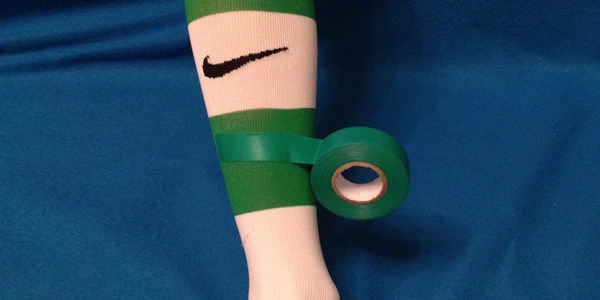
If there's one bit of kit (other than your actual kit) which you've relied upon at one point in your amateur career or another, it's tape. Enter any changing room in the country on a match day and you'll inevitably hear someone desperately yelling five minutes before kick-off, 'who's got tape!?' Tape, despite its easy accessibility and affordability, is gold dust. It's equally adept at keeping your shin pads from slipping as it is at preventing your socks from falling down. Its versatility puts most Sunday leaguers to shame. Just try not to be the one who actually brings the tape, as you'll likely spend the entire pre-match ritual zigzagging between needy players like a rogue pinball. And if you're not keeping tabs on it, you'll be worried sick about your tape being taken. You certainly don't want to have to go full Liam Neeson before a ball's even been lumped.

8. The Usual Suspects

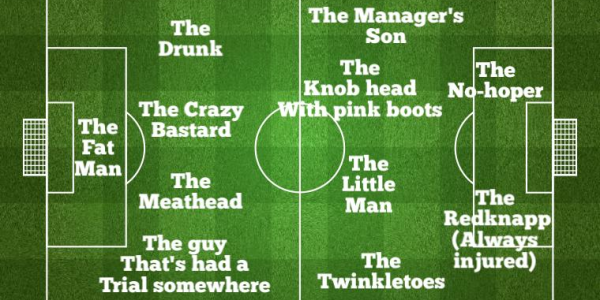
In amateur football there are a few easily identifiable characters which apparently grace every club. Firstly, you have the psycho. He's usually a battle-hardened centre-half with a particularly low IQ and propensity for violence. War cries of 'tek his legs!', or 'he doesn't want it!' are not unusual here, and he continually displays the aggressiveness typical of a jumped-up adolescent, despite being 41. Another common figure in amateur football is the slightly fat talisman. He's the metronome, a calming influence €” usually in the centre of the park €” that keeps everything ticking over. Rarely leaving the centre circle (he's massively unfit), this guy has a Godly touch coupled with the vision of Paul Scholes. He's also the one player on the pitch emotionally mature enough to play a safe backwards pass. Sadly, everything went downhill after those failed trials with West Ham. Finally, we have the speed demon. Usually a winger of impressive stature and immense pace, the speed demon is an absolutely woeful footballer. The other team will fear his pace for the first five, before quickly sussing that he can't cross, dribble, pass or support his own head yet.

7. 'Going Quiet'

One might consider a lack of shouting to signify calmness, coordination and an understanding that goes beyond the verbal, but 'going quiet' is a cardinal sin in amateur football. Before a match even begins, one of the manager's key instructions will be to do lots of talking; this will be reinforced by the vociferous captain (usually the best at talking), who agrees that it is imperative to do lots and lots of talking. If the manager and captain get it their way €”as they often do €” the Sunday league football pitch can be one of the loudest and most hilarious agglomerations of noise about. It's also widely accepted within the low-level football community that being quiet indicates a lack of willing, organisation and testosterone. Even if the captain is the worst player on the pitch, his ability to roar encouraging clichés for in excess of 90 minutes make him an indispensable member of the team.

6. Mucking In

Putting Up Goal Posts Mucking in means your role as an amateur footballer is not actually limited to playing football. While some clubs are naturally more organised than others, at some point in an amateur footballer's career it's certain he'll have to perform a variety of challenging, yet rewarding roles. Such roles include €” but aren't limited to €” administration (looking after team sheets); accountancy (chasing up late subs); and even construction (erecting goal posts with a little attacker on your shoulders who's securing the net). Starting as substitute can also often lead to the dreaded question, 'do you mind running the line?', which you absolutely mind doing as it's the worst kind of mucking in there is. Nonetheless, you transform yourself into a linesman, try overly hard not to cheat all the while suffering a load of abuse from not only the other side, but your own team-mates as well for not cheating enough.

5. Football Clichés
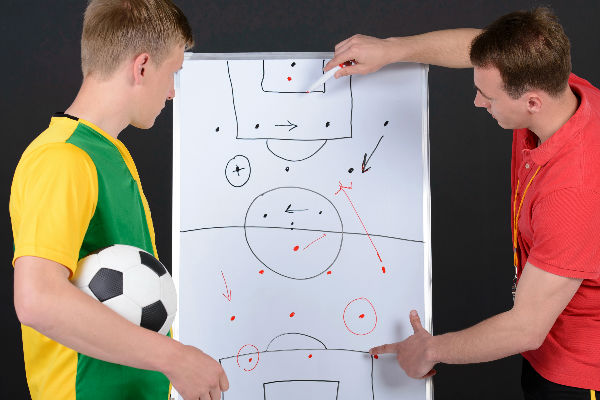
Any amateur football manager worth his salt will be a bottomless barrel of highly amusing, educational or useless clichés. In light of the manager's lack of tactical nous, man-management becomes even more important. The captain is also expected to excel in the art of timely cliché dropping, like when walking out for the second half at 3-0 down, but letting the guys know 'It's still 0-0', giving the team a fighting chance. The manager's main job is letting the side know 'it's a game of two halves' if the chaps look despondent or disinterested following an unsuccessful first 45. He might even note that 'we've been the better side', despite conceding four goals and managing only 20% possession. The captain, on the other hand, has the ability to dictate the team's playing style on the fly, reverting endlessly between 'get it in the mixer!' and 'keep it on the deck', unwittingly throwing off both his opponents and own team-mates. Finally, standard players are like Chess pawns, and they all bare the right to shout simpler one-liners such as 'winners!' for every aerial challenge and 'time!' every time a team-mate gets on the ball. It's also possible to encourage the movement of your team-mate with the ball at his feet, simply by suggesting he 'travel'.

4. Low-Level Thuggery

Though pleasant to idealise grassroots football as an expansive pool of untapped potential, it's more realistic to view it as a place where working guys go and vent a week's pent-up anger. More often than not a team will house a couple of thugs, determined to stand on your toes, elbow you in the temple and fly into tackles at knee height. Younger players are often unfairly targeted by balding, would-be hard men and it is the duty of their team-mates to protect them. It can be incredibly tribal on the pitch and can turn nasty very quickly. While on-pitch 'banter' is more often than not laughed off, there are times when some bulky Neanderthal would rather have it out with you in a field on a wet Sunday lunchtime. On the contrary, amateur football is a great time for a bit of male bonding, there's truly nothing quite like it.

3. Overly-Aggressive Parents

Even worse than the wannabe thugs who take to the pitch are the mouthy parents (particularly at junior levels), who seem to be more revved up than the actual players. You get some real mouthpieces who've obviously never kicked a ball in their lives giving the ref stick, giving their kids stick, giving the opposition stick - basically everybody gets some stick. Sadly, it's not unusual to see parents arguing over a nothing-match on the touchline, this does however provide some thoroughly entertaining moments. Most parents, in fairness, do actually turn up to support the lads playing and behave either in a respectable, enthusiastic or utterly disinterested manner.

2. Always In Training

Why is it that when in training you drift around the astro-turf like George Best, but struggle for form when it matters, somewhat more like Leon Best? This isn't only an amateur affliction either, as they say one Titus Bramble was the world's finest trainer... Most magical moments, whether it be an outrageous bit of skill, a sublime pass, or a Yeboah-esque wonder-strike from the underside of the bar come for us amateurs in mid-week training. This could genuinely be down to the state of the pitches that we find ourselves playing on at the weekends though, or it could be that we just don't handle the big game atmosphere like we ought to. More to the point, it could be that only seven made it to training, allowing for acres of space and infinite attempts.

1. The Bouncing Ball

A curious example of a phenomenon that causes as much hassle for an amateur back four as it does for a Premier League one: the bouncing ball. Letting the ball bounce after a huge drop kick from the opposition keeper is asking for trouble. Never will a manager scream like he does when the ball bounces straight over his most trusted centre-half, allowing the opposition battering-ram in one on one. A bouncing ball dropping from the midday sky may as well be a grenade for all the trouble it causes, except you want to head this thing before it hits the ground. Terrified shouts of ''s ball!' all cling to the air as one, for everybody knows the danger of the long, bouncing ball.

 
Posted On: 
Contributor
Contributor

Recent English graduate and Newcastle United nut. Rom-Com enthusiast, Bob Dylan fan-boy and expert poacher of eggs.