History is the lifeblood of a sporting institution. Be it the Liverpool reverence of Shankly, Green Bay Packers adoration of Vince Lombardi, or the inevitably long-lasting legacy that Fergie has left behind at Man United, everything a club does is held in context of what has gone before. The downfalls of clubs like Leeds and Nottingham Forest in recent times, are all the more shocking, because they were taking Europe by storm, not just their own country. Usually it is events on the pitch that decide which way a club's history will go, but there are some owners who for various reasons, from making their own egotistical mark to the more understandable maximising of revenue streams, have changed key traditions at the risk of antagonising their most important allies - the fans. Whether it be Vincent Tan at Cardiff City, Assem Allam at Hull City (no Tigers), or the notorious Art Modell's transformation of the Cleveland Browns into the Baltimore Ravens, the history of sport is littered with brave and often stupid moves. Read on for some of the most controversial.
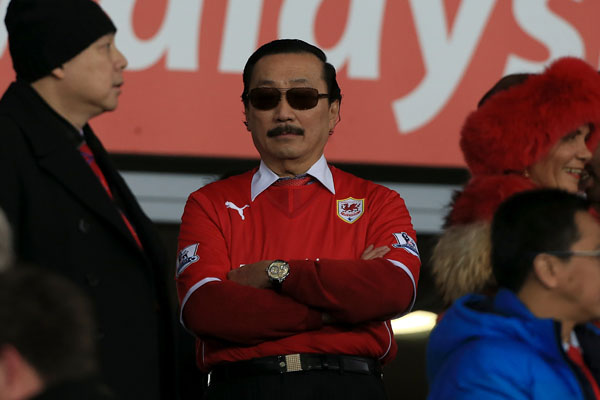
4. Vincent Tan And Dato Chan Tien Ghee (Cardiff City)
While the not-particularly well-liked chief executive of Cardiff City is currently making negative headlines for his questionable treatment and eventual sacking of manager Malky McKay, many fans had already turned against Vincent Tan. In May 2010, Tan and Chan joined forces to take control of the financially stricken Cardiff, and their first move was to assure popular manager Dave Jones of his secure position at the club. This went down well with fans, and by the time Jones was given the boot a year later many fans had already grown tired of his failure to get the club into the Premier League. Soon after replacement McKay had led Cardiff to a third straight failure in the play-offs, the unthinkable happened. A statement on the club's official website confirmed plans to change the club's strip colours and crest. Instead of a bluebird, the primary symbol would be of the Welsh red dragon, with the bluebird relegated to a token gesture beneath that dragon. In a more obvious change to casual viewers, the home strip was also changed from blue to red, with blue becoming the new away strip's colour. However, for diehard fans this move was a stab in the back, as the club's nickname, 'The Bluebirds' was deep-rooted in Cardiff tradition. The club's original colours were actually chocolate and amber before the change to royal blue, around 1910, but not long after this change, a classic children's play called 'The Blue Bird' came to the city's New Theatre. It had a six-night run and received favourable reviews. The play's writer Maurice Maeterlinck recieved a Nobel Prize for Literature partially based on this play, and the furore surrounding this led an unknown Cardiff fan to start calling the team 'The Bluebirds.' The club eventually officially officially adopted the nickname. One would somehow doubt that anyone would be stupid enough to adopt 'The Dragons' as a nickname, at least not in public.
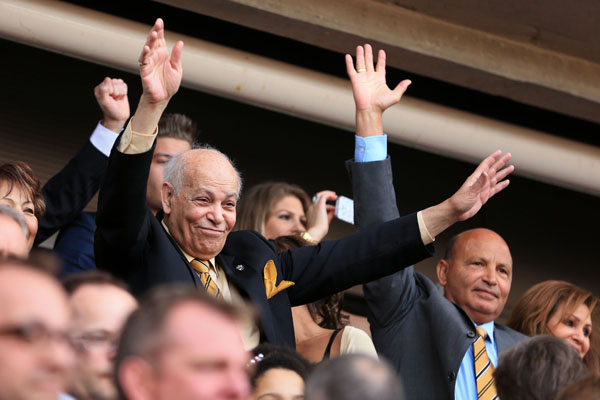
3. Assem Allam (Hull City AFC)
We go from dragons to tigers when discussing the bravery/stupidity of Hull City's new owner Assem Allam. While he seems quite supportive of manager Steve Bruce (and well he might be), his public relations have left a lot to be desired. In a move that left Hull die-hards foaming at the mouth, he announced plans to first change the name to Hull City Tigers, then Hull Tigers. Reminds you of a rugby team doesn't it? The FA is yet to confirm that this name change will be ratified for the 2014-15 season, and without this rubber stamp the Premier League fixture lists and results will continue to refer to the club as Hull City. As this requires a consultation process, including input from supporters, it is by no means a foregone conclusion, but the very attempt has caused tensions to mount at the KC Stadium. To top it all off, when fans voiced their opposition to this name change, in the shape of a 'City Til We Die' chant, Allam responded by claiming they could die when they wanted, and make room for fans who just wanted to watch good football. Ill-advised? Undoubtedly. While the rest of the statement contained some reasonable observations on the good he has done for Hull, taking on the lifeblood of your football club tends to come back to haunt you. Fortunately, the on-pitch form of the Tigers has kept the wolves from Bruce's door (his position will undoubtedly become shaky at the first sign of a dip) but Allam's judgement will surely have some fans shifting uneasily in their seats. More matches like the 6-0 home drubbing of Fulham will be more than welcome though.
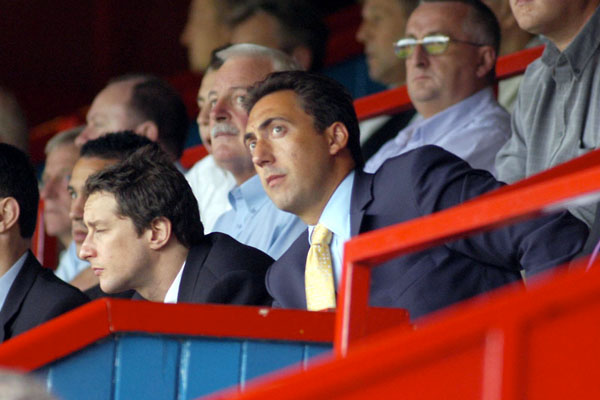
2. Wimbledon FC (Charles Koppel)
The story of Wimbledon FC is, on the whole, a happy one. The late 80s brought unprecedented success, with the most treasured honour in their history being the 1988 FA Cup. The 'Crazy Gang' won plaudits in this spell for their spirited and committed performances, but a decade on, and the shine was wearing off. After the Hillsbrough disaster, the Taylor report ruled the extensive redevelopment of many grounds, including Plough Lane. The club had long been looking to leave the ground, and the then owner Sam Hamam did not have the money to redevelop, so they groundshared with Crystal Palace from 1991 to 2003. This was unpopular with fans, but not as much as what followed. From the 2003-04 season on, those that stuck around had to endure a relocation to Milton Keynes, 80 miles away, and after one season of transition under the original Wimbledon name, a new name to complete the misery - Milton Keynes Dons. Many previous owners had looked into alternative homes - understandable given Plough Lane's tiny capacity - but Charles Koppell, who had long been interested in a move to Milton Keynes, had taken was a step too far. In 2007, the move was complete, as the MK Dons set up home at Stadium mk, and since 2007, the club has given up the legacy and history of Wimbledon FC, as the Football Supporters Federation was refusing to recognise its supporters groups. Most of the original Wimbledon support had long since been following AFC Wimbledon, who began life in 2002 in the nineth tier, and have since risen to League Two. The two clubs even met once in the FA Cup, with the MK Dons coming through 2-1 at their new home in 2012.
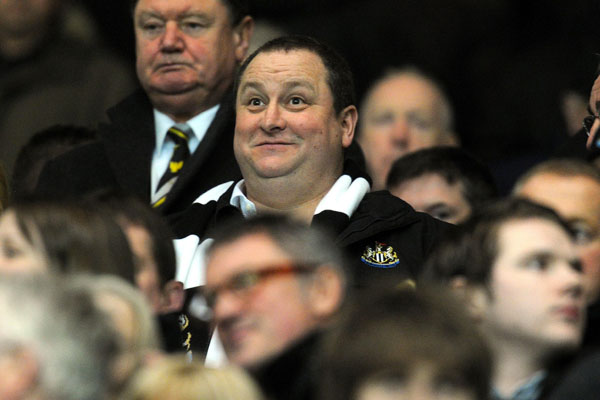
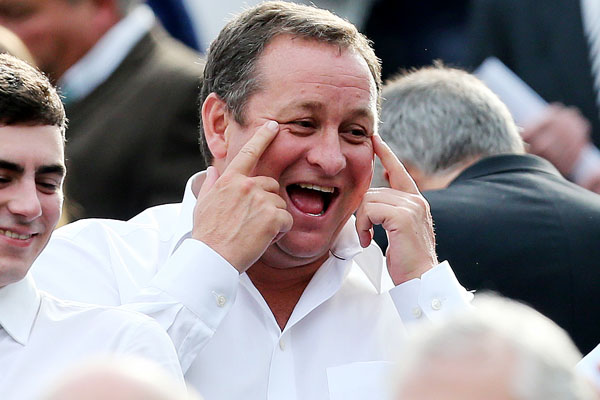
1. Mike Ashley (Newcastle United)
The much publicised owner of Sports Direct dipped his toes into the football world in 2007, securing control of Newcastle from Freddie Shepherd and Sir John Hall. Since then, his lack of football knowledge has repeatedly dogged his efforts to leave behind something for fans to remember him fondly by when he eventually departs. Near the top of his list of misdemeanours was his decision in November 2009 to change the name of Newcastle's home from St James' Park to the Sports Direct Arena. Officially, this was to promote the sponsorship opportunity to those interested in purchasing the naming rights for the ground, in order to clear the numerous debts that existed at the club. Unofficially, there were those amongst the Toon Army who suspected he was merely using the stadium as free advertising for his sportswear business. Soon after his announcement, he claimed he was not dropping the much-loved and historic original name, clarifying that the official name would in fact be the sportsdirect.com @St James' Park Stadium, which remained the case until October 2012, when the equally contoversial announcement of Wonga as the club's new sponsor was revealed. Wonga, in a more media-savvy approach, spurned the opportunity to make St James' Park the Wonga Arena, and instead restored the ground to its former self. It is doubtful that any future owner of Newcastle United will ever make the same mistake of attempting to sell off the club's heritage.
I am from Bangor, aged 24, and possess an MA in Journalism from The University Of Ulster. I have had work published in the Belfast Telegraph and interviewed several local footballers and Olympic athletes. I also run my own sports blog, 'Sporting Thought' in addition to contributing to What Culture.