5 England World Cup Decisions That Should Haunt Roy Hodgson

Something big is wrong with England football, but that doesn't excuse the manager...
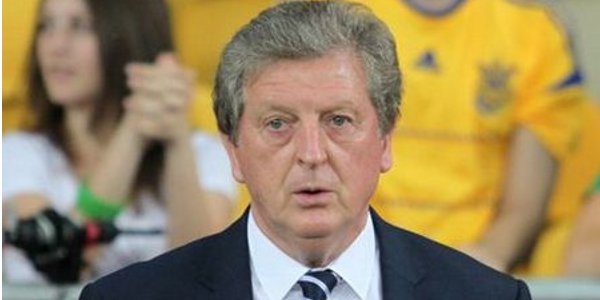
England€™s first World Cup group stage exit since the 1958 tournament in Sweden has predictably lead to an extensive post-mortem analysis from the British media. Similar to the 2010 exit and many competitions after the nation€™s lone international triumph in 1966, the reasons for failure are being regurgitated from the past, along with some interesting new insinuations. Some of the old rationales include the lack of enough English players in the Premier League, the need for a winter break, a suggestion to copy the B-league system from other successful European nations, encourage more qualified coaches, better youth development and eradicate the obsession with having only one star player. On the back of this latest failure, some interesting new permutations have appeared: the Messiah complex by Jonathan Wilson of the Guardian, the Telegraph's Jonathan Liew's thoughts on market capitalism and the greedy club theory that includes the worrying proliferation of talented Englishmen happy to sit on the bench, as espoused by Darren Lewis of the Mirrror. All of the aforementioned points may have merit and need addressing if English football wants to see a different outcome to both Euro 2016 in France and the Russia 2018 World Cup, that much is obvious, but there is something more fundamentally flawed with the England set-up specifically, and not the wider game that must also be addressed. The most simple and obvious reasons for England's failure in Brazil was coach Roy Hodgson's tactical and squad choices: he failed to utilize the young players who shined in the Premier League, and he failed to play his available talents in their best positions. With that in mind, we're looking back at the 5 tactical and squad selection faux pas that came back to haunt Hodgson at the World Cup very quickly.

5. The Wrong Formation

England Formation Throughout the 2014 World Cup qualifying campaign, Hodgson was generally criticized for being defensive and conservative, especially in competitive matches. He had endured the same accusations at Euro 2012, but there he had no choice, as his squad was ravaged by injuries. To his credit, he addressed this issue in the final two crucial qualifiers versus Montenegro and Poland, where England played some of the most enterprising football of his tenure. Afterwards England learned their World Cup group opponents and Hodgson had the remainder of the Premier League season and friendly matches to observe the players form at their clubs and formulate the best way to use their skills in the national team. The performances of Liverpool with their contingent of English players using a 4-4-2 diamond system adopted by Brendan Rogers basically provided Hodgson a clear blueprint to use in the national team. He shoudl have followed it in the same vein that Spain, Italy and Germany embraced the club styles of Barcelona, Juventus and Bayern Munich - after all, club partnerships clearly work in international teams. Unfortunately in friendly matches versus Chile, Germany, Denmark, Peru, Ecuador and Honduras Hodgson never tried this and it lead to a host of problems, which were exposed criminally in the defeats against Italy and Uruguay.

4. The Rooney Conundrum
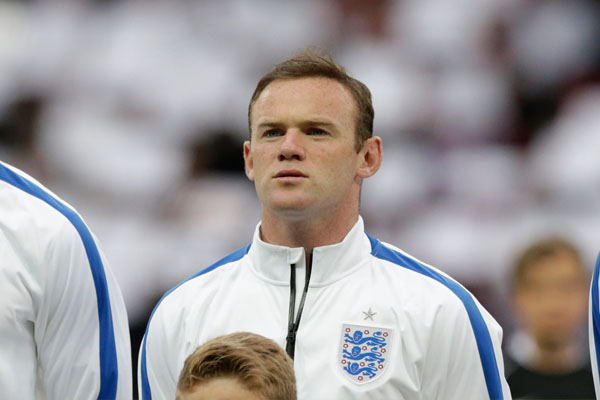
Before the Italy game, a story emerged that Hodgson wanted to play Wayne Rooney on the left on his 4-2-3-1 system because he wanted to play Raheem Sterling in €œhole€ position instead, to counter the threat of Andrea Pirlo. Playing Sterling there made sense, but Rooney€™s lack of proper defensive nous left Leighton Baines exposed at left-back and Italy cleverly attacked this space throughout the game and scored their winning goal via a cross from that position. In the preferred 4-4-2 diamond set-up, Hodgson could still have played both Sterling in the €œhole€ and Rooney in his preferred striker role, while another midfielder in Ross Barkley, Adam Lallana or Jack Wilshire could have been employed to offer a stronger base. The Rooney experiment was not needed and Hodgson really has to take blame for creating that unnecessary tactical approach.

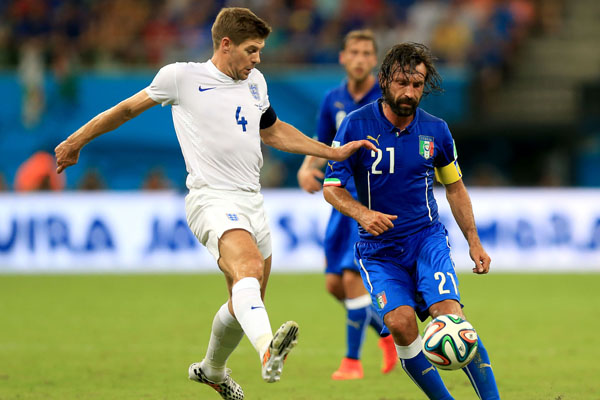
3. Exposing Steven Gerrard

Another noticeable flaw of Hodgson 4-2-3-1 system instead of using the Liverpool 4-4-2 was its effect on Steven Gerrard. Rafael Hoginstein of ESPN FC aptly noted the problem:
€œThe back four, an unremarkable collection of players who could have done with some midfield protection, were left exposed by Gerrard and Jordan Henderson, who themselves were always outnumbered in central areas. It was curious that an England team with a strong Liverpool slant didn't replicate the three-in-central-midfield formula that has so obviously brought out the best in Gerrard and the attackers ahead of him€.
Gerrard playing in a mid-field two at his age was very risky: he has good attributes as a playmaker, but he needed more protection, which is why Brendan Rogers always played two midfielders alongside him at Liverpool, as Hodgson should have noted in his numerous scouting trips to Anfield. It remains puzzling then, why in all the England warm-ups before the tournament Hodgson didn€™t notice and replicate this. Instead, he left the midfielder exposed, which lead directly to the mistake that cost England their World Cup place.

2. The Non-Selection Of John Terry And Ashley Cole
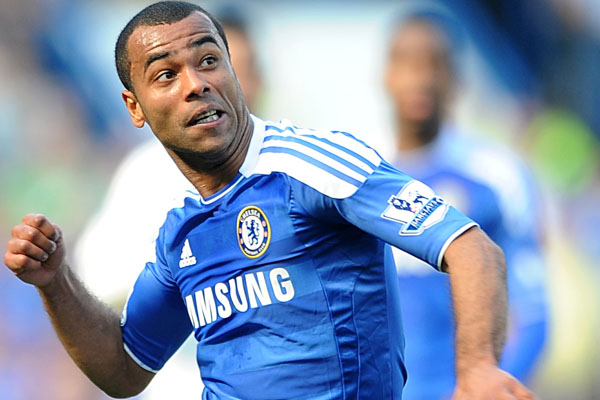
If the Liverpool formation and use of English players was the attacking template England needed to use in Brazil, then the Chelsea€™s English trio of Terry, Gary Cahill and Cole was also the foundation the defence should have been built on. Unfortunately Hodgson never attempted to make this a reality. Firstly, he made the bold decision to leave out Ashley Cole. Both Leighton Baines and Luke Shaw had been pushed heavily for the starting left-back berth by the media, but neither were a better option than Cole, even at his advancing age. Yes, it could be argued that Baines excellent form at Everton and Cole's lack of consistent game time for Chelsea meant that the latter's days as first choice were no longer set in stone, but his 107 cap experience and his status as unquestionably England's best ever left-back were too valuable to leave at home. Even while not playing regularly, Cole produced two fantastic end of season performances versus Atletico Madrid and Liverpool that highlighted his prowess was still elite. Hodgson could and should have rotated Baines and Cole depending on the opposition strengths, because both of them have different positive and negative points. Luke Shaw€™s time could have come during the EURO 2016 qualifiers. The second issue was the touchy topic of trying to bring back Terry. Obviously the Chelsea stopper had retired from national team duties in September 2012, feeling his position was "untenable" after the FA pursued allegations of racially abusing Anton Ferdinand even after the courts cleared him, but his performances for Chelsea were so good, that it was in England€™s interest for Hodgson, Terry and the FA to have a adult discussion to see if a recall was possible. The threat of the Premier League€™s leading scorer, Luis Suarez loomed large and in both Chelsea/Liverpool fixtures, Chelsea won and Suarez didn€™t score, which made the case for the Chelsea trio starting for England compelling. Last month, Martin Samuel of the Daily Mail revealed that FA Chairman, Greg Dyke, told Hodgson if he wanted to persuade Terry out of international retirement, the chairman would make it happen. But Hodgson declined the offer. If this is true and he chose to stick by the Jagielka/Cahill partnership - who to be fair did well in qualifiers - the events of the World Cup sadly exposed Hodgson's flawed judgement. The fact is England€™s defence would have been stronger with Terry in it. Of course there is no guaranteed his presence would have prevented Balotelli and Suarez from scoring, but at least if they had England fans would have accepted they did it against the nation€™s best available defence.

1. Too Many Out Of Form Manchester United Players
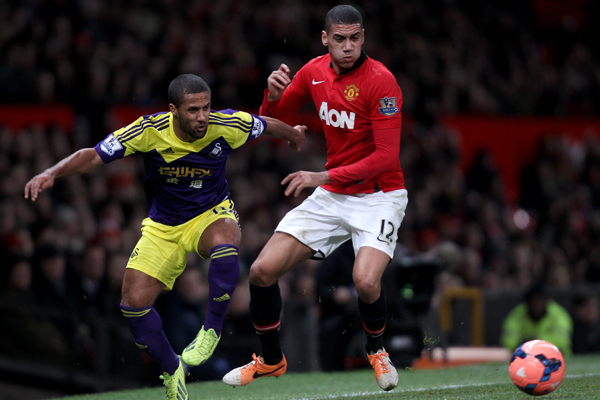
Manchester United€™s poor league form meant that Wayne Rooney was the only English player at the club whose World Cup squad place was secure, as everyone else of the right birth-right seemed to have either played themselves out of contention or were holding on to slim hopes of travelling. Surprisingly Hodgson included the under-performing trio of Phil Jones, Chris Smalling and Danny Welbeck in his squad. Jones and Smalling had stagnated badly at United last season, especially Smalling, but the England manager seemed to have treated him as a personal project for the last 12 months, perhaps thanks to their Fulham link. However, his form did not warrant a place in Brazil, and nor did Jones', especially not over better performing defenders like John Stones, Curtis Davies and Steven Caulker. Ultimately, the two matches Smalling and Jones played versus Ecuador and Costa Rica, all but confirmed why they should not have been picked. Welbeck, despite his energy and very good work rate, showed too many times in the season that his finishing is simply not clinical enough for a striker. Hodgson meanwhile seemed to ignore his other qualities and he made the starting XI, but realistically Jermaine Defoe is the better goal-scorer and should have been picked despite being in America, while Lallana, Wilshere or Barkely should have been the first choice player as an advanced midfielder. Tom Cleverley€™s choice as back-up player also exposed Hodgson unusual amount of selected United players, especially as Gareth Barry andTom Huddlestone most certainly deserved to be on the stand-by list far more. Unfortunately, these five issues don't offer much confidence that Hodgson is the correct coach to lead this new generation of English players ahead of EURO 2016 and Russia 2018, and with the game under review in England, it is perhaps the manager who should accept some more blame.

In this post: 
England
 
Posted On: 
Contributor

Football fanatic & frustrated England national team supporter. I tend to watch all international football tournaments and qualifiers that is humanly possibly. Also, as much premier league, serie a, bundesliga, la liga, ligue 1, champions league and MLS every season.