The Star Trek Conspiracy Iceberg Explained
38 entries, 6 tiers. Let's dive into the shadowy waters of the Star Trek Conspiracy Iceberg.
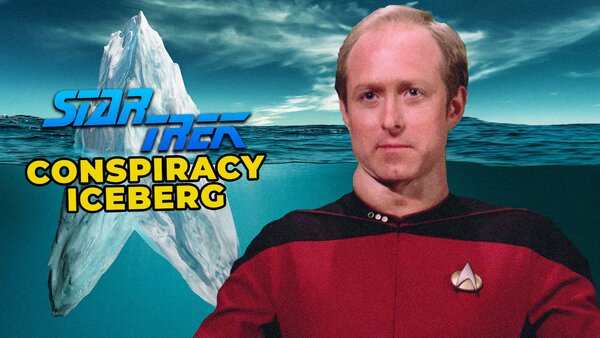
Star Trek has offered a surprising number of conspiracies over the years. So many, in fact, that we're finally embracing the iceberg list format. For those unfamiliar, an iceberg list (or chart) takes the elements of a particular topic and categorises them by level of complexity or obscurity — moving from above the surface of the iceberg to the hidden depths below.
Our iceberg will be composed of six tiers. In tier one at the tip of the iceberg, the conspiracies will be largely the most well-known of Star Trek — the least convoluted or fringe. Down and into the icy waters towards tier six, the conspiracies under discussion will become more and more niche, more elaborate, and even just a little far-fetched.
We have populated this iceberg list ourselves to cover as wide a range of conspiracies as possible from across the franchise. We will, however, be avoiding episodes such as Court Martial, Dagger of the Mind, and Whom Gods Destroy, as they deserve different considerations than the label 'conspiracy'.
By 'conspiracy,' we also mean 'conspiracy theory'. The history of humanity, of Starfleet and the Federation, and of all the aliens in between seems to turn on them. The 'Conspiracy Truthers' from Tulgana IV have their work cut out. As do we.
Oh, what a tangled web we weave…
6. TIER ONE
Bluegills
In the mid-2360s, something was seemingly very wrong at Starfleet Command. There were strange orders, irrational proposals, mysterious deaths, and long-time colleagues were "bluffing their way through talk of old times". Some, like Admiral Quinn and Captain Tryla Scott, quietly voiced their suspicions before becoming part of the plot themselves. Others, like Admiral Satie (more on her a bit later), played a part unknown. Others still, like Captain Keel and crew of the Horatio, were completely silenced, ending in a debris field.
Starfleet had been infiltrated, slowly and meticulously, by a race of parasitic beings known colloquially as the 'bluegills'. Accidentally encountered by a Federation survey team on an uncharted planet, these small, insect-like creatures used humanoid hosts as their puppets. To take control, they forced their way in through the mouth and wrapped themselves around the victim-host's brain stem.
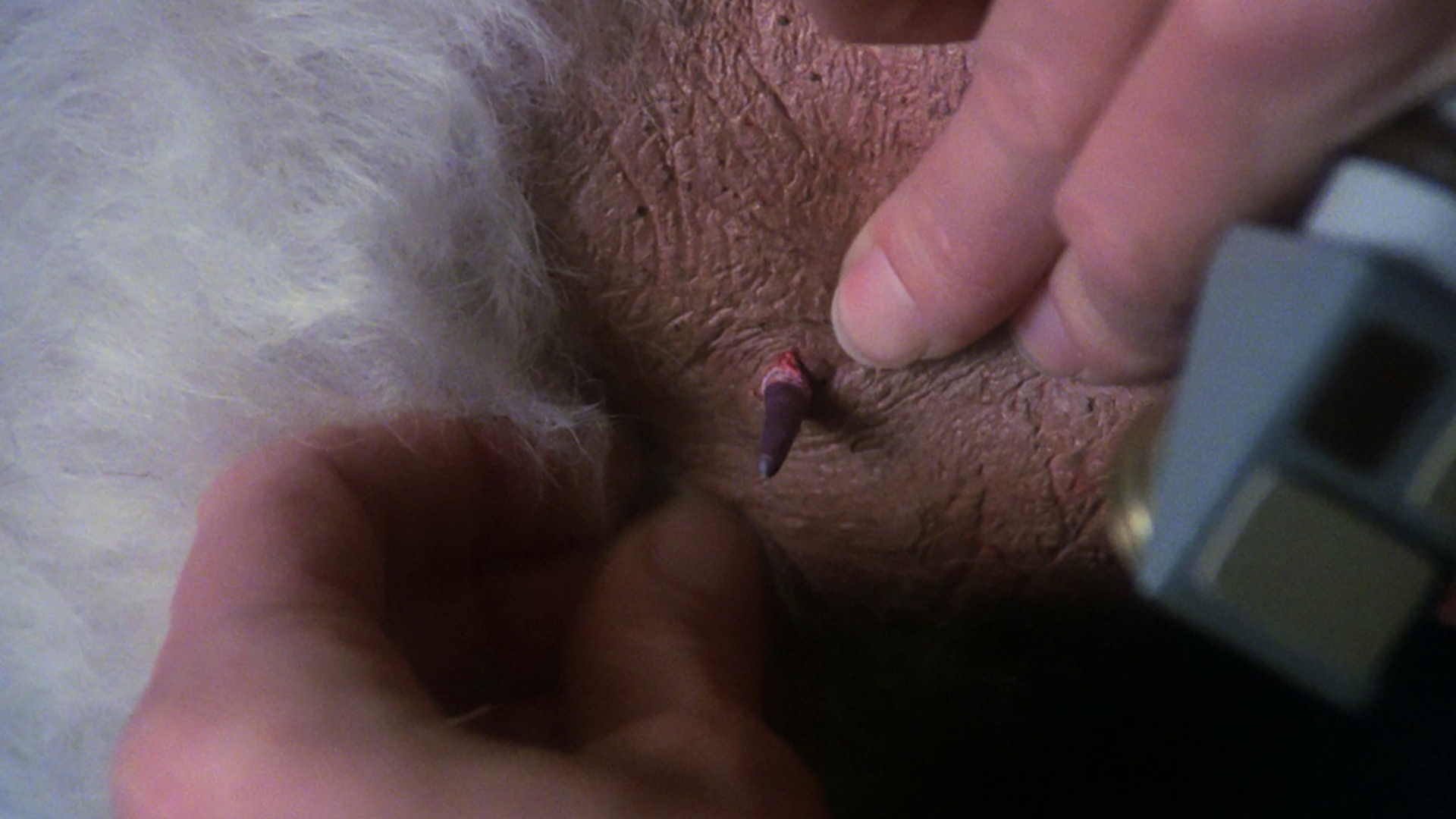
The only sign of infection was a small, blue gill protruding from the back of the neck. This was their downfall. A little fakery on the part of Doctor Crusher allowed Commander Riker to do some infiltrating of his own at Starfleet HQ. Both he and Captain Picard were able to dispatch the 'mother parasite,' and Commander Remmick along with it. With that, its 'offspring' scurried off to die.
The 'homing beacon' that 'mother' sent out beforehand — a map to Earth for fellow bluegills — is still presumably crossing the galaxy. Worse, if those 'conspiracy truthers' on Tulgana IV are to be believed, the so-called "butt bugs" never left Starfleet at all…
Steve Levy
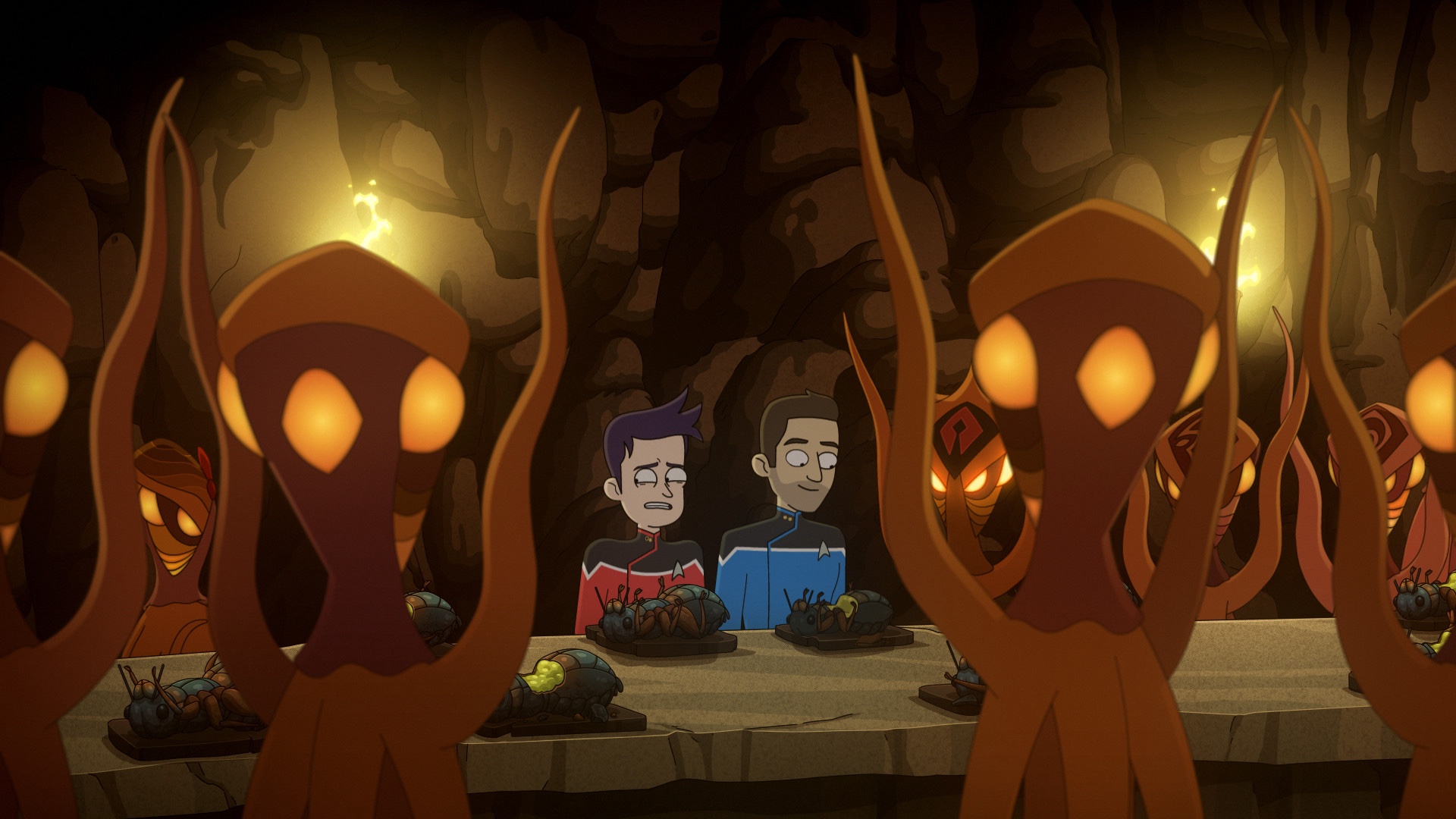
Lieutenant Steven 'Steve' Levy of the USS Cerritos was a walking set of conspiracy theories unto himself: "Changelings aren't real"; "the Dominion War didn't happen"; "Wolf 359 was an inside job." Well, if you think about it, he was sort of right about that last one. In amongst the "mansplaining" of various types of headwear, Levy was most certainly wrong about the rest.
That was until an encounter in a cave on Kyron 4 with Lieutenant j.g. Brad Boimler. What Levy thought was a "Vendorian morality test" turned out to be a Vendorian morality test. All that time he'd spent on those "subspace forums" wasn't for nought! However, as the Vendorians themselves put it, they did not "do the Klingon civil war" — stick around for that lower in this iceberg — nor did they falsify data about warp speed damage to subspace. They did still "lay brood pods in throats"!
Roswell
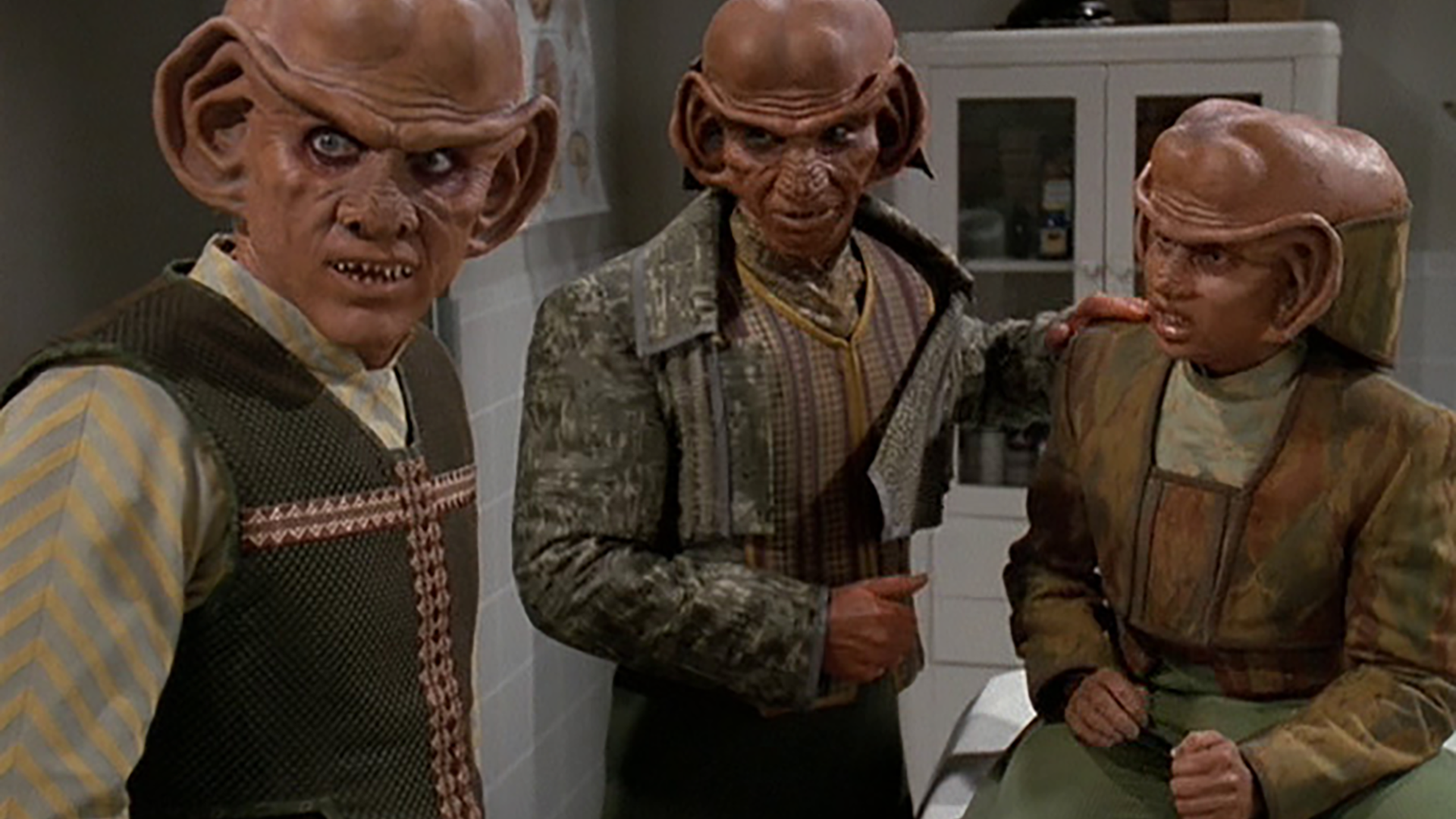
The 'Roswell Incident' of 1947 is one of the most famous UFO/alien conspiracies. First reported as the capture of a 'flying saucer' by the US Air Force, the official account soon switched to 'weather balloon'. In reality, there was an alien encounter in New Mexico that year, though it was far more Ferengi than little green men.
The 'true' story of Roswell began in the 24th century with an outwardly innocent trip to Starfleet Academy for Nog. Quark's sudden generosity should have been the first sign of trouble — an apparently spotless ship from cousin Gaila, the second. The shuttle — now named 'Quark's Treasure' — was, of course, sabotaged and smuggling kemocite. The rest of Roswell was Rom's genius, time travel, and tobacco smoke.
More on alien visitations to pre-warp Earth later.
'Shakespeare In The Original Klingon'
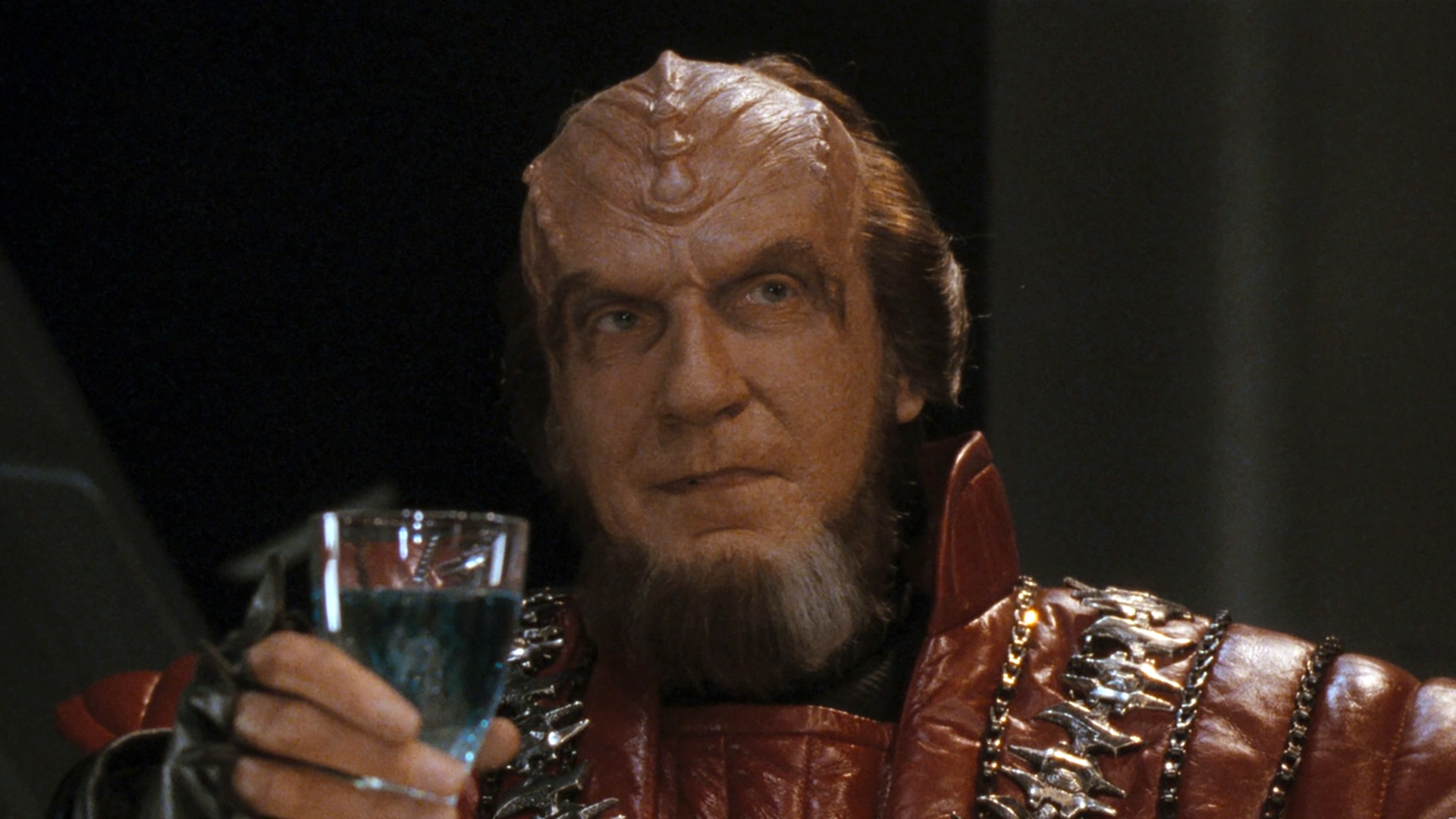
Chancellor Gorkon was perhaps joking or making a power play when he said, "You have not experienced Shakespeare until you have read him in the original Klingon". By then, the so-named 'authorship question' had been a conspiracy theory for hundreds of years.
Since the mid-19th century, in fact, various so-called 'Anti-Stratfordians' have asserted that Shakespeare was not — or could not be — the author of his works. More troubling, certain fascist regimes have also tried to claim the Bard of Avon as their own. Whether Shakespeare was actually a Klingon living in Elizabethan England remains to be seen.
Not long after Gorkon had met his end aboard Kronos One, and in a similarly curious vein, Spock famously noted that, "An ancestor of mine maintained that if you eliminate the impossible, whatever remains, however improbable, must be the truth". Those were the words of Sherlock Holmes, but the pen belonged to Sir Arthur Conan Doyle. Spock's lineage is not a conspiracy per se, but that comment was odd enough to have been the subject of a few theories.
Garak
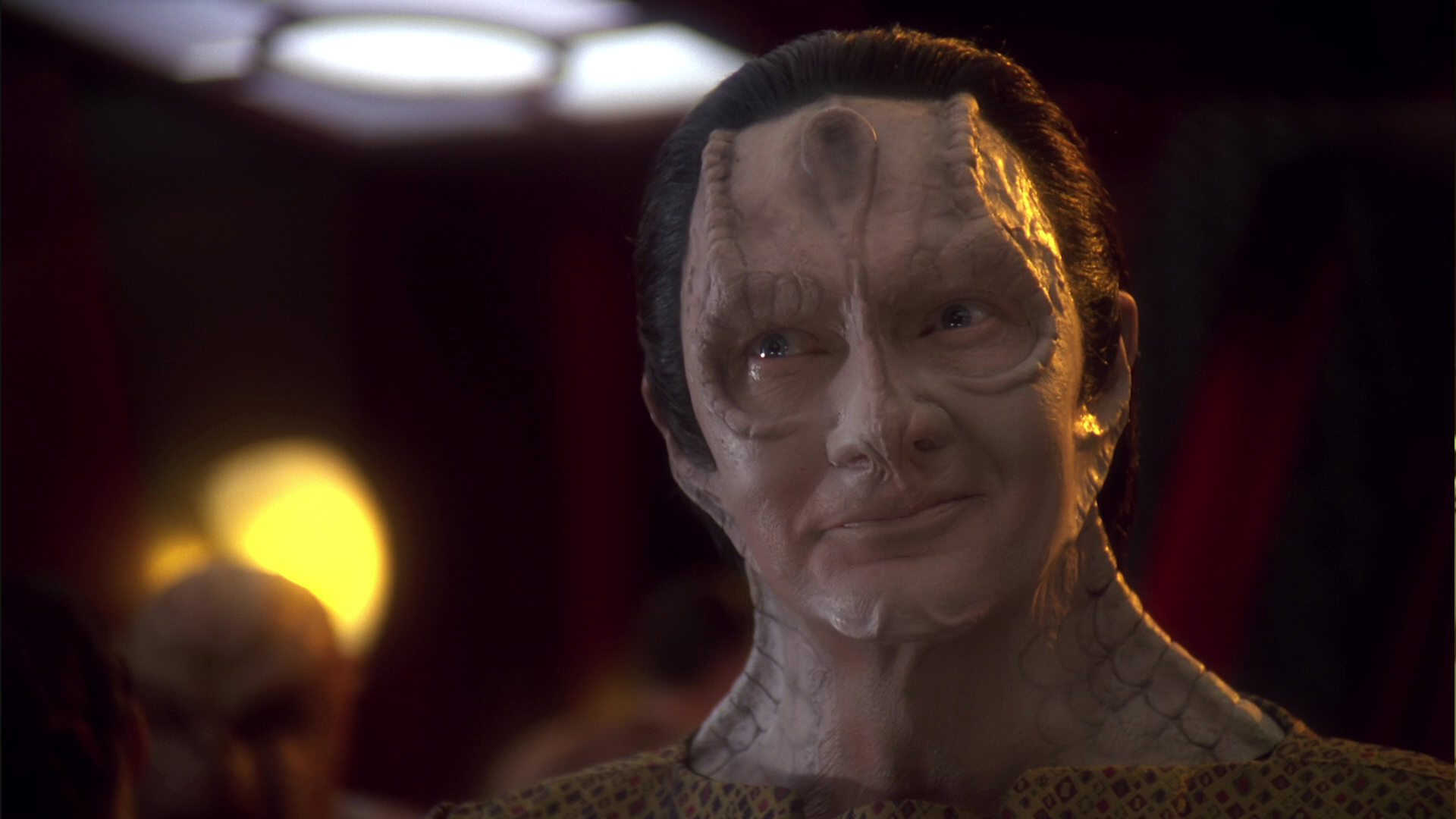
In life, there are those, like Steve Levy, who spread conspiracies, and there are those, like Elim Garak, who are the conspiracy itself. Even his first name became part of an elaborate lie. On Deep Space 9, Garak presented himself as a tailor, "plain and simple," the proprietor of a shop along the Promenade. Over the years, and with a lot of lies in between, those on the Station came to realise that this Cardassian had done a lot more than hem dresses.
In truth, Garak had once been a high-ranking operative of the Obsidian Order — the merciless Cardassian intelligence agency. He was even the "protégé," the "associate" of Enabran Tain, head of the Order from 2348 to 2368. He was, in fact, Tain's son. That we only learnt upon Tain's death in a Dominion prison cell.
The father-son relationship was fraught with enmity (to say the least). Tain was responsible for Garak's exile from Cardassia Prime in 2368. For reasons still unclear, Garak had betrayed his former boss in a way so reprehensible that Tain once wished him "a long, miserable life […] surrounded by people who hate him". Later, Tain would also try to have Garak killed (more on that later).
If we can believe the story, Garak's most curious 'mission' as agent of the Obsidian Order was surely the period he spent on Romulus posing as a gardener at the Cardassian embassy. The deaths of several high-ranking Romulan officials just happened to happen around the same time.
Section 31
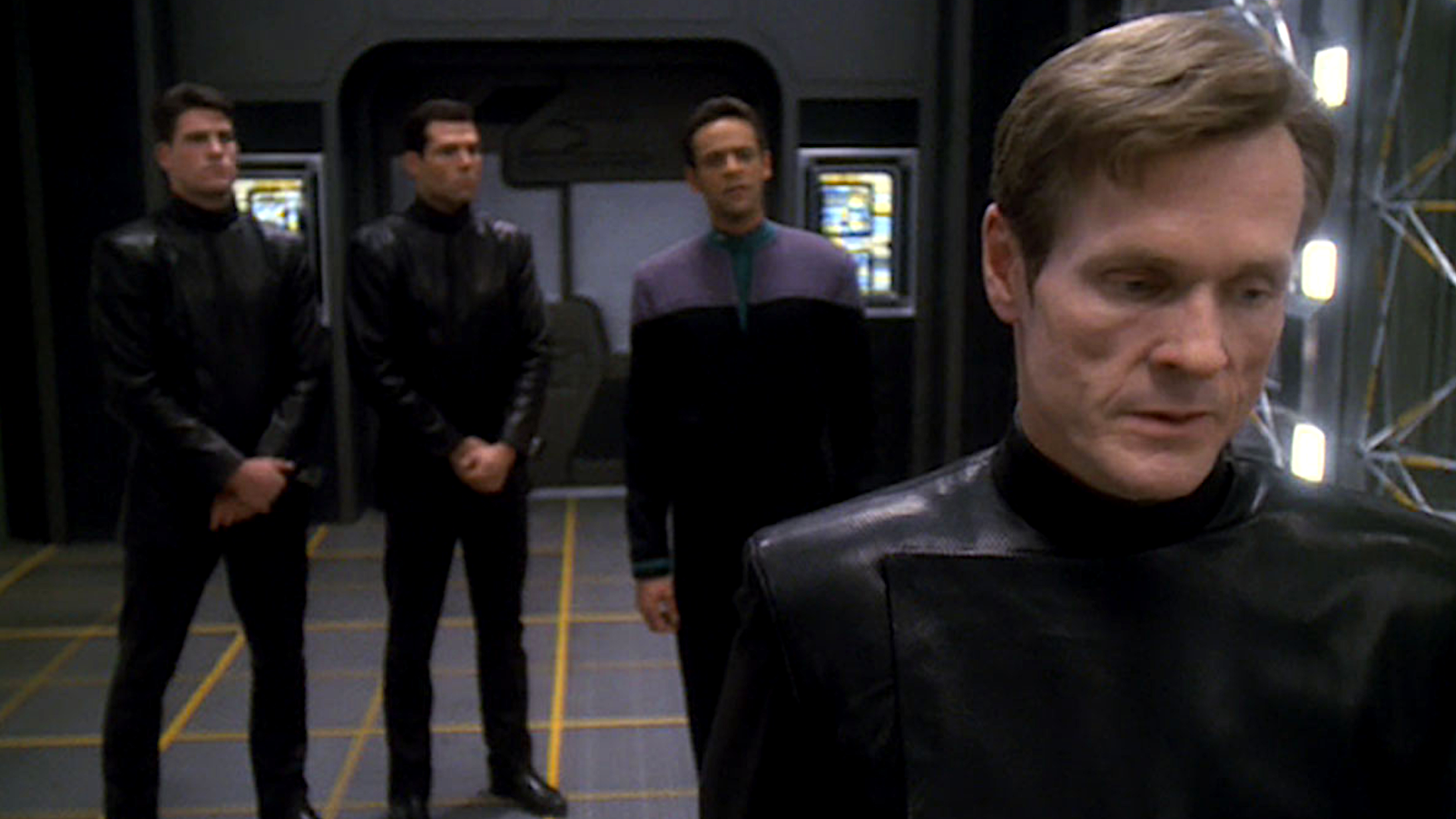
From a historical perspective, Section 31 largely defies classification. Given the broadest of remits by Article 14 (Section 31) of the Starfleet Charter, the organisation has existed in the guise of officialdom since the beginning of Starfleet itself.
From there, it has operated under varying levels of oversight and degrees of secrecy. Rogue group or just other branch of Starfleet Intelligence, Section 31 was always up to its neck in almost every conspiracy the galaxy had going. In fact, Section 31 would place lower on this iceberg, but for all the things we do know about it. Covert operations have rarely been less covert.
In the 22nd century, Section 31 was intimately involved with the crisis created by the Klingon augment virus. 31's Agent Harris allied himself in a clandestine pact with Klingon Fleet Admiral Krell, enabling the kidnapping of Doctor Phlox to Qu'Vat Colony in order to find a cure. Harris wasn't inclined to charity, however, and Krell never had any intention of honouring a quid pro quo.
By the 23rd century, Section 31 had entered into a semi-secretive "temporal arms race" with the Klingons. 31's Project Daedalus, headed by operative Leland, and scientists Mike and Gabrielle Burnham, eventually succeeded in creating a 'red angel suit' with time travel capabilities.
In that period of its history, Section 31 also operated under at least some supervision by Starfleet. In the 2250s, Starfleet personnel made direct use of Section 31's AI threat assessment system 'Control'. When Control combined with a mysterious AI from the 28th century, it turned against its creators. It would have wiped out all life in the galaxy, but for the Discovery's one-way trip to the 32nd century via their own red angel suit.
In the 24th century, after (at least) a 'godsend' and more from former-Emperor Georgiou, Section 31 returned to a clandestine existence for a while under Luther Sloan. No headquarters didn't mean any less busy. In the early 2370s alone, 31 kidnapped Doctor Bashir and tried to recruit him, conspired to interfere with internal affairs on Romulus, developed the morphogenic virus in an attempt at genocide, and experimented upon a group of changelings at Daystrom Station.
By the 2380s, Section 31 was back to being an open secret. In 2381, transporter duplicate William Boimler was recruited into the organisation, then given the captaincy of the USS Anaximander on a classified mission through the multiverse.
All that was just the tip of the iceberg. Let's descend to tier two…