10 Biggest WWE Maniacs Of All Time

These mad men blurred the line between reality and entertainment.
The world of professional wrestling can be a place where truth is sometimes stranger than fiction. The business can be quantified with the numbers of tickets sold and the amount of pay-per-view buys, but the art form is based on the emotion. The emotional response of an audience is what leads the crowd flocking to the box office for the next live event or ordering the next PPV. While pro wrestling had its share of goofy gimmicks, there are a group of individuals that blurred the line of reality and entertainment. The ability to make even the most jaded fan question if what they watched was, "a part of the show" is a rarity, especially for today's product. The debate of if wrestling was "real" raged for years, but these performers were believed to be legitimately unstable. However, the ability to make the list of wrestling's top maniacs is not achieved through a cartoonish gimmick, but rather the promos, in ring skill, and a sense of believability for a competitor. There's also a complexity as to how each wrestler arrived at their specific character and the influential events behind it. These are the top maniacs in professional wrestling.

10. The Necro Butcher

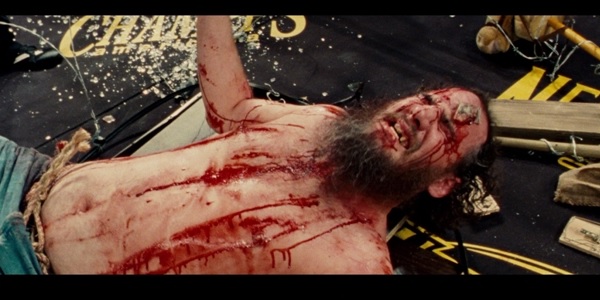
Necro Butcher became a cult favourite on the independent scene over a decade ago and his willingness to risk his own health made him a draw for many promotions over the years. He had a mixture of the stiff style of Bruiser Brody and the risk taking of Mick Foley. Along with a wild appearance, Necro created an aura for himself that is rarely seen on the smaller circuit of today's internet savvy audience. A flurry of stiff punches and flying chairs became a signature of his attack. He had all the elements to create a sense of believability around his character, but he certainly paid a price for his notoriety. As he continued to work the indy scene, the risks he took during many of his matches were noticed by some of the promoters of the well known independent promotions and he debuted for IWA Mid-south in 2001. A year later he suffered one of the most graphic injuries in pro wrestling history, as he was suplexed into a stack of light tubes and a portion of skin was hanging from a major gash in his arm. Unfortunately, the 'death match' style took its toll on Necro Butcher and his profile has declined in recent years. However, he made an undeniable impact as one of wrestling's top manics through sheer violence.

9. Dean Ambrose

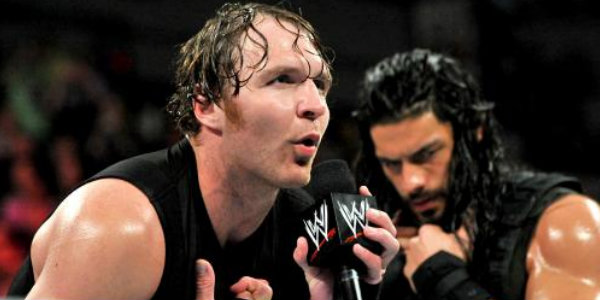
Dean Ambrose has earned his name as "the lunatic fringe" and started to develop his skills at Les Thatcher's HWA a decade ago. A combination of Brian Pillman and Jake Roberts added to his own style, Ambrose garnered notoriety on the independent circuit for his technical skills. However, his ability on the mic is what sets him apart from many on the WWE roster. The Shield was one of the major stables within the past ten years for the WWE and Ambrose was without a doubt the best on the mic of the group. He mentioned his turbulent years growing up an influence for many of his promos and the ground work for character development is set for him to continue to evolve as a performer. The wild eyes and mannerisms add much to the persona of Ambrose and he's already proving he has what it takes to be a main event star. Obviously, Ambrose has more to accomplish in his WWE career, but he makes the list because he's one of the most dynamic competitors on the WWE roster today.

8. Bray Wyatt

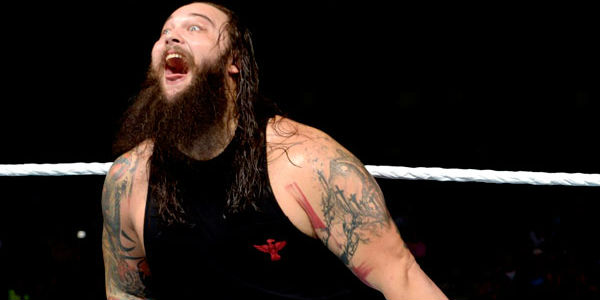
In truth, much of Wyatt's story has yet to be written, but he makes this list for his ability on the mic and in the ring to make the fans believe his character. In many respects, getting a maniac character over as believable is more difficult now than years previously. The WWE makes it no secret that their performers are playing the role of characters, so to be perceived as more than just playing a role is accomplishment. In fact, the ability to make fans question just where the line of reality is and where the line of entertainment is, can be credited as a major accomplishment. The realism that Bray Wyatt brings to the table is what gets a response from the crowd and his elaborate promos about the direction of society have been some of the most entertaining segments on Raw in the past few years. Specifically, the promo he did when the choir sang to John Cena was extremely effective. Hopefully, Wyatt continues to get TV time so that he can continue to evolve as a competitor.

7. Abdullah The Butcher

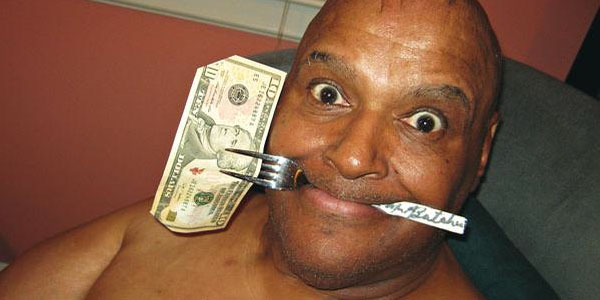
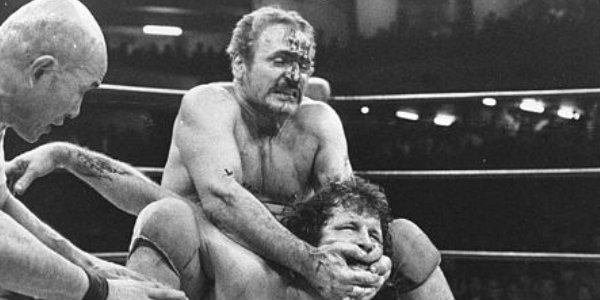
Some of the names on this list were known for their elaborate promos, but "The Madman from the Sudan" makes the list after five decades of bloody battles and scars. In reality, Larry Shreve was a Canadian Judo practitioner that basically used The Original Sheik's gimmick, but with such a unique appearance, Abdullah quite literally carved a legacy around the globe. He wrestled in different territories in the United States during the 60s before taking his career to the next level when he debuted in All Japan Pro Wrestling in the earlier 1970s. Abby was wild and he would use anything he could get his hand on during a contest. He appeared untamed and despite his notorious reputation today, he must get credit for his ability to project realism during many of the bouts during the peak of his career. The Butcher terrified audiences around the world and when he staggered toward the audience during a bloody brawl with an opponent, the crowd scattered. Now retired, Abdullah was inducted into the WWE Hall of Fame in 2011, but after a highly publicized court case earlier this year, Sherve was found to be responsible for exposing an opponent to hepatitis C during a match and ordered to pay for damages. Despite the negligence toward the end of his career, The Butcher makes the list for a career that saw him spill blood all over the globe for decades.

6. Raven

Scott Levy, the man behind Raven, can be described many ways, including controversial, outspoken, brilliant and probably several other adjectives. Perhaps, the word that best describes the former ECW Heavyweight champion is complex. Despite using rather cartoonish gimmicks during the early years of his career with Scotty Flamingo in WCW and Johny Polo in the WWE, Levy transformed himself when he debuted as Raven in ECW. The grudge character that appeared on the ECW TV show at the beginning of 1995 was a sharp contrast to Levy's previous characters and it's said that much of the darkness of Raven was fueled by his real life struggles with depression during his career. He credits much of the original Flock gimmick to the work that Kevin Sullivan did in Florida over a decade prior, but it certainly wasn't a rip off. The presentation of the character was one of the main reasons it was over as one of ECW's top acts, as Levy was unconventional during almost his entire run with the company. While his opponent walked to the ring, Raven sat almost motionless in the corner and while some yelled about the mayhem they planned in a promo, Levy often quoted poetry to further an angle. It's somewhat surprising that the Raven character accomplished as much as it did, both from promos and storyline wise, considering the initial run was only two and a half years.

5. The Original Sheik

Eddie Farhat was an innovator and one of the originators of the hardcore style. Specifically, when he debuted in 1950, he was doing wild things that hadn't been done before and paved the ground work for many wrestlers to come after him. Fire, pencils, and chairs were all apart of The Sheik's attack. He had a presence that projected wildness and the audience actually feared him. He was believed to be legitimately dangerous and he went to extensive lengths to protect his character, which increased the perception that he was uncontrollable. Evidence of just how believable Farhat was as a character is that he was over as a star in every territory he wrestled for and drew major heat on a global level. Farhat worked basically every territory in the United States at some point during his career and gained equal fame in Japan as well. All of this was done without The Sheik saying a word because he didn't do promos. When you consider that he was a star for almost five decades without any mic work, it shows just how skilled he was at presenting danger to an audience.

4. Kevin Sullivan

With over thirty years in the sport, Kevin Sullivan has proved to be one of the brightest and influential minds in the history of the business. His background as a weight lifter and amateur wrestling was helpful when he transitioned into the pro ranks in the 1970s, but "The Prince Of Darkness" makes this list for the work he did in Florida in the 80s, which served as an inspiration for some of the other competitors featured. The Charles Manison type of cult leader that assembled a stable of oddities around him drew major heat and petrified audiences in the process. The promos Sullivan did using his noticeable Boston accent were menacing and the verbiage seemed foreign, but was actually not related to any actual cult, which shows the ability he had on the mic because it was believable. Despite somewhat outlandish content, Sullivan had the skill to convince the audience that he was some type of deviant leader. Mark Lewin, Bob Roop, and Luna Vachon all did well in their roles so it certainly added to the overall presentation. His ring work was actually secondary to what made Sullivan feared during the peak of his career, it was rather his ability to project danger through promos and on screen appearance.

3. Jake "The Snake" Roberts

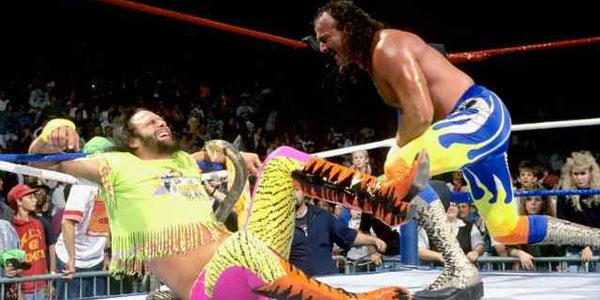
Before Jake "The Snake" Roberts became one of the sport's success stories with the help of Dallas Page and DDP Yoga, he was one of the most devious competitors to lace up a pair of boots. In many respects, Roberts is the godfather of ring psychology because he knew exactly how to get maximum value from everything he did in the squared circle. Roberts never had the build of a monster, but his cold eyes made him seem like one. His deliberate interview style presented the agenda of a calculating mad man and he created a presence of danger anytime he appeared on screen. The years he spent polishing his skills in various territories paid off when Roberts debuted for the WWE in 1986 and quickly became one of the company's top stars. Despite the late 80s being such a peak for the wrestling industry as a whole, Roberts' best run of his career was actually a few years after the boom in popularity. His legacy was cemented when he turned heel in 1991 and specifically, the feud with Randy Savage must be considered one of the highlights of Roberts' career. Roberts was involved in the infamous "snake bite" angle when a cobra bite the arm of Savage as he was trapped in the ropes. In the sometimes cartoonish era of the early 90s, Roberts portrayed the angle as legitimately dangerous and it's a storyline that is still remembered today.

2. Mick Foley

When Mick Foley was in his prime, he channeled emotion, very real emotion into the interviews he did and he makes the list here mostly for the work he did from 95-97 as he transitioned from Extreme Championship Wrestling to the global stage of the WWE. In some ways, Mick's well documented sacrifices of sleeping in his car during the 400 mile trips he made to Dominic Denucci's school to learn to wrestle were representative of the passion he verbalised with a microphone. In fact, the word sacrifice could be used to describe Foley's entire career, as he risked his body and physical well being for the sake of the performance. It was those risks that fueled much of the frustration that Foley vented in front of an ECW camera in 1995, when he did things from a creative prospect that weren't done before in a wrestling interview. Foley, who would become a best selling author, would explain a story throughout a 7-8 minute promo that would draw the attention of the audience. Foley took exception to the blood thirsty fans of Philadelphia and his resentment allowed he to embark on a series of "anti-hardcore" promos that are still mesmerising nearly two decades after they originally aired. Eventually, Mick shed his maniac persona and he became one of the biggest stars of the "attitude era," but it was the maniac that paved the way for him to become a Hall of Famer.

1. Brian Pillman

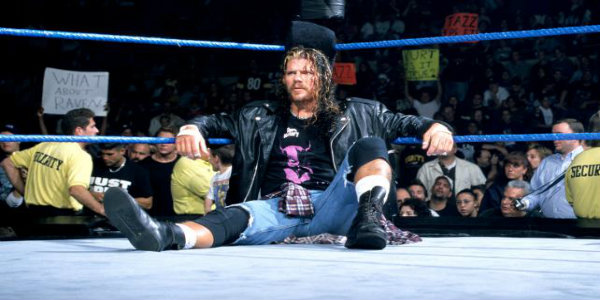
After a list of insanity, what makes Brian Pillman the #1 maniac? The former Cincinnati Bengal started wrestling for Stu Hart's Stampede Wrestling promotion in the late 1980s before he was signed to WCW and became known for a high flying style that became the blue print for American cruiser weights. In many respects, Pillman had two different career because as he evolved and created the "loose cannon" character, the great in ring work that he was known for became secondary to his unpredictability. One such occasional was the "shoot" between WCW booker, Kevin Sullivan and Pillman at the Super Brawl pay-per-view in 1996. Pillman's contract was almost expired and in an attempt to maximize his value for his next deal, a worked shoot took place live during the show. The infamous, "I respect you, booker man!" Sadly, a few months later, Pillman was involved in a very serious car accident and he sustained several injuries, included a shattered ankle that required surgery. Pillman had the ability to make people believe he was actually crazy and furthermore, he made the people backstage believe his character was legitimate. He was ahead of his time in terms the way he presented his character and the promo skills. He did "worked shoots" before they were used on a regular basis during the Monday night war. Tragically, Brian Pillman passed away from a heart condition in 1997, but as mentioned, his style has influenced some of the current generation in the WWE. Pillman is one of the most underrated talents in the history of the business, but he's undoubtedly a legend.

In this post: 
Mick Foley
 
Posted On: 
Contributor
Contributor

Jim Lamotta hasn't written a bio just yet, but if they had... it would appear here.