10 Common Misconceptions About Modern Day WWE
Ending the PG Era wouldn't solve everything.

As successful as they've become, WWE remain one of the most criticised and misunderstood organisations on the planet.
Professional wrestling is routinely mocked for its perceived lack of legitimacy, and mainstream media rarely give the sport the credit it deserves. No matter how much time passes, it seems that WWE will always face an uphill battle to silence their many critics, even as wrestling moves further and further into the public eye.
"It's fake! The fans think it's real! It's only for nerds and children!" We've heard it all before, but no matter how many times they're debunked, these fallacies never seem to go away. The business remains rife with unfortunate stereotypes and stigmas, and WWE will likely remained haunted by these perception problems for decades to come.
And as soon as one disappears, another one emerges. Shifting to PG programming has washed away much of the inherent crassness from where a huge chunk of the company's criticism came, but it has created misconceptions of its own, and that's just one example.
There are plenty of legitimate gripes to throw at WWE's current product, but some of the company's biggest complaints just don't stand up to scrutiny. WWE's own fans are often the company's harshest critics, as is their right, but today's WWE is nowhere near as calamitous as the cynics would have you believe...
10. Michael Cole Sucks

WWE’s announcers are a constant source of criticism these days, and for good reason. Maruo Ranallo is well-liked as SmackDown’s play-by-play guy, but the blue brand’s commentary is blighted by JBL’s boorishness, David Otunga’s mundaneness, and a bloated four-man booth. Raw’s commentary, meanwhile, regularly devolves to no more than a series of shills and soundbites, and adding Percy Watson to the fold has done nothing to aid NXT TV.
These announcers often do more to detract from the product than sell it, and that’s an issue. As the company’s most tenured commentator and the voice of their flagship show, Michael Cole often takes the bulk of this criticism, but almost none of it is his fault.
Cole’s Raw performances have become emblematic of the announcers’ problems as a whole, but performances on recent Network specials like the UK Title Tournament and Beast In The East prove that he’s still a first-class announcer. Sharp, engaged, and well-informed, Cole was in top form, and Raw would be a far more enjoyable show if he was allowed to work this style every week.
The difference is in the production. Cole has an incredibly difficult job, and has Kevin Dunn and Vince McMahon directing his commentator through his earpiece on Raw and pay-per-views. When free of these shackles, Cole is a fantastic commentator, and one nowhere near deserving of the criticism he gets. Fans’ complaints on WWE’s announcers are often justified, but they’re aimed at the wrong people.
9. Everyone Wants To Work For WWE

There’s a widely held assumption that WWE is the only place to be in the wrestling industry, and that every wrestler on the planet is dying to work for them. WWE is every wrestler’s ultimate goal, and the company’s market share and unparalleled financial might mean that they can snap up anyone they want at the drop of a hat.
No other company can offers its wrestlers the same level of wealth, fame, and exposure as WWE, and for many wrestlers, a WWE contract is indeed the endgame. This isn’t the case for absolutely everyone, however, and while WWE aren’t always the be all/end all they’re made out to be.
Kota Ibushi and Zack Sabre Jr. stand as good examples. WWE made moves to sign the duo following their Cruiserweight Classic runs, but both turned them down in favour of the lighter schedules and freedom offered by the independent circuit. The Young Bucks recently re-signed to ROH and NJPW rather than negotiate with WWE for the very same reasons, meanwhile, and there are countless other examples.
There aren’t as many places for wrestlers to earn a decent living as there used to be, but some of the world’s biggest talents have turned WWE down in recent years. Don’t be surprised if Kenny Omega does the same in the near future either: the current man-in-demand said he’d rather be “the legend that never went to WWE” as recently as January 3rd.
8. WWE Don't Care About Good Wrestling

There’s a strong belief among certain sects of wrestling fans that WWE no longer care about the in ring action, and that they’re all about the soap opera. While the McMahons themselves have often referred to WWE as an entertainment company rather than a straight-up wrestling promotion, the past 12 months show that the in ring side of things is as important as ever.
Raw and SmackDown typically feature at least a couple of decent matches every week, but that’s only scratching the surface. The NXT TakeOver specials routinely produce Match of the Year candidates, and the UK and Cruiserweight Classic tournaments were built entirely around the strength of the actual wrestling.
On the main roster, last year’s Charlotte vs. Sasha Banks feud produced countless great matches. Everything AJ Styles touched turned to gold, whether he was working with Roman Reigns, John Cena, or almost anyone else. Dolph Ziggler and The Miz had a great series of matches, Kevin Owens vs. Sami Zayn’s Battleground showdown was phenomenal, and barely a PPV passed by without showcasing some great in ring action.
WWE’s storytelling is as contrived as ever, and they still have a nasty habit of burying potentially great matches under shambolic endings (see: the Kevin Owens vs. Seth Rollins feud). Still, the idea that WWE don’t care about great matches just doesn’t stand up to scrutiny anymore.
7. All Championships Are Meaningless

WWE haven’t done a great job booking their champions in recent years, particularly at a midcard level. WWE champions routinely lose non-title matches, regain their titles through cowardly means, and are portrayed as inferior wrestlers to their challengers. Despite all this, WWE’s championship scene isn’t anywhere near as catastrophic as many would have you believe, and of WWE’s 10 main roster titles, only two look weak at the moment.
Kevin Owens has had a horrendous Universal Title reign, and the United States Title became an afterthought around Roman Reigns’ waist. Aside from those belts, however, WWE’s championships are in excellent shape.
The Raw Women’s Championship has become the most prestigious women’s belt in WWE history, and the Raw Tag Titles always feature prominently on Monday nights. AJ Styles has had an excellent run as WWE Champion, The Miz’s Intercontinental Title runs helped elevate both himself and the belt, and while SmackDown’s other belts are young, they’re not exactly lacking in prestige at the moment.
WWE absolutely need to do a better job with the Universal and United States Titles, neither of which has been well-handled in recent years, but the company’s other divisions are in great health.
6. WWE Are Destroying Independent Wrestling
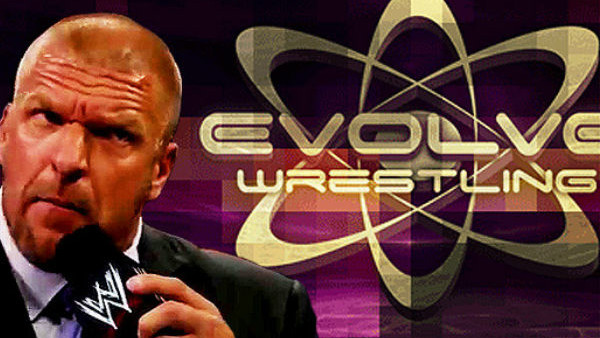
It’s easy to be cynical about WWE’s recent expansion. Triple H himself has been particularly vocal in his desire for WWE to expand their horizons and form links with smaller promotions, and recent months have seen the company build new working agreements with companies like EVOLVE and PROGRESS. The pessimistic viewpoint is that WWE are only doing this for their own gain - so that they can cherry-pick talent and steal the independents’ buzz - but there’s little evidence to support this at the moment.
WWE’s relationship with PROGRESS allowed Finn Balor and Tommy End to appear on the company’s recent Birmingham show. EVOLVE, meanwhile, is fast en route to becoming a breeding ground for WWE’s next wave of talent, with the likes of TJ Perkins, Drew Gulak, Tony Nese, and Kassius Ohno all recently joining WWE.
Companies like PROGRESS produce an excellent product, but they’re never going to be a realistic threat to WWE. WWE have no incentive whatsoever to try and drive them out of business, and Triple H has spoken openly about the all-round importance of these companies thriving. That isn’t to say WWE’s incursions into independent wrestling won’t be without negative implications, but for now, they seem to benefit both WWE and the independents.
5. Sami Zayn Is Being Buried

Sami Zayn hasn’t had the best of times since overcoming Kevin Owens at Battleground. The duo put on an excellent match, but Zayn has regularly missed weeks of TV since then, and hadn’t been put back into a prominent storyline until a couple of weeks ago. While Kevin Owens became Universal Champion, Zayn became an afterthought, and it’s still a tough pill for his supporters to swallow.
Zayn is a fantastic wrestler, and the company’s most natural underdog male babyface. His in ring work is second to none, and he’s absolutely capable of delivering on the biggest stages. He’s still not treated as a genuine superstar, however, and after spending the past month or so being continually beaten from pillar to post by Braun Strowman, many fans have taken to throwing the dreaded B-word around.
Sami Zayn is far from buried, however: in fact, this role is absolutely perfect for him. Zayn winning every other week would remove everything that made him special in the first place, and he has always been at his best when working from beneath. Sami is a scrappy, courageous performer who gets knocked down a lot, but always gets back up, and that’s why people rally behind him.
If Sami was winning every week, he’d be “just another guy.” His feuds with Neville and Owens stand as his two WWE career highpoints, and both featured complete dominance from the antagonists prior to Zayn’s eventual victory. Great hardship produces great victories, and history suggests that his next ascendency angle is only just around the corner.
4. Business Is Bad

WWE’s ratings aren’t in great shape at the moment. Raw hit a historical low point in September, and while things have started bouncing back in recent months, WWE’s average viewership is as low as it has ever been. This has naturally led to droves of onlookers calling WWE’s current situation a state of crisis, but while ratings remain a strong indicator of viewing trends, they’re nowhere near as important as they used to be.
Consumption methods have changed drastically over the past few years. Viewers are gradually shifting away from live television and towards streaming services and records, and the downturn in ratings isn’t a WWE-specific problem, but one reflected throughout the television industry.
Viewership changes aside, WWE’s financials are in great shape. Revenue grew 20% to hit an all-time record of $658 million last year, and TV rights deals are set to grow from the current figure of $130 million to $235 million in 2018. Revenue from the Network grew 25% in 2016’s first six months compared to the previous year, and no other sporting entity can match WWE’s mastery of social media outreach.
Things aren’t perfect, but WWE have done a good job in adjusting their business practices to remain profitable in an ever-changing marketplace. They’re an incredibly robust business, and they’re doing just fine.
3. PG Is The Problem
Ask a dozen WWE fans what they think the biggest problem with modern day WWE is and there’s a strong chance at least half will say “PG.” The company’s switch to a more family-friendly style of programming hasn’t sat well with a big chunk of viewers, particularly those who revere the Attitude Era’s more risque programming, but while the rating has definitely caused a few problems, it isn’t without its positives.
PG has simplified WWE’s storytelling to the point where Raw and SmackDown often feel dumbed down, sanitised, and overly safe. Wrestlers aren’t as flashy as they used to be, the programming lacks edginess, and WWE have never been so risk averse.
It’s wrong to think that returning to an Attitude-style product would act as some kind of miracle cure, however. PG provides a far safer working environment for the performers, makes WWE a shedload of cash, and opens them up to new advertising opportunities. Furthermore, it has done much to banish the crass immaturity rampant throughout the Attitude Era, and the removal of trashy hardcore wrestling and things like bra & panties matches have resulted in a noticeable increase in all-round wrestling quality.
PG has its positives and negatives, but it should only take a quick glance at the positives to understand why WWE persists with it. WWE could absolutely stand to benefit from treating the older segments of its audience more seriously from time to time, but abandoning PG isn’t the solution.
2. Roman Reigns Isn't Any Good

It’s official: Roman Reigns is the most hated wrestler on the planet.
The Rock’s much-maligned cousin became the first babyface to ever win Pro Wrestling Illustrated’s dreaded “Most Hated Wrestler” award earlier this week. Barely a week passes without Reigns being booed on Monday Night Raw, and it has never been clearer that he’s not going to succeed as the top-level babyface WWE dearly want him to be.
As with John Cena before him, however, Reigns’ failure to get over has somehow seen him branded as an inept performer. No current WWE employee draws more criticism than Reigns, but he’s a victim of poor booking and a mistimed push more than anything else.
His character work isn’t great, but that’s because he has been forced into a role that buries his strengths and highlights his weaknesses. Reigns was fantastic as The Shield’s quiet wrecking ball and as a smarmy, self-aware champion in the weeks following WrestleMania 32. If he was allowed to fill one of these roles instead of the detestable “face” character he currently plays, Reigns would be a natural star.
Reigns is also a far better wrestler than many give him credit for. Sure, he’s not as flashy as an AJ Styles, but he has become a highly effective all-round worker. WrestleMania 32 was a disaster, but Reigns had strong matches with Styles, Seth Rollins, Dean Ambrose, Finn Balor, and countless others in 2016 alone. His matches are often tainted by shenanigans, but Reigns has proven himself a solid workhorse when called upon.
It’ll likely take a big heel turn to save Reigns’ perception problem at this point, but while far from flawless, he’s more than capable of playing a role in WWE’s main event scene.
1. WWE Have A Monopoly

It’s true that WWE are incredibly comfortable in their position at the top of the wrestling market, and that the likelihood of another company knocking them down is slim. WWE’s market share is gigantic, and this allows them to do as they please in most cases.
That being said, calling WWE a “monopoly” is inaccurate by definition. They are not single sellers providing a unique product in their market, and promotions like TNA, NJPW, and countless others provide close substitutes to WWE’s product. Instead, WWE’s situation is far closer to an oligopoly: a state of limited competition in which a market is shared by a small number of producers or sellers.
WWE’s market share is secure, but it’s not unbreakable. Ring Of Honor are currently owned by a huge broadcasting group with impressive financial clout and TV stations around the USA, while Lucha Underground is ran by some of TV’s most prominent producers. TNA, meanwhile, were a huge part of a Viacom-owned TV network up until a couple of years ago. Each of these companies has (or had) the opportunity to move closer to WWE’s level, but chose against taking the financial risk.
The only sense in which WWE is a monopoly is that none of their competitors can match their reach. They do not, however, have complete control over the wrestling business, and unless they’re able to drive everyone else out of business, they never will.