10 Fascinating WWE Survivor Series 1992 Facts
An average show marred by some major firings the previous week.

The year 1992 was a troubling one for WWE. Despite the presence of some truly historic occasions (SummerSlam at Wembley, Bret Hart's first World title win, the greatest Royal Rumble match ever), 1992 is most notable for the manner in which a once-stacked roster of wrestlers shriveled and shrank in the midst of many real-life controversies.
Once the dust from WrestleMania 8 settled, some major names were either gone from the WWE scene, or would be gone within weeks or months. Any time you lose Hulk Hogan, Roddy Piper, Jake Roberts, Sid Justice, and the Legion of Doom from your roster within a six-month time frame, it's fair to say you're not living in ornate times.
It wouldn't be fair to call WWE "the walking dead" headed into Survivor Series 1992, but "the walking wounded" might suffice. Changes were made, particularly at the top of the card, as Bret Hart and Shawn Michaels were given the World and Intercontinental championships, respectively during the month of October. That both men would be squaring off for the main belt at Survivor Series signaled a major change in WWE philosophy. Times were changing, almost entirely out of necessity.
Here are ten facts about the 1992 Survivor Series you may not have known.
10. A Thin Roster Led To The Scrapping Of The Elimination Format

When the show opened with High Energy vs. The Headshrinkers, in what could've been the feature match of any Prime Time Wrestling episode of the day, you knew Survivor Series had entered a new age. No longer was the show rigidly scheduled to host four or five tag team elimination matches, and was instead "just another night" for WWE.
The only elimination match saw The Nasty Boys and The Natural Disasters take on Money Inc and The Beverly Brothers. Aside from that, it was singles and tag team matches up and down the card, with nothing else befitting of the Survivor Series name.
The reason for the change stemmed from the diminished quality of the roster. It wasn't just the loss of major names, but the fact that the midcard was filled with such non-established talents like Max Moon, Damien Demento, and others that led to WWE rolling into Thanksgiving Eve with a less-populated card for the night.
9. Ultimate Warrior And Davey Boy Smith Were Fired Shortly Before The PPV

WWE had fallen under heavy scrutiny in the wake of a number of scandals, in particular the use of steroids and growth hormone among its performers. More than ever, McMahon had to exercise zero tolerance when it came to offenders of the tightening standards within his promotion.
As a result, two men with high-profile matches for Survivor Series ended up losing their jobs: The Ultimate Warrior, and Davey Boy Smith. Just three months earlier, both men were challengers for the two singles titles at SummerSlam.
Both Warrior and Smith were receiving growth hormone from a dealer in England. Bret Hart claims he received a call one week before Survivor Series from McMahon, informing him that he had just fired Warrior, and was about to let Hart's brother-in-law go as well. Warrior was officially pulled from the card roughly nine days before the show, with Mr. Perfect hastily turning babyface in order to fill in his spot.
8. Smith Was Meant To Defend The Intercontinental Belt At The Show

The IC title switch from Smith to Shawn Michaels in late October 1992 had some rather interesting timing. On WWE television the weekend of October 24/25, it was announced that "The British Bulldog" would defend the strap against The Mountie at the forthcoming pay-per-view.
However, Michaels won the belt from Smith on Tuesday, October 27 at the Saturday Night's Main Event tapings, so plans seemed to change rather quickly. In a rather curious coincidence, The Mountie quit WWE during the previous day's tapings, after losing to Bret Hart in an untelevised match in under 30 seconds.
By the time WWE's weekly programming aired the weekend of November 7/8, the Smith/Mountie match was no longer mentioned in the pay-per-view rundown, and Smith was never going to be issued a replacement.
7. It Was The First Ever WWE PPV In Which Neither Hogan Nor Warrior Wrestled

SummerSlam 1992 was the first WWE pay-per-view to not feature Hulk Hogan in any way, due to his departure after WrestleMania 8. Beneath his final curtain, he endorsed the returning Ultimate Warrior, somebody that McMahon felt compelled to bring back in order to shore up the weakening star power.
Warrior wrestled Randy Savage at SummerSlam that year, but due to his firing shortly before Survivor Series, the latter event marked the first pay-per-view that neither he nor Hogan wrestled on.
Savage remained as the last true babyface headliner of the 80s/early 90s guard, and even he was starting to be used sparingly. SummerSlam 1993 the following year would mark the first WWE pay-per-view that neither Hogan, Warrior, nor Savage wrestled on, as it was becoming more and more clear how much times were changing.
6. Ric Flair Was Coming Off Of An Unusual Injury

Very late in what would be Ric Flair's second and final run as WWE Champion, "The Nature Boy" suffered a rather peculiar malady during a house show match against The Ultimate Warrior. During the course of the match, Flair started exhibiting balance issues, apparently following a flipping turnbuckle bump. He worked through the title change to Bret Hart days later, while still suffering the ill effects.
Flair was formally diagnosed with paroxysmal position vertigo, a balance disorder caused by a bone within his ear chipping, leading to the unsettling of his equilibrium. The loss of balance associated with the condition necessitated him being taken out of the ring for a short period of time.
Aside from one house show match with Warrior days after dropping the strap to Hart, Flair didn't wrestle for close to a month. He resumed his working schedule less than one week before Survivor Series.
5. It Was The First Televised Casket Match In WWE History

On July 14, 1991, The Ultimate Warrior defeated The Undertaker at St. Louis' Busch Stadium in what was the first ever casket match in WWE history. That was a non-televised live event, and it would be 16 months before WWE would ever put such a match on the small screen.
Undertaker defeated Kamala in a largely-unmemorable sub-six minute match at Survivor Series 1992, though it has historic value as the first casket match ever to be broadcast to a home audience.
Since then, the gimmick has been used numerous times for championship matches and storyline blowoffs featuring Undertaker. Most often in such instances, Undertaker nemeses have had irrational fears of caskets (Kamala, Yokozuna, Heidenreich, among others), leading one to wonder why they'd dare incur the wrath of a zombie mortician in the first place.
4. The Undertaker Worked Through A Considerable Arm Injury
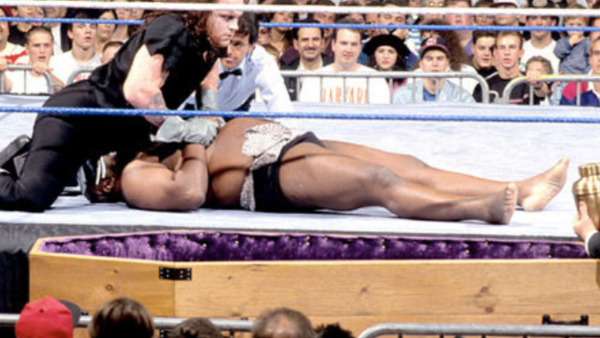
The casket match only going five and a half minutes likely didn't raise too many eyebrows - it was a dominant win for a popular character, and nobody was expecting a technical classic between The Undertaker and Kamala anyhow.
However, it was reported in the October 19, 1992 edition of The Wrestling Observer that The Undertaker was expected to miss significant time with bone chips in his elbow and shoulder. He was pulled from house show appearances in the latter half of October, and was apparently once thought to be in danger of missing Survivor Series.
As it turns out, The Undertaker was back in action two weeks before the pay-per-view, but only working short matches with Nailz at live events, all of which went less than a minute. The brief matches were likely meant to take it easy on an ailing "Phenom".
3. Hart Paced The Main Event Slower As A Favor To Michaels
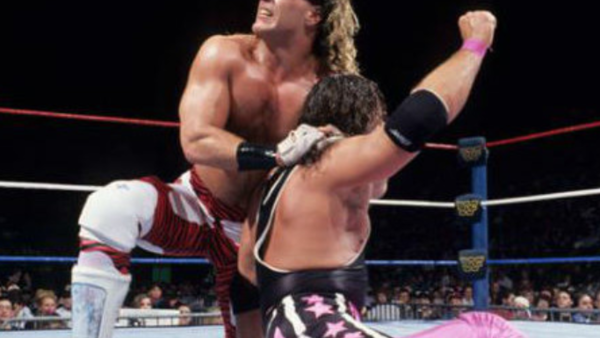
With Bret Hart as WWE Champion, the title bouts were expected to feature more technique and science than there had been in the days of Hogan and Warrior. His first pay-per-view opponent was IC Champion Shawn Michaels, in what is known today as "That other Survivor Series title match between Bret and Shawn."
The Survivor Series main event lasted nearly 27 minutes, and was amazingly only the third longest WWE Championship match on pay-per-view that year (behind the Royal Rumble match and Warrior vs. Savage at SummerSlam).
Still, 27 minutes is a long time for two wrestlers to engage in physical activity, even if they are two superb technicians. Hart later claimed that he had to go at a slower pace than he was originally intending, after Michaels reportedly told him that he wasn't in the shape to go at their usual pace for such a grueling duration. In any event, the match was still of excellent quality, slower pace or not.
2. It Was The First WWE PPV To End On A Submission

Long before it seemed like every wrestler on the roster possessed both an impact finisher and a submission finisher, submission finishes were much rarer the further you went up the card. It just wasn't often that a top-shelf wrestler in WWE was subjected to such an "uncool" manner of losing like tapping out.
When Hart snared Michaels in the Sharpshooter for the planned finish, it was the first time that a WWE pay-per-view had ended in that fashion. It was also the only time that Sharpshooter-wielding Bret ever ended a pay-per-view by winning with that hold.
In fact, if you don't count the "Screwjob" endings of 1997 and 1998, the next time that a WWE pay-per-view ended on a wrestler actually submitting to a hold wasn't until September 2001. That's when Kurt Angle made WWE Champion Steve Austin submit to an ankle lock at the end of Unforgiven.
1. Half Of The Participants Were Gone One Year Later

In all, 26 wrestlers took part in televised matches at the 1992 Survivor Series, far less than in any previous year. The company climate had changed so much by the end of 1992, and would continue to do so throughout 1993, when half of those 26 wrestlers would be gone by the time the next Survivor Series rolled around.
The 13 survivors were Owen Hart, Samu, Fatu, Tatanka, Rick Martel, Randy Savage, Razor Ramon, Yokozuna, Virgil (mostly on house shows by the fall of 1993), Irwin R. Schyster, Undertaker, Bret Hart, and Shawn Michaels.
As for the unlucky 13 to be out of the WWE picture, we're talking Koko B. Ware, The Big Boss Man, Nailz, Mr. Perfect, Ric Flair, Ted Dibiase, Beau Beverly, Blake Beverly, Brian Knobbs, Jerry Sags, Earthquake, Typhoon, and Kamala. What a difference a year can make, indeed.