10 Fascinating WWE Survivor Series 1993 Facts
Owen begins to turn heel, while the All-American Luger push drags along.

Survivor Series 1993 ended up being a pleasantly-decent show, in spite of all of the backstage turmoil and roster shuffling taking place at the time. When you have five "guest wrestlers" in one elimination match, and resort to having another promotion's tag team title match, both on one major show, chances are your company isn't in the best place.
For the boss, matters were much worse than just a meager roster. Less than one week before the pay-per-view, Vince McMahon was indicted in New York on federal charges of conspiring to distribute steroids to his wrestlers. Though the trial would not begin until July 1994, it was understandably a tense time for the sports entertainment giant in trying to fix its image. McMahon, as the list will show, wasn't the only major name within WWE who was dealt a severe legal punch at the time.
The combination of an uneven roster and serious outside distractions eroded the usual sense of permeating fun that came standard with WWE programming. By late-1993, the shows felt less like the golden years of the company, and more along the lines of a distorted funhouse mirror version of what WWE was supposed to be. Survivor Series 1993, despite being far from the worst show ever, reflected that downshift.
Here are ten facts about Survivor Series 1993 you may not have known.
10. It Was The Only WWE PPV Held At The Boston Garden

Madison Square Garden in New York remains the alpha and omega of WWE venues, particularly in the days when exclusive cards from the arena were broadcast on local TV. However, there were other venues that had their own special "home" telecast, including Philadelphia's Spectrum, Toronto's Maple Leaf Gardens, Los Angeles' Sports Arena, and of course, The Boston Garden.
Despite the relevance of the Garden and its yellowish hues to those idyllic times in WWE history, it only managed to hold one pay-per-view, that being this Survivor Series. The venue ended up closing in September 1995, four months after the final WWE show (dubbed "A Night to Remember") in the building.
Since then, WWE has held 11 pay-per-views in Beantown, all of which have emanated from the replacement venue, which today is known as TD Garden.
9. It Marked Bobby Heenan's Final WWE PPV As A Full-Timer
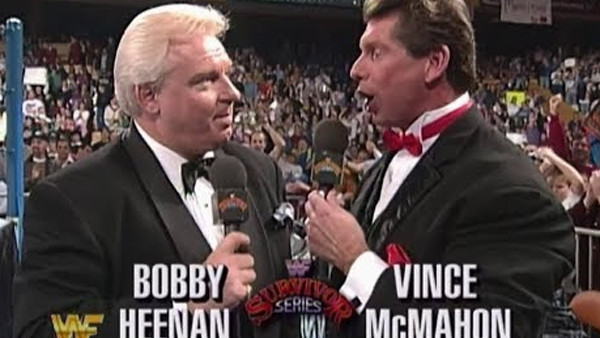
Another reason to look back at Survivor Series 1993, warts and all, with a bit of fondness is because it was the last WWE pay-per-view in which 'The Brain' graced the home audience with his unmatched wit. The Hart Family-Knights match is Heenan at his absolute finest, rattling off one zinger after another toward Calgary's first family of wrestling.
Stories somewhat differ as to why Heenan left when he did. The most commonly-offered explanation (including by Heenan himself) is that he was tired of the constant travel, especially with his neck in such rough shape. Making the commutes from his Tampa home up to New York and Connecticut semi-regularly was wearing on him.
The Wrestling Observer notes that Heenan may have been asked to move to Connecticut, which he had no interest in doing. There was also word that Heenan was asked to take a major pay cut due to leaner times for WWE, but that's unclear.
8. Randy Savage Replaced Mr. Perfect

One year after Mr. Perfect returned to the ring, filling in for Ultimate Warrior as Randy Savage's tag team partner, it was Savage that had to fill in for Perfect at the 1993 Survivor Series. Perfect was originally scheduled to appear on Razor Ramon's team against a foursome captained by Irwin R. Schyster.
Perfect vanished from house show bookings in late-October 1993, with Bob Backlund taking his place. Mentions of Perfect had been dropped from WWE programming, and he was noticeably absent from a brawl between the two teams that aired just 11 days before the pay-per-view.
Savage's fill-in was announced by Ramon as a surprise on the night of the show, after noting somewhat sourly that Perfect had backed out on his partners. Reportedly, Curt Hennig was taking time off to deal with family issues, though The Wrestling Observer has also claimed that Hennig was upset about not winning back the Intercontinental title.
7. Jerry Lawler Was Subbed Out Due To Very Serious Charges
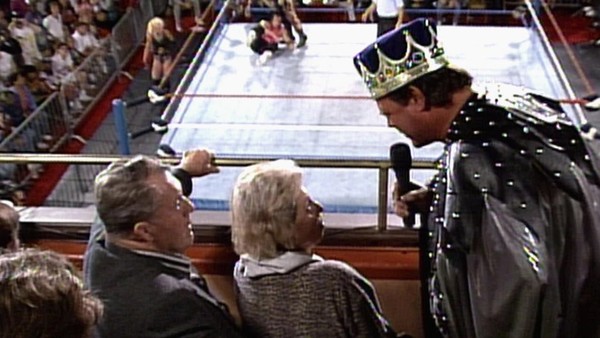
The big blow-off to the lengthy Bret Hart-Jerry Lawler feud seemed to be coming at Survivor Series, when Bret and three of his brothers would wrestle Lawler and three non-descript "knights". At nearly the last minute, Lawler had to be scrubbed from the card (and WWE programming in general), replaced by a returning Shawn Michaels.
The day before the pay-per-view, Lawler pleaded not guilty to statutory rape, sodomy, and harassing a witnesses, stemming from an alleged altercation with a 13-year-old girl in Louisville, KY the previous June.
The charges were later dropped in February 1994. The girl was apparently unable to get her story straight, and later admitted that her allegations were false. Lawler would resume his work with WWE at WrestleMania X the following month.
6. Terry Funk Was Supposed To Play The Red Knight
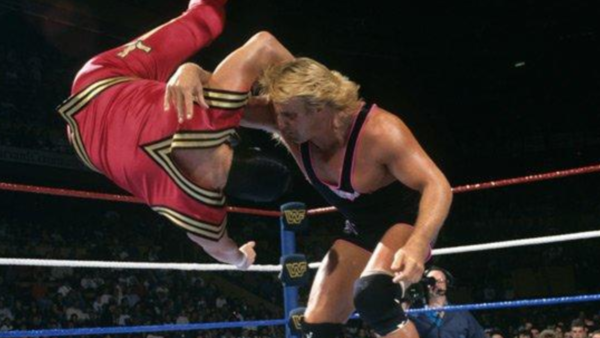
Despite Michaels filling in for 'The King', his three partners were still given the "Knight" motif, probably because the outfits were already designed. The mercenaries in costume were only named by color, but all had some measure of notoriety in the wrestling business. The Blue Knight was Greg Valentine, while the Black Knight was barnstorming powerhouse Jeff Gaylord.
The Red Knight ended up being played by Barry Horowitz (the screams gave it away), though it was initially supposed to be Terry Funk in the garb. Funk claims he was propositioned with an offer to take the role of head booker from Pat Patterson (who was looking to lighten his workload). After doing the job as one of the Knights, Funk would then move into the office role.
Funk ended up passing on the job, bailing on McMahon. He realized he didn't want to live in New York, and left a note for Vince that read, "My horse is sick. I think he's dying. I'll see you later." Years later, when Funk popped up in WWE once more, Funk alleges that Vince's first words to him were a wry, "So how's your horse?"
5. The Harts' Match Had To Be Rehearsed The Day Before

There were so many uncertain components to the Harts/Knights match. Bret and Owen Hart were really the only full-time active WWE wrestlers in the contest. Bruce and Keith Hart were in their early-forties, and Keith hadn't wrestled regularly in several years. Horowitz and Valentine were still mostly active, while Gaylord was a USWA guy, and had little to no experience working with the performers in the match. Michaels was shaking off a bit of ring-rust coming off of a September suspension.
For these reasons, the group got together in Stamford the day before the show to go over the match, in order to better get on the same page. Bret noted that brother Bruce, ever the enterprising spirit, tried to take Gaylord aside and design spots that would directly benefit himself, only for Bret and Michaels to openly chastise him.
The match lasted more than 30 minutes and was about the most basic action you've ever seen, owing mostly to the collective rust and lack of general cohesion. But it led to Owen's awesome heel turn, so there's that.
4. Bruce Hart Was Initially Pitched As The Brother To Turn On Bret

But if WWE went with their initial inkling, it wouldn't have been Owen that got the spotlight. In October 1993, when trying to hammer out a long-term contract with a somewhat-discontent Bret, McMahon and Patterson pitched the idea of a family feud between Hart and one of his siblings, based on apparent jealousy of Bret's career success.
McMahon initially pitched 43-year-old Bruce as the malcontent, but Bret felt the younger, better-performing Owen deserved a chance at a major push. Bret took up Owen's cause, and claims that Patterson initially resisted, arguing that Owen couldn't handle the spot. McMahon, however, deferred to Bret's feelings, and agreed to go with Owen.
The sibling rivalry that began at Survivor Series 1993 was borne out of WWE's desire to keep Bret happy and employed, and Bret's desire to give his kid brother the breakout role he long deserved.
3. An Indy Promotion's Champions Appeared On PPV For Two Different Companies In One Year

This is one that will likely never be matched or surpassed in any way. In February 1993, WCW Superbrawl III featured a non-title match pitting Smoky Mountain Tag Team Champions The Heavenly Bodies (sans their belts) against The Rock 'n' Roll Express. That match took place as part of a talent arrangement between Jim Cornette and ill-fated WCW shot-caller Bill Watts.
Later that year, Cornette was on the inside at WWE, and Smoky Mountain started doing business with McMahon. The same two teams (with Jimmy Del Ray replacing Stan Lane in the Bodies) faced off at Survivor Series, and this time, it was for the gold.
While Asheville, NC was receptive to the fix of classic tag team rasslin', Boston was anything but, treating the two teams like unwelcome outsiders. Still, it marks a unique coup for Smoky Mountain, that they were able to get their Tag Team champions (and their rivals) to square off on WCW and WWE pay-per-views, in the same calendar year no less.
2. It Was Ludvig Borga's Second, And Last, WWE Pay-Per-View Match

When WWE brought in Finnish brute Tony Halme in the summer of 1993, they had big plans for a wrestler who resembled a more reasonably-shaped Brock Lesnar. As anti-American Ludvig Borga, the sneering brawler was being built up as the next top foreign menace, someone for eventual World Champion (ahem) Lex Luger to feud with in the name of God and country.
Borga, as a member of the Foreign Fanatics, was pinned by Luger at the end of the main event. Little did anyone in WWE realize that it was the last time he would appear on a company pay-per-view.
Halme injured his ankle in January 1994 just prior to the Royal Rumble. He missed that pay-per-view, plus a scheduled WrestleMania X encounter with Earthquake. Borga quietly left the promotion, never having returned from the injury, and never coming through on the early faith that WWE imbued in him.
1. It Was The First Of WWE's Annual PPVs To Plummet Beneath 200,000 Buys

The Wrestling Classic in 1985 reportedly did around 60,000 buys, which isn't as disastrous if you consider the comparatively-leaner pay-per-view market of the time. Before November 1993, it was believed to be the only WWE pay-per-view to not clear 200,000 buys. Even the No Holds Barred special in 1989 is said to have bested that plateau.
Survivor Series 1993, however, revealed a new low for annual WWE fare, coming in at just 180,000 buys. That marked a full 28 percent drop from the 250,000 that bought the previous year's show, as well as the 250,000 that bought SummerSlam just three months earlier.
It wouldn't be until the height of the Attitude Era that Survivor Series would even top 300,000 buys again. The November tradition had fallen in the eyes of fans during this time, and upcoming incarnations would make that quite evident.