10 Fascinating WWE Survivor Series 2006 Facts
We never did solve the mystery of who Mike Knox was.

The 2006 Survivor Series was another one of those compromise shows. The event tempered the hungry maws of the nostalgia-minded with three elimination matches, while stacking the rest of the card with singles matches that were mostly from the SmackDown side of the aisle.
Overall, the event best embodies just how all-over-the-place WWE could be in 2006. For one thing, it's a Survivor Series event with some traditional elimination bouts, but there's also the involvement of ECW wrestlers and branding. Characters rooted in the Attitude Era, such as D-Generation X and The Undertaker, wrestled on a show with legends like Ric Flair and Dusty Rhodes, ECW icons like Sabu and Rob Van Dam, and latter day studs like John Cena and Randy Orton.
Survivor Series 2006 felt like one of those WWE video games where you can unlock 40 different legends and classic gimmicks, and integrate them at will with the modern roster. There had been pining for yesteryear within WWE's product before, but the way in which WWE hearkened back to the past in 2006 was at unprecedented, never-before-seen levels. Survivor Series 2006, perhaps better than any non-WrestleMania event, exemplified the wildest blending of eras.
Here are ten facts about the 2006 Survivor Series you may not have known.
10. The Event Allowed Philadelphia To Complete "The Big Five"

Three months earlier, WWE SummerSlam 2006 took place in Boston, making Beantown the first city to host each of WWE's Big Five: Royal Rumble, WrestleMania, SummerSlam, Survivor Series, and the defunct King of the Ring.
The 2006 Survivor Series enabled Philadelphia to pull off the same feat. 'The City of Brotherly Love' rarely gets any truly great pay-per-views (outside of the 2013 Money in the Bank), but they can at least lay claim to this accomplishment.
It began when a decent SummerSlam 1990 took place in Philly, followed by the wretched 1995 King of the Ring. More awfulness followed in the form of WrestleMania XV in 1999. The 2004 Royal Rumble at least had one of the greatest Rumble matches ever. And finally, the 2006 Survivor Series was a fun, if mostly-uneventful, showcase.
9. It Was The Most Recent Survivor Series With Three Men's Elimination Matches

The worst Survivor Series' are the ones with just one elimination match, with "qualifiers" to make the teams. It feels so forced and arbitrary, like "Ooh, the heel side gains Tyler Reks! The suspense is off the charts!"
Just announce a few elimination matches and let the fans' imaginations take over, you know? When there's more elimination matches, the teams tend to fall in line a little quicker without the team-building week-to-week pathos.
In the case of 2006, the teams organically came together based mostly on ongoing feuds, like the good old days. It was also the last instance of there being three men's elimination matches on the same show, and the first time since 1999 where that was the case. I think we can all agree that the show needs more than just three, right?
8. Roddy Piper Was Pulled From Ric Flair's Team
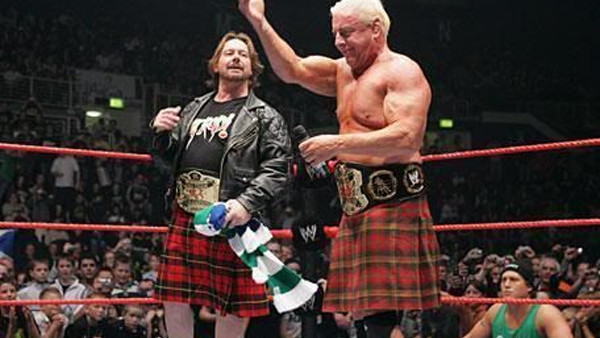
The opening match was a four-on-four deal with Ric Flair captaining a team of legends against four Spirit Squad members, sans Mitch. Flair's cell of icons was to include Dusty Rhodes, Sgt. Slaughter, and Rowdy Roddy Piper, whom he'd recently become Tag Team champions with.
Shortly before the pay-per-view, Piper ended up hospitalized, diagnosed with Hodgkin's lymphoma. A mass had to be removed from his back, before undergoing subsequent radiation therapy to fully rid him of the disease.
It was his return to action that enabled him to realize his situation. Piper was voted into a team with Flair at Cyber Sunday, and the rigors of wrestling once more actually called attention to the mass in his back. Piper even noted that if the fans hadn't voted for him at Cyber Sunday, he may not have been diagnosed in timely fashion.
7. WWE Tried To Get Ricky Steamboat To Replace Piper

Prior to going with Ron Simmons, the first choice to fill in for 'Hot Rod' was another old kayfabe nemesis of Flair's, one Ricky 'The Dragon' Steamboat. Steamboat hadn't wrestled since 1994, but as WrestleMania 25 would later prove, he was still capable of performing at a remarkable level, age considered.
There was one major problem, though: he didn't own the rights to his ring name. When Steamboat divorced wife Bonnie, for whatever reason, she got the rights to his wrestling persona in the settlement. At the time, she was refusing to let her ex-husband use the name for wrestling endeavors.
WWE reportedly tried to talk Bonnie into allowing Steamboat use of the name for Survivor Series and some surrounding television shows, but she said no. Clearly, something did eventually change, as Steamboat regained his working persona in time for his 2009 Hall of Fame induction.
6. Ric Flair Had The Longest Gap Between Survivals

Flair overcame three-on-one odds against The Spirit Squad, downing Mikey, Kenny, and Johnny in order to save the match for the good guys. It wasn't Flair's first time surviving at the event, but it did mark a rather impressive feat.
Flair's victory at the 2006 Survivor Series came 15 years after surviving in the opening match of the 1991 show. That remains the longest gap between survivals of any wrestler in the history of the event, and underscores Flair's unearthly endurance just a little more.
Other notable lengths between survivals include Big Show (six years between 2004 and 2010), Sheamus (seven years between 2009 and 2016), Randy Orton (eight years between 2008 and 2016), and Bubba Ray Dudley (13 years between 2002 and 2015, if one counts the table elimination match from the 2002 show).
5. The Real-Life Love Triangle Spurred Lita's Decision To Leave

For as intense as the entire Edge/Lita/Matt Hardy saga was when it played out in 2005, imagine how much wilder the whole thing would've been in the Twitter era. That it predated everyone's favorite kneejerk social media outlet (and was still an internet-breaker) speaks volumes as to how much folks got wrapped up in all the drama.
Lita's WWE contract expired the week of Survivor Series, where she put over Mickie James on her way out of the company. She had been considering leaving as far back as 2005, when the entire ordeal became public.
According to Lita, pro-Matt supporters sent her hate mail and some even threw things at her in public. She told WWE.com around Survivor Series, after admitting that the situation still haunted her, "I feel like there is no way for me to escape the whole feeling that I have from being involved in such a public affair. There’s no other alternative for me than to walk away.”
4. Edge Threw A Going-Away Party For Lita Afterward

The way Lita's WWE exit was handled on camera didn't sit well with her, nor with many fans. It was one thing to see a villainous character get comeuppance in embarrassing fashion (having her deeply-personal items auctioned off by Cryme Tyme while Lita threw a tantrum), but the consensus was that the future Hall-of-Famer could've been given something a bit more dignified.
Leave it to Edge to handle that. After the event, Edge took Lita to what she thought was going to be a late-night Philly diner for a quick bite with her folks (who flew in for her last match), only to be taken to an upscale bowling alley. It was there that most of the WWE roster surprised her with a going-away party, all arranged by 'The Rated-R Superstar'.
In the midst of the drinks and the slightly-tipsy attempts at bowling, Lita was treated to a video of various people wishing her the best in her future. The last person on the video, if you can believe it, was Pee-wee Herman of all people, which delighted Lita no end.
3. It Was The First Survivor Series With Mixed-Brand Teams

After the 2005 show centered around ramped-up tension between the Raw and SmackDown brands, the 2006 show was all about a sudden detente. The days of split pay-per-views were about to end. There was seemingly no further point to the Brand Extension, other than to pop a rating through an annual draft.
In 2003 and 2004, the elimination matches were brand-exclusive: Raw vs. Raw, and SmackDown vs. SmackDown. A year later, as mentioned, was the turf war between the shows.
The two five-on-five matches in 2006 saw Raw, SmackDown, and ECW wrestlers intermingling on the same teams, with no semblance of outward pride for their respective brands. WWE's reality has always been flexible, but a year after fighting to the near-death, it was a strange sight to see the brands become so secondary.
2. "Who's Mike Knox?" Was Apparently Based On A Real Incident

When Mike Knox debuted in the summer of 2006 as Generic Big Guy #5728, you could hear crickets blinking. Existing as little more than scenery for the whole "Kelly Kelly is an exhibitionist" story, Knox didn't have much to bring to the table. His standing on WWE programming was reinforced at the 2006 Survivor Series.
Knox succumbed to an early Sweet Chin Music doled out by Shawn Michaels, who expressed confusion before pinning Knox. Then he questioned his teammates as to whether this Knox fellow was even a wrestler in the match. When it was confirmed that he was, Michaels deadpanned, "Oh, so we're doing good then?" One of the more underrated funny lines in WWE history.
According to Figure 4 Weekly, that in-match joke was apparently based on a recent creative meeting that Michaels sat in on. Seems HBK didn't watch ECW, because when someone mentioned Knox's name, Michaels seriously asked, "Who's Mike Knox?" Then the joke made it into the work.
1. Fans Reportedly Were Leaving In Droves During The Main Event

Batista challenged King Booker for the World Heavyweight title in the main event, and clearly the Philly fans had no interest in such a match. From chants for Booker in the early going, to a generally tepid reaction throughout, it wasn't exactly a main event for the memory bank.
To make matters worse, large packs of fans were leaving as the match was playing out, lessening the chance of a loud, positive reaction for Batista capturing his second-career World title. Not that he had a ton of fan momentum on his side, anyway.
The match, as mentioned, was in Philadelphia, the same place in 2017 where fans at Battleground left the Punjabi Prison match early in order to buy tickets for the Royal Rumble. The Philly crowd knows when it's time to make their collective exit.