10 Greatest Promo Guys Of The Ruthless Aggression Era

The ten best talkers in one of the most overlooked periods in WWE history
Picture the scene: it's just after Wrestlemania XVII and we've witnessed the infamous Austin heel turn, a moment signalling the end of the Attitude Era and the beginning of an era Vince himself would go on to dub the Ruthless Aggression Era, a shift that saw the rises of stars like John Cena and Batista and a change in focus that concentrated much more on the in-ring action. This didn't mean promo and character work was simply left by the wayside however: this oft overlooked period of time saw the surge in popularity of some of the best talkers and character workers of all time, and it's no coincidence that the one thing you'll see in common with the majority of this list is that they were also the top workers of the time. In a stretch of time where everyone had a high degree of in-ring skill, it became of paramount importance to have a character that stood out. No disrespect intended, but that's the difference between an Eddie Guerrero and a Chavo Guerrero; both men were amazing in-ring technicians, but one just had that edge of charisma and intrigue that the other did not, and that is precisely why one became a world champion and the other did not. It was also an age for a different kind of character: wrestlers became less gimmicky and were allowed to express more of their own identities as the Attitude Era developed and this culminated in the Ruthless Aggression Era having personalities that were a little more true to life than ever before. But again, that didn't mean a compromise in either characterisation or self-promotion, and arguably it made the successes of these greater promo guys - robbed of make-up, mask and gimmick, all the more impressive.

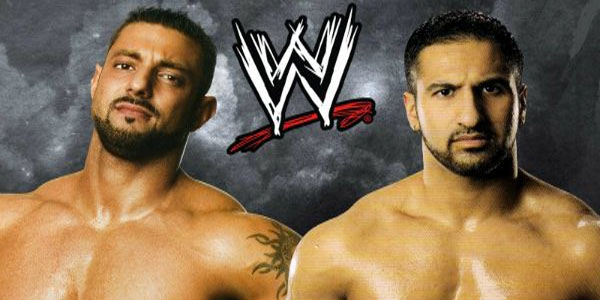
10. Mohammed Hassan & Davari

Pushing the boundaries of what you could do on WWE TV, Hassan and Davari debuted in late 2004 in front of an American audience still sore from 9/11. As is usually the case in professional wrestling, foreign equals heel, but it was their outspoken nature that really caught the attention of the fans. Their diatribes about the representation of Middle-Eastern people on television since the attacks on the World Trade Center struck a chord with the audience, mainly because they were right. The best heels speak with a grain of truth in their words, that's the reason Punk's shoot promo worked (although it effectively turned him face) and that's why Hassan and Davari's incendiary words were so effective with the WWE audience. In the short time he was with the company, he drew a level of fan heat unheard of since the days of security guards having to escort the Fabulous Freebirds away from arenas to avoid people who genuinely wanted them dead. It was real when the pair went on a tirade about misrepresentation in the media and it's hard to argue against much of what they were saying. Their time in the WWE came to a head when a terrorism storyline feud against the Undertaker, in which men with ski masks, clubs and piano wires attacked 'Taker after a match, occurred just three days before the London bombings. The television networks wanted nothing to do with Hassan and Davari, somewhat proving most of what they were saying in their promos and the WWE had no choice but to let them go a month or so later.

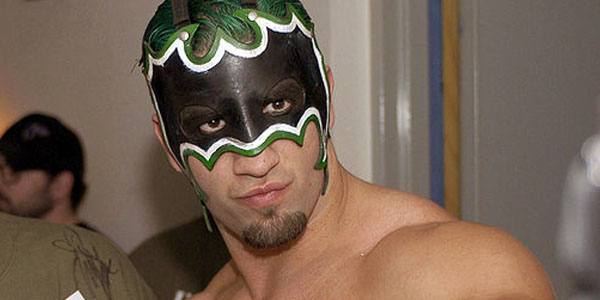
9. The Hurricane

Gregory Helms was a mainstay high flyer from the days of WCW's awe-inspiring cruiserweight division but when he jumped to WWE, he changed his act up a little. After the Invasion angle ended, he starting appearing on Smackdown under a new guise, that of the mighty superhero The Hurricane. Helms' total immersion into this ridiculous gimmick was what made it work and he found a way to incorporate his athleticism into a brilliant character that let him be both funny and make fun of how serious the rest of the roster was in comparison. A notable moment included his unlikely feud with The Rock in 2003. The Rock had returned from Hollywood as Hollywood Rock, an arrogant heel who thought that the WWE fans should treat a movie star like him better than everyone else - a mentality that The Hurricane had a problem with, positioning him as the underdog fan favourite in a feud that ran on Smackdown for a while. His promos weren't necessarily amazing in the traditional sense, but the thought put into the character allowed for him to stand out in backstage skit and segments and be a genuinely funny comedy character in an era full of more 'serious' stars.

8. "Big Evil" Undertaker

In May of 2000, The Undertaker returned to the WWE from injury with a new biker gimmick, seemingly much more human than before, and then following the conclusion of the Alliance storyline, he turned heel, cut his hair short and began to refer to himself as 'Big Evil.' During this heel run he became a lot more vocal than before and his intimidating method of belittling people on the microphone revealed a hereto unseen side of the Undertaker. The promos he cut took on the air of a big bully, a man that knew there were very few that could stand toe to toe with him. Not so much the unstoppable monster Undertaker we saw in the first few years of his career but one willing to cross personal boundaries in order to assert his dominance. The backstage skit where he beat the hell out of Ric Flair's son David is the perfect example of how his new attitude was perfectly suited to a heel character for the time period. He eventually goaded Ric into a Wrestlemania match in which he beat the hell out of him too and it was during this period that he got across the 'pure striker' aspect that remains with him to this day. The biker gimmick was reportedly done to give 'Taker the chance to speak more often and it was in this period that we saw that there was more to the Undertaker than his physicality and an awesome entrance.

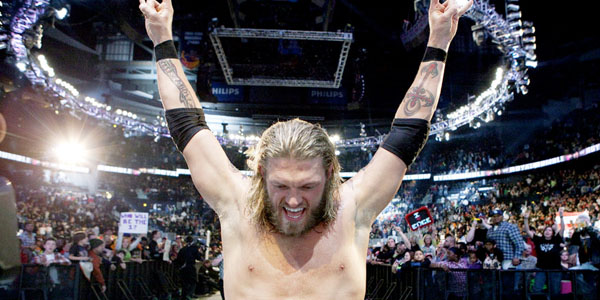
7. Edge

Edge's emergence from his lauded tag team career into a major solo star was one of the defining stories of this period. He and Christian were always one of the most thoroughly entertaining acts during the Attitude Era and he take part in the TLC matches that would raise the bar for future high spot type bouts. He truly came into his own in 2004 when he returned from injury with newer heel tendencies (following his previous run as a midcard face) and an unhealthy new obsession with the World Heavyweight Championship. He adopted the new moniker 'The Rated-R Superstar' and was involved with some of the edgiest (no pun intended) angles of that era. The most notorious of these is the art imitating life angle with himself, Matt Hardy and Lita, in which Edge stole Lita away from Hardy and Hardy went after him in revenge. The heat came from the fact that it had happened in real life just a few months before and Edge didn't hold back in rubbing Matt's face in it every time he got the opportunity to speak. On the other end of the spectrum, his heartbreaking goodbye speech which came from out of nowhere the night after Wrestlemania XXVII. He had discovered after several MRIs that his neck was damaged to the point where he could no longer compete. It stunned the crowd and Edge handled what must have been earth shattering news with a degree of grace you rarely see anywhere.

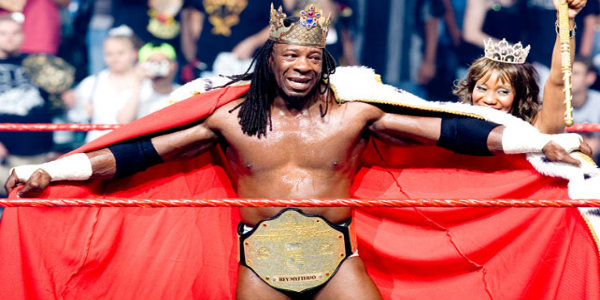
6. Booker T

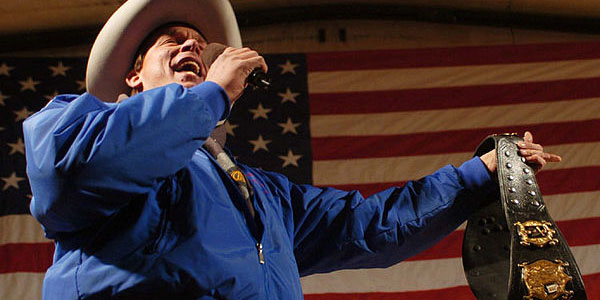
Booker is arguably the greatest African-American champion of all time and the biggest success story to come out of WCW long term. He came to the WWE in the midst of the Invasion angle and stayed in and around the main event scene until the end of his career. To say Booker was a wordsmith on the mic would be a stretch, but he certainly had his own inimitable style that left a lasting impression on all who heard it. There wasn't a fan alive at the time who didn't raise his hand in front of his face and shout "FIVE TIME, FIVE TIME, FIVE TIME!!!" along with him as he reminded everyone just how many world championships he had won. Later came the various character turns and gimmicks, such as King Booker (pictured above) after he won a King Of The Ring tournament and a face run against Triple H. During this feud, he displayed a more fiery face character that united the fan base in support of him like few could manage at the time, causing a lot of controversy when he lost the blow off match at Wrestlemania XIX. He's still around today as an on-screen personality and occasional commentator, which is definitely a role that suits his natural charismatic personality.

5. JBL

A roster mainstay throughout the Attitude Era as one half of the Acolytes with long time friend and wrestling legend Ron Simmons, JBL came into his own in 2004 when he took on a J.R. Ewing-esque heel character. Known as JBL, the character was based on his real life success on Wall Street and being a rich white arrogant Southerner in a time of serious austerity ensured that JBL was booed viciously from the outset. He was arguably the hottest heel of the era, going on to feud over the world title with crowd favorites John Cena and Eddie Guerrero. Whenever he picked up the mic, the crowd had a special brand of hatred reserved for him. This was none more evident than at the inaugural One Night Stand PPV in 2005, in which he stood on a balcony above the pro-ECW crowd as a symbol of everything they hated and proceeded to verbally abuse almost everyone there for the entirety of the show. Sharp as a razor, JBL always had a comeback when engaged in a verbal war with somebody and had the canny ability to say the exact thing that would draw the most ire from the crowd.

4. Raven

One of the most most under utilised talents of the time, Raven made his name in ECW as a dark manipulative heel character that he reportedly based on Patrick Swayze's Zen bank robber Bohdi from the film Point Break. He made his first appearance in the WWE in 2000 at the Unforgiven PPV. Raven was always an alluring character and he tried to bring as much of what made him popular in his ECW days to WWE television. He warred quite often over the Hardcore Title as suited his grungy street tough persona but he also came across with a type of twisted intelligence whenever he spoke that was rare among heels at the time. He engaged in several interesting storylines through his WWE tenure that had his distinctive psychology all over them, including the sadly aborted angle in which he turned Sunday Night Heat into his own playground and terrorized the other wrestlers on the show in pursuit of his 'masterpiece.' He left shortly after this angle was axed, mostly due to his unique ideas not being allowed free reign on WWE TV. A unique mind in the world of professional wrestling, his odd puppet master character would set the stage for characters like it in the future, most evidently guys like Bray Wyatt. It was just a shame we never got a longer stint with him with the WWE.

3. John Cena

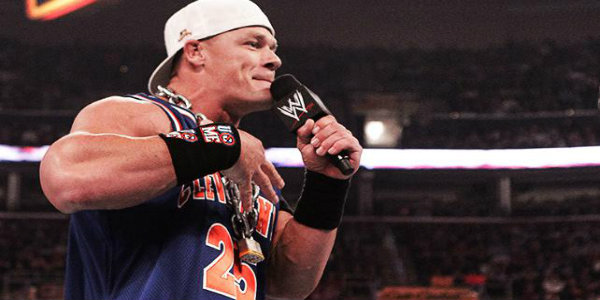
Before he became the polarising face of the WWE, Cena came up through the ranks as an outspoken heel with a white rapper gimmick. The story goes that Cena had been flopping as a vanilla babyface after a roaring start in his debut match against Kurt Angle. The company were about to axe him when Stephanie McMahon overheard him freestyle rapping on the tour bus and the Doctor Of Thugonomics was born. Berating his opponents with freestyle rhymes where he came across as an overblown cocky heel, Cena was arguably a lot more free, easy and creative on mic back then compared to nowadays. His constant rapping eventually got him over and made him the fastest rising star of the era, especially after the departure of Brock Lesnar. We all know the mega star Cena would go on to be and it could be argued that for better or worse, none of it would have happened without the Vanilla Ice-esque character that made him a household name.

2. Kurt Angle

He made his debut in the dying days of the Attitude Era as a cheeseball Olympic-centric heel character, putting an arrogant spin on the old forumla of 'saying your prayers and taking your vitamins' to draw massive heat. His character was then toughened up and played a little straighter during the Invasion angle and turned face. Coming out into the brand split, he was once again a heel but was now a little more vicious, playing up his amateur wrestling background a little more. All of his mic work at the time was both high quality and incredibly varied. As the WWE hero against the Alliance, he was very intense and convinced the crowd that he was the right man to lead the WWE following Stone Cold's betrayal. Later on, when teaming with the more serious Chris Benoit, he would flex his surprisingly considerable comedic muscle as the funny man of the team. We'd see this again later on when Kurt went one on one in constant rap battles with championship rival John Cena in some of the funniest segments of the era. https://www.youtube.com/watch?v=NsuDpKHzmrc Although he debuted in the Attitude Era, the era of Ruthless Aggression was when Kurt Angle became a more multi-faceted talent and made a lasting mark on the wrestling business.

1. Eddie Guerrero

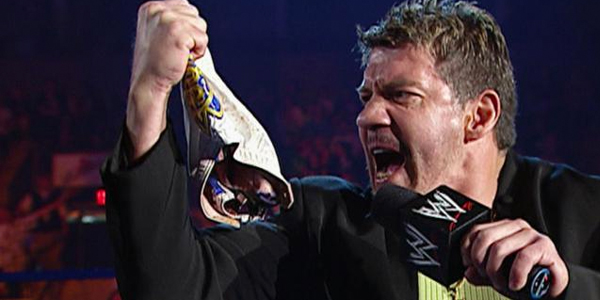
A lot of talent were on par with one another in this period of time, but there was one man who finally got his due after years of working in the business and it was his amazing psychology and character work that finally sealed the deal. Eddie was always counted as one of the elite in between the ropes, but it wasn't until spending the tail end of the Attitude Era in the midcard that he finally jumped up into title contention and it was his super charismatic character that got him there. The 'Lie, Cheat, Steal' gimmick was beloved by fans and made Eddie the top guy in the company for some time. With his admittance to using what would usually be heel antics sprinkled with a little Latino charm, Guerrero got over big time with the WWE fans who remained enthralled by Guerrero and hung on his every word every time he got a hold of the microphone. His feud with erstwhile villain JBL was one of the hottest feuds of the era and marked the moment where Eddie's character work and mic skills finally matched his incredible in-ring skill. Which Ruthless Aggression stars do you think should have made this list? Share your own picks below in the comments thread.

Contributor

Just a jolly ol' pop culture nerd living just outside London in England. I dabble in a little bit of everything but specialise in wrestling, gaming and comic books.