10 Incidents That Ultimately Made WWE's Success

Is the impact Shotgun Saturday Night had on WWE too often underplayed?
The blueprint for the success that carried the World Wrestling Federation from its "New Generation" doldrums to "Attitude Era" success and beyond involves numerous touchstones that for as much as they could be related to behind-the-scenes machinations, actually either were happy (or sad) in-ring accidents/tremendously executed in-ring moments that took these instances over the top and made them notable pieces of the folklore surrounding the very real evolution of the WWF from an also-ran competing with World Championship Wrestling to being a monolithic sports entertainment conglomerate. The reasons for WWE's success are as varied as Vince McMahon taking a more "hands on" role in the presentation of his product to the inclusion of grapplers never employed by the company (or without any pro wrestling background) taking on key roles that re-defined the pro wrestling industry. The players in WWE's ascension are a unique cadre of characters who, if you ever contemplated putting them together in a room, would appear to be as much of a "land of misfit toys" as Extreme Championship Wrestling could've ever been purported to have been. Are there more than ten incidents that "shaped success?" Of course. Are these the most significant ten of these hundreds of smaller moments that also benefited WWE's climb? Certainly. Click "next" below to kick off the slideshow;

10. Shawn Michaels "Loses His Smile" / Rocky Maivia Wins WWF Intercontinental Championship - February 13, 1997
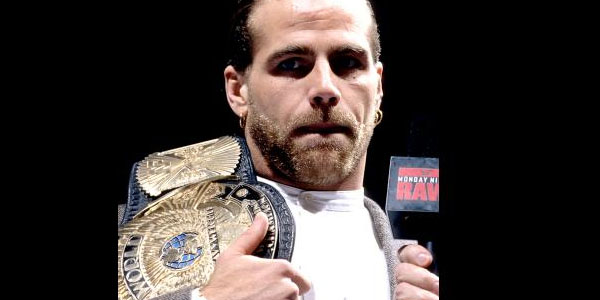
By 1997, Shawn Michaels' primadonna attitude and WWE's "Attitude direction were well-established. However, on February 13, 1997's special one-time edition of "Thursday Raw Thursday," Shawn Michaels vacated the WWF Championship, explaining to the crowd that due to a severe knee injury, he would possibly be forced to retire. Of course, politically, the "knee injury" was seen by top WWF Championship contender Bret Hart as a slap in the face as Michaels was slated to lose the WWF Championship to Hart at Wrestlemania 13. Saying that he was also taking time off to "find his smile again," Michaels quickly returned after seeing Dr. James Andrews for knee surgery. Of course, throughout the time that Michaels was away, Bret Hart cut promos on live television claiming that Michaels' injury was illegitimate. Of course, this heat led to the DX versus Hart Foundation feud, which saw angst between Hart and Michaels escalate to the point of Survivor Series '97's "Montreal Screwjob." Now, of course, had Michaels never "lost his smile" and done business with Bret Hart would a series of events been kicked off that led to the development of the "Mr. McMahon" character that caused a key swing in WWE's business. And, yes. If Rocky Maivia would've never defeated Hunter Hearst Helmsley on Thursday Raw Thursday, he never would've "sucked" he never would've truly been told to "die," and, yeah...we all know the rest. Know our damn roles, shut our damn mouths, make him millions of dollars richer and then go watch Hercules. Exactly.

9. "Owen 3:16 Says I Just Broke Your Neck" - August 3, 1997
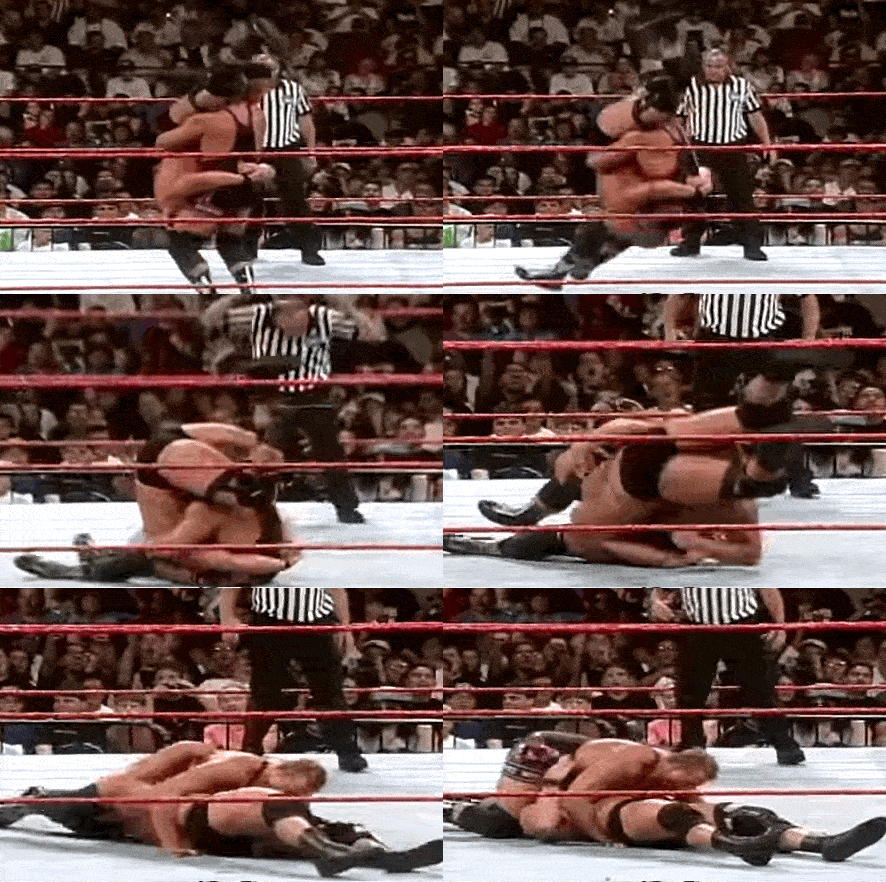
By Summerslam 1997, Owen Hart and "Stone Cold" Steve Austin were embroiled in a feud that was delivering both in promos and in the ring. The blowoff was a "Kiss My Ass" match at Summerslam, wherein if Austin lost, he'd have to kiss Hart's rear end. Of course, during the match, Hart went to give Austin a piledriver, and in a freak accident dropped Austin on his head and broke his neck. What this allowed for is for Austin to return and to tailor his in-ring style to involve much more promo time and significantly more brawling (in order to let the muscles around his neck heal without dealing with Austin taking too many bumps). Austin as a brawler is where Austin's popularity surged. Yes, Austin cutting promos was huge. However, Austin limiting his insistence on being a guy who had a motor and could take it to the limit bell-to-bell - and rather being a guy who could trade fists like anyone else in the crowd - significantly helped his appeal. In Austin's in-ring presentation evolving, he added yet another important tool in his arsenal that made him the ultra-believable babyface character that fans could believe in and wholeheartedly support.

8. "Intensity, Integrity, and Intelligence" - Kurt Angle Debuts In The WWF On November 14, 1999
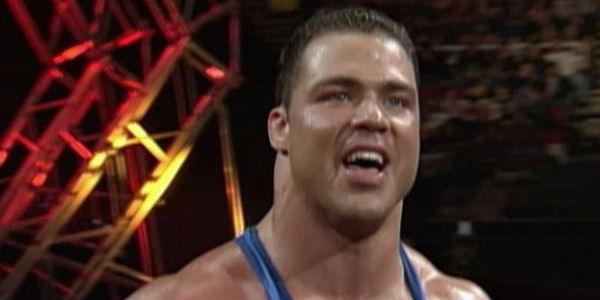
Kurt Angle is a once-in-a-lifetime pro wrestling success story. In October 1998, Angle was wrestling in Memphis, Tennessee's Power Pro Wrestling developmental territory. By February 2000, he was the holder of the European and Intercontinental Championships, and by October 2000, he was the WWF Champion. From being nowhere near the roster in 1998 to being the company's top performer in 2000, Kurt Angle's rise is a key piece in the WWF success puzzle. Angle added a main eventer with legitimate credibility to an already filled (yet possibly over-exposed) top of the roster. Angle was an Olympic-gold medalist with instantaneous gifts within the squared circle and beyond. From providing a romantic foil for Stephanie McMahon, to dousing the ring in milk, to playing a ukelele for Mr.McMahon - while also having bad-ass main event matches - Angle's ability to be a true master of all trades was invaluable to the WWF's ability to shape the continuation of their "Attitude Era" success.

7. The Radicalz Debut - January 31, 2000
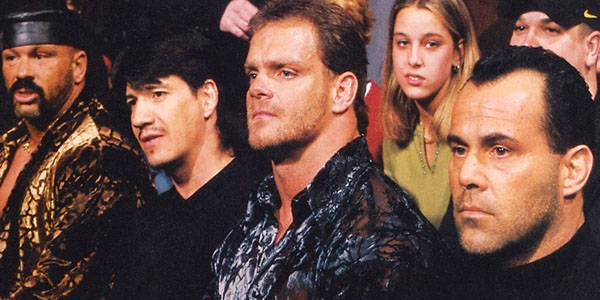
When Chris Benoit, Eddie Guerrero, Perry Saturn and Dean Malenko debuted in WWE in 2000, it was arguably the final nail in the coffin of the antiquated notion that "New York a 'big man' territory." For three decades, the WWF had promoted itself as being the place where tall, jacked up and/or tall and jacked up heavyweights were the norm on top of the card. Even when Bret Hart and Shawn Michaels were pushed on top, they wrestled larger competitors, but when the WCW foursome debuted (and Benoit and Guerrero excelled), it spurred a time wherein two smaller competitors could compete against each other in the main event with nary an eyebrow being raised. Benoit and Guererro debuted January 31, 2000. By Wrestlemania XX on March 14, 2004, the duo both held World Wrestling Entertainment Heavyweight Championships aloft amid a shower of confetti to end the event's broadcast.

6. Hulk Hogan Denies Steroid Use On The Arsenio Hall Show - July 16, 1991
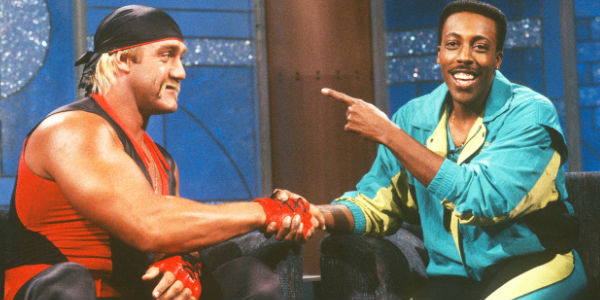
When as a guest on the Arsenio Hall Show in 1991, Hulk Hogan denied using steroids. Of course, four months after admitting that he had never used steroids, the WWF instituted an anti-steroid policy, and Hogan's WWF appearances were intermittent. By 1994, he admitted under oath in federal court that he had been using steroids since 1976, though they were never given to him by Vince McMahon. McMahon remained free, but Hogan left the WWF, and became WCW's centerpiece largely until the company's closure in 2001. Of course, without Hulk Hogan in the WWF, Vince McMahon eventually aggressively developed newer and younger talent, and eventually shed the cartoon image so heavily pushed during the Hogan era. Had Hogan never been shamed out of the WWF, then the space in which Bret Hart and Shawn Michaels became superstars would've never been created. As to how that trickles down to the likes of Shawn Michaels Wrestling Academy graduate Daniel Bryan? Well, that much is obvious. But for smaller, less obviously steroid-abusing wrestlers having a career in WWE at-present, there's a clear correlation.

5. WWW.WWF.COM - May 21, 1998

On May 21, 1998, WWE's Shane McMahon-led digital media department launched WWF.com. Now ticking in at 100 million-plus visitors a year, WWE's internet presence was largely spawned by the success of the website in advertising, marketing, branding (Stephanie McMahon is the head of corporate branding) and merchandising the global pro-wrestling conglomerate. Expanding from the success of the now WWE.com to getting active on Youtube, Twitter, Facebook, Tout, Vine, and numerous other social media avenues can be connected to the site as well. Now dominant in the mobile app space with both the WWE app and WWE mobile game "Supercard," too, all of these successes can be linked back to Shane McMahon's decision to take the company onto the world wide web.

4. Vince McMahon Takes The Stone Scold Stunner For The First Time - September 22, 1997
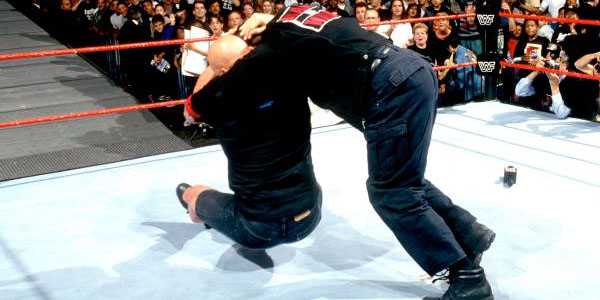
Until September 22,1997, we'd all known privately that Vince McMahon was the owner of the World Wrestling Federation. Though we were two months away from the "Montreal Screwjob," when the then-injured "Stone Cold" Steve Austin gave Vince McMahon the Stone Cold Stunner at Raw at Madison Square Garden, it was the first moment that left the crowd shocked and amazed that the company's owner was ideally wanting to be a bit more than just a bit player. Of course, very few fans knew of the WWF invasion of Memphis' USWA in 1993 (in which Vince McMahon played an eerily "Mr. McMahon"-esque heel), but seeing McMahon as more than a milquetoast announcer at this point definitely portended that more could happen with him as owner/on-screen character.

3. WWF Shotgun Saturday Night Debuts - January 4, 1997
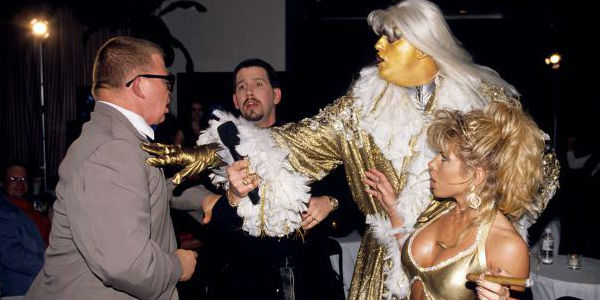
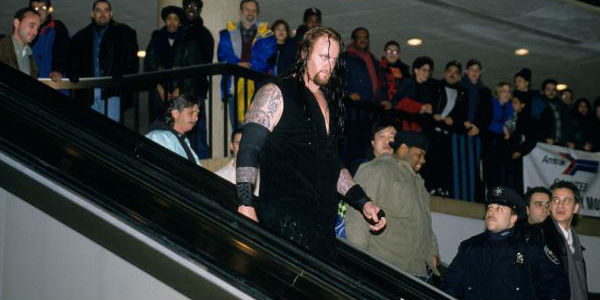
So, yeah. Ever wonder when the WWF initially went from a TV show that rarely had all-over-the building brawls, questionable moral content, strong sexual content and profane language on a regular basis came from? Well, look no further than "Shotgun Saturday Night." Initially started as a late-night TV program meant to rival Extreme Championship Wrestling's oftentimes late-night broadcast "Hardcore TV," the initial episode goes as far as having Terri "Marlena" Runnels fully expose her breasts to The Sultan, allowing Goldust to win a match. Featuring brawls in shopping malls, fights involving automobiles, and loose morality on display from commentators like Brian Pillman, the program was a harbinger to pretty much what happens every few segments on Raw - even in today's "TV-PG" era.

2. The Curtain Call - May 19, 1996

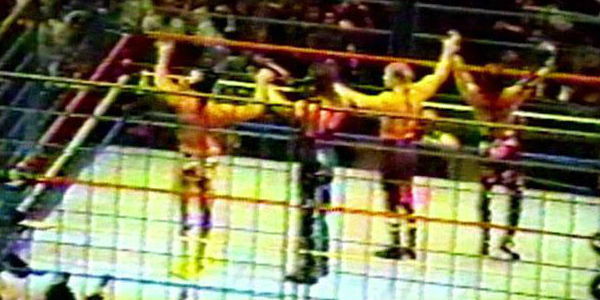
So, yeah. It's 1996, and WCW is ramping up to start really kicking the WWF's ass in the Monday Night Wars. They've just signed Diesel and Razor Ramon, and eight days from May 19th, Razor's going to debut using his government name as Scott Hall on WCW's Monday Nitro. Diesel's debuting two weeks later on June 10th as Kevin Nash (also his birth-given name). Thus, it only made sense that in the last time that Diesel and Razor Ramon are in a WWF ring (on May 19th), that their real-life friends Hunter Hearst Helmsley and Shawn Michaels would want to pay them tribute in some small way before they departed the company. Well, instead of buying them nice parting gifts and calling it a day, after their hard-fought cage match, Diesel and Michaels were joined by Razor and Hunter (who themselves had wrestled earlier in the evening) and the four hugged mid-ring. Yes, this is pro-wrestling and yes, that act certainly breaks every single idea of kayfabe ever. At that time, "The Kliq" (as the foursome that included at times the artists later known as Justin Credible and X-Pac) had heat on them behind the curtain for literally being a "clique" and ultimately pushing themselves up the card on the backs of each other (like this stellar 1994 Tag Team Championship match between champions Michaels and Diesel vs. challengers Razor Ramon and the 1-2-3 Kid, or say Shawn and Razor's ladder match at Wrestlemania X for the Intercontinental Championship, or any great number of Diesel versus Michaels matches for the WWF Championship). Thus, the idea of the four so obviously flouting rules of kayfabe was the final straw. Hunter Hearst Helmsley was of course punished and buried (no literally, in mud in a "hog pen match" with Henry Godwinn, or figuratively, at Wrestlemania 12 in getting squashed by the returning Ultimate Warrior). Once not-so buried, the re-christened "Triple H" joined with Shawn Michaels in Degeneration X and of course, lampooned the "Curtain Call," along with leading the adoption of the Attitude Era, and now, Triple H basically runs the entire damned company.

1. "I Didn't Screw Bret, Bret Screwed Bret." - November 17, 1997
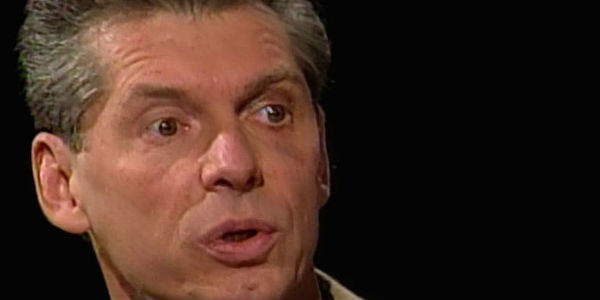
In order to facilitate Bret Hart not showing up on WCW Monday Nitro on November 10, 1997 with the WWF Heavyweight Championship, he orchestrated a "screwjob" finish at the 1997 Survivor Series Pay-Per-View on November 9, 1997 that involved (the rumored participation of) Shawn Michaels, referee Earl Hebner, and agents/bookers Jim Ross, Jim Cornette, Pat Patterson, Sgt. Slaughter and Gerald Brisco. Of course, in eight people "screwing" one Bret Hart, it would be obvious that Bret Hart certainly didn't "screw" himself in Montreal. Thus, when Vince McMahon got on camera with Jim Ross in a "shoot"-style interview and explained that "Bret screwed Bret," he immediately cast himself as the largest real-life and on-camera heel in the company's history. In a pro wrestling company where the company itself portrayed the largest heel, it added a dimension to the traditional pro wrestling storytelling mechanisms that had never existed before. Foremost, the owner was an active character, but unlike say, "Cowboy" Bill Watts, he wouldn't beat you with his body (which ex-WWF Champion McMahon has indeed, done) he could also beat you by literally "ringing the damn bell" as you were *gasp* locked in your own finishing hold. As dastardly a thing that has ever been done either in front of or behind the scenes, it shifted the storytelling paradigm in WWE in such a way that the company was able to use the advantage (along with terrific in-ring wrestling and a heaping dose of sex appeal) to win the Monday Night Wars

Contributor
Contributor

Besides having been an independent professional wrestling manager for a decade, Marcus Dowling is a Washington, DC-based writer who has contributed to a plethora of online and print magazines and newspapers writing about music and popular culture over the past 15 years.