10 Most Innovative WWE Superstars Of All Time

These guys were way ahead of their time.
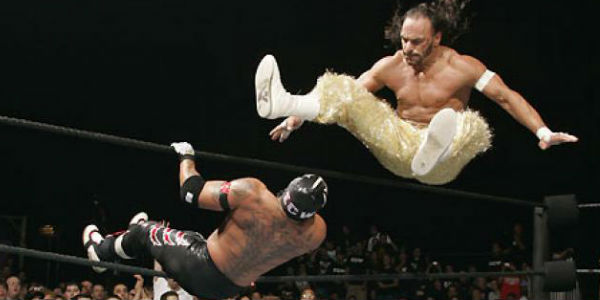
These days fans have seen everything. It takes something truly spectacular, like Adrian Neville's Red Arrow or the Wyatt Family's entrance, to make people say 'I haven't seen anything like that before'. But wrestling has always had its innovators. While you certainly have to be unique to be a professional wrestler for a living there are those who do things that are completely different from what came before them. The last twenty years, in particular, has seen its fair share of innovators. As the risk was increased and wrestlers, generally, started to have a higher athletic standard wrestlers constantly looked to find things that the crowd had never seen before. Oftentimes this would be a new move or sequence of moves but not always. Innovation also comes in the form of promos and character. Some wrestlers were so innovative that there innovations changed the business forever, their inventions becoming standard practice in wrestling. Others are so innovative that nobody could quite duplicate what they did. Wrestlers are still innovating today and always will: the audience demands it from them. Here we look at the top ten innovative WWE superstars of all time.

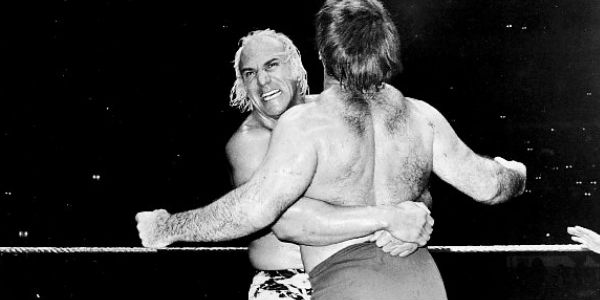
10. Superstar Billy Graham

The man billed from Paradise Valley, Arizona revolutionised the way that wrestlers looked, talked and acted. At his peak in the 1970s Billy Graham had the best physique in professional wrestling and was an award winning bodybuilder as well as training partner to Arnold Schwarzenegger. Graham was absolutely shredded and made other wrestlers, who were in good shape themselves, look bad in comparison. Graham has since admitted that this was the result of massive steroid abuse and is an outspoken critic of the performance enhancing drugs since suffering many nasty side effects since retiring in 1987. But Graham was not just a body. He also had a unique promo style for the time and often spoke in rhymes. Throw in tie-dye clothes and bleached blonde hair and Graham was bound to stand out. Other wrestlers took note, most notably Ric Flair, Hulk Hogan and Jesse Ventura. Not only that but Graham also introduced the term 'brother' to describe his fellow professional wrestlers which has since become part of the wrestling lexicon.

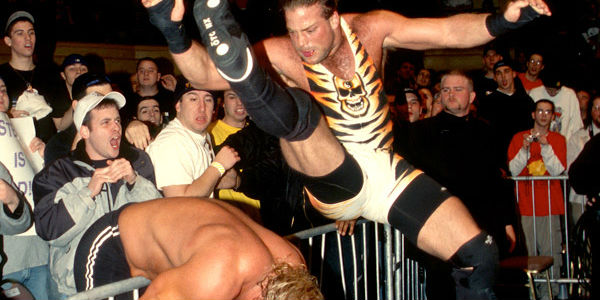
9. Rob Van Dam

Mr. Monday Night, Mr. Pay Per View, The Whole F'N Show. Rob Van Dam is a man with many nicknames, the majority of which he came up with himself. RVD has never been short on confidence. And why should he be? Van Dam is one of the most athletically gifted performers in wrestling history, a firm fan favourite and can still go in the ring. Honing his craft first in Japan and then in ECW during the 90s his style slowly changed and he added new, innovative moves to his already impressive repertoire. With Van Dam being in ECW many of these moves naturally involved chairs. The Van Daminator, where RVD would spinkick a chair into his opponents face to the delight of the crowd and the Van Terminator, which saw him springboard across the entire length of the ring and dropkick a chair into his prone opponent ensured that he got over strong with the Philadelphia faithful. RVD wasn't just about the moves and other innovations included his laid back, stoner attitude. He wouldn't give interviews saying he was going to kick everyone's ass, rather that the time was 4:20 (a reference to his marijuana habit) and that he was going to 'smoke their ass'. He was calm and collected, cocky but extremely talented. RVD backed up his boasts. His airbrushed singlets featuring dragons, skulls and yin-yangs were also unlike anything seen in wrestling.

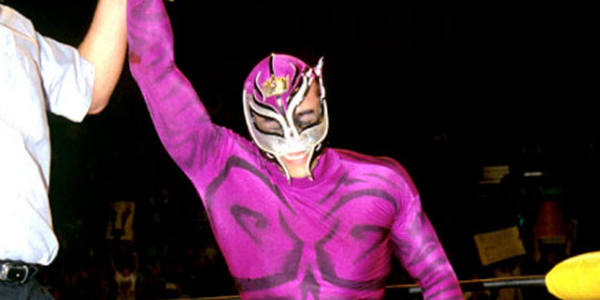
8. Rey Mysterio

When wrestling fans around the world first saw Rey Mysterio in the mid 90s he was like a breath of fresh air. Still the era of the big man in many respects, smaller wrestlers hardly stood a chance if they hoped to make a name for themselves on the big stage. There were a few exceptions, like The 1-2-3 Kid, but they were few and far between. Bigger was usually better, as far as promoters were concerned. There was a notable shift in attitude during the 90s as Eric Bischoff's WCW launched its cruiserweight division, plucking the best light heavyweight wrestlers from around the world. Eddie Guerrero, Chris Jericho and Dean Malenko were all mainstays in the division but Rey Mysterio is arguably the greatest cruiserweight wrestler in wrestling history. Rey was first exposed to American audiences via the When Worlds Collide pay-per-view in 1994, a co-promotion between Mexico's AAA and WCW. Msterio's performances caught the eye of Paul Heyman who brought in Rey as well as fellow luchadores and favourite opponents Psychosis and Juventud Guerrera to fill the void left by the departure of Guerrero, Malenko and Benoit. Rey followed the Radicalz to WCW in 1996 and wowed crowds with his devil may care style and revolutionary moves. Rey, who was carrying around a lot less muscle mass back then, move around the ring with the grace of a gazelle and could mix it up with heavyweights when called for. A master of the hurricanrana, Rey was undoubtedly innovative. In many ways, he still is: his 619 finisher is one of the most unique finishers wrestling has seen for quite some time.

7. Jushin Liger

Before Mysterio dazzled American audiences in WCW there was another masked man who similarly impressed with his style and work ethic. Jushin 'Thunder' Liger was a product of New Japan Pro Wrestling's notoriously hard dojo system. After graduating and then taking trips to America, Mexico and Britain to improve his craft he returned to New Japan as a star with a gimmick and costume patterned after a popular anime. Liger took a trip to WCW in 1992 and had a collection of classic matches with the late Brian Pillman. Featuring state-of-the-art wrestling and acrobatics, the WCW audience had never seen anything like it. Liger returned to WCW in the 90s and had further great matches with Ultimo Dragon, Dean Malenko and Rey Mysterio but spent the majority of his time in his homeland. Liger is also responsible for inventing many moves including the shooting star press. No, Billy Kidman did not invent that one. Nearly 50, Liger still wrestles in Japan and is as popular and innovative as ever. https://www.youtube.com/watch?v=MoQJSOij3rs

6. Sabu

Considering he was trained by his uncle, the legendary Original Sheik, it is no surprise that Sabu would be an innovator in wrestling. Initially trained in the basics and technical wrestling, Sabu left that behind and patterned himself after his uncle albeit with a few twists. It was in Frontier Martial Arts Wrestling in Japan in the early 90s that Sabu would perfect the moves that made him a star later in ECW. In FMW Sabu regularly teamed with his uncle and chaos usually ensued scarring his body along the way. Barb wire death matches were the norm, you see. Sabu brought his ECW in 93 and made an immediate impression on the bloodthirsty audience. Some of Sabu's innovations include his chair-assisted offence, his refusal to talk or do promos and, significantly, his table breaking. Although not the first to put his opponent through the wood, Sabu definitely popularised it. Many times after a match he would moonsault himself through a table just to put over how crazy he was. Sabu's stint in WWECW in 2006 proved that he was just as crazy and innovative as ever.

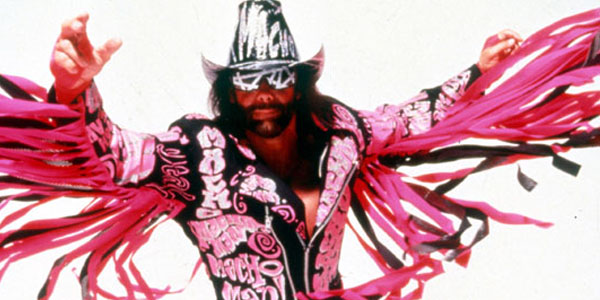
5. Macho Man Randy Savage

Oooooooooooh yeah! Macho Man Randy Savage was a mega star in the 1980s thanks to his totally over-the-top personality and innovative ring style. Other wrestlers, who were used to relying on stalling, restholds and other shortcuts to get through matches could only sit back and marvel at the timing, speed and execution of the Macho Man. Fans watched in awe as Savage flew through the air and delivered his patented elbow drop. Savage also had an innovative interview style and character, as well as some truly outrageous ring gear. He was the total package. As macho as you thought you were, you would never be as macho as Savage in his prime. A hall of fame induction is surely forthcoming. Nobody deserves it more.

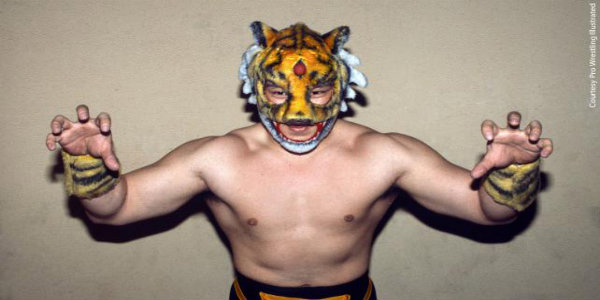
4. The Original Tiger Mask

Real name Satoru Sayama, the original Tiger Mask is one of the greatest and most innovative wrestlers of all time. Sent to England and then Mexico to gain experience and fill out physically, Sayama returned to New Japan Pro Wrestling in 1981. He was given the gimmick of Tiger Mask after a popular anime in order to attract a new, youthful audience to the promotion. Many traditional fans and wrestlers scoffed at the idea of a wrestling anime character but Sayama proved them all wrong in his star-making debut against frequent opponent The Dynamite Kid. The wrestling that the audience saw that night was lightyears ahead of its time. Moreover the execution and speed of their sequences was breathtaking. Fans embraced Tiger Mask and he became the star of New Japan's Junior Heavyweight division, often performing in main events as the heavyweights couldn't follow him. Tiger and Dynamite brought their spectacle to Madison Square Garden for the WWF in 1982 and stole the show again. Sayama briefly retired while still on top in NJPW and released a book where he exposed professional wrestling to Japanese audiences and even had a spell in MMA. In his prime he was in a league of his own.

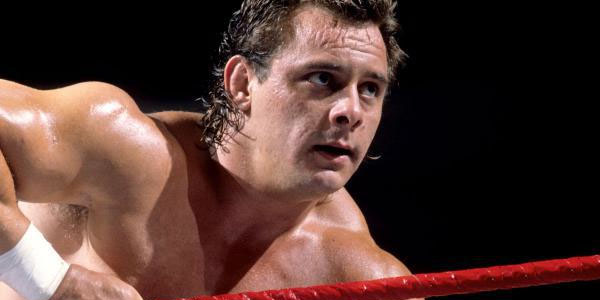
3. The Dynamite Kid

Well, maybe there was another man in the same league as Tiger Mask. Tommy Billington, alias The Dynamite Kid, was another innovator. Decades before they came as standard, Dynamite was delivering high impact suplexes, dives and other daredevil manoeuvres. In the ring he was no nonsense and had only one speed: full speed. Dynamite didn't slow down for anyone and if you couldn't keep up, too bad. Although he was a lot smaller than the majority of wrestlers at the time, Dynamite knew how to handle himself outside of the ring thanks to his years training with British hard men Ted Betley and Billy Robinson. There were many times when other wrestlers tried to mess with Dynamite and paid for it. Dynamite, who could be an incredibly mean figure, was not to be messed with. Dynamite is now confined to a wheelchair and does not have the use of his legs thanks to his reckless style. In his autobiography Pure Dynamite he expressed no regrets over his wrestling career and says he wouldn't change a single thing. He opened up a lot of doors for future generations of smaller wrestlers and without him wrestling wouldn't be what it is today.

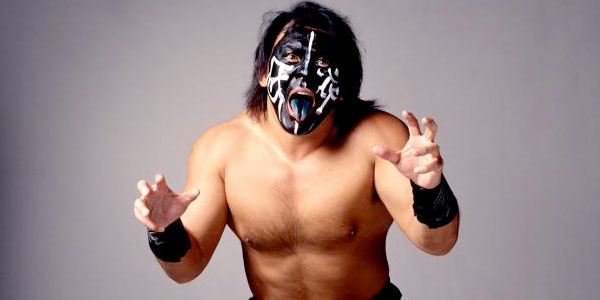
2. The Great Muta

Keiji Mutoh's alter-ego is a true renaissance man. He has reinvented himself many times over during his thirty year career, innovating along the way. As The Great Muta, Mutoh wrestled for WCW in 1989-90 and captured the imagination of the American audience. Moving with grace that belied a man of his size, Muta performed handsprings, dives and his spectacular moonsault finisher. Muta would also use the dreaded green mist and would attack referees. Muta got so over that he went from the opening match to the main event and feuds with Sting, Ric Flair and Lex Luger. Muto has said that wrestling is more to do with what you do with your brain and not so much to do with what you do with your body. As part of this philosophy and due to countless injuries, Muto had to tone down considerably by the late 90s. He reinvented himself with a new style and look in the early 2000s and is still performing on top in Japan today. Mutoh's longevity is a testament to his innovation and ability to change with the times.

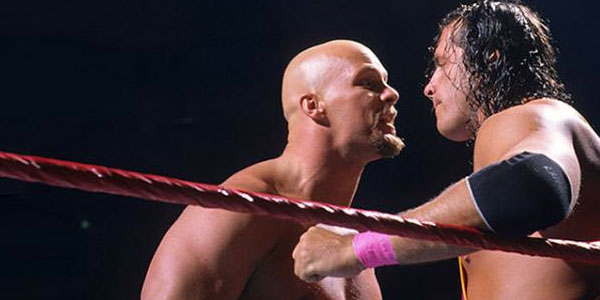
1. Stone Cold Steve Austin

While he didn't invent the shooting star press or do his promos in rhyme, The Texas Rattlesnake is as innovative as anyone on this list. In WCW Stone Cold was a workhorse, a technician, a mechanic. A great wrestler, sure, but he was missing something. After being fired by WCW he went to ECW for a short stint in 1995 and vented his frustrations in a series of memorable promos. Austin believed he could be a star and when he signed with the WWF later that year things looked bright. Then he was saddled with the lame Ring Master gimmick and crowds didn't react. Something had to change. Changing his name to Stone Cold Steve Austin and adding the Stone Cold Stunner to his game, Austin developed an attitude. By doing and saying whatever he wanted Austin, a heel, began to be cheered by a sizeable portion of the audience. He turned face in his classic match with Bret Hart at Wrestlemania XII and never looked back. The anti-hero was in and the traditional play by the rules, say your prayers and eat your vitamins babyface was definitely out. Austin realised that and he went on to change the business, doing record numbers for the WWF. After suffering some painful neck injuries he adopted and then popularised a brawling style that was different from anything else at that time in wrestling. Austin was an innovator and his innovations changed the business forever.

Contributor
Contributor

Student of film. Former professional wrestler. Supporter of Newcastle United. Don't cry for me, I'm already dead...