10 Major Flaws With WWE's Current Booking Methods
WWE have all the puzzle's pieces, but no idea how to put them together.

WWE are in an odd place at the moment.
The company is generating more revenue than ever before and their position atop the market is unassailable - but profit margins, TV ratings, and interest levels are down. They're healthy, and not in any immediate danger, but still vastly underperforming.
The bulk of these problems arise from the product itself. WWE might have one of the most talented rosters they've ever assembled, but this certainly isn't reflected in their recorded output, and the promotions's TV shows and pay-per-views continually fail to live up to the standards fans rightly expect from such a phenomenal group of performers.
This isn't the wrestlers' fault, but the company's. WWE's booking mechanisms are utterly broken. Their autocratic control over every minute detail has created a sterilised environment with little suspense or drama, in which storylines are rarely resolved satisfactorily, almost everything feels like a retread, and the creation of major new stars is borderline impossible.
It's a massive shame, because while there's still plenty of enjoyment to be had from the current product, the company could be doing so much better in this department...
10. Win One, Lose One
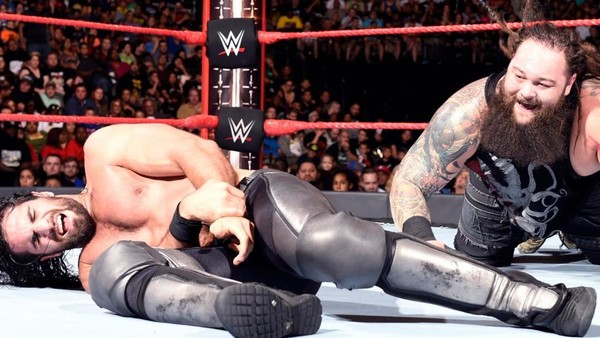
Ask the average WWE fan what they think the biggest factor contributing towards the company's inability to create new stars is and there's a strong chance they'll say "50/50 booking."
They'd be right.
There's no such thing as momentum in WWE anymore. Long, winning runs are almost completely unheard of, because whenever a wrestler scores a big victory, they're inevitably struck by a loss a week or two later, rendering the win pointless. This leaves them with no chance of pushing forward, and little hope of ever becoming a genuine star.
Strong, dominant pushes work, and we need only look at Braun Strowman's success to prove this. Sure, not everyone is suitable for this type of monster push, but WWE could definitely stand to benefit from booking wrestlers on lengthy winning runs more often, rather than curbing their progress in Bray Wyatt-esque fashion.
In trying to push everyone at once, WWE have succeeded in pushing nobody at all. They've created an environment where no one truly stands out, and everyone feels roughly on the same level. Unfortunately, Triple H's bullish, defensive response to the criticism suggest that this destructive pattern will continue long after Vince McMahon's leadership comes to an end.
9. Lowly Midcard Champions
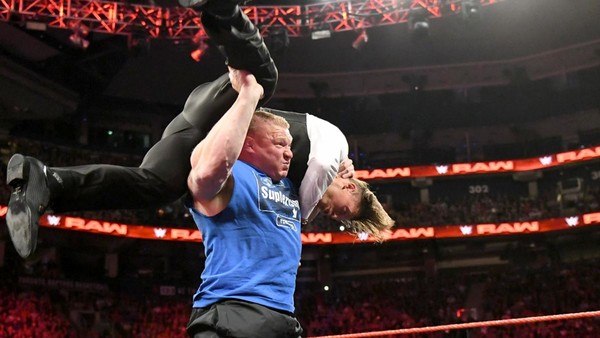
WWE have been booking their midcard champions like dirt for years. There are occasional periods where the United States and Intercontinental Titles are treated with the respect they deserve (John Cena's 2015 US Championship run, for one), but these periods inevitably pass, and WWE revert to type. Midcard champions too often play jobbers to the stars, and this must come to an end if their roles are ever going to mean something again.
The latest example came on this week's Raw, when Universal Champion Brock Lesnar not only obliterated The Miz, but his whole entourage. The IC Champ's sharpness on the microphone means he should quickly recover this lost heat, but that's not the point: he was treated like a stepping stone for another wrestler's benefit, when, as a champion, he should be booked stronger than anyone outside Universal Title contendership.
Holding these belts has become a curse for most wrestlers. They may win their championship fights, but they'll regularly take falls in non-title and tag matches. They're often among the weakest booked wrestlers in the company, and for performers of The Miz's calibre, that's not good enough.
8. Too Many Cooks
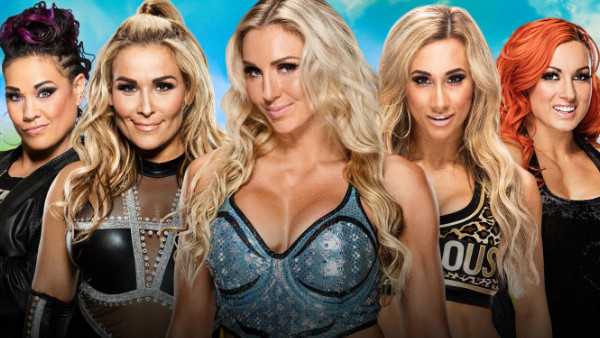
If it feels like WWE television is being gradually taken over by multi-person matches, it's because it is. WWE have greatly increased their number of cluster bouts this year, and while some will argue that this represents an efficient use of their massive talent roster, it has had a detrimental impact on most wrestlers.
It's impossible to stand out when you're sharing the spotlight with so many others. Multi-person matches aren't an inherently bad thing, and they're particularly useful when deciding title contendership, but WWE have gone to the well far too many times. There's not enough airtime to give everyone a cohesive singles match or rivalry, of course, but when you have wrestlers bounce from one listless multi-person situation to another, they're never going to differentiate themselves, and never going to get over.
SmackDown's women's division provides the clearest evidence of this booking technique's failings, but it's prevalent throughout the company. Sometimes it works (the current Raw main event scene), but it often doesn't, and in relying on this technique so heavily, WWE have left themselves with two rosters crammed with directionless, character-less workers who rarely get a chance to shine on their own.
7. Recreating Daniel Bryan

Daniel Bryan was WWE's last major babyface success story, but his triumphs came in spite of the company's actions, not because of them. The Yes! Movement was spawned from the promotion's perceived mistreatment of the crowd's favourite underdog. Several years of burials and mis-bookings created an immense groundswell of support, and the night Bryan finally smashed through these barriers at WrestleMania XXX created one of the most euphoric moments the sport has ever seen.
WWE recognise this, and have since tried to recreate it with a number of other wrestlers. They appear to think that if they book their babyfaces in losing positions for months on end, it'll create a similar situation to The Yes! Movement, and in the end, they'll have created they rightful air to Bryan's throne.
This isn't working. Such an organic success story can't be replicated in a creative meeting, and by constantly booking similar characters like Sami Zayn and Bayley to lose, they've only succeeded in making them look out of their depth. They're diminishing these performers' popularity, not enhancing it, and have worn out two potentially valuable babyface commodities as a result.
6. Superman Babyfaces
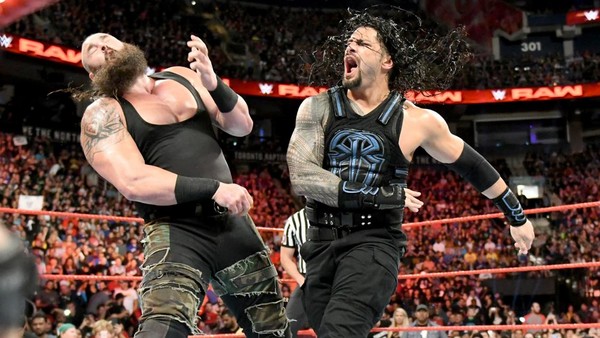
As if the damage done to Bayley and Sami Zayn isn't evidence enough, the way WWE book Roman Reigns proves that they have no idea what they're doing with the good guys anymore.
Reigns is the latest in a long line of Superman babyfaces. Like John Cena and Hulk Hogan before him, he is Raw's untouchable demigod, and while he loses a lot more often than either of his predecessors, he rarely does so without a convenient excuse, or without immediately getting his heat back.
Roman lost to Braun Strowman on this week's Raw, but it came through Samoa Joe's interference. When he fell to 'The Monster Among Men' at Great Balls Of Fire, he literally tried to murder him afterwards. Reigns "lost" Extreme Rules' five-way main event, but he didn't take the fall, and he dominated the match up to that point. The list goes on.
The push has split WWE's audience down the middle. It's working for the younger fans, but he's easily the company's most despised performer among the older age groups, and WWE have shown no sign of plotting a different course. He's their guy, and they're going to push him this way regardless of how you feel about it.
5. Giving Huge Matches Away

John Cena vs. Shinsuke Nakamura was a strong match, and one of the best SmackDown main events in recent memory, but it could've been so much more.
This was supposed to be a dream match. Cena and Nakamura had spent their entire careers working on opposite sides of the globe until last year, and having been kept apart for so long, their first collision should've been huge. If they were given 20-25 minutes to do their thing on a pay-per-view, perhaps it would've been, but while clearly very good, their SmackDown bout still felt like a letdown.
Like AJ Styles vs. Randy Orton earlier in the year, Cena vs. Nakamura could easily have occupied a prominent spot on any major PPV, but was given away on free television. It was a huge, huge waste, but the kind of thing that will naturally arise through the company's current episodic TV format.
Regardless, WWE must start doing a better job of saving these matches for the year's biggest shows. Giving them away provides fans with little incentive to subscribe to the Network, and while there's nothing wrong with throwing a major match on Raw or SmackDown every now and then, it happens way too frequently.
4. Exhausting Their Stipulations
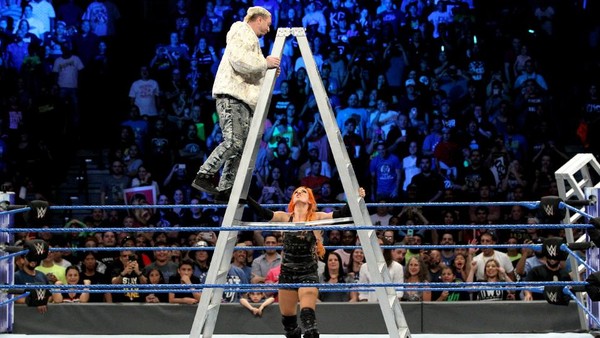
Gimmick matches used to be a valuable booking tool. When two wrestlers were locked inside Hell In A Cell, it was because they were engaged in the kind of rivalry that couldn't be settled with a simple pinfall. Their mutual hatred had escalated to a level that demanded a stipulation, and the gimmicks' relatively sparing use maintained their special feeling.
This is no longer the case. It feels like every second or third WWE PPV is packaged with a specific stipulation these days, and even the ones that aren't usually feature a couple of gimmick matches. Over-saturation has killed their appeal. They've become the norm, the fans are desensitised to them, and until WWE start exercising restraint again, they'll remain meaningless.
WWE are the kings of taking a good thing and running it into the ground. Hell In A Cell used to feel legitimately dangerous, but when you present the stipulation three times in the same evening (as WWE did with last year's PPV), and film it through a PG lens, the appeal is dead. They still produce decent bouts from time to time, but it's hard to think of a match type that WWE haven't ground to dust over the past few years.
3. Not Preserving Superstar Auras

Ask yourselves how many WWE wrestlers feel like genuine megastars in 2017. If you're objective, you'll come up with a short list. Brock Lesnar and John Cena sit atop the pile, but neither man is around all year, which creates a huge void of star-power during their downtime.
You could make an argument for AJ Styles as well, but outside this group, you're left with the likes of Seth Rollins, Kevin Owens, and Randy Orton: great performers in their own ways, but far from the titans WWE would like them to be.
Lesnar and Cena's superstar auras were cultivated years ago, while Styles' was built in other promotions. Failing to create and preserve this kind of allure is a huge problem for WWE in 2017, and while he's extremely popular, nobody embodies this more than Shinsuke Nakamura, whose own aura has been decimated on the main roster.
It's impossible to see 'The King Of Strong Style' as special when he's going 50/50 with Dolph Ziggler or engaging in pointless SmackDown tag matches. He has quickly become just another face in the crowd, and in failing to show restraint with his appearances, cannibalising his moveset, and forcing him to conform to sports entertainment tropes that don't suit him, WWE aren't just letting Nakamura down, but themselves too.
2. Lame Introductions

First impression are a big deal, and from Chris Jericho to Kane, countless wrestlers have launched successful careers on the back of an incredible debut. When WWE absolutely nail a wrestler's introduction, they're all but guaranteeing their first few months with the company will be a success - but these situations are becoming increasingly rare.
American Alpha were a white hot act coming out of NXT, but they died on SmackDown. Jason Jordan and Chad Gable made a lame debut after the 2016 draft, and were rarely given the opportunity to prove their worth, even when they held the brand's Tag Team Titles. Main roster audiences had absolutely no reason to care about them, and they failed to get over as a result.
The same goes for Tye Dillinger, Apollo Crews, and countless others. Not all of these wrestlers were destined to become headliners, but what's the point in bringing them up if you're not going to do anything with them? By introducing these performers so coldly, WWE aren't just leaving them with a bad first impression to overcome, but effectively saying they don't have any faith in their ability to get over from day one.
1. Unwarranted Title Reigns

Winning a championship used to feel like a huge moment, and signify the victor's status as one of the best in the business. This is no longer the case in WWE, where title belts are often nothing more than worthless trinkets, having had their value gradually chipped away by years of questionable booking.
There are a number of sides to this, with the biggest being WWE's habit of passing their belts to wrestlers who don't feel like they've warranted a reign from a kayfabe standpoint.
Current WWE Champion Jinder Mahal is the obvious example, but there are plenty of others. Bray Wyatt's big Elimination Chamber win felt like a jarring fluke, given his atrocious pay-per-view win/loss record. Goldberg's Universal Title victory came on the back of a losing Royal Rumble performance. Randy Orton's last WWE Title run presented 'The Viper' in his most lethargic state.
Championship runs used to be reserved for the company's hottest, most exciting acts, but this is no longer the case. WWE don't assign reigns based on merit anymore. It increasingly feels like the company are drawing names from a hat these days, and until WWE sharpen up the way the belts are booked, they'll continue to feel like fashion accessories, not prizes.