10 Most Beloved ECW Wrestlers Of All Time

ECW! ECW! ECW!

In eight years, Extreme Championship Wrestling created a cult-like following based not so much on great in-ring action as on presenting captivating entertainers who engendered love and respect from pro wrestling fans worldwide. The key to ECW winning over its fanbase was in perpetuating an atmosphere wherein wins and losses maybe didn't matter as much as creating a "love-in" environment for violence, mayhem and aggression. The promotion itself was always the winner, and its best loved combatants could be wrestlers who didn't look like wrestlers, almost never won matches, legitimately damaged themselves (or one another) or did things in a wrestling ring that in any other (non-wrestling) situation could easily be deemed as punishable by imprisonment. For as much as wrestlers like "Full Blooded Italian" JT Smith, Terry Funk or The Public Enemy could be on this list, they're not. This list prides itself on having a group of wrestlers with significant longevity in the promotion. As well, for as much as wrestlers like Raven could be on this list too, he was a heel (and a damned fine heel at that), so he wasn't exactly beloved. This is a list largely comprised of wrestlers who were either babyfaces, cheered by the crowd (with one obvious exception) or fondly remembered overall. Thus, by stated criteria, here are the 10 most beloved ECW wrestlers of all time.

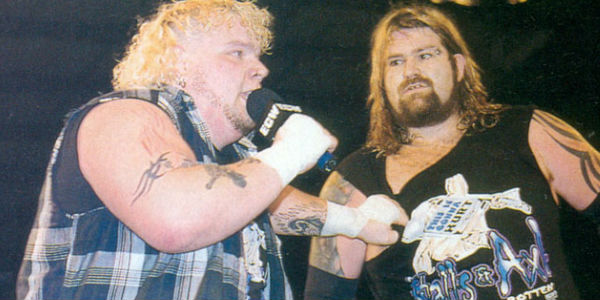
10. Axl Rotten/Balls Mahoney

Both tipping the scales at well over 300 pounds, Axl Rotten and Balls Mahoney had a decade of territorial wrestling experience, runs in major promotions (Rotten in WCW, Mahoney in the WWF as "Xanta Claus") and a surprising level of technical wrestling acumen that belied their slovenly, battered appearances. As solo wrestlers, Rotten's "Taipei Death Matches" with kayfabe brother Ian involved the wrestlers using taped fists dipped in shards of glass, and immediately made Rotten as a niche-style hardcore grappler. Mahoney entered ECW in 1997, and became a star for bashing people over the head with uniquely decorated steel chairs. Once Rotten got with the program of bringing chairs to the ring, too, the "Hardcore Chair Swinging Freaks" were born and in a promotion filled with a plethora of unique niche acts, was easily one of the most beloved of those acts. Looking like two hard-nosed (yet surprisingly amiable) guys from the wrong side of the tracks, their unique presentation along with the ability to credibly wrestle Lance Storm and Chris Candido or brawl with the Dudleys (and see fire be involved) or Da Baldies allowed the tandem to always be entertaining. However, due to injuries when the team was due to content for the ECW Tag Team Championships, Balls' three runs with the titles were split between Masato Tanaka and Spike Dudley.

9. Mikey Whipwreck

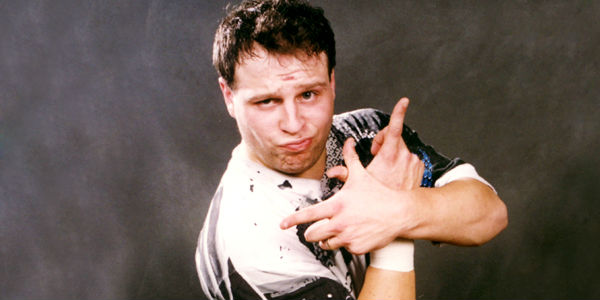
Take a skinny kid on your promotion's ring crew, have him wrestle in t-shirts adorned with dragons and jean shorts for gear, and watch him as an underdog become the promotion's most unlikely "Triple Crown" champion (Heavyweight, Tag Team and Television championships). In his ECW career, Mikey defeated 2 Cold Scorpio and Steve Austin, and won the tag team championships with Cactus Jack. Between May 1994-May 1996, when the promotion also featured the likes of Rey Mysterio, Psicosis, Konnan, Dean Malenko, Eddie Guerrero, Chris Jericho and many more later legends, it was Whipwreck who was the main event performer. With less than two years of significant ring-time, Whipwreck was certainly less-than-polished, but it was in his lack of acumen by comparison to the likes of so many others in the ECW that made him a unique attraction. Returning to ECW after a one-year sojourn to WCW in 1998, he returned and reinvented himself as the mentally unhinged Mikey Whipwreck who was managed by James "The Sinister Minister" Mitchell, and teamed with then Japanese sensation Yoshihiro Tajiri. At the end of ECW, Whipwreck and Tajiri's matches versus the likes of the Full Blooded Italians (Little Guido Maritato and Tony Mamaluke) were some of the world's most innovative tag matches for that era.

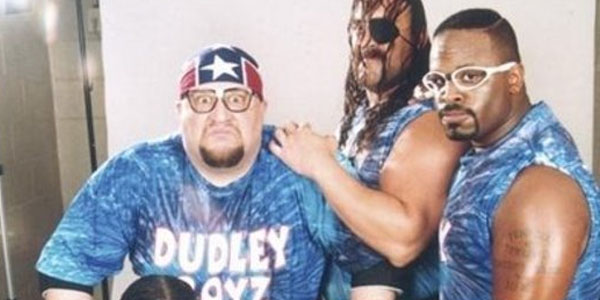
8. The Dudleys

So, the story goes like this. Papa Dudley was a travelling salesman who sired young in every single are he visited with a plethora of different women. At some point, this misfit family of redneck siblings in tie dye and overalls gathered in Extreme Championship Wrestling, and proceeded to dominate at every single spot on the card. As well, each member of the family evolved. From being a silly dancing and stuttering oaf with a black (and very religious) half-brother to being a foul-mouthed and diabolically evil perennial tag-team championship pair, D-Von and Bubba Ray Dudley were loved to be hated by the ECW faithful. As far as "runt of the litter" Spike, he debuted as the babyface Dudley in 1997, and Little Spike Dudley (aka "LSD") moved up the card from being launched into the crowd by Bam Bam Bigelow to being a two-time Tag Team champion with Balls Mahoney. As far as being beloved? Ask any ECW fan to run down a list of their most despicable family moments, and the smile that will cross said fan's face will say everything that puts them on this list.

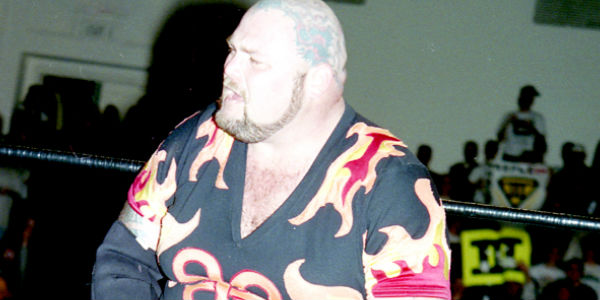
7. Bam Bam Bigelow

Given the fact that he was "discovered" in 1985 by Paul Heyman, "The Beast From The East" may be the truest "ECW original" there is. Debuting in ECW in 1996, Bigelow's pre-ECW career allowed him to enter the promotion as possibly the biggest mainstream star the company had regularly seen in its midst to that date. Bigelow's two WWF runs involved working with Hulk Hogan, Andre the Giant and Lawrence Taylor, while in the NWA he wrestled Barry Windham, and in New Japan wrestled Antonio Inoki and teamed with Big Van Vader. Thus, when making his first substantial run in ECW by 1997, he was a polished pro wrestling superstar in every sense of the word. Upon entering ECW, Bam Bam Bigelow hurled Spike Dudley into the crowd, fell backwards while locked in the Tazmission and plunged through the ring with him on his back. He also joined the Triple Threat with Shane Douglas and Chris Candido, and by October 1997 became the ECW World Heavyweight Champion. Memorable matches with Shane Douglas, Lance Storm, The Sandman and Rob Van Dam defined his run, and made him one of the promotions most popular wrestlers by the time he left for World Championship Wrestling in 1998.

6. Taz

The Path of Rage. The Human Suplex Machine. The Most Miserable Man on the Planet. The FTW Heavyweight Champion. An ECW Triple Crown Champion. The only man to wear the ECW World Heavyweight Championship inside of a World Wrestling Federation ring. This is also the same man who started in Extreme Championship Wrestling as the Tasmaniac. Taz? Certainly not the Tasmaniac, and in blending a street-tough urban attitude with a heaping blend of mixed martial arts, judo and excellence at executing wrestling suplexes, was easily one of not just ECW's - but pro wrestling's - most beloved wrestlers during his time in Paul Heyman's promotion. Appearing to be unbeatable was only a piece of Taz's mystique. As well, there was his UFC-style training squad "Team Taz" that accompanied him to ringside, as well as whistle-blowing manager Bill Alphonso, and the ability to deliver in "money" scenarios including wrestling Sabu at ECW's first Pay-Per-View Barely Legal, his 1998 "FTW" Title introducing feud with Shane Douglas, and yes, while as a contracted WWF performer, defeating Mike Awesome for the ECW Championship in 2000.

5. New Jack

There's thought in some circles that Jerome Young may not have ever been completely trained to be a professional wrestler. However, as New Jack, Young was certainly charismatic, and in knowing more than a little bit about creating an engaging on-screen presentation (and always wrestling to the strains of Ice Cube and Dr. Dre's "Natural Born Killaz"), achieved more success and infamy in six years in ECW than most wrestlers could hope to do in the lifetime of a one or two-decade ring career. In 1996, he achieved infamy as during a match with 17-year old untrained wrestler Eric "Mass Transit" Kulas, as in said match, Jack bladed Kulas and he bled profusely. "Fan cam" footage of the event circulated worldwide and just as ECW was preparing for pay-per-view, the wrestler announced as having committed three "justifiable homicides" created a situation that put the promotion's pay-per-view clearance in jeopardy. As well, Jack's the originator of diving from very high places onto tables, as his balcony dives from 1998 onward were the stuff of awe-inspiring fandom. Furthermore, in the year 2000, while wrestling VIc Grimes of Da Baldies, he and Grimes fell from a scaffold and the injuries Jack sustained left him blind and brain damaged. Of course, only in ECW does this allow the fans to love you even more.

4. The Sandman

the sandman James Fullington smoked cigarettes, drank beer, wrestled while intoxicated, hit people with "Singapore canes," sometimes took ten minutes to get to the ring as Metallica's "Enter Sandman" played on a loop, and once drank beer from Missy Hyatt's breasts. Yeah, he's pretty much a made man in the annals of ECW just based on that sentence alone. However, when Sandman became the ECW World Heavyweight Champion in 1995, that pretty much cemented the idea that Extreme Championship Wrestling was "extremely" different than any other pro wrestling promotion in the world to that point. Sandman's less than adequate wrestling skills, use of weapons as much as punches, kicks and maneuvers, as well as his "never say die" persona made him a performer with whom blue collar wrestling fans could strongly identify. From caning his wife Lori, to feuding with Raven (and his entire family), Steve Austin and having a memorable feud with Rhino in the promotion's final year, he was a key ECW contributor.

3. Tommy Dreamer
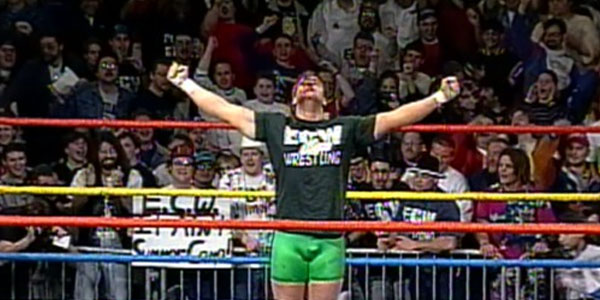
The "Innovator of Violence" started off in ECW as well, basically Paul Roma, a smiling babyface enhancement talent-type with muscles and suspenders. Somewhere along the way to being arguably the most beloved ECW wrestler with the worst win/loss percentage, he kissed two women at the same time, engaged in a captivating feud with Raven (and Beulah McGillicutty), made stars of many mid-card talents including the likes of Justin Credible and C.W. Anderson, and also aided in booking the promotion, too. In ECW being a wrestling company where the curtain was lifted, fans were aware that Dreamer always wearing ECW apparel wasn't a babyface appeal for sympathy, but rather, it was the truth. The blood he shed in the ring felt like the lifeblood of the promotion. In many ways, every table that Dreamer went through, every chairshot he took and every time he was busted open and bled was him winning his own ECW World Heavyweight Championship. ECW's tragic hero, he was certainly "hardcore" and deserves his perpetually beloved status in the eyes of ECW's forever faithful fans.

2. Sabu

Ex-Ring of Honor (and current Evolve and Dragon Gate) booker Gabe Sapolsky was once the head of the Sabu Fan Club. The "Homicidal, Suicidal and Genocidal Maniac" was also storyline introduced to the promotion by Paul E. Dangerously, and was an ECW "Triple Crown" champion. He accomplished all of this without speaking a word. However, though he did not speak, his actions were so gruesome that the level of pain to which he exposed his body allowed him to become a cult icon in ECW, a living legend of sorts. In 1995 versus Terry Funk at Born To Be Wired, it was in a no-ropes barbed wire match that Sabu tore open his bicep with a ten-inch gash that he attempted to fix with his own wrist tape. The match of course ended with Sabu and Funk needing to be dis-entangled from the barbed wire with wire cutters in a display so brutal it was never replicated by the promotion. As well, the level of perceived shoot enmity between Taz and Sabu was one of the selling points of the promotions inaugural pay-per-view, Barely Legal. As an in-ring talent, his groundbreaking high-flying style was paired with that of fellow The Sheik trainee Rob Van Dam for an entertaining tag-team duo managed by Bill Alphonso, as well as a memorable series of matches with the likes of Tommy Dreamer and The Sandman, too. Oftentimes more of an attraction than a wrestler engaged in feuds, he certainly was a top draw and deserving of placement on this list.

1. Rob Van Dam

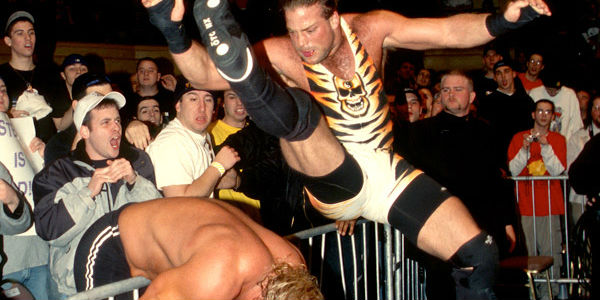
By the year 2000, it was an easily arguable point that Rob Van Dam was ECW's "Whole F'n Show." His matches with Jerry Lynn were pay-per-view main event quality, and his marijuana-loving lifestyle allowed him to become iconic in pop culture's underground. If ECW needed a poster child for what its values were, Van Dam was ideal. Though not exactly a wrestler known for being a great grappler by a traditional definition of the concept, Van Dam could most assuredly leap from one turnbuckle horizontally across a ring and dropkick an object into a man's face. He could also jump absurdly high into the air and deliver a frog splash, use his legs as a springboard off the top rope to complete a moonsault, spin kick a chair into a man's face and do somersault planchas far into the crowd. The coolest cat in the kennel, Van Dam's persona of being just a little too baked-seeming to execute these maneuvers worked for ECW's fanbase. "RVD 4:20 says I just smoked your ass?" Kitschy. Pointing at yourself as the fans scream your initials? Corny as hell. Shrugging your shoulders in the face of fear? Bizarre. However, for RVD it worked, and moreso than any other wrestler, when Rob Van Dam joined the WWF during the "Invasion," it was him (alongside Booker T) who zoomed up the card to the main event based solely on the perception of being a wrestler from another promotion who absolutely could hang with WWF main event talent. The most beloved ECW wrestler of all time? From a standpoint of in-ring matches, unique charisma and instantaneous recognition from those not-so familiar with the promotion in its heyday as being a major league star? Certainly.

In this post: 
ECW Sabu
 
Posted On: 
Contributor
Contributor

Besides having been an independent professional wrestling manager for a decade, Marcus Dowling is a Washington, DC-based writer who has contributed to a plethora of online and print magazines and newspapers writing about music and popular culture over the past 15 years.