10 Reasons Why WWE Fans Should Be Watching New Japan Pro Wrestling
It's more easily accessible than you might think.
 Ever since WCW and ECW closed their doors in 2001, fans of North American pro wrestling have been clamoring for an alternative to WWE. Sure, WWE's product can be great sometimes, but it's often not, and either way, that's what we've got. Yes, there's TNA, but for most of its existence, the company's been offering a WWE-lite style product (either in terms of booking or in terms of the talent it hires) and let's face it if you've given TNA a chance, you were probably even more desperate for an alternative afterwards. The good news is, there's a great alternative to WWE, and in recent years it's become ultra-accessible. New Japan Pro Wrestling, the Land of the Rising Sun's biggest grappling company for decades, has risen from the ashes of the early 2000s puroresu bust to become the best wrestling promotion in the world. With iPPVs available online (NJPW's contract with provider Ustream is coming to an end, but a new deal is expected to be made), anyone with internet access can watch the shows and follow the action. You don't need to take my word so easily, though here are 10 reasons why New Japan is worth checking out.
10. The Atmosphere
https://www.youtube.com/watch?v=T1XxgRB8R3c Japanese wrestling is seen as more serious than mainstream U.S.-based wrestling, and thats not an inaccurate statement but it also doesnt mean that its completely without pomp and ceremony. It was Japanese fans, after all, who invented the practice of throwing streamers at wrestlers during their introductions to show respect and appreciation. Entrances are often elaborate and fantastical, like this one from February, in which Kazuchika Okada made his way to the ring alongside a dinosaur. Everything has a time and place, and that certainly beats spending 20 minutes of Raw exploring an under-the-ring society of little people. The fans are also different in Japan. Theres nothing wrong with western wrestling fans at a lot of WWE shows, theyre the most entertaining part of the proceedings. The difference is, Japanese fans are used to wrestling being treated as a sport, and they react as such. Typically, babyfaces are cheered and heels are booed, but respectfully, and chants are more earnest than ironic, done out of support for favorites rather than the desire to entertain oneself. Its not better or worse than in WWE, just an interesting contrast worth exploring.9. The Next Big Thing
8. The G1 Climax
7. Strong Style
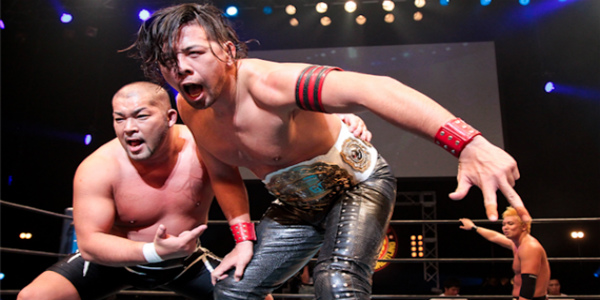 For years, many of the wrestlers in New Japan have utilized a fighting technique known as Strong Style a martial arts-influenced discipline that relies on hard strikes and legitimate submission holds. Popularized by bad dudes like Akira Maeda and Riki Choshu, Strong Style matches tend to look a bit more "real" than their more traditional counterparts. The Strong Style continues today. Obsessed with MMA, former New Japan Chairman Antonio Inoki hired shootfighters to compete for New Japan, and in turn, sent many wrestlers into the realm of legitimate fighting. Unfortunately, this often turned out poorly for many of the wrestlers, and may have inadvertently caused MMA to boom in Japan at the expense of pro wrestling. Nevertheless, in today's New Japan, there are plenty of wrestlers with shootfighting experience (Shinsuke Nakamura, Katsuyori Shibata, and Minoru Suzuki, to name a few), and they incorporate the skills they've learned into their pro wrestling styles. While Strong Style wrestling isn't for everyone, the wrestlers who practice it make for an interesting juxtaposition with the rest, adding another element of uniqueness to New Japan.
6. A Western Influence
5. The Junior Heavyweights
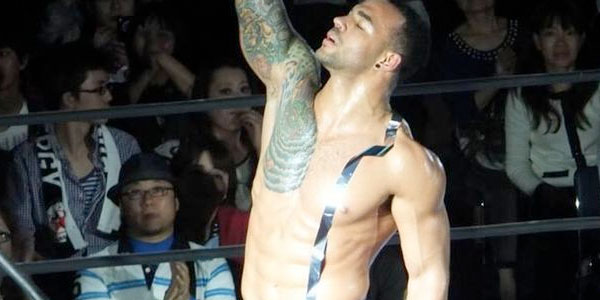
4. Familiar Faces
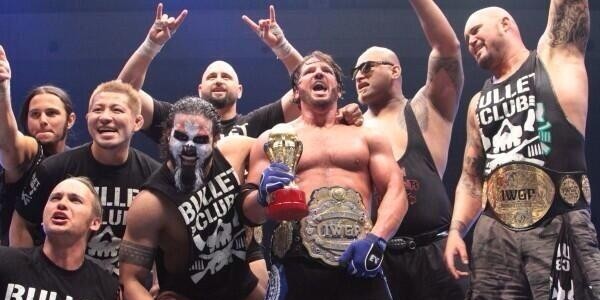 While the majority of New Japan's top talent is native to the country, there has always been a western presence in the organization. In the past, stars such as Vader, the Steiner Brothers, and of course, Hulk Hogan have competed for the company, often showing a different, rougher side to their personalities or in-ring styles. NJPW founder Antonio Inoki sought out foreign talent (in the 1990s, the company worked extensively with WCW) and had a reputation for treating gaijin superstars welll. Though Inoki no longer runs New Japan, the tradition of American, Canadian, and European grapplers in the organization continues. New Japan's top heel stable, Bullet Club, is comprised almost exclusively of westerners, including The Young Bucks (Matt and Nick Jackson), Doc (Luke) Gallows, the current reigning IWGP Heavyweight Champion, "The Phenomenal" AJ Styles, and their newest member, Jeff Jarrett. Bullet Club isn't the only place for gaijin, though former WWE stars Shelton Benjamin, Davey Boy (DH) Smith, Jr., and Lance (Vance) Archer fill in the ranks of Suzuki's invading Suzuki-gun stable (along with WWE alum Taka Michinoku). Ultra-talented ROH/TNA veteran Alex Shelley is a fixture of the Junior division as well, and currently one half of the Junior Heavyweight Tag Team Champions. Looks like you can tell the players without a program.
3. Wins And Losses Matter
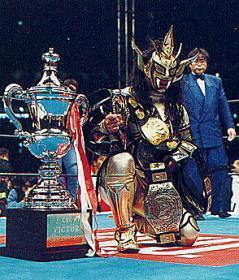 A common criticism of WWE today is that the outcomes of actual matches aren't treated as particularly important. Whether it's John Cena smiling and joking after big losses, Daniel Bryan being told not to sell his shoulder after a hard-fought WrestleMania victory, or wrestlers losing matches and then getting title shots, it's clear that what happens in the ring is secondary to what happens outside of it. After all, it's not a sport it's storytelling. Outcomes in New Japan are no less predetermined than in WWE, but they're treated as more important as such, the booking makes more sense as a whole. Champions rarely drop falls, and when they do, it's usually cause for a title match. Titles are defended less frequently, and so the matches (and the championships) themselves seem more important. The aforementioned tournaments also hammer home how important winning and losing are. Everybody wants to win the G1 or the New Japan Cup and receive a shot at the IWGP Heavyweight Championship, but a good showing also goes a long way. Additionally, in the round-robin tournaments, even wrestlers who ultimately fail can raise their stocks with victories over reigning champions or hated rivals. It is a sport, after all.
2. Hiroshi Tanahashi
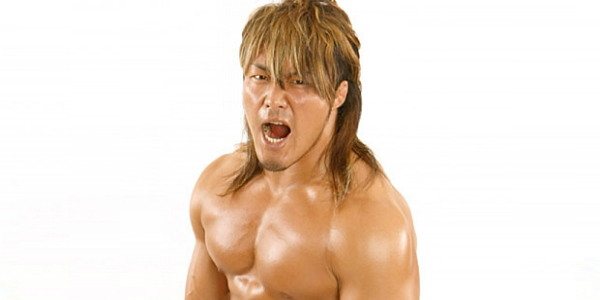 In most of the microcosms of pro wrestling, there's usually an "ace" to whom you can point someone who does every single little aspect of the sport so well, that it's impossible not to become a fan of his, even if you're only a casual viewer. In WWE, it's Daniel Bryan not only is he a phenomenal talent in the ring, but he's also great at playing his role, no matter what it is. Just as any fan could become emotionally involved in his journey to the main event of WrestleMania, we could all laugh heartily when Bryan angrily asked a confused psychiatrist if Charlie Sheen put him up to showing him a picture of a goat. In New Japan, the ace is Hiroshi Tananashi, known as the "Once in a Century Talent." It's not a misnomer Tanahashi is widely considered the best wrestler in the world (yes, including Bryan) and one of three men to win the Wrestling Observer's "Wrestler of the Year" award three consecutive times. He was a first-ballot inductee into the WO Hall of Fame last year, and he continues to wow audiences with his performances, showing no signs of resting on his laurels. His feud with younger star Kazuchika Okada was seen as a passing of the torch of sorts, paving the way for a new generation of talent, but Tanahashi is still the most popular grappler in the company and another IWGP Heavyweight Title reign seems likely. And while he's never had to yell at a muppet like Bryan has, Tanahashi's got a charisma to his performance and body language that makes him riveting, just like any true master of the sport.
1. The Matches
 In the end, it all comes down to one thing if the action doesn't deliver in the ring, then there's nothing that can save a wrestling promotion. The ring, though, just happens to be where New Japan Pro Wrestling truly excels. Though Japan was the place to be for classic action in the 1990s, most of the best stuff (excluding joshi, Japanese female wrestling) was coming from competitor All Japan Pro Wrestling. "The Four Corners of Heaven" as Mitsuharu Misawa, Kenta Kobashi, Toshiaki Kawada, and Akira Taue were collectively called became superstars and the darlings of tape traders on this side of the Pacific. Twenty years later, though, it's New Japan who rules the roost, worldwide. In addition to aforementioned prodigies like Tanahashi and Ibushi, New Japan cards are filled with action from former IWGP Heavyweight Champions like Okada and Nakamura, up-and-comers like Tomohiro Ishii (whom Meltzer has praised as the best worker of 2014) and Tetsuya Naito, and "outsiders" like Suzuki and Styles. Many of the ex-WWE wrestlers in the company, like Smith, Archer, and Gallows, have added new depth to their performances and honed their skills in an environment where wrestling is king. No matter what the matches are, New Japan's cards are always full of must-see action, and no one regrets spending money on the product.