10 Most Ridiculous Lawsuits In Wrestling

If the law is an ass, then these people have mooned all of us.

Frivolous lawsuits are ten a penny these days, people practically queuing up to litigate against one another for the most spurious reasons: like the California city that sued the manufacturers of a taser when one of their police officers drew her gun instead of her taser and shot a suspect to death; or the convict who sued himself for 5 million dollars, claiming that in committing a crime that he was imprisoned for, he€™d violated his own civil liberties. Often the motivations behind the silliest lawsuits you€™ve ever heard of are the real story, though €“ just as in pro wrestling, sometimes the story behind an angle is sometimes more interesting than the angle itself. So it€™s always fascinating reading when people who engage in a worked business, playing different, outrageously exaggerated versions of themselves and blurring the line between reality and fiction for a living, are forced to engage in the ultimate version of a shoot and agree to tell the truth, the whole truth and nothing but the truth. There€™s also a fine line between fantasy and delusion, as you€™ll see from some of these examples of the most ridiculous lawsuits in wrestling.

10. A Lack Of Testicular Fortitude

In June 2011, an independent wrestler in Indiana by the name of John Levi Miller, wrestling as €˜J-Millz€™, appeared on a local card run by the Coliseum Championship Wrestling promotion against one Guido Andretti, a wrestler chiefly known for wrestling in OVW for a few years towards the tail end of the Attitude Era (he and his tag team partner reached career highs when they were beaten in handicap matches by the Big Show in late 2000 and Dave Batista in early 2001). One of the stars of the second season of a low-rent €˜Bachelorette€™ style reality show called Love Games, J-Millz had left the series in the fifth episode to concentrate on his actual relationship with his real life girlfriend. His appearance on the show as a local celebrity of sorts got enough interest, however, that CCW invited him to appear on their card on the same week as the season finale. In February 2012, Miller would sue Andretti €“ real name, Clinton Woosley €“ CCW and the alleged promoter, Sam Cosby, for an unspecified amount, after doctors were forced to remove a ruptured testicle. He claimed that heel Andretti, scheduled to lose to him that night, had gone into business for himself and kicked him hard between the legs in an effort to actually win the match. Miller elaborated, saying that Woosley had told him beforehand that he understood the finish, but that mapping out the match itself wasn€™t necessary. CCW and Cosby were accused of not ensuring that the veteran wrestler had been trained sufficiently. Cosby countered that Andretti and J-Millz actually finished the match with the agreed finish, the babyface going over, and that Miller hadn€™t mentioned anything to him at the time about being hurt. We have to admit, we€™re confused €“ if the match went as planned and finished as planned, in what way did Andretti go into business for himself? It€™s fairly common for old school guys to call a match in the ring, too, and for the heel to lead €“ something Miller should have known, especially given that he and Woosley had already worked together in Ohio Valley Wrestling eighteen months or so prior to the match in question. Sounds to us like a simple case of the veteran choosing to stiff the young, good-looking reality television star to make sure he knew his place, and things going wrong. Still, we€™re pleased that J-Millz wasn€™t permanently affected by his injury €“ he and his wife (he married the girlfriend) celebrated the birth of their daughter last month.

9. TNA Sues WWE For Telling Them About A Mole
On May 23rd 2012, TNA Entertainment, LLC, sued a former employee, Brian Wittenstein, and World Wrestling Entertainment, Inc, for the use of confidential information in gaining a competitive advantage. Translation: they claimed that Wittenstein had told WWE all about certain contractual information about their roster, which WWE had then used to attempt to poach TNA€™s talent. This would be a major news story and a potential source of legitimate scandal €“ were it not for the fact that TNA only knew about the leak to begin with because WWE had fired Wittenstein and informed them of his betrayal of their trade secrets. TNA€™s point, if point you can call it, was that WWE had the information for three weeks before choosing to play the honourable babyface card, and during that time used it to try to grab Ric Flair, who had suspiciously asked for his release around that time, and was suspected of intending to return to WWE. First of all, let€™s just clear this up: if TNA had someone of the stature of Ric Flair on their roster, it€™s because he couldn€™t work for WWE at that point, for whatever reason. Angle only signed with TNA because WWE fired him. Hogan only worked for TNA for so long to prove a point to Vince McMahon after a disagreement over his value to WWE in 2006. Flair only signed with TNA in January 2010 after WWE hadn€™t returned his calls for six months. Secondly €“ suing someone over a legal issue that they€™ve specifically called to your attention and already resolved for you is what we refer to in the trade as a jerk move. TNA would withdraw the lawsuit eight months after filing it, without prejudice and with the option of refiling at a later date. Yeah, that showed €˜em.

8. Botched A Move And Broken Your Leg? Sue The Company!
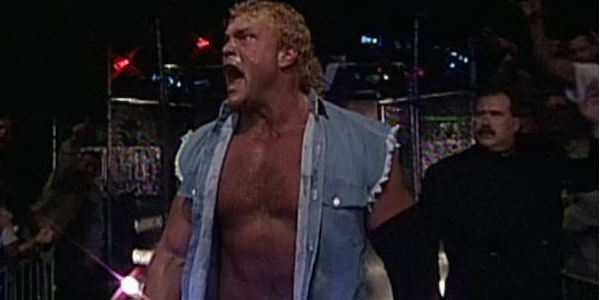
Everyone€™s seen the clip by now from Sin in January 2001, where Sid Eudy, wrestling for WCW as Sid Vicious but known as Sid Justice and Sycho Sid in the WWF, botched a jumping big boot from the second turnbuckle and snapped his left leg completely in half, breaking two bones, one of which ripped through his skin. The botch all but ended his career, the last and worst of the instances of terrible timing that would prevent Eudy from ever grabbing the genuine main event status that he probably deserved. When WWF purchased WCW€™s assets later in the year, Eudy€™s ongoing contract wasn€™t one of the ones snatched up, and his downside pay was continually reduced €“ a normal move in WCW when a wrestler wasn€™t able to work. Of course, Eudy couldn€™t work anyway: he had nowhere to return to even if he was physically able. He was released from his contract in June 2001 by WCW€™s successor UWC, a shell corporation devoted to dealing with liabilities and lawsuits. In retaliation, Eudy€™s lawyers filed suit against UWC, its parent companies, and the road agent that convinced him (against his better judgement) to perform a move he had no business attempting: one John Laurinaitis, who had just been hired by WWF. He sued for breach of contract, breach of fiduciary duty, negligence, negligent infliction of emotional distress, tortuous interference with contractual relations, attorney fees, and unjust enrichment, claiming that he was coerced into performing the move. The wheels of litigation moving exceedingly slowly (and expensively), it was nearly four years later that Eudy€™s case would finally be thrown out for good upon appeal... as well it should, given that WCW€™s contract with him specifically allowed them to do what they did, and in fact entitled them to terminate his contract earlier than they did. His only argument was that, as he felt that WCW€™s own actions had led to his injury, contract law allowed him to be excused from not being able to fulfill his end: WCW coerced him into delivering the kick that ended his career, so WCW should have kept paying him in full. That wasn€™t an argument the court was ever going to accept. WCW€™s contract was airtight. He also tried to claim that WCW airing the footage of his broken leg amounted to them unjustly enriching themselves (no: his contract gave them ownership of the tape of his match, regardless of what happened in it), and that their cashing in an insurance policy on him also amounted to unjust enrichment (no: the policy was specifically to reimburse them for some of the payments they€™d already made to him when he couldn€™t earn money for them). We€™re not sure who was representing Eudy, but he should probably have powerbombed them.

7. WWF Sues WCW Over Losing Hall and Nash
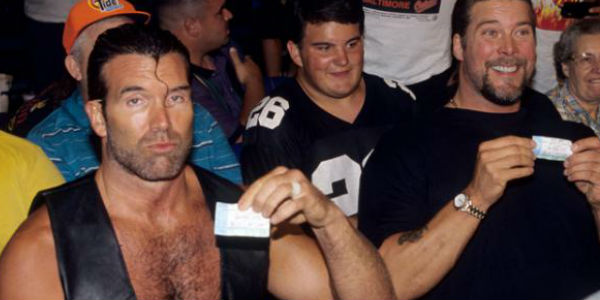
The WWF didn€™t take kindly to having Scott €˜Razor Ramon€™ Hall and Kevin €˜Diesel€™ Nash leave for WCW in May 1996. In one of the pettiest display of sour grapes that we€™ve ever heard of, the company sued WCW€™s owners for various breaches of copyright, claiming that Hall and Nash were appearing as versions of the same characters they€™d played on WWF programming, which were created, developed and owned by WWF €“ although both men were performing for WCW under their own names. Their case was given a certain legitimacy by the fact that Hall and Nash both initially appeared on WCW programming as invaders to the promotion: although they were contracted to WCW, the storyline had them presented as arriving from WWF to disrupt WCW. All parties made sure not to mention the WWF by name, but the implication was deliberate, and in turn the WCW audience was encouraged to infer from their allegedly outlaw interferences in the show that they were still working for WWF €“ which carried the further implication that they were playing the same characters. This is what happens when worked shoots go bad, essentially. WWF would continue to assert in litigation throughout the entire Monday Night War, that the nucleus of the NWO, Scott Hall and Kevin Nash, were in fact playing Razor Ramon and Diesel under different names. The case was settled in 2000, presumably because WWF had won the war, and there was no need to nitpick over the matter any more. We don€™t even want to think about how much all of this pointless catfighting cost both companies over that four year period.

6. WCW Sues WWF For Mocking Them

In what was referred to as a €˜mirror image€™ lawsuit arising from WWF€™s lawsuit against them over Hall and Nash, WCW filed suit against WWF in May 1998 alleging multiple instances of engaging in unfair business practices designed to confuse the consumer €“ the wrestling fans they were competing over. If you€™re not sure what that actually means, we€™ll break it down for you: as part of the Monday Night War, WWF and WCW would regularly forcibly remove the urine from each other, sarcastically namechecking their competitor€™s promotion, television show and characters and even airing skits further acting as liquid waste extraction devices, like the €˜Billionaire Ted€™ segments, D-X€™s invasion of Nitro, the fake Diesel and Razor Ramon characters, etc etc. Basically, WCW sued WWF for taking the piss out of them on television. Not only was the WCW lawsuit equally as pointless as the WWF€™s own lawsuit of two years earlier, which was still ongoing, but it deliberately aped the structure and style of the previous suit. Opinions vary as to whether the WCW litigation was a legitimate legal tactic to prove to the court in the WWF case that WWF weren€™t practicing what they preached, or just Eric Bischoff€™s way of going €˜nyah nyah, I got your nose, I got your nose€ to Vince McMahon.

5. Jerry Lawler Sues WWF Over Harley Race

In May 1987, Memphis wrestling legend and future WWE Hall Of Famer Jerry €˜The King€™ Lawler filed a lawsuit against the WWF for trademark infringement. Lawler had been known as €˜The King€™ since 1974, when he defeated his mentor Jackie Fargo for the NWA Southern Heavyweight Championship €“ it€™s an abbreviation of €˜King Of Wrestling€™, but there€™s an obvious callback to Elvis Presley (the other King in Memphis) there too which has allowed Lawler to retain the nickname/title for forty years. In 1986, Harley Race had won the second King Of The Ring tournament in WWF. The company was running a policy of avoiding mention of any other wrestling promotions in its gradual national expansion, and had hit on the tournament as a way of presenting Race€™s impressive pro wrestling pedigree without actually mentioning his accomplishments. When WWF began to promote a show in Memphis, Lawler€™s home territory, as featuring €˜The King€™, Lawler decided to take a stand: he felt that he had sufficient standing with the local wrestling audience that this was a transparent attempt to muddle his fans into thinking that he was appearing for the WWF, a promotion he€™d never worked for at that point and that, in Tennessee, he was directly competing with. This seems absolutely fair enough to us, and it only really qualifies as a ridiculous lawsuit because, incredibly €“ Lawler won, when every other local promoter was falling by the wayside. The WWF was prevented from running Harley Race with his €˜King€™ gimmick when touring through Lawler€™s territory. Lawler himself is convinced that his gumption in standing up to McMahon was a big factor in his being hired several years later by the WWF, and in his longevity with the company since then: Vince likes people with a set as big as his, essentially. They€™d also parlay the real life litigation into a series of storyline feuds when Lawler arrived in WWF, with Bret Hart€™s King Of The Ring coronation ceremony being hijacked by the real King in 1993, leading to a two year feud between Lawler and the Hart family.

4. The USA Tries To Break Up The NWA

Vince McMahon€™s prosecution in the nineties for allegedly distributing steroids to the WWF locker room wasn€™t the only time that the US government litigated against the biggest name in the wrestling industry. However, four decades before that, the WWF was the WWWF, and owned by a different Vince McMahon €“ his father. In those days, it was the National Wrestling Alliance that ruled professional wrestling in the USA €“ and that was the problem. In the 1950s, it was the USA vs. the NWA: the United States government filed an antitrust suit against the collection of wrestling promoters that had only recently clubbed together to control and shape pro wrestling in North America. That basically means that the government considered that the formation of the NWA had created an illegal monopoly, preventing competition in the wrestling business. And of course, it had €“ they€™d put together the NWA to achieve precisely that goal. The wrestling industry in those days was (and in many ways, still is) an industry of savvy carnies€ they were so used to working people for a living that being duplicitous was simply doing business. Putting together the National Wrestling Alliance was simply better business for them, but ironically with more transparency and less skullduggery between the previously rival promotions. The government didn€™t quite see it that way of course, but the NWA quickly figured out how to work the law. The member promotions voluntarily cut a deal, entering into what€™s called a consent decree with the government: they agreed to take certain actions to amend their business practices in order to comply with market competition regulations and so break up what government lawyers saw as their professional wrestling monopoly. These restrictions chiefly amounted to being banned from preventing insolvent wrestling promoters from joining the NWA, dividing up the country into territories that only specific member promotions would be allowed to run shows in, and blackballing those who violated or ignored NWA rules. Of course, that removed most of the point of creating the NWA in the first place, so once the smoke had cleared some months later, they simply resumed business as usual, while assuring the US government that they were complying with the decree. That€™s right: the National Wrestling Alliance worked the United States Of America, continuing to operate a rigid and inflexible monopoly over the entire pro wrestling business for decades to come, until an unscrupulous east coast firebrand took the whole lot of them on and created his own monolithic institution to control professional wrestling, ruling the industry from the 1990s onwards.

3. Natalya Accused Of BDSM Domestic Abuse
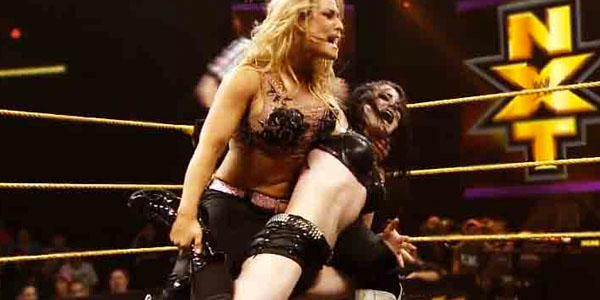
In the weirdest litigation ever filed against someone in the pro wrestling industry, veteran WWE diva and Hart family mainstay Natalie €˜Natalya€™ Neidhart was recently sued for a quarter of a million dollars for being a violent, abusive dominatrix. Pennsylvania convict Christopher Donnelly filed a handwritten suit on 27th June this year, representing himself and alleging that Natalya was a secret dominatrix, who had been in an abusive and threatening relationship with him for four years between 2005 and 2009 while touring the USA. He claimed that she had beaten and abused him at hotels all across the country, berating and humiliating him, even to the extent of forcing him to become a prostitute, and also having aborted his child just to mess with his head.j Of course, Natalya has been with Tyson Kidd for thirteen years, and travelling with him for pretty much the entirety of her professional wrestling career: the couple married last year. Donnelly had presented absolutely no evidence either, and€ well, how shall we put this? Upon interview with him, it was clear that the wheels on the bus didn€™t go round, round, round. The stairs didn€™t go all the way to the top. He was as mad as a box of frogs, and the lawsuit was thrown out.

2. The Panda Beats The WWF

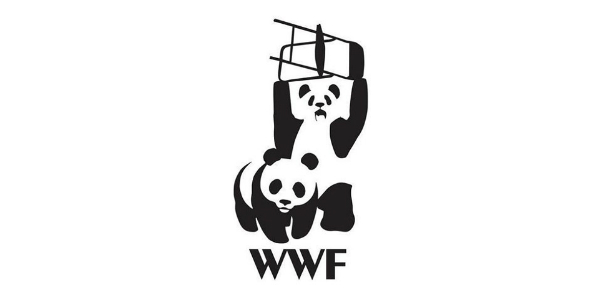
It€™s part of wrestling history now, but at the time, this was a massive, huge deal: the day the WWF was defeated by the WWF. This is the reason so many of your wrestling DVDs had an odd blurring effect on older footage for so many years. Back in the 1990s, the World Wrestling Federation was contacted by the World Wildlife Fund, the charity that protects animals, over the similarity in their initials. WWF had wwf.com, and was expanding their market share on an almost monthly basis at the time €“ and when there€™s global recognition involved, there€™s money involved. In this case, fairly reasonably, the World Wildlife Fund argued that, as a charitable cause, global recognition was more important to them and to the world at large than it was to an American professional wrestling promotion. They had more of an identity abroad as well €“ the WWF was muscling in on the panda€™s turf, not the other way around. At the time, Vince McMahon agreed, completely voluntarily, to keep the use of the disputed initials €˜WWF€™ to a minimum in overseas markets where the panda was better established €“ which was, more or less, everywhere. This gentleman€™s agreement kept the matter out of court for nearly a decade, until €˜Stone Cold€™ Steve Austin, The Rock, the Attitude Era and the WWF€™s defeat of WCW in the Monday Night War resulted in WWF€™s presence worldwide expanding exponentially. And naturally €“ because it€™s Vince McMahon €“ he ignored the gentleman€™s agreement he€™d shaken hands to a decade earlier, and threw the WWF brand about overseas with mad abandon. The next thing he knew, the panda had suplexed the WWF right into court, obtaining a ruling that the wrestling promotion had to abide by the previous agreement. McMahon, realising how much that would hamstring his now genuinely World Wrestling Federation, and not being one for half measures, opted for the dramatic option of changing the name of the company and completely rebranding€ hence the WWE.

1. Hulk Hogan Sues Vince Russo For Defamation Of Character

Most pro wrestling fans know all about the notorious events of Bash At The Beach 2000, a WCW pay-per-view that was the last time Hulk Hogan was seen on WCW television. Essentially, and without getting too bogged down in the whole shoot-versus-worked-shoot thing, WCW €˜creative director€™ Vince Russo wanted Booker T as the new champion, but Hulk Hogan wanted Jeff Jarrett to drop the title to him: and Hogan€™s contract gave him the last word on the subject. In order to maximise the publicity out of the angle €“ it was agreed that Jarrett would go out and simply lie down for Hogan to pin him. Hogan would react with a weary disgust, do so and then stalk out with the title belt. He would then leave the building as the WCW champion. So far, so good€ except Russo reappeared in the ring later on, cut a scathing promo on Hogan insisting that the crowd would never see him in WCW again, and set a new title match €“ Jarrett vs Booker T €“ for the main event, which Booker would end up winning. Hogan€™s story is that Russo would run a tournament for the title with a new belt, crowning a new champion at Halloween Havoc €“ only for him to return to WCW, holding the original title belt and insisting that he was the real champion. Hogan says that the abusive promo Russo cut after he€™d left the arena wasn€™t part of the deal, and as a consequence he never returned to WCW as planned. He would later sue Russo for defamation of character and breach of contract €“ in real life, not as a part of the storyline. Yes, we know it€™s hard to keep those straight sometimes. Russo tells it a little differently, claiming that the entire thing was a work, including his promo and the restarted title match later on €“ WCW fans were meant to think that Hogan was gone from the company, and then Hogan was supposed to return and face Booker T in the new champion versus old champion angle. He says that Hogan€™s paranoia got the better of him after he€™d actually seen the rest of the event, and that his failure to call Hogan on time, as he€™d agreed he would, allowed the paranoia to fester. Whichever the case, a Georgia court ruled partly in favour of Hogan in determining that he€™d not been handed creative control as agreed in his contract €“ but also handed down a judgment that Russo€™s promo was delivered "in a fictional context by his fictional character about the fictional character Hulk Hogan. As such, there is no evidence that Russo intended to make a false factual allegation regarding Mr. Bollea." Essentially, WCW, Hogan and Russo had been running lame worked shoot angles for so long, and were so confused by that point over what constituted a shoot and a work, that it took a judge to make it clear to them in an actual court ruling. Now that€™s ridiculous.

In this post: 
Natayla
 
Posted On: 
Contributor
Contributor

Professional writer, punk werewolf and nesting place for starfish. Obsessed with squid, spirals and story. I publish short weird fiction online at desincarne.com, and tweet nonsense under the name Jack The Bodiless. You can follow me all you like, just don't touch my stuff.