10 Rotten Gimmicks Played By WWE Hall Of Famers

Polka dots and Dusty Rhodes? Yeah, that'll work...

Fans - across a wide spectrum of "casual" and "hardcore" eligibility - have argued about the positives and negatives of the WWE Hall Of Fame system for many years. It's unclear which set of guidelines govern the promotion's own personal memorial wing, but there do seem to be some roadblocks put up for certain talents which, for whatever reasons, don't seem to fit this ever-changing set of rules. One notorious example would be the case of Owen Hart. Fans have bickered back and forth about why the younger brother of Bret hasn't been inducted, but there seems to be an awful lot of red tape WWE don't wish to go near, including lawsuits and tragedy. Others have been entered to much bemusement from the wrestling audience, who simply can't understand why the likes of lifetime mid-carder Koko B. Ware was entered years before first ballot Hall Of Famer 'Macho Man' Randy Savage. Whatever their reasons for being entered, there have been many WWE Hall Of Fame inductees who didn't always seem destined to have the most memorable careers. Playing characters and gimmicks which don't fit in with their status, these Hall Of Famers won't look back too fondly of these portions of their respective careers.

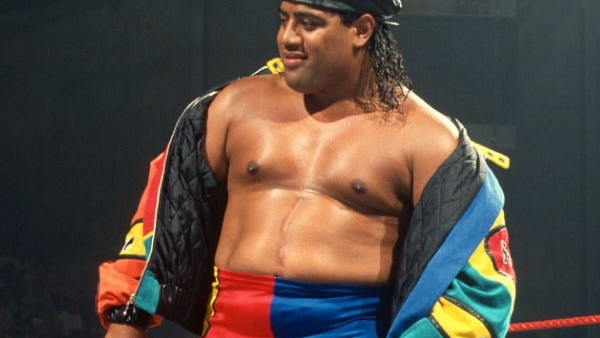
10. Fatu Says No To Drugs!

Entering the WWE Hall Of Fame largely because of his success as the character Rikishi, Solofa Fatu Jr was also part of one of the most memorable tag-teams of the early 90's, The Headshrinkers. It was through his association with another duo, Too Cool that Fatu found most fame however, showing charisma which had been largely untapped previously. In the mid-90's, the WWF were struggling for ideas, and following the breakup of The Headshrinkers, Fatu became a street-savvy guy who warned children on the danger of drugs and leading a violent lifestyle. It was a positive message, but a nothing gimmick, and it struggled to get over. https://www.youtube.com/watch?v=5YPNcTA_CzU The whole character only lasted a year or so, before Fatu was repackaged once more, this time as The Sultan. Playing the role-model Fatu, the artist now better known as Rikishi had a really forgettable run, one which didn't really do anything for the guy long term. Fans didn't buy into the persona, and it had reached the dreaded 'enhancement talent' level before too long.

9. 'Veteran' Bob Backlund

Inducted in 2013, Bob Backlund is a name from a bygone generation in wrestling, but that doesn't mean he deserves to be dismissed. On the contrary, Backlund is a wholly fitting example of what the WWE Hall Of Fame should be all about. The man held the then-WWWF Title for around 5 years, and was in tremendous physical condition. In fact, old Bob still keeps himself fit and healthy today, showing that old habits die hard, and had a fantastic 'out of touch' character in the mid-1990's. Unfortunately, when he returned to the WWF in 1992, Backlund looked like a wrestler who didn't really fit in with the glitzy, glamorous, cartoon-like world of wrestling which Vince McMahon had created since fans had last seen him. This would have been fine had the man been playing heel, like he did later, but he was brought in as a white-meat babyface, and fans found it difficult to relate to his goody-two-shoes image. https://www.youtube.com/watch?v=hBVoEwZTeIw Outside of some great fan support during the 1993 Royal Rumble, Bob Backlund floundered as a babyface, and it's almost embarrassing to look back at how forced some of his reactions were around this period. If this kind of character were to be introduced today, wrestling fans would be convinced that the company booking him was trolling their audience!

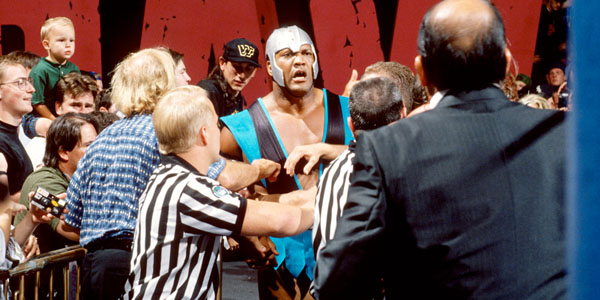
8. Faarooq The Gladiator

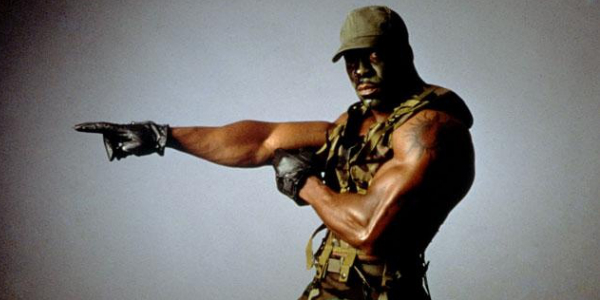
At one point, Ron Simmons was the WCW World Champion, and a man considered by many to be someone who could be on top of the company for years to come. Instead, in 1996 Simmons made his way to the promised land of Vince McMahon's WWF, where he would give up his babyface, legitimate athlete leanings, and instead become the gladiatorial Faarooq Asad. Only adding to the bizarre visual of Ron Simmons in a baby blue space helmet and bright blue and black singlet, was the fact that Sunny was initially chosen to be his manager, making the tandem quite the odd couple, even for the World Wrestling Federation. It wouldn't be long before 'Asad' was chopped from the name, making Simmons plain old Faarooq, and the character was made the head of the Nation Of Domination, a faction primarily set up to feud with Ahmed Johnson. Gone was the blue helmet, thankfully, and fans were introduced to a far more serious Faarooq character. Eventually, Simmons would join with Bradshaw (now JBL) to form The Acolytes, then The APA, but it's hard to imagine Ron Simmons would be getting inducted for his short-lived gladiator gimmick, which failed to connect with fans whatsoever, and made the man look like a villain from Thundercats, or similar cartoon shows aimed at kids.

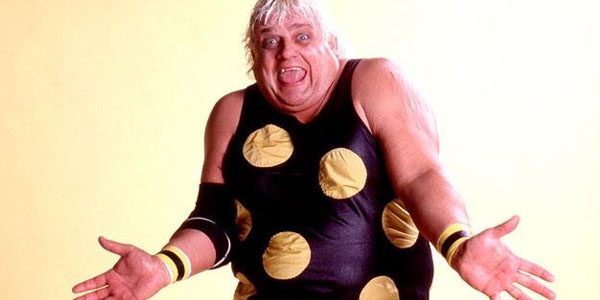
7. Polka Dot Pandemonium

Connecting with wrestling fans like few performers throughout the history of the industry, 'The American Dream' Dusty Rhodes was the perfect antidote for Ric Flair's silver-spoon antics in the 1980's. Representing the common man, Rhodes was a figure fans could easily relate to, and they couldn't plonk down their money fast enough to watch him battle the arrogant Nature Boy. Signing Rhodes to the WWF seemed like a no-brainer for Vince McMahon, but what confused longtime fans was the direction the company chose to take the Dream upon his arrival. In the cartoon land of McMahon's vision, 'The American Dream' was churned up by the marketing machine and spat out, landing in even more over-the-top fashion. Wearing polka dots, and having his personality tweaked so that he came across like a walking, talking Barney The Dinosaur, Rhodes no longer really represented every day men and women. Instead, he was like a children's entertainer, which admittedly sums up a lot of the roster during the late 80's and early 90's.

6. Not Exactly Hitting The Bullseye

A longtime servant of the WWF, Tito Santana had been working for the McMahon family since 1979, but in 1991 he was repackaged as 'El Matador'. Wearing pink boots and playing the role of a bull fighter, Santana has remarked in interviews since that he was in line for a main event push, as the promotion were looking to expand into Mexico. Interestingly, Tito claims the WWF chose Canada first, which is why Bret Hart got his first top line run. Santana was somebody everyone could rely on for a solid match, regardless of his opponent or the time allotted to them. Simply put, the guy was the very definition of a stalwart, and a great hand to have on the roster - so good was Santana at working the style McMahon wanted, that he was often placed with newcomers on house shows, in order to fully integrate them into the way the WWF did business. Regardless of his aptitude for wrestling, the 'El Matador' gimmick wasn't the best, and is a tough sell to any audience. The creative team felt the man would be cheered for his bravery, and fans would instantly perceive him as tough, due to his many years of bull-fighting, but longtime fans already knew Santana from before, and newcomers didn't really see him a top name. https://www.youtube.com/watch?v=OceR-sWNKm0 Departing in 1993, Santana has barely been seen since, and it's a shame that such a great performer had to go out with a lame-brain gimmick like this one!

5. The Literal Texas Chainsaw Massacre
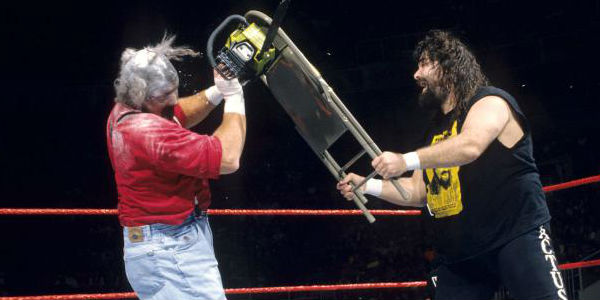
Often referred to as 'middle aged and crazy', Terry Funk was inducted (alongside his brother, Dory) in 2009, having the esteemed privilege of going into the WWE Hall Of Fame the same year as fellow Texans, Steve Austin and The Von Erich Family. Nobody can deny the impact of Terry Funk, or discredit the punishment he had put his own body through for the love of professional wrestling. The man has retired more times than most people have had hot dinners, but he keeps coming back for more - even though these returns have played to increasingly diminished returns, it's clear that Terry dearly loves wrestling, and it's hard for him to hang up those boots for good. Looking to try something different, a trait which admittedly must always be praised, the WWF redubbed Funk in 1998, calling him 'Chainsaw Charlie'. It was baffling, considering the sheer history the Funk name carried with the wrestling audience, and the character only really made for a few memorable moments, not least the chair-duel spot between Funk and longtime friend Mick Foley at the 1998 Royal Rumble.

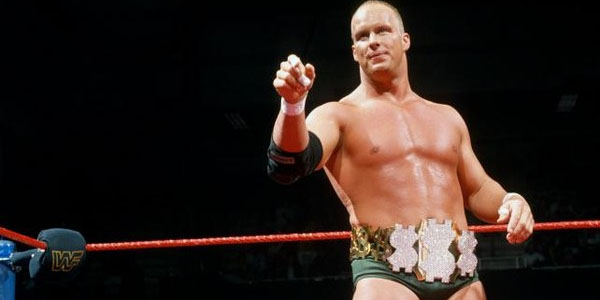
4. Lord Of The Ring

The ring-name "Stone Cold" Steve Austin is infamous, even people who don't follow wrestling at all have heard of it. There wasn't a place you could travel in the Western Hemisphere during the late-90's which didn't have one person walking around in an 'Austin 3:16' t-shirt, which really shows the success that particular character had. Before all that, there was 'Stunning' Steve Austin in WCW, where the man himself was portrayed as an upstart ring general, and somebody who was technically sound inside the ring, whilst being brash outside of it. It was a pretty typical heel gimmick, but a lot better than what the WWF initially had in mind for him. Introduced as Ted DiBiase's new Million Dollar Champion, Austin was called The Ringmaster, and his in-ring skills were played up by Vince McMahon and Jerry Lawler on commentary. It was an auspicious start to life in the federation for Austin, and it immediately became clear that he wasn't digging the character. https://www.youtube.com/watch?v=P0hrPgKz7XQ It was pretty nondescript, and not the best way for the guy to kick things off in the biggest promotion around. Thankfully, after winning the King Of The Ring in 1996, Austin was allowed to show more of his personality, and the rest - as they say - is history. Turns out that even the biggest success stories in wrestling had some amount of crap to get through first!

3. Hart Failure

Bret Hart Cowboy The above image is taken from one of Bret Hart's acting appearances, which grappling fans should be grateful for. The fact of the matter is, when Hart first signed to the WWF in 1984, officials wanted to give him a cowboy gimmick, and have him literally ride to the ring of a trusty steed, bull-rope in hand, a whoopin' and a hollerin'. Turning down the character, Hart nonetheless did appear as 'Cowboy' Bret Hart a handful of times, which is hard to fathom nowadays, given the history of the man's career and the legacy he left on the pro wrestling landscape. It wasnt only Vince McMahon who saw money in the Canadian playing a cowboy, however, and Hart even made appearances under the nickname in the UK, most notably wrestling on World Of Sport under the guise of rancher. Imagine how different WWF/WWE history would be if Bret Hart hadn't spoken up, telling anyone who would listen that he couldn't possibly do the gimmick justice, mainly because well, he wasn't a cowboy, and knew little about them. No pun intended, but Bret's heart must have skipped a few beats when he realised this was what the big time writers had in store for him.

2. The Curious Tale Of Saba Simba
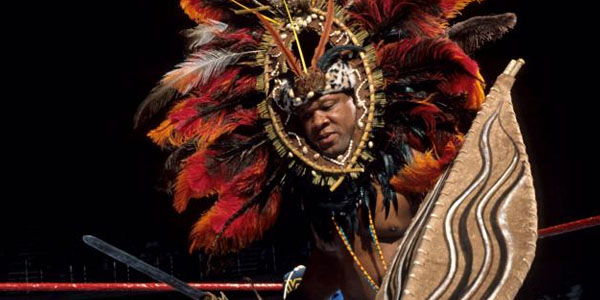
Listen to Tony Atlas talk now, and the man will tell you that he may understand the backlash to his Saba Simba character of the early-90's, but he doesn't care much, because Vince McMahon helped save his life. Once a keen bodybuilder, going under the moniker 'Mr. USA', Atlas had previously held the WWF Tag-Team Titles (along with Rocky Johnson, father of The Rock) in 1983. Incredibly, Atlas would fall on hard times once he left wrestling in the late-80's, and was reportedly living on a park bench and hooked on drugs before McMahon brought him back to play the African character of Saba Simba. A lot of people felt the gimmick was inflammatory, and borderline racist, with McMahon saying that Atlas had legally changed his name to Simba and was paying homage to his African heritage. https://www.youtube.com/watch?v=KG5LI168rBo The gimmick didn't last too long, and for good reason, fans couldn't believe what they were seeing. This was a pretty ill-advised move from the WWF, and didn't go over well with anybody. Tony Atlas did his best in the role, but it was far from a winner, and could have ruined his career had he played it for any real length of time.

1. Typical WCW

A lot of famous wrestlers have played rubbish characters during the early portions of their careers, it's almost a given that everybody will have at least one skeleton in their proverbial closet, it's like a right of passage! Some of these gimmicks are ill-advised, but sometimes a wrestler himself has come up with something he or she believes can help them gain some notoriety. During his time on the independent scene, Booker T was known as 'G.I Bro', a pretty blatant attempt to cash in on what the WWF were doing in the early-90's with Sgt. Slaughter. Army men and military gimmicks have been around for a long time in wrestling, but Booker likely just wanted something which would get some eyes on him quickly. Almost a decade later, Booker had been one of WCW's most consistent performers for years, and it only seemed natural he'd eventually become WCW World Champion. History would dictate that the man would indeed bag the big gold belt, later going on to have a mostly-stellar career in the WWF/WWE. Vince Russo's decision to have him reprise the 'G.I Bro' schtick in 2000 nearly killed the man's career, however. Joining the Misfits In Action, Booker put back on the army gear, to a less-than-positive reaction from fans, who really just wanted to see Booker T. It's examples like this, when WCW blatantly didn't listen to their audience, that it makes it more understandable when pondering why they went out of business shortly after. What other horrible characters played by WWE Hall Of Famers can you remember? Do you agree with the choices on this list? Let us know down in the comments below!

In this post: 
Dusty Rhodes
 
Posted On: 
Contributor

Lifelong wrestling, video game, music and sports obsessive who has been writing about his passions since childhood. Jamie started writing for WhatCulture in 2013, and has contributed thousands of articles and YouTube videos since then. He cut his teeth penning published pieces for top UK and European wrestling read Fighting Spirit Magazine (FSM), and also has extensive experience working within the wrestling biz as a manager and commentator for promotions like ICW on WWE Network and WCPW/Defiant since 2010. Further, Jamie also hosted the old Ministry Of Slam podcast, and has interviewed everyone from Steve Austin and Shawn Michaels to Bret Hart and Trish Stratus.