10 Most Scandalous Pro Wrestler Deaths

Real life tragedies that shocked the world.
Chris Benoit Death Media Coverage Obviously, when someone dies, it's a terrible occurrence. However, when the death is attached to a scandal, it's twice as saddening. Unfortunately, if a professional wrestling fan, the number of times that famous wrestlers have passed in a scandalous manner is unfortunate. This is a somber list, but ultimately one that could be used as a lesson to promoters, wrestlers and fans alike to highlight the moments when some of our in-ring favorites are asked to or act in a manner that pushes the envelope just a bit too far.Throughout the history of wrestling, there are certainly more than ten wrestlers who have passed away. Again, this list is not meant to sensationalize death, but rather to question those moments when moments occurred that left both media and the industry alike shocked, surprised and completely up in arms This is a sad, yet salacious group of tales, too. Wrestling itself is a bizarre business filled with unusual occurrences. As well, the moments that tend to befall wrestlers outside of the ring are certainly bizarre, too. Covering everything from alleged mafia and narcotics deals gone wrong to just sheer negligence on the part of pro wrestling promoters, to yes, the strain and wear of the business pushing talents a bit too far, it's all here, and all sad. Pause, read and let's hope that these occurrences do not repeat themselves in the future.

10. Dino Bravo
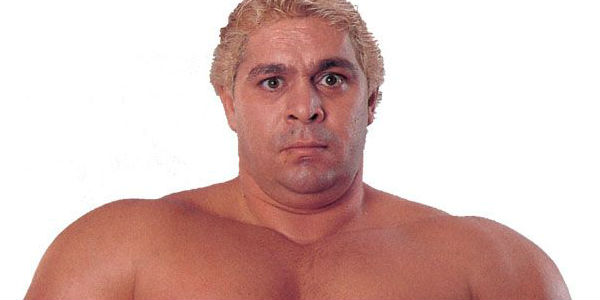
"Canada's Strongest Man" had a 22-year career in pro wrestling that ended in 1992 after a run with the World Wrestling Federation that lasted 14 years with a Tag Team championship run with Dominic Denucci, as well as significant singles runs portraying a French-Canadian strongman. After his retirement in 1992, Bravo moved back to his native Montreal, and short on employment options, became a smuggler of cigarettes across the Canadian border to indigenous Canadians. Engaging in this illicit activity while connected to Montreal crime boss Vic Cotroni allegedly ran him afoul of other organized crime families already in the cigarette smuggling business, and less than one year after his last WWF appearance - on March 10, 1993 - he was found dead in his Quebec home, victim to 17 bullets (seven to the head and 10 to the torso). Obviously, one makes their own conscious choice to consider a life of organized crime, but of the many other options so many other wrestlers took once no longer employed by the WWF in that era, the serviceable and veteran heel Bravo's mafia-style murder is certainly one of the more scandalous deaths in wrestling history.

9. Chris Adams

Chris Adams From being one of World Class Championship Wrestling's most beloved grapplers to also being the initial in-ring trainer of Steve Austin, "Gentleman" Chris Adams had a storied professional wrestling career. However, by 2001 Adams was out of the mainstream spotlight, back in the British native's adopted home of Texas. The idea that he would overdose on alcohol and GHB in 2000 (an incident which killed his then girlfriend Linda Kaphengst) isn't necessarily surprising when considering the big-time party scene associated with the World Class territory. However, getting into a drunken brawl with a man named Brent Purnell on October 7, 2001 and Purnell shooting Adams dead (with Purnell being acquitted)? A legend of Adams' stature being murdered in a drunken brawl doesn't feel befitting of his status. Sad, and absolutely bizarre, too.

8. Mitsaharu Misawa
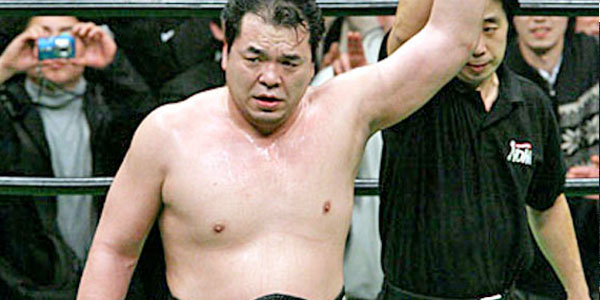
Misawa Arguably one of the wrestlers most widely associated with All Japan's "strong style" wrestling movement of the late-1980s and early 1990s, by 2009 Mitsaharu Misawa was 46 years old and a cornerstone of All Japan offspring promotion Pro Wrestling NOAH alongside fellow "strong style" advocate Kenta Kobashi. A style of wrestling built upon suplexes and drivers that dropped wrestlers directly on their head or necks, the fact that Misawa passed in the ring on June 13, 2009 during a match in which he was teamed with Go Shiozaki against GHC Tag Team Champions Akitoshi Saito and Bison Smith is intriguing when the speculated coroner's report is discussed. Citing a cervical spinal cord injury that caused cardiac arrest after taking a belly-to-back suplex from Saito as the cause of death, that move's link to Misawa's "strong style" past seems quite obvious. Taking bumps in professional wrestling is a part of the industry, and given the inability of someone to assume that 100% of all bumps in a wrestling match will be taken safely, any bump is potentially fatal. However, when compounded by nearly three decades of high-impact bumps on a human body, Misawa's untimely demise could have been staved off had his high-impact style not been so, well, high-impact.

7. Chris Kanyon
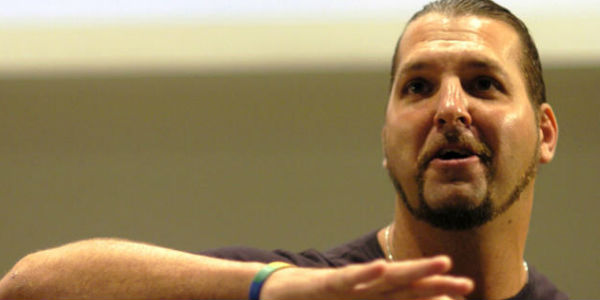
Depression is a serious disorder and deserves awareness and attention. In contemplating the suicide of Chris Kanyon, the influence of depression upon the unfortunate situation must be considered. Upon being released from World Wrestling Entertainment in 2006, Kanyon worked the independent scene using the gimmick of being a shoot openly gay wrestler. Included in this was a publicity stunt in which he claimed that WWE released him because of his sexuality, because he was in fact, gay. By 2010, Kanyon had been diagnosed with bipolar disorder, and on April 2, 2010, Kanyon was found dead in his Queens, New York apartment, having overdosed on antidepressants. Those who are suicidal getting the mental help and support they need is important. Had Kanyon done so, the chances of him committing suicide would have significantly lessened.

6. Gino Hernandez

Gino Hernandez The "Handsome Halfbreed from Highland Park, Texas," Gino Hernandez was a superstar on the rise in World Class Championship Wrestling who at the time of his death in 1986 had barely scratched the surface of his global main event potential. However, when confronted with the facts of his death, it a) showcases a potential flaw in his rise to superstardom, and b) tells a shocking and traumatic tale, too. After having not seen Hernandez for three days, World Class referees David Manning and Rick Hazzard accompanied local Highland Park, Texas law enforcement officers to Hernandez's apartment, finding him dead at the scene. His death was ruled as a result of an overdose of cocaine, some believing that Hernandez was murdered in a drug related incident given that he had three times more than a deadly amount of cocaine in his system, and cocaine was also rumored to be in his stomach, too. Dead at 28, Hernandez's death is a terrible case of a rising legend gone way too soon.

5. Anthony "Pitbull #2" Durante

After a 14-year career that saw heights as great as being a championship-level performer in Extreme Championship Wrestling, Anthony "Pitbull #2" Durante (above, right) was 36 years old with a criminal record in Pennsylvania and New York, living in Misaquimit, Rhode Island and working at the Foxwoods Casino in Mashantucket, Connecticut in 2003. Wherever life takes you where you're the parent of 21-month old and eight-month old children and you and your grilfriend both overdose on fentanyl - a drug 80 to 100 times more potent than morphine and more potent than heroin - while your children are in the house, is a place in life that could likely either be avoided or be mitigated against with some sort of therapy or governmental assistance. Sadly, Durante was never contractually employed by World Wrestling Entertainment, thus he would be unable to receive the company's drug and substance abuse treatment program benefits.

4. Bruiser Brody

Some say it was over a payday dispute, while others suggest the possibility of a drug deal gone awry. But no matter why Frank "Bruiser Brody" Goodish was murdered in a shower by Jose "Invader #1" Gonzalez in Bayamon, Puerto Rico on July 16, 1998. The murder of Brody certainly occurred, though, and likely did not need to happen. Talent squabbles with promoters over paydays have led to violent fisticuffs. As well, when drugs have been involved between wrestlers, violence has been the solution, too, but never murder. Of course, something more heinous than anything ever considered in pro wrestling had to have happened because both Dutch "Zeb Colter" Mantel and Tony Atlas were subpoenaed for testimony in the case, never took the witness stand (Mantel received his subpoena after the trial was over, and Atlas refused to take the stand), and both also continued to return to Puerto Rico to wrestle after Brody's death.

3. Chris Candido

Widely considered one of the best in-ring performers and kindest souls in the professional wrestling industry, a surgery gone awry ultimately killed Chris Candido, and what makes it as scandalous as it is painful is that its something that could have VERY easily been avoided. Wrestling for TNA at the company's Lockdown pay-per-view on April 24, 2005, Candido fractured both his tibia and fibula and dislocated his ankle during a steel cage match. After undergoing surgery to repair the injuries, he appeared - as scheduled - at TNA's Impact! tapings. Four days later, a stricken with unknown illness Candido collapsed and was rushed to the Robert Wood Johnson University Hospital in New Brunswick, New Jersey, Mis-diagnosed with pneumonia, doctors drained his lungs, but Candido died. Only 33 years of age, Candido's brother Johnny reported to the press that Chris died due to a blood clot, on his leg, a complication from his multiple surgeries.

2. Chris Benoit

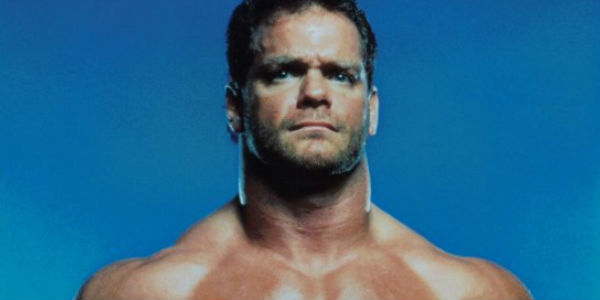
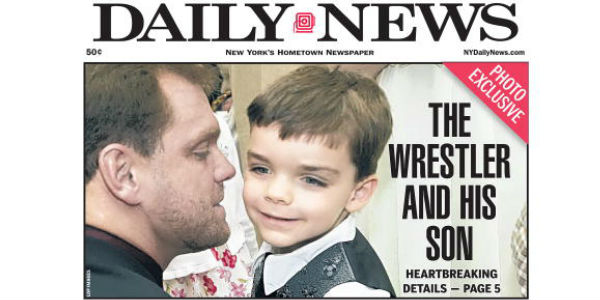
Nearly a decade after it occurred, the most scandalous parts of the Benoit tragedy lie in again breaking down Benoit's autopsy report, and wondering how he was still allowed to perform in pro wrestling. These facts are frankly quite heinous. At the time that an autopsy was performed on the body of Chris Benoit, he had 400 times the usual amount of testosterone in his system of a man his age. As well, brain research done on Benoit showed that his brain was damaged to the point that it resembled that of an 85-year-old Alzheimer's patient. Furthermore, his brain showed the effects of severe chronic traumatic encephalopathy (CTE), with damage to all four lobes of the brain and brain stem. As well, he had suffered so many concussions that behavioral problems linked to potential dementia were also included in the potential reasons why Benoit did what he did. Logic would state that a man suffering so significantly should not have to suffer in a way that would create the condition that would lead to that man killing himself, and his family, too.

1. Owen Hart

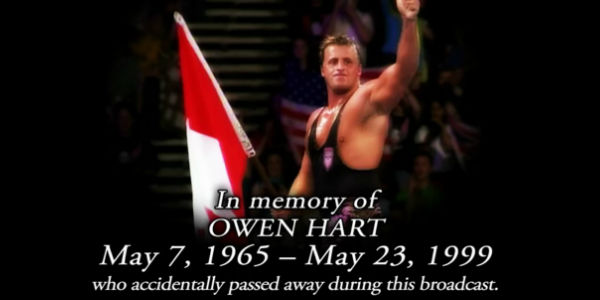
Anything in wrestling that doesn't involve grappling could be considered a "stunt." When pro wrestling gets to the point that a wrestler is being lowered from the ceiling in a harness (in order to lampoon another company lowering a wrestler from the ceiling in a harness), in retrospect, that's insanely stupid. The fact that Sting never detached from his harness during the "Crow Sting" era is a miracle. Yes, Sting dressed in black in the the rafters pointing his bat at the NWO was cool, but we also know that the Ultimate Warrior sprinting down the aisle was cool, just as Hulk Hogan pointing at his opponent in his comeback was cool, too. The WWF lampooning WCW with "Billionaire Ted's Rasslin' War Room" was dumb, but only hurt people's feelings. Attempting to lower Owen Hart from the ceiling killed Owen Hart. Moreso, even if Hart had successfully landed, it would've been a one-note joke that would've damaged the then-massive egos of WCW president and booker Eric Bischoff, as well as Hulk Hogan. Was this really necessary? Of course not.

Contributor
Contributor

Besides having been an independent professional wrestling manager for a decade, Marcus Dowling is a Washington, DC-based writer who has contributed to a plethora of online and print magazines and newspapers writing about music and popular culture over the past 15 years.