10 Things You Don't Know About WWE In 1997

Montreal happens, DX is born and everything in between.
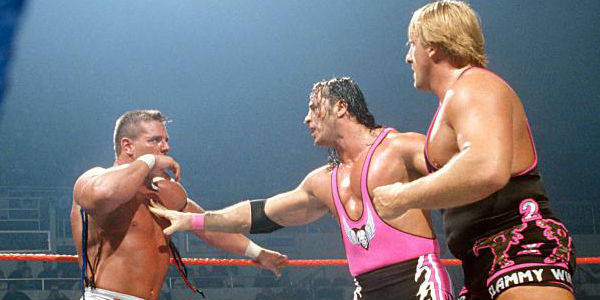
As we have seen from previous installments, sometimes the biggest stories in WWF/E happen off screen rather than on screen. Last time, in 1996, we learned that Razor Ramon was originally supposed to face Goldust at Wrestlemania XII, Edge made his WWF debut at a house show, and Triple H€™s punishment for the Kliq MSG Curtain Call was seriously overblown. In 1997, and the landscape of the WWF changed dramatically. The top babyfaces in the company in January, Bret Hart and Shawn Michaels, were heels by the time the year ended. One of the biggest heels in the company, Stone Cold Steve Austin, would end the year as one of the hottest babyfaces in the industry, and the most shocking night in WWF history would occur this year. With so much happening behind the scenes with the Bret Hart/Shawn Michaels feud, you€™d think you would know everything that went on backstage in the WWF, but you€™d be wrong. There are plenty of little nuggets of trivia that came from this year. Some of these you may have also known about, but simply forgot.

10. The Headbangers Wrestled As The Flying Nuns/Sisters Of Love€For One Week

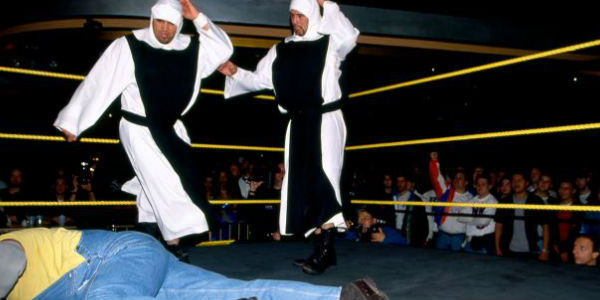
In the beginning of the year, the WWF wanted to create a live late-night show that emanated from nightclubs around the country. They called it Shotgun Saturday Night. The first episode was notorious for Marlena €œflashing€ The Sultan during a match. But what many people forgot was that the first episode was also known for the debut of The Flying Nuns, who would later be known as The Headbangers. Mosh and Thrasher had a small debut as The Headbangers on WWF television in late 1996. They debuted on WWF Superstars in November, and lost a match to Doug Furnas and Philip Lafon in December. On that first episode of Shotgun Saturday Night, they were repackaged as The Flying Nuns and wrestled The Godwinns. During the match, the New York City crowd chanted €œHoly sh*t€ and €œGo to Hell€ at them. Brother Love made his return after a year absence and interfered, causing the Nuns to win the match. After the match, Brother Love rechristened the team as the Sisters of Love. The very next week on Shotgun, the Sisters of Love had a vignette where they were arrested for solicitation outside of the Disney Store on 42nd Street in Times Square, Manhattan. Later that night, the Headbangers re-debuted and lost to Furnas and Lafon in the main event (which ended after the show went off the air). So for those keeping track, in the span of a week, Chaz Warrington and Glenn Ruth went from the Headbangers to the Flying Nuns to the Sisters of Love and back to the Headbangers. And you thought Dustin Runnells had his share of gimmicks.

9. It Was Supposed To Be Bret vs. Shawn II At WrestleMania 13
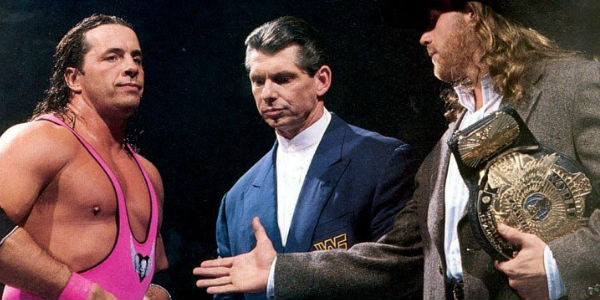
Anybody who watched the Bret vs. Shawn Greatest Rivalries DVD knows the story. The Bret vs. Shawn rivalry was laid out more than a year in advance. Bret dropped the WWF Championship to Shawn at Wrestlemania 12 with the idea that there would be a rematch the very next year at Wrestlemania 13 where Bret would win the belt back. Obviously, as history has shown, that€™s not what happened. Shawn got a knee injury in late January and gave the famous €œlost my smile€ speech, blowing the plans for the big rematch up. Bret was then left without a Wrestlemania opponent and was given Steve Austin. Even though they went out and had one of the greatest matches of all time, Bret was upset that Shawn pulled out with a suspect knee injury so he wouldn€™t have to drop the title to Bret. https://www.youtube.com/watch?v=TpOu5hDDXUk This animosity lingered throughout 1997 and was one of the reasons Bret was adamant about not wanting to drop the WWF Title to Shawn in Montreal at Survivor Series, which led to the Screwjob.

8. Jerry Lawler Called Goldust A Very Bad Word On National Television€And Nothing Happened

As part of Goldust€™s face turn in 1997 (and an attempt by the WWF to make their gimmicked characters more human), he ran into Jerry Lawler as the main antagonist. Goldust€™s appeal as a heel was to be androgynous to the point of being homosexual in order to psyche out his opponent. With a face turn looming, the WWF decided fans would get behind him if he was outright straight. The turning point for Goldust as a character was when Lawler outright asked him if he was €œqueer,€ to which Goldust replied €œno€ and punched him. Before Lawler faced Goldust one-on-one, he cut a promo where he called Goldust a€well€the British use the term to describe a cigarette. https://www.youtube.com/watch?v=6aWKM-UZD3E Because WWF wasn€™t corporate yet, and was actively trying to push the boundaries of what they could and couldn€™t get away with on television in an attempt to draw in viewers, Lawler was not punished in any way for his remark. All that happened was Vince giving an apology on commentary immediately after Lawler uttered the slur. What Lawler did in 1997 would be unheard of in this day and age, and he would have been terminated on the spot. However, it was a sign of the times back then (only 17 years ago), where using that kind of language flippantly wasn€™t seen as a big deal.

7. An Episode Of Monday Night Raw Emanated From Two Different Countries

https://www.youtube.com/watch?v=lLq8PVpKoNI Not since Wrestlemania 2 had the WWF aired a broadcast from two different locations, and never before had there been a broadcast in two different countries. With half of the roster on an extended overseas tour of South Africa and Kuwait and the other half remaining stateside, Vince and company got creative with the April 14 episode of Raw. The first hour emanated from the Worthen Arena in Muncie, IN, and the second half emanated from Johannesburg, South Africa. The matches at both venues were pre-taped for the April 14 broadcast. The Muncie matches were taped a week prior on April 7 (back then, the WWF would tape a live Raw followed by a taped Raw either the next day or immediately following the conclusion of the live show). The South Africa matches were taped on April 9. The broadcast went back and forth between the two venues with two different announce teams calling the action for each match. Vince McMahon and Jim Cornette called the action in the states, and Jim Ross and the Honky Tonk Man were in South Africa. To this day, it remains the only episode of Raw that was shown from two different locations.

6. The Number Of House Shows Were Cut Down Significantly
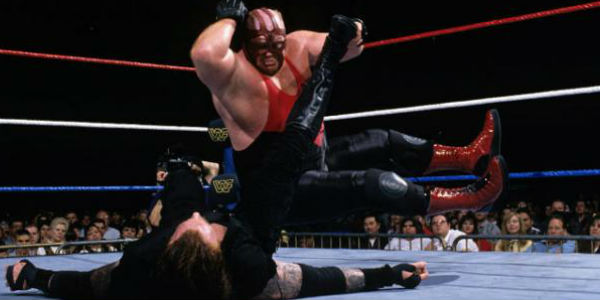
In the 80s and early 90s, it would be common to have a WWF live event every day. The roster would be split into two traveling halves, and both would conduct live events once a day, with both rosters coming together to tape a few episodes of Superstars, Wrestling Challenge, and Monday Night Raw over the course of a weekend once a month. Wrestlers back then would be on the road upwards of 300 days a year. 1997 was the year where the number of live events made a steep decline. Perhaps it was the cyclical nature of the business, and WWF was on a downswing before the rise of the Attitude Era. Perhaps it was because the roster wasn€™t big enough to split in two. Toward the end of the year, there would be no house shows on Tuesdays, Wednesdays or Thursdays. Some weeks, there would be no house shows at all between two Monday Night Raw tapings. Even though live gate revenue was going down, this was more than likely keeping the wrestlers fresh. This would be the start of the schedule we are used to today where house shows take place on Friday, Saturday and Sunday, followed by television tapings on Monday and Tuesday, and getting Wednesday and Thursday off.

5. The WWF Let Jim Cornette Rant About WCW And Phil Mushnick On-Air

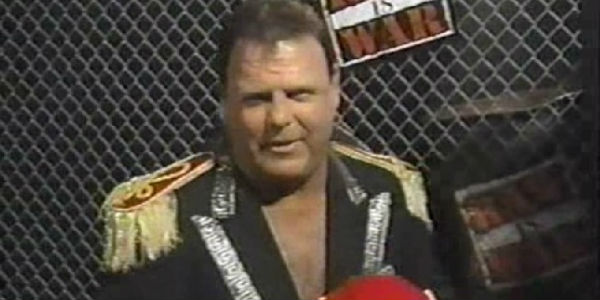
https://www.youtube.com/watch?v=Il65bpBgevI With their butts being kicked weekly by WCW, the WWF tried anything and everything to bring in more viewers. They even took their resident loudmouth, Jim Cornette, and gave him a couple minutes every week to just say what was on his mind because they thought it would generate some buzz. The first of Cornette€™s promos took place the night after Bad Blood on October 6, where he put down WCW and mentioned former WWF talents Diesel, Razor Ramon, and the 1-2-3 Kid by their real names (which Hall and Nash were using in WCW). He ended the promo the same way he ended all of his promos: €œI€™m Jim Cornette, and that€™s my opinion.€ The next week, he went on a rant against New York Post columnist Phil Mushnick, who had long campaigned against professional wrestling, specifically the WWF. Mushnick had commented on Brian Pillman€™s death, and used his death in his crusade against the WWF. This continued next week, with Vince McMahon joining in and encouraging fans to write letters to Mushnick. Cornette actually put over WCW talent like Ric Flair in his rants. Eventually, these rants would be dropped, as Cornette needed to be used for the NWA revival in 1998.

4. The ECW Invasion Storyline Ended Because Of€Road Dogg?

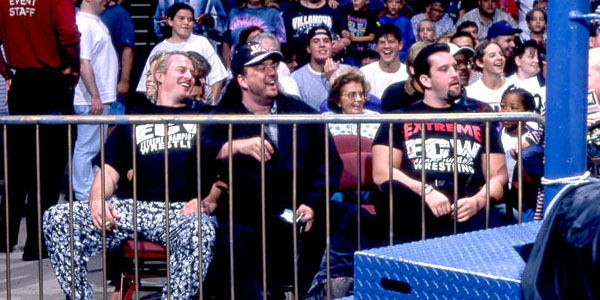
One of the more underrated stories of 1997 was Vince McMahon being willing to work alongside Paul Heyman in a cross-promotion between the WWF and ECW. Famously, ECW invaded the Manhattan Center in March, just before Wrestlemania, in order to promote their first ever Pay Per View, Barely Legal. In the aftermath, Rob Van Dam stayed on WWF television and promoted himself as €œMr. Monday Night,€ which got him over as a heel in ECW. He debuted on Raw in a win over Jeff Hardy, and teamed with Jerry Lawler until June. The storyline was supposed to go longer, until the WWF made a suggestion that was unforgivable in the eyes of RVD€he has to lose to Jesse James. https://www.youtube.com/watch?v=y0IrsWbzZRE A year before he€™d become The Road Dogg, Jesse James was a lower-card enhancement talent. Apparently, it wasn€™t even going to be a clean loss (reports vary that either James was going to beat RVD via count out or the match would go to a draw), but RVD felt like anything less than a clean win over an enhancement talent was beneath him, so he walked out of the company and returned to ECW, and wouldn€™t step foot in the WWF again until 2001 after ECW folded.

3. The First Edge vs. Christian Match In The WWF Took Place in 1997
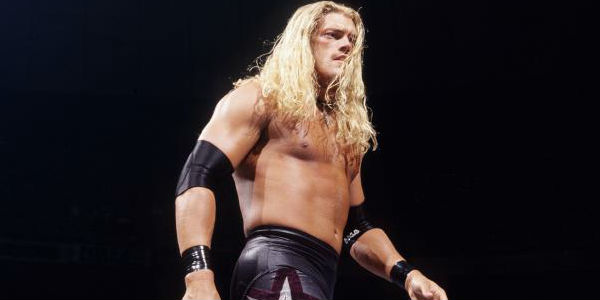
In the 1996 version of this column, we discussed Edge€™s first WWF match where he substituted and faced Bob Holly. In 1997, Adam Copeland had another dark match, but this time, he was joined by a fellow unknown. The date was November 11, and the place was Cornwall, Ontario, Canada, mere days after the Montreal Screwjob. It was a Monday Night Raw taping which would be aired on the following Monday (11/17), which meant that the cameras were rolling. In a dark match, Adam Copeland (Edge) defeated Christian Cage in about five minutes. Because the cameras were rolling, footage of the match exists, and was actually included in the Edge: A Decade of Decadence DVD.

2. Mick Foley (And Others) Were Ready To Quit After The Montreal Screwjob

https://www.youtube.com/watch?v=D66bz01zNJk Many people know that Bret Hart was not the only one to leave the WWF in the immediate aftermath of the Montreal Screwjob. His brothers-in-law The British Bulldog and Jim Neidhardt followed him out the door to WCW, with WCW paying the WWF $150,000 to buy out the contract of the Bulldog. But those two weren€™t the only ones who were considering leaving because of the double-cross. As Mick Foley pointed out in his first autobiography, Mankind: A Tale of Blood and Sweatsocks, he seriously considered leaving the WWF after the Screwjob, believing that Vince couldn€™t be trusted. Mick did not appear on the following night€™s Raw, but did appear the following night for the November 17 Raw taping. Foley hinted that he wasn€™t the only one who felt that way, bringing up The Undertaker (who did work the following night on Raw) as one of the main voices of dissension. If Foley had made good on his desire to quit the company, we may never have gotten the WWF Title wins in 1999, and Foley may never had become the Hardcore Legend.

1. Vince McMahon Offered The Ultimate Warrior A 5-Year Contract In December 1997

Warrior Dec1997 Offer As discovered earlier this year based off of content relating to lawsuits between Warrior and the WWE, Vince McMahon made an offer to the Warrior in December 1997, in secret, for a 5-year contract with a $750,000 base salary before royalties. In the letter, Vince states the following: €œJim (Hellwig), this deal is far more lucrative to you then (sic) our last agreement of 1996, and obviously, far more long term. I look forward to building the resurgence of the Ultimate Warrior again. Vince.€ This came one month after one of Vince€™s two top guys, Bret Hart, left the company, so obviously Vince was desperate for star-power. And even though Vince would claim in the Self-Destruction of the Ultimate Warrior DVD that Warrior was damn-near impossible to work with and he fired Warrior on three different occasions, Vince still recognized just how important Warrior was to the business by offering him this deal. Be sure to comment below or follow me on Twitter @PocketSeagull.

Contributor
Contributor

Justin has been writing about professional wrestling for more than 15 years. A lifelong WWE fan, he also is a big fan of Ring of Honor.