10 Things I Hate About WrestleMania
The Road To WrestleMania used to be a downhill plunge... now it's more of an uphill struggle.
In the old days, the company had the so-called Big Four pay-per-views - Royal Rumble, WrestleMania, SummerSlam and Survivor Series - rising head and shoulders above the smaller events broadcast every month. Nowadays, though, WrestleMania doesnt even belong in the same ballpark as the other three.
The Show Of Shows is an industry all in itself. Practically every promotion, person and pro wrestling patron with ties to the business will descend upon Dallas this week to snap up all the available hotel space and fill the citys social calendar to bursting with wrestling-related events.
WrestleMania brings in so much revenue that the effect has been compared to civic regeneration: an independent study indicated that New Orleans benefited from WrestleMania XXX to the tune of 142 million dollars. Cities compete with one another for the opportunity to be chosen as the next years hosts.
Its a big deal, is what Im saying - an institution, a brand that is probably equal to WWEs own, if not greater, and could conceivably outlive the organisation that spawned it. And, like all institutions, it has its critics not least those who remember back when it was just a huge wrestling show, not a 'cultural phenomenon' or an edifice.
With that in mind, here are the 10 Things I Hate About WrestleMania.
10. It's Dependent On The Nostalgia Buck
Okay, so WrestleMania has always been about courting celebrity involvement and mainstream indulgence. In recent years, however, Vince McMahons relied on an entirely different kind of special guest star to enhance the pedigree of the card.
Thats right, Im about to crack that hoary old chestnut again: the infamous part-timers.
For a change, lets not dive into the specifics of each case where a middle-aged, part-time wrestling legend has been given a key spot on the card which could - and should - have been saved for a contemporary wrestler who works for the company year-round.
Lets not even get into the mire of quibbling over Brock Lesnars status as a special attraction performer, and whether hes worth the money he takes off the company and the shine he takes off the rest of the roster.
No, lets find some easy common ground here. This is a company thats sunk millions into securing its future with its state-of-the-art Performance Centre training facility and the NXT brand. Lets agree that WWE should probably rethink how it presents the performers of that future, and how theyre seen by the fans.
In basic business-speak: if current and future generations of WWE performers are products - carefully selected, invested in, and released to the consumer with a view to maximising their revenue potential - then WWEs marketing of that product is childish, counterproductive and frivolous, not to mention inconsistent and shortsighted.
Nowhere is that more evident than at WrestleMania, when previous highly successful products that are clearly past their best are trotted out and promoted as still being far superior to the current batch on sale.
What does that tell the consumer about the companys future?
9. It Takes Itself Way Too Seriously

Granted, Vince McMahon stole The Grandaddy Of Them All tagline from Starrcade, but still the Show Of Shows? The Grandest Stage Of Them All? The Showcase Of The Immortals? You can tell that these nicknames are over-the-top, grandiose nonsense, because they sound like the kind that Triple H would give himself when he was cracking one off in the shower.
But then every WrestleMania is the greatest of all-time, you know. Youd think that kind of hyperbole would leave the company with no room to improve every year but - astonishingly - every year the show gets better and better.
Its almost as though someone on commentary is just parroting narcissistic feedlines from a gnarly old carny with a God complex. Almost.
Likewise, to ensure that everyone recognises the awesome nature of the event theyre watching, WWE are at pains to over-inflate attendance figures, the most notorious of which is of course the gate at WrestleMania III as previously discussed. It's not just performers heights and weights that are inflated in WWE.
We get it. Its big. Its WrestleMania, for Gods sake. You dont have to keep putting it over to us.
8. The Lack Of Intelligent Stagecraft
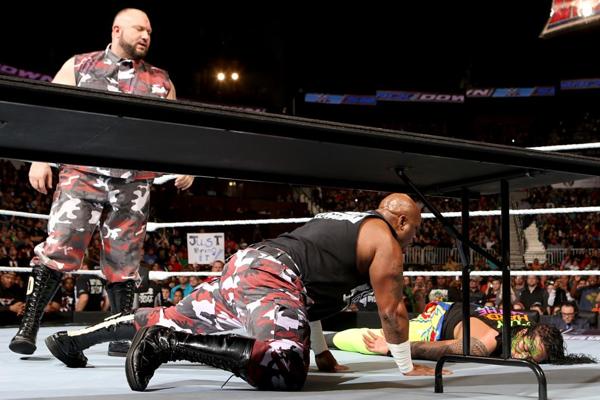
Clearly the spectacle and the pageantry of WrestleMania are two of its biggest selling points, so keep the Fourth Of July pyro, keep the freewheeling sideshow. What Im concerned with is basic stagecraft - and this may be the Grandest Stage Of Them All, but its still just a stage, and one thing always stays the same.
Timing. You have a certain amount of time to fill, and thats it: no amount of money, marketing, promotional flair or creative brilliance can turn sixty minutes into sixty-one.
WrestleMania is a massive show, but its timed at four hours for worldwide broadcast. Look at how many matches get relegated to the pre-show these days. Sure, theyre still being broadcast on the Network with the same production value as the rest of the card and, sure, the participants still get to perform in front of the same crowd but theyre not really on the show, and everyone knows it.
Far too often, the show goes so long that advertised matches on the broadcast card itself are shortened, even cancelled. Thats terrible stage management. Whos running this supposed Show Of Shows?
And whats eating up that time? Sometimes marquee matches go long, and thats fair enough, but then there are the live bands playing full-length versions of wrestlers theme tunes to welcome them to the ring. There are the unskilled celebrities taking part in skits or, worse, actual matches.
There are the mid-level pop, rock and hip-hop stars awkwardly playing a clutch of their hits in front of wrestling fans that, by and large, could not care less about them. There are the vanity entrances for the big stars with lengthy high-concept production and choreography, when the crowd would pop for the opening bars of their theme if they hummed it at them.
Ive helped run events, artists and productions on stages from the teeny to the ginormous (yes, those are technical terms), and any decent stage manager could tell you that this is simply incompetence. Considering the vast, state-of-the-art production that WWE has working overtime, wed better make that 'stunning incompetence'.
7. The Revisionist History

The story of WrestleMania, like the story of the WWF/E and Vince McMahon himself, has been subject to vast swathes of revisionist history over the years, so lets clear a few things up.
Contrary to vicious rumour, before the WWF went national professional wrestling wasnt stuck in high school gymnasia and local armouries. Supercards were around long, long before Hulkamania or WrestleMania.
Its likely that Vince McMahon was inspired to create WrestleMania due to the success of the NWAs annual Starrcade event, and by memories of his fathers Showdown At Shea events in 1972, 1976 and 1980 with the WWWF, which drew crowds ranging from 22,000 to 36,000.
Wrestling has always been a huge draw for audiences, and that predates Vince Jr. and his courting of celebrity involvement and mainstream indulgence. Frank Gotch and George Hackenschmidts rematch for the World Heavyweight Championship supposedly drew 30,000 fans in Chicago in 1911.
In fact, it doesnt just predate them, it runs concurrently. Jerry Lawler was a massive star in Memphis before he came to the WWF, the main draw that brought an average weekly crowd of 8,900 to the citys Mid-South Coliseum on Monday nights in 1982.
Todays WWE (the top wrestling organisation in the world for two decades and a major global brand, dont forget) manages to draw around that number to Monday Night RAW every week, and thats as a touring commodity that carefully manages its schedule to avoid burning out the fanbase.
WrestleMania has become a monolith, but it wasnt a revolution. In point of fact, even at its most massive, its not the top-drawing wrestling show of all-time. That honour falls to the two-day Collision In Korea event in April 1995, a collaboration between World Championship Wrestling and New Japan Pro Wrestling that saw well over 150,000 attend each of the two days.
Of course, WWF/Es own estimation of their top drawing shows is famously exaggerated: the alleged 93,173 that attended WrestleMania III is widely disputed. The Wrestling Observers Dave Meltzer maintains that the venues promoter told him that the genuine attendance was around 78,000 which is still huge, but not record-setting.
Don't believe everything you read, folks.
6. The Return Of The Rematch

Theres a disturbing leaning toward WWE re-running a money match again at WrestleMania and only at WrestleMania, making a repeat reaction out of a feature attraction.
The Rock and Stone Cold Steve Austin famously clashed three times during the Attitude Era, at WrestleMania XV, WrestleMania X-Seven and WrestleMania XIX - but at two year intervals, at entirely different points in their careers, and with entirely different storylines and characterisation at play, these rematches felt more like battles in an ongoing war.
Similarly, Edge & Christian, the Dudley Boyz and the Hardy Boyz clashed at WrestleMania 2000 and X-Seven - but their three-way feud had been building brilliantly over the intervening year, including the first ever TLC match at SummerSlam 2000.
Really, it was Shawn Michaels and the Undertaker that began the worrying trend, working the Heartbreak Kids retirement match in the main event of WrestleMania XXVI the year after their barnstormer at WrestleMania XXV.
Naturally, Triple H couldnt let that slide and he would end up wrestling the Dead Man at the next two WrestleMania events just so he could tie with his BFF in DX (although he just had to reverse the storyline so that it was the Undertaker desperate for a rematch with him, and not the other way around).
Most notoriously, The Rock and John Cena had their once in a lifetime superfight main event from WrestleMania XXVIII repeated a year later at WrestleMania 29. The second time would prove to be for the WWE Championship, but aside from that it didnt significantly stand out from the first.
And thats the point, really. Running a high profile rematch exactly a year later just makes the card seem derivative and unimaginative. New stipulations, locations, gimmicks and titles dont really change the story of the match or the people involved on their own.
WWE need to let fans demand a rematch and allow it to happen organically, rather than just booking it on the following years show as a matter of course.
5. Booking The Entire Roster Onto The Card
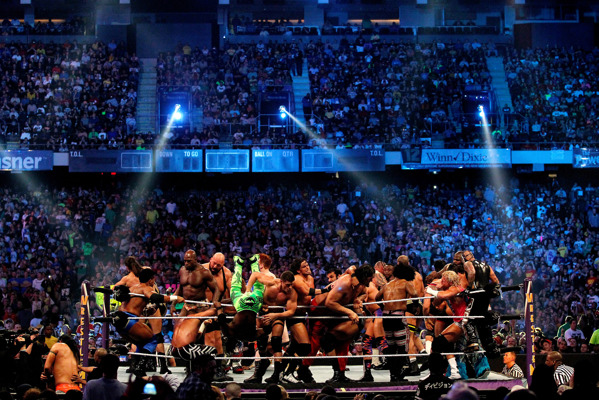
In recent years, WWF/E have begun trying to give as many wrestlers on their roster as possible a 'WrestleMania moment and pay-day. This was never the case in the early days of the event.
Oh, there have always been Battle Royals... but in the old days they were surrounded by gimmickless singles matches, which were the true focus of the card.
These days there arent just Battle Royals, there are multiple-team tag encounters, triple threats, and now a multi-man ladder match. Overbooking is a horrible hangover from the Attitude Era, and it seems that WWE are hellbent on clusterf***ing the WrestleMania card every year now, purely to shoehorn every active wrestler on the roster onto the show.
It's great that so many talented people are getting a little extra cash... but time spent on their characters and programmes the rest of the year would be far more helpful. For example, Zack Ryder is a man buried so deep in recent years that youd think hed died of something contagious.
His work as the less enthusiastic half of a mid-level tag team on the developmental brand has, pathetically, been the highlight of his career since those halcyon days of the summer of 2011.
And now hes in the Intercontinental Title ladder match at WrestleMania 32. Someone who'd only started watching the product in, say, 2013, would be forgiven for wondering who on earth this 'Ryder' guy is and how he's appeared out of nowhere to get an IC title shot.
People on the undercard shouldnt be on the biggest show of the year, but then the word undercard shouldnt cover half to two-thirds of the roster. WrestleMania isnt a consolation prize for having a crappy spot the rest of the year. Its supposed to be the Showcase Of The Immortals, not the Parade Of The Zeroes.
Lets turn these zeroes into heroes and then figure out where they belong come WrestleMania season.
4. Theres No Dynamic Storytelling Anymore
The Road To WrestleMania used to be a downhill plunge, and now its an uphill struggle. As a general rule, the biggest show of the year used to form the basis for the biggest marquee matches and the culmination of ongoing angles, blowing off the highest profile feuds in spectacular fashion.
Thats not the case any longer. Instead of acting as a dramatic climax, the company tends not to do anything about WrestleMania until literally a matter of a month or so before the show, then panic books the main event matches and obsesses over trying to build up decent storylines for them to the exclusion of practically everything else.
Pretty much every other match on the card will usually have no story behind it, and be booked on the fly a few weeks before the big day. The Road To WrestleMania isnt just uphill: its also on rails.
Lets look at this years card. The saga of Roman Reigns vs. The Authority has been going on since TLC last year, when truculent babyheel underdog Reigns snapped after failing to regain the WWE World Heavyweight from Sheamus and clobbered innocent babyheel boss Triple H*.
However, the main event match between Reigns and The Game wasnt made until Fastlane on February 21st.
Similarly, Shane McMahon didnt return until the night after Fastlane to set up the Hell In A Cell match with the Undertaker, and Brock Lesnar didnt assault Dean Ambrose (causing the Lunatic Haircut to challenge him to a WrestleMania match) until that same evening.
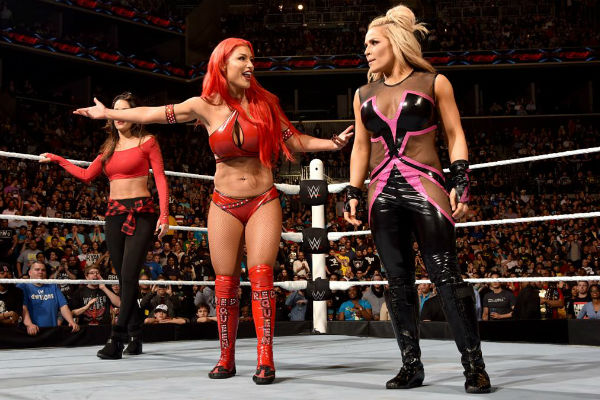
Thats all three of the big matches on the card, set up six weeks before the show. The triple threat for the Divas Championship was set up at the beginning of March, but every other match on the card was set up two to three weeks beforehand. I tell a lie: the ten-woman tag match didnt exist until last Monday.
Its yet more evidence that its the WrestleMania brand that sells tickets here. WWE recognise that theyll get the gate and the WWE Network viewers they want regardless of whos on the show, and dont have to bother building a narrative.
Right? Because the alternative is that the WWE are now completely useless at booking the biggest success theyve ever had.
*No, the alignments are in no way confusing in this storyline.
3. They Have A History Of Screwing Up The Main Event
Actually, that last quibble has teeth. WWEs track record at booking their WrestleMania main event is 50/50 at best (ironic, given that 50/50 is the booking style they favour these days).
Now, there's no such thing as a multiple main event, no matter what WWE tries to have us believe. The last match on the card is the main event. Everyone knows that. With that in mind, WrestleMania has a significant history of blowing that main event over and over again.
Cena vs. Miz at WrestleMania XXVII was just a glorified teaser for the WrestleMania XXVIII main event of Cena vs. The Rock, and everybody wanted to see Hogan vs. Flair at WrestleMania 8, not Hogan vs. Sid.
At WrestleMania 21, the overweening quality of the Undertaker vs. Orton and Angle vs. Michaels bouts ruined the crowd for the slower, more pedestrian championship matches with the Cena vs. JBL and Triple H vs. Batista at the top of the card.
Similarly, even if Triple H and Stephanie McMahon hadnt thoroughly emasculated Y2J leading up to it, their main event match at WrestleMania X8 wasnt ever going to hold a candle to Hogan vs. The Rock earlier on the same card. It was the event match of the year.
Austin vs. The Rock III at WrestleMania XIX went on second to last when it was clearly likely to be Austin's last WrestleMania match as a competitor. In the absence of that match Lesnar vs. Angle was a fine main event (botched shooting star press notwithstanding), but this was the last hurrah of the Attitude Era, and a grace note to Austin's career. It should have headlined the show.
Want more? Everyone could tell a month in advance that Undertaker vs. Michaels should have headlined WrestleMania XXV. Just as had happened at WrestleMania 21, the matches that had to follow it (Cena vs. Edge vs. Big Show and Triple H vs. Orton) played to an exhausted crowd.
This massive error in judgment was corrected the following year, when - with Michaels' career on the line - the rematch headlined the show.
Finally, the whole card was horribly overbooked at WrestleMania 2000, no match more so that the four-way main event, in which each wrestler represented a McMahon, making eight separate agendas in one match. Oh, and the most hated heel in the company won this massive clusterf***.
Ill give you three guesses who that was...
2. It's A Celebration Of Wrestling, Not Just A Wrestling Show
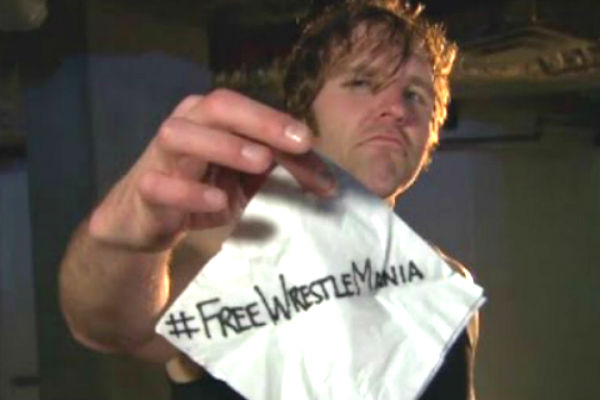
A lot of the previous entries centre around a central thesis: that WrestleMania is the brand that people are coming to see. Not the individual wrestlers, not professional wrestling itself, not even the WWE. WrestleMania is the selling point.
Over the last few years, it's become less and less important who's on the card and what the storylines are. The experience - the whole WrestleMania thing - is the unique feature that consumers are seeking out when they buy a ticket and book travel and accommodation.
As for the people at home well, its not so much a case of voting with your wallet if youre not keen on the WrestleMania card. The days of paying through the nose for the pay-per-view are fast receding in the rear view mirror. Like all of WWEs special events , the show - including the kick-off matches - streams live on the WWE Network, which costs a tenner a month, and many people already have the Network.
Lets face facts: the rationale for complaint about a product changes when youre not being asked to pay any extra for the product. If all you have to do is run a cable from your laptop to your unfeasibly large flatscreen, then youre not really even sacrificing picture and sound quality.
In 2016, WrestleMania is a self-contained brand worth umpteen millions that isnt dependent on the companys current storylines to sell out because the stories being told on the show only started a few weeks beforehand.
We keep treating it like its the feature length season finale of one of our favourite TV shows when the reality is that its a standalone special, a jumping on point for new, casual consumers of the WWE product, and a seismic talking point in popular culture.
WrestleMania isnt just a wrestling show anymore.
1. Its Still WrestleMania
In 2016, WWEs unofficial party line when it comes to addressing fan complaints about the nosediving quality of the weekly television shows goes something along the lines of, Whatever, marks. Youre still watching!.
While thats not true of everyone, the points fairly valid. We talk a good game about rioting and boycotting and hashtag cancel WWE Network, but how many have actually done it? Out of all of them, how many have stuck to their guns?
WrestleMania is a done deal for many people, regardless of their ambivalence toward the current state of the product or the current state of WrestleMania itself. If youve already got the Network, why wouldnt you get in the beers and tune in on the 3rd, complaints or not?
And, lets face it the show is massive, and the hype is infectious. Last years event was lauded as a genuine triumph, despite the lazy, godawful narrative building up to it. As everyone expected, the storytelling on the night continued to be simplistic at best.
However, it turns out that an empty spectacle is still a spectacle, and the roster delivered their end of the bargain, working their asses off even without the support of WWE creative.
The show was deemed to be a success, despite everything. Chances are this Sundays show will perform a similar miracle on our lowered expectations. Its not the WrestleMania I grew up with in the early nineties, or the late nineties or even the late noughties.
But its still WrestleMania, after all that.