10 Things You Didn't Know About Stone Cold & Brian Pillman Gun Angle
Some little known facts about Austin 3:16 vs. Pillman 9MM.
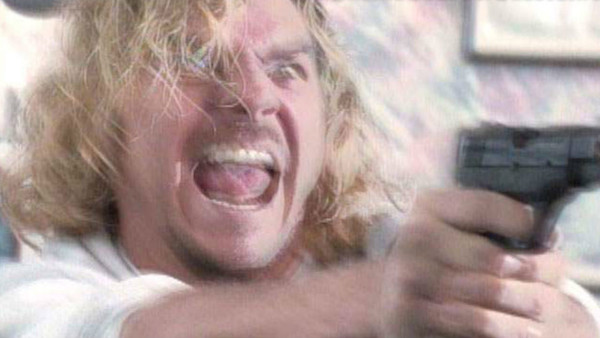
Just under 25 years ago, WWE presented an angle so controversial, so shocking, and so adult-oriented that it almost got them kicked off the air.
On 4th November, 1996, Brian Pillman pulled out a 9mm gun on Monday Night RAW and implied its use in defense of his family and home against Stone Cold Steve Austin.
For some, it was far too intense, far too dramatic, and way too real to be considered acceptable viewing for the young audience to which the WWF was supposedly catering to at the time. While the signs were there throughout most of 1996, the promotion and company was changing, and they were heading in a direction that would see them push the envelope as far as possible.
This angle could very well have been the launching point for the shock TV period so fondly remembered as the Attitude Era. It featured two of the company's most intense performers, who had a unique bond and incredible chemistry that lasted throughout their entire careers: Brian Pillman and Steve Austin.
Though much has been discussed about the angle over the years, there's also several little-known facts about the segment. Ranging from the pre-segment opinion of the USA Network to the original role of Brian's wife Melanie, many topics are covered in this article, featuring 10 things you didn't know about the infamous Austin/Pillman angle from Monday Night RAW.
10. It Was Bruce Prichard's Idea

Back in November of 1996, the World Wrestling Federation was in the early stages of a thorough TV ratings ass-whopping at the hands of rival organization, WCW. In an attempt to combat the slump, Vince McMahon had already begun to turn his product into a more adult-oriented program consistent with other contemporary shows like The Jerry Springer Show or the USA Network's own Silk Stalkings, by featuring more risqué angles and characters that, in any other year, would've been completely forbidden.
So when Bruce Prichard came to Vince with an idea that involved Steve Austin storming Brian Pillman's home as a way to finish a job started on the 27th October episode of WWF Superstars (crushing Brian's ankle using a steel chair in a manner that would become known as "Pillmanizing"), McMahon was hesitant. The idea continued that while Austin would be coming after Pillman in his own home, the Loose Cannon would enact castle law and attempt to protect his home and his family with a gun.
McMahon had never allowed the use of a gun on his television before as it was considered taboo and not a family-friendly tactic. But after being persuaded by both Prichard and WWF Magazine editor and future lead writer, Vince Russo, McMahon acquiesced and decided to run with the angle.
9. USA Network Pre-Approved The Angle

In an effort to boost RAW's ratings, Vince decided to proceed with the controversial angle, but not before getting it pre-approved by several USA Network executives.
There was an initial draft of how the angle would play out that saw some elements needing to be removed (more on that later), but eventually McMahon was able to get the network executives of his flagship's television show to authorize the script after it was rewritten.
It would later be revealed that the USA Network executives that approved the segment were not expecting it to be quite so well-executed. They thought the audience would know that it was "just another wrestling angle", and that the whole ordeal would come off as hokey or wildly unbelievable.
As it turned out, the network execs couldn't have been further from the truth and, despite their pre-approval, McMahon was about to experience some backlash.
8. It Took Place During The First RAW To Air At 8PM EST

During the Fall of '96, WCW was on fire with the nWo having just formed that past July. Vince was desperate to gain any sort of advantage he could against Monday Nitro's rapidly increasing ratings, as well as mitigate any disadvantages that could've been hurting his flagship program.
One of McMahon's strategies was to negotiate an earlier time-slot on the USA Network.
As of the previous May, TNT had increased the length of their Monday Nitro television show to 2 hours beginning at 8 PM EST. Since RAW's debut on the USA Network in January of 1993, the Monday Night wrestling show had always begun at 9 PM EST. In Vince's mind, the fact that Nitro was starting an hour earlier did RAW ratings no favors as it allowed pro-wrestling fans to get their weekly dose a little early. Even casual viewers, Vince believed, may have intended to tune into RAW at 9 PM but forgot about it while watching Nitro.
In addition, the lead-in for RAW went from being Murder She Wrote to the much more male demographic-friendly Walker, Texas Ranger.
To kick off this new start time, Vince had planned this major angle which would surely get people talking - including the USA Network.
7. Ratings Spiked, Nearly Tying Nitro Before Falling Off

After the segment aired, McMahon was initially pleased with how well everything came off. It felt real. Maybe a little too real, as Vince would come to learn.
When the ratings came in, it was the same old story. Nitro had defeated RAW handily, but there were some interesting revelations.
The quarterly breakdowns showed that the angle brought RAW to a near-tie with Nitro at one point in the broadcast. As much interest as the angle had apparently generated, the same quarterly breakdowns also showed that around 125,000 pre-teen viewers had tuned out once tensions peaked.
Apparently, the angle was too dramatic and much too intense for many younger viewers, as they tuned out of RAW and tuned into Nitro.
While a blow-away ratings win would've likely given Vince some support on which to back his idea to run this controversial segment, the USA Network and key advertisers were livid and the ratings were the least of their concerns.
6. An "F Bomb" Made The Original Broadcast

Throughout 1996, the World Wrestling Federation had begun to feature language that was a bit more colorful than that which was used in years past. Perhaps most famously, Stone Cold Steve Austin coined his industry-changing promo just five months prior to his home-invasion angle with Pillman, by shouting out one of the most famous lines in WWE history at the King Of The Ring PPV:
"Talk about your psalms, talk about John 3:16...Austin 3:16 says I just whipped your ass!"
From there, occasional curses and PG-13 level language would make it onto WWE programming, but Pillman's outburst on the 4th November episode of RAW made Austin's King Of The Ring speech look like a lullaby.
"Let him go. I'm gonna kill that son of a bitch! Let him go! Get out of the way! Get out of the f**king way!"
The biggest violation of acceptable language in the history of Vince's company had just made its way across the USA Network's airwaves.
While Mene Gene once famously uttered a similar curse during a live WWF Pay-Per-View (a forum a bit more liberal given its elective paid nature), the fact that this violation was no slip-up and heard across a major cable television channel left USA's executives none too happy.
5. Many USA Network Executives Wanted To Throw RAW Off The Air
According to James Dixon's book Titan Shattered: Wrestling With Confidence and Paranoia, the USA Network's VP Of Sports Programming Wayne Becker wanted to pull RAW off the network effective immediately because of the use of the F word.
In addition to the language that was aired, the segment was so well-acted that many upset parents called the station to complain about the mature content that was aired on what was supposed to be a family-friendly show. Even advertisers like Milton Bradley furiously voiced their concerns about the angle. It didn't matter to them that the USA Network had actually given the green light on the segment and actually, many high ranking managers at USA were unaware of the pre-approval.
It all led to Network CEO Kay Koplovitz having a face-to-face meeting with Vince McMahon to discuss the future of Monday Night RAW. In this meeting, Koplovitz made it clear to McMahon that the direction of RAW needed to remain family-friendly and acceptable to younger audiences.
A year's worth of Goldust, the Billionaire Ted skits, and repeated occurrences of abusive language and gestures had all been enough for the USA Network Chairwoman, and she made it clear to Vince that it needed to stop.
We all know how that turned out as the period that would become the Attitude Era resulted in record-breaking viewership for the WWF on USA, but back in 1996, the ratings weren't there yet.
4. Pillman Had Legitimate Surgery Just Days Before

One week before the infamous RAW segment, the two superstars ran an equally memorable angle which actually served as the setup for their explosive Monday Night RAW scene.
During an in-ring interview conducted by Pillman on the 10/27 Superstars, Austin continued his attempts to goad Bret Hart out of temporary retirement. With Pillman having ties to the famous Stampede Wrestling promotion in Calgary, Bret Hart's home, the Loose Cannon ended his interview by echoing the Hitman's catchphrase, calling him the "best there is, best there was, and the best there ever will be." This incensed Austin in storyline, and he immediately attacked his interviewer and former WCW tag team partner.
Austin grabbed a steel chair, placing Pillman's ankle in between the closed seat and the back of the chair. Climbing to the second rope, Austin leaped off onto the chair, stomping on Pillman's ankle, essentially breaking it in kayfabe.
Shortly after the interview aired on television, Pillman had legitimate surgery on his ankle.
The reality was that Pillman needed another surgery after a gruesome automobile accident shattered his ankle to pieces in April of '96. The angle allowed Pillman to get the surgery and remain off TV so when viewers saw Pillman laid up, wearing a cast in his Kentucky home on the 11/4 RAW, it was legitimate.
3. It Was Filmed Live While The Rest Of RAW Was Taped

A common cost-cutting measure of Vince McMahon's early years running the WWF was to feature multiple television tapings on the same night. It wasn't unusual for the WWF to run a show that ran in excess of four hours that they used to turn into 3-4 weeks worth of television shows.
While WCW's Nitro aired live every week on TNT, Monday Night RAW was often aired on tape delay. Such was the case on 4th November, 1996 when Goldust battled The Stalker, The Sultan took on Alex "The Pug" Porteau, and Rick Bognar's Razor Ramon wrestled Marc Mero.
The matches that took place in the arena were weeks old, but the footage of Austin invading Pillman's home was filmed live as it happened.
Vince had originally considered taping the segment a few days before airing it, but later thought that shooting it live was more in line with the nature of the segment and would give it a more realistic feel. He was right.
When RAW came to television homes on 4th November, the matches were all pre-recorded, but the segments that featured the Austin/Pillman angle, including the night's commentary track laid down by Vince McMahon, Jim Ross, Jerry Lawler, guest caller Kerwin Silfies, and on-the-scene correspondent, Kevin Kelly, was all done live.
2. Melanie Pillman Was Supposed To Bump

Remember that original script that was previously referenced where Vince had to rewrite it in order to get the segment approved by the USA Network? Well, it featured two major occurrences that had to be removed and, therefore, did not take place.
The first featured a spot where the wife of Brian Pillman, Melanie, was supposed to take a bump, or fall. There aren't too many details about the nature of the bump or how it would exactly go down, but Austin's intrusion into the house would've lead to a spot where Melanie Pillman would take some sort of physical strain.
The USA Network was not having it.
The angle was controversial enough the way it eventually aired, but the network drew the line at violence towards a woman. This domestic incident against a woman, along with the follow-up action called for in the original script, was not something the network was comfortable airing.
So Vince rewrote the script and removed the part that called for Melanie to be physically impacted along with one other major component that was to come about as a result of Melanie's fall.
1. Pillman Was Supposed To Fire Two Shots At Austin Before The Feed Cut

Despite some of their other television shows featuring similar or worse storylines for entertainment purposes, the USA Network would not allow violence against a woman to air on Monday Night RAW show, nor were they tolerant of Vince's attempt to show an actual on-screen firing of the gun.
As previously mentioned, the original script called for Pillman's wife to take a bump, but that would've immediately led to Brian firing off two shots live on-screen, intended for Steve Austin. While Melanie still played a role in the angle and could be seen on-screen taking care of her husband before ultimately screaming, her physical contributions were scratched thus removing the catalyst for Pillman to fire off the two rounds.
Instead, the sound of the gunshots could be heard on the live broadcast, but the violence was mostly implied since the screen quickly cut to black the second that Austin came within range of Pillman and his weapon.
The multiple-segment footage that ended up airing was vivid enough to get the wrestling world talking and regardless of what was cut from the original plans, the "Pillman's Got A Gun Angle" will go down as one of the most controversial ever in the history of professional wrestling.